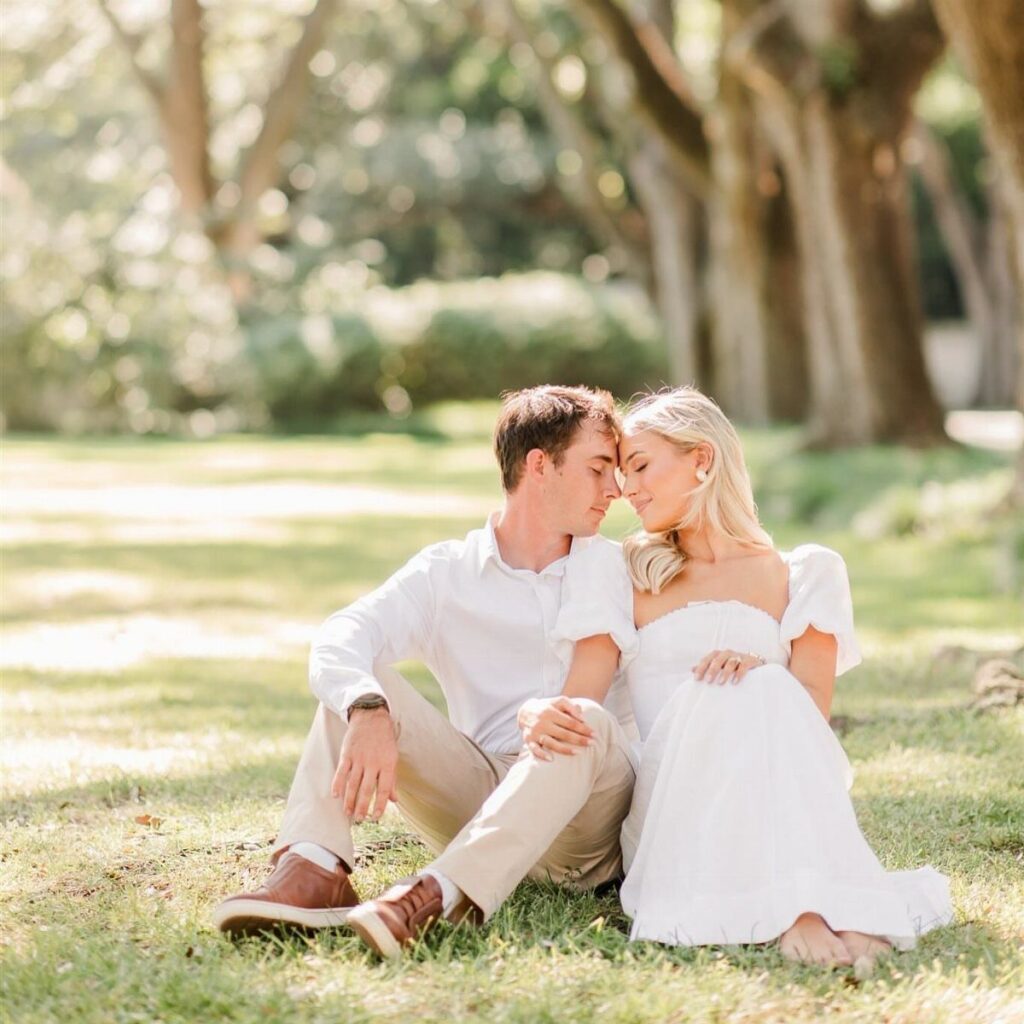
The outfits below run from a gingham two-piece set to traditional South Asian formalwear, and what separates them is the setting you’ll be standing in.
Your skin’s undertone then settles the shade, and every outfit you pack should be one you can move in.
1. Location-based Outfits
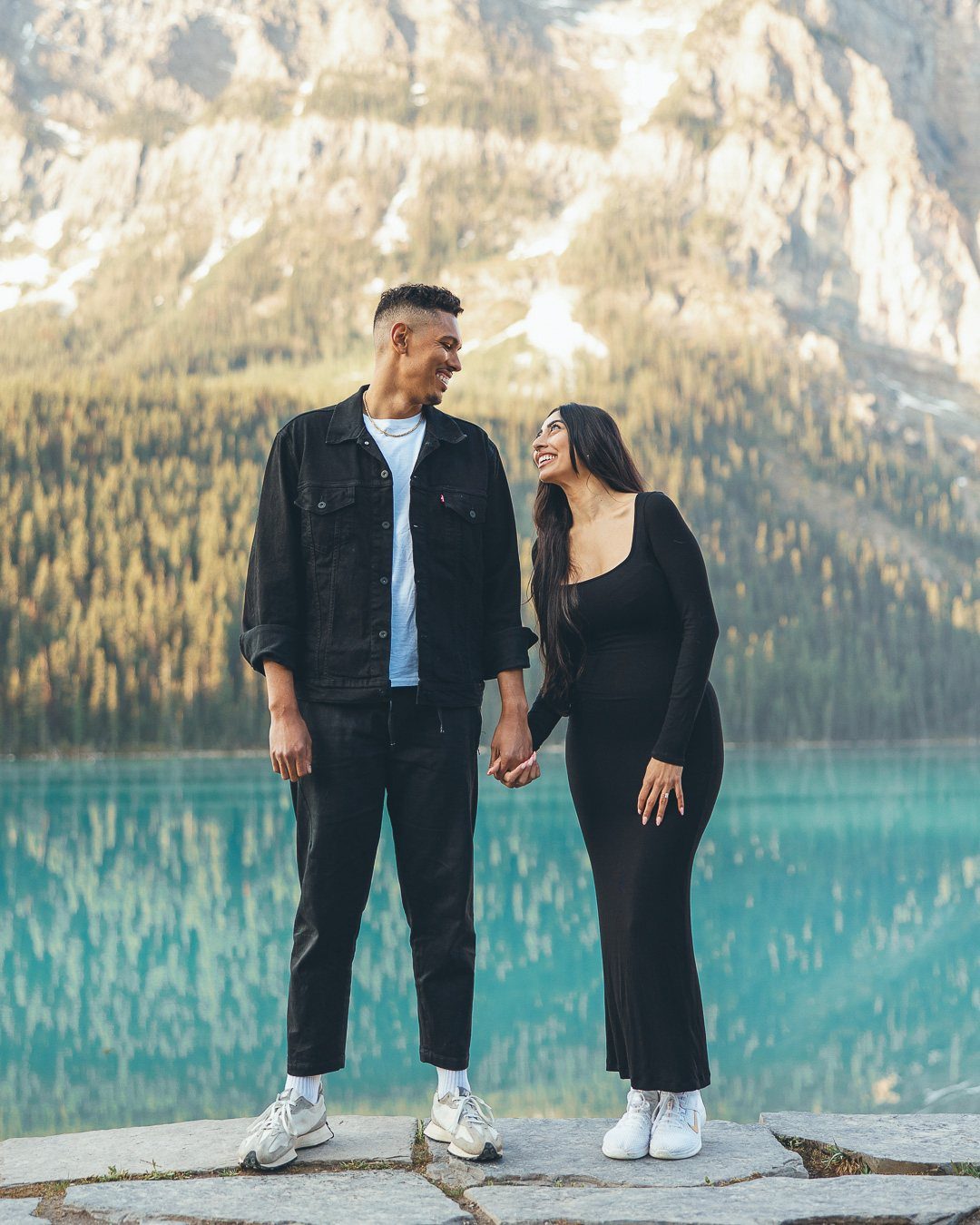
Black outfits and white sneakers against a turquoise lake and mountains: the color of the place does half the work, and the clothes simply stay out of its way.
Let the location choose the palette before you shop. Look at what the backdrop is made of, then pick colors that either contrast with it or sit quietly inside it.
Sneakers are my pick for any shoot that involves walking to the spot. You’ll look comfortable, and your feet will survive the session.
2. Soft Neutrals and Pastels
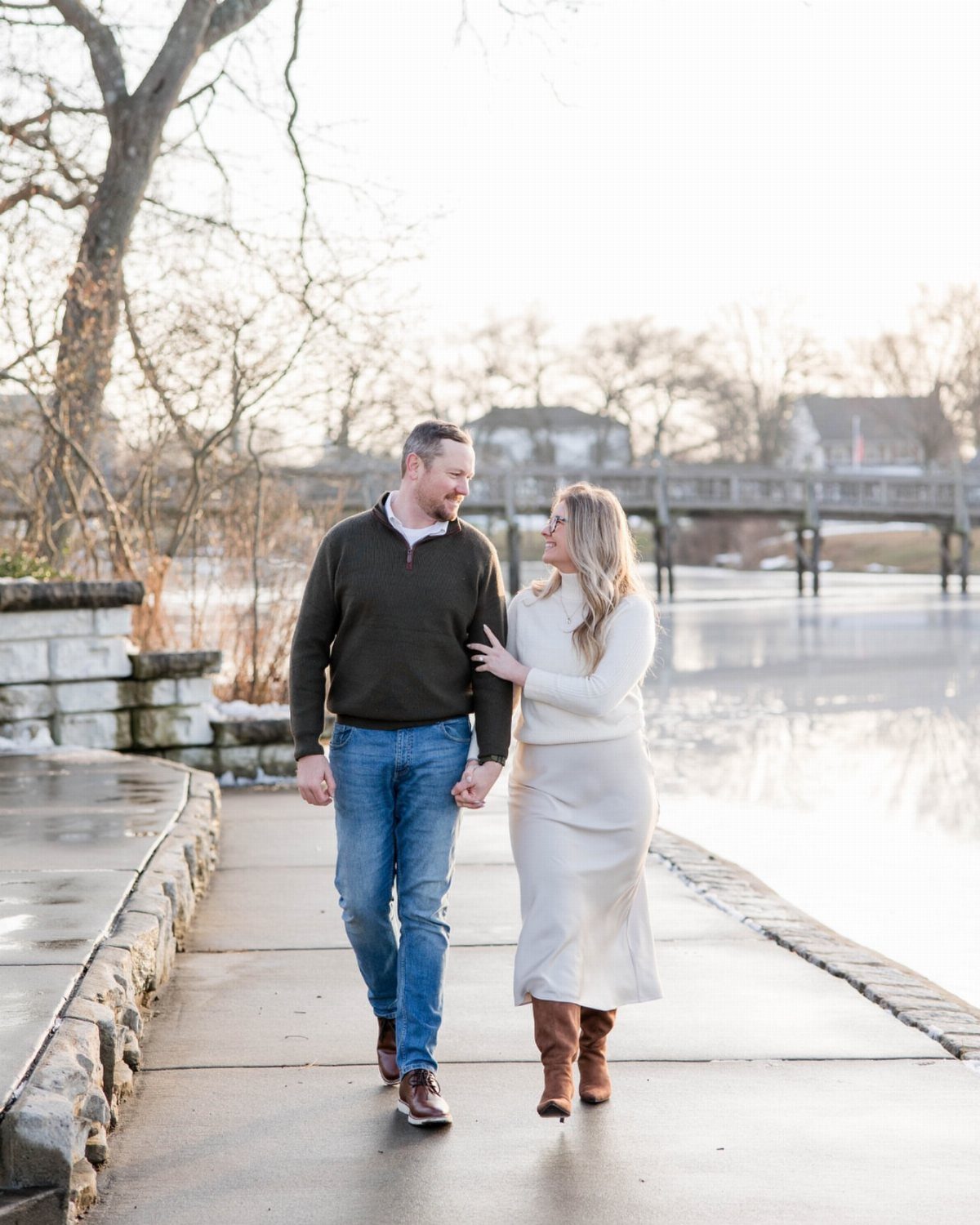
Spring light is soft, so quiet colors read as calm instead of washed out.
I like knits here because they add texture without adding pattern.
Pick one tone per person, keep the two from fighting, and use the white piece to tie you together. Soft pastels would work the same way if green feels too deep for your taste.
Spring colors have a coolness that naturally fills the air with love.
3. Floral Dress and Blue Shirt
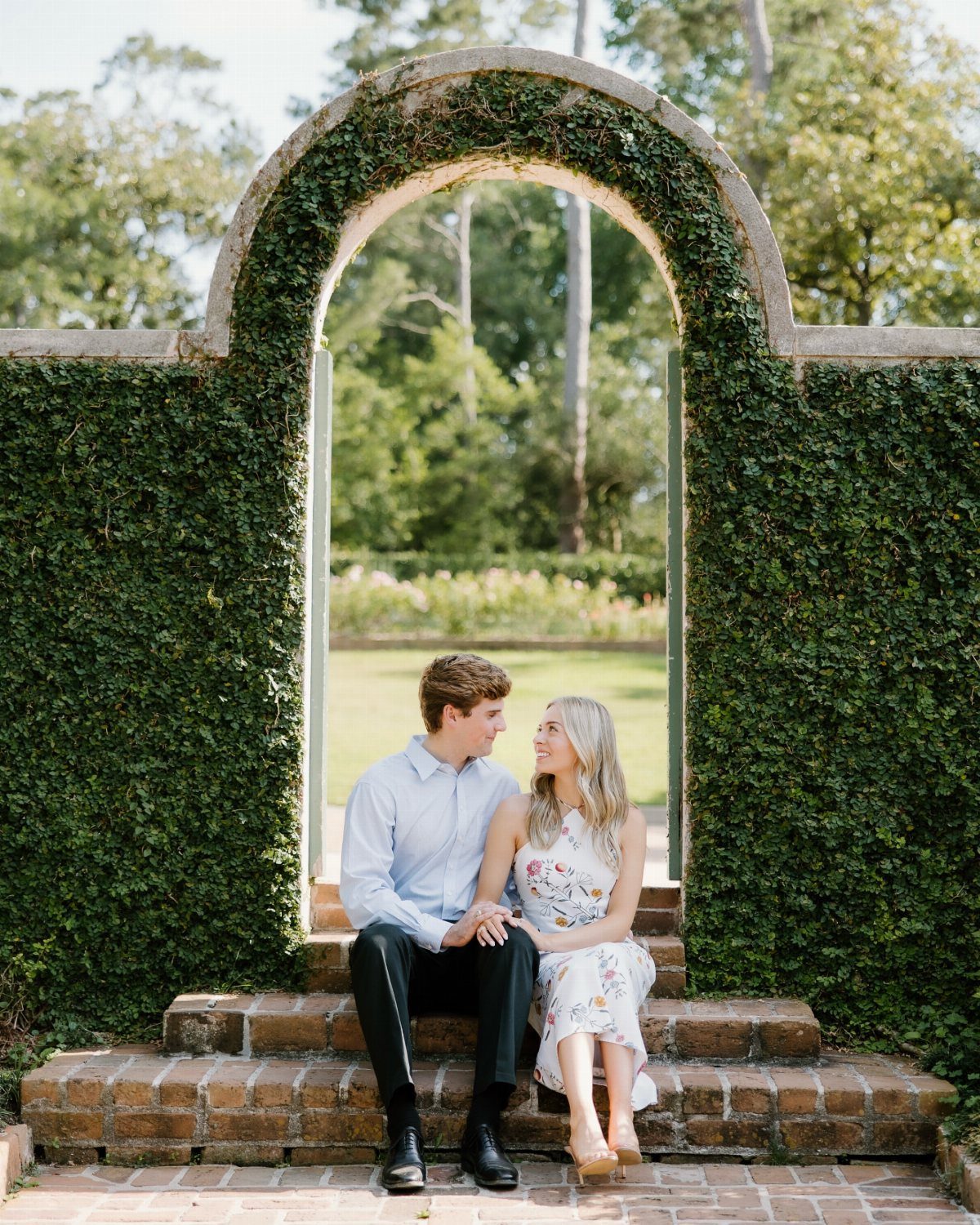
White florals and a crisp light blue button-down make a pairing that looks planned without looking matched. The dress carries the pattern, so his shirt only needs to be clean and ironed.
Black pants keep him grounded against a busy backdrop like ivy and brick.
A midi length is easy to sit in on steps, which matters if your photographer wants you low and close. Steam both pieces the morning of the shoot.
4. Traditional South Asian Formalwear
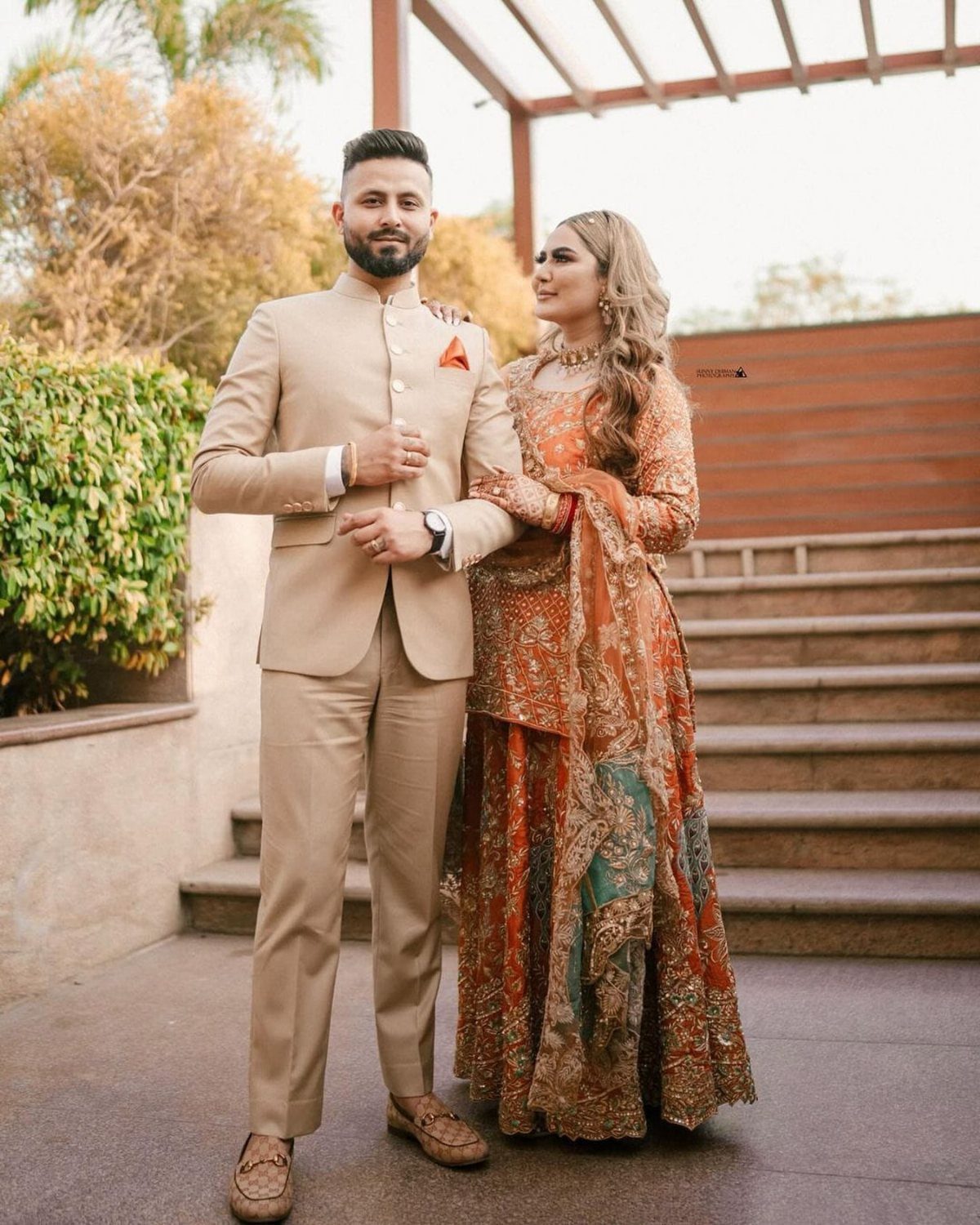
An embroidered orange and gold lehenga beside a tan mandarin collar suit proves that formalwear belongs in a spring engagement shoot. The rich color holds its own against greenery, and the tan keeps him from competing with it.
Choose his piece to sit in the same warm family as her embroidery.
If the outfit is heavy, shoot near stairs or a bench so you can pose without fighting the fabric. Pieces like this also make strong images for invitations.
5. Gingham Two-piece Set
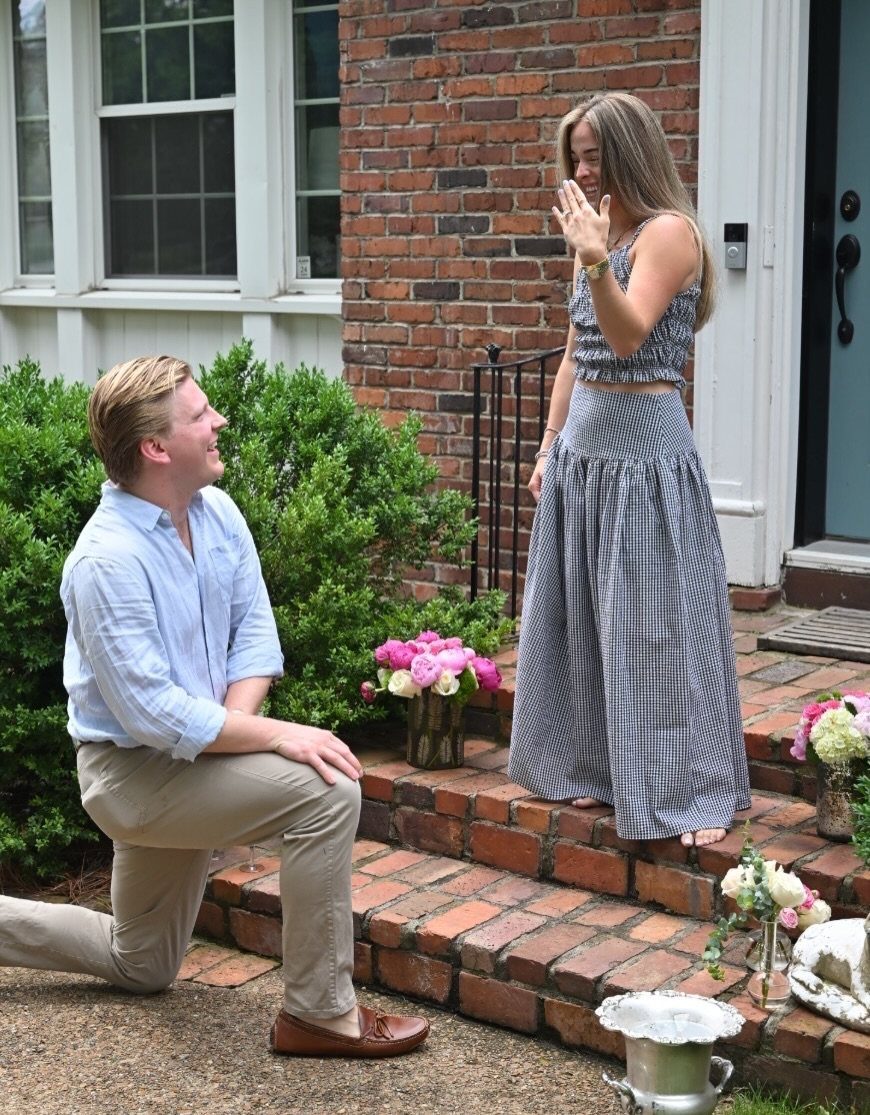
Gingham gives a spring shoot its picnic energy, and a grey and white crop top with a matching long skirt keeps the check from feeling too sweet. Grey is a gentler choice than the usual bright colors.
Let him wear solids.
A light blue shirt and khakis let the pattern stay the star, and the combination works on brick steps among pink flowers. Matching sets are also easy to pack: no pairing decisions on the day.
6. Light Blue Blazer and White Dress
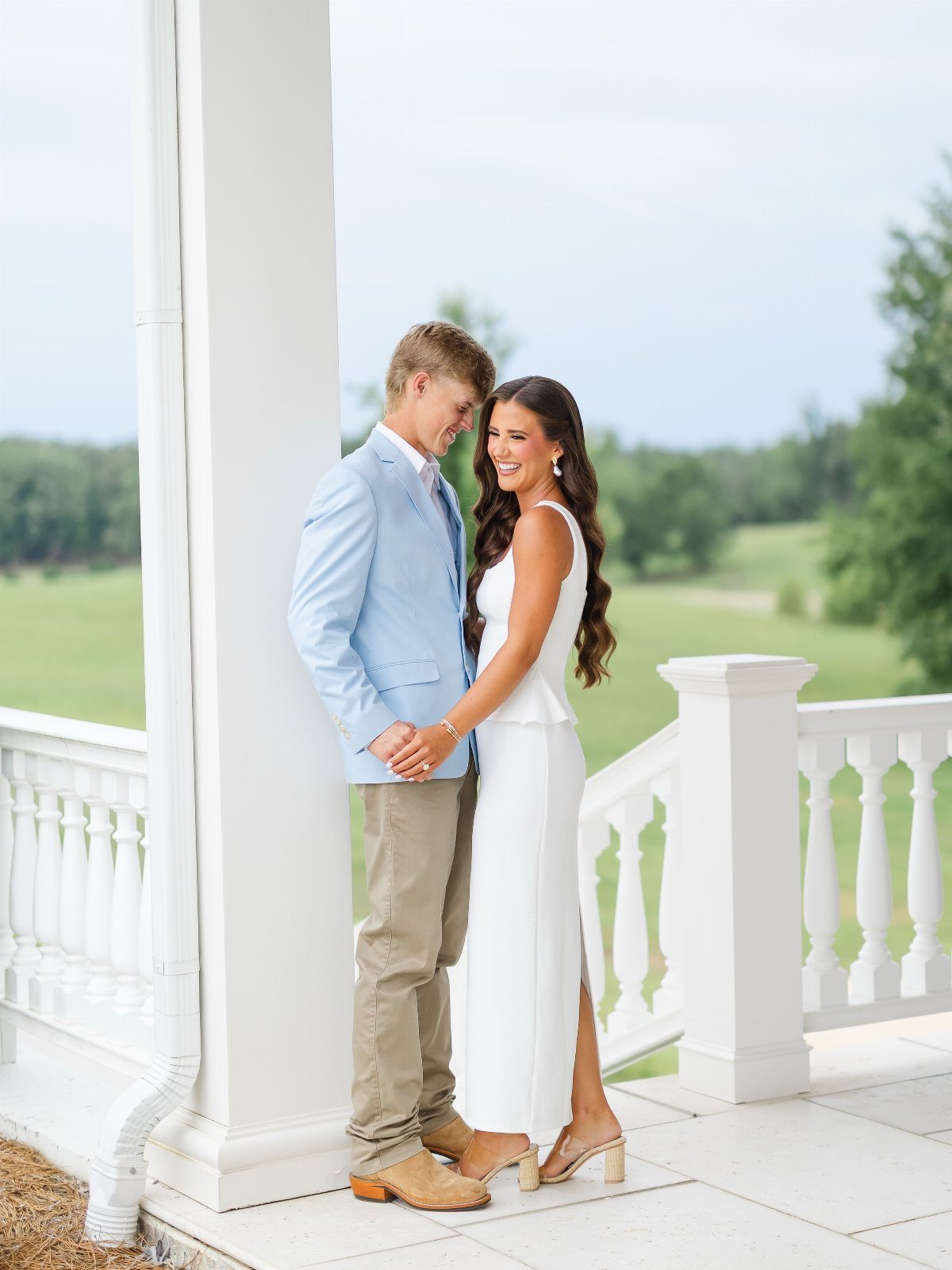
A light blue blazer over khakis next to a long white sleeveless dress is a clean, dressy pairing that suits a porch, a garden or any white-trimmed setting. Nothing in it fights for attention.
I would have him wear the blazer open for movement, and skip a tie so the look stays warm instead of stiff.
A sleeveless dress can feel cool on an early spring day, so keep a light wrap nearby between shots.
7. Blue and White Patterned Set
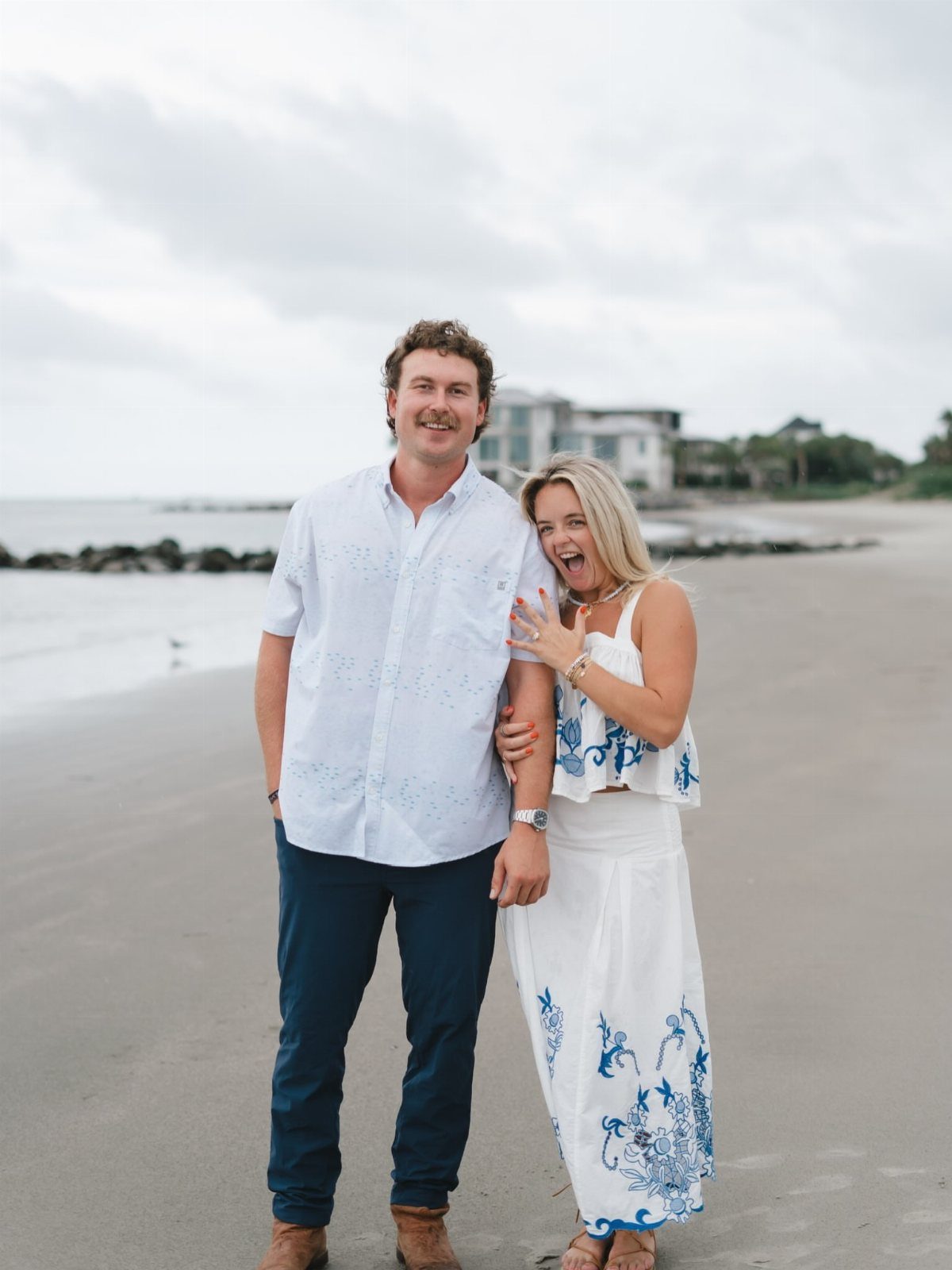
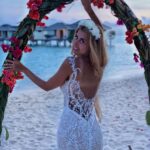
Navy trousers and a white shirt on him, an embroidered white top and blue patterned skirt on her: the 2 outfits share a palette without sharing a single piece.
That is easier to pull off than matching sets, and nobody ends up looking like a uniform.
Let her outfit carry the pattern and keep his plain. Navy is the shade to repeat from her skirt, so check that the blues are close before you buy.
On sand and water, this white and blue scheme stays light and clean, though white shows every wrinkle, so steam both tops before you leave.
Choosing the Right Colors
Neon and other loud brights photograph badly, and they pull the eye away from your faces. Stick to light pastel blues, greens and pinks, and mix them with neutrals like black, white, navy or khaki.
Before you shop, check your undertone. Check your veins in natural light: blue or purple signals cool undertones, green signals warm, and both means neutral.
A second test uses white paper held at your neckline. Pinkish skin beside it points to cool undertones, yellowish skin points to warm, and neutral shifts with the season.
Warm undertones pull off warm colors better, cool undertones suit cool ones. When your undertones differ, pick colors opposite each other on the color wheel.
Planning for Movement
Plan on 2–3 outfits, with one dressy set and one casual set. A dress for one look and jeans with a fun top for the other gives you two very different feels from a single session.
Dress a little fancier than you would on an ordinary day, but never at the cost of comfort. If you can’t move in it, your photographer can’t pose you in anything candid, and stiffness shows.
Test every outfit in good natural light before the shoot. That’s where you’ll spot a bad fit, a see-through fabric or a pinching waistband while there’s still time to swap it.
Incorporating Personal Elements
Nothing here is a hard rule, so let your own life into the frame. Climbing gear, band tees, kitchen aprons and team jerseys have all turned up at engagement sessions, and they say more about you than a perfect palette.
Bring your dog if you have one. A custom bandana announcing the engagement works well, and so does a small sign.
For accessories, hats, sunglasses and a flowy shawl add dimension. Stacking bracelets and a dainty necklace also help.
Book a manicure beforehand, since close-ups of the ring are likely.
Frequently Asked Questions
What colors should I wear for spring engagement photos?
Soft pastels in light blue, green or pink, mixed with neutrals like white, black, navy or khaki, photograph best. Soft spring light flatters muted shades, so quiet tones look calm on camera and don’t wash out.
Look at the backdrop first, then choose colors that either stand apart from it or blend into it. Neon and other loud brights fight with your faces for attention, so I’d leave them in the closet.
How many outfits should we bring to our engagement session?
Pack 2–3 outfits, and make sure one is dressy and one is relaxed. Pairing a dress with a casual look like jeans and a playful top gives you two distinct moods in one session.
Wear each outfit outside in daylight a few days ahead; that’s when a poor fit or sheer fabric shows up, and you can still swap it.
Should we match our outfits for engagement photos?
No, coordinate instead of matching. Stick to one shared palette but let each of you wear different pieces, so the two of you don’t look like a uniform.
One of you carries the pattern, such as a floral dress or patterned skirt, while the other wears clean solids in a shade pulled from it.