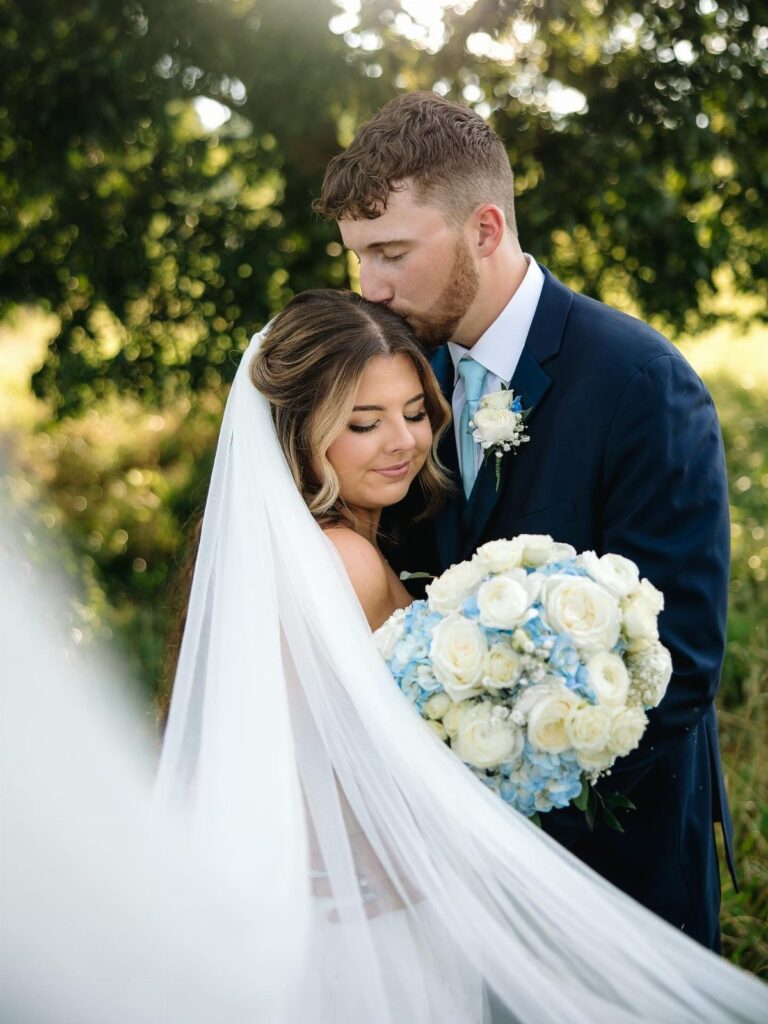
Most of these ideas cost nothing but a location and good timing; the spending goes to a photographer who can handle low light, and to a bit of weather preparedness, since a white umbrella or a spare wrap is cheap insurance.
What decides which ones are yours is when your day has light to work with: a late ceremony can swallow the 60 minutes before sunset, so couples with an evening start should lean on night portraits, while a daytime wedding can build around golden hour portraits and a quiet first look.
1. Sunset Silhouettes
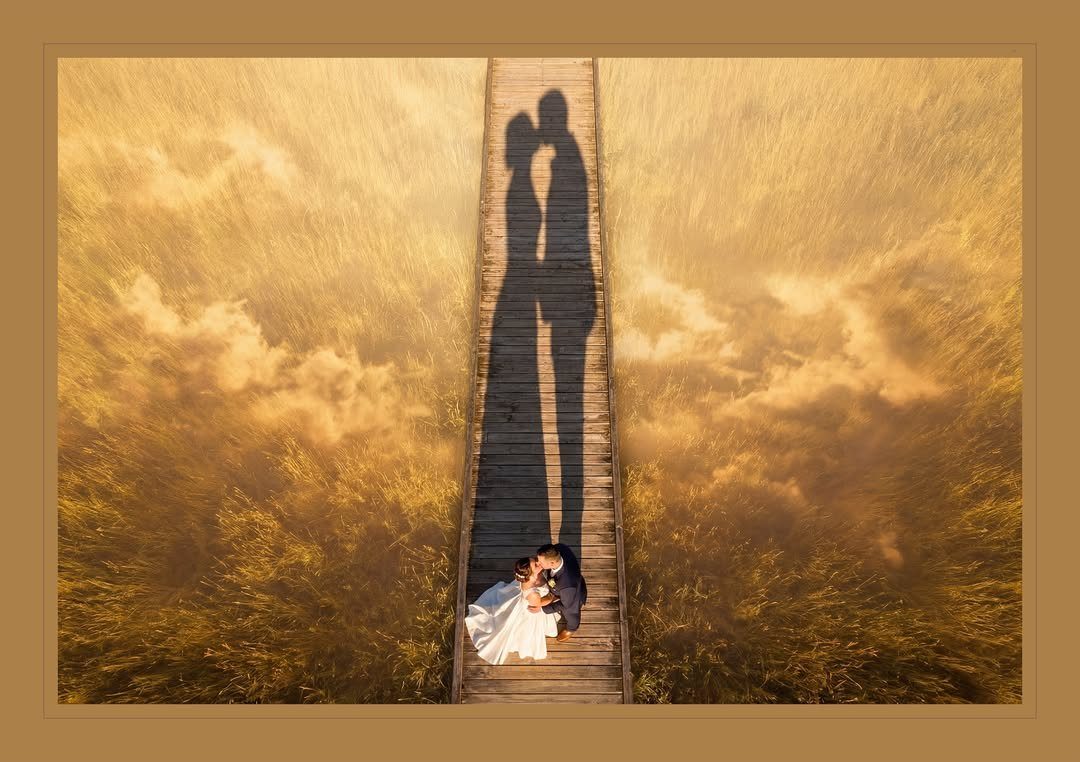
A silhouette depends on one move: put the couple between the camera and the low sun, so the faces go dark and the outline does the talking.
On a pier like this one, the boards add length to the shadow and lead the eye straight to the kiss.
Pick a pose with a clear shape.
A kiss or an embrace reads well as a single dark form, while a loose, side-by-side stance blurs into a blob. Ask your photographer to shoot from above if the setting allows it.
2. First Look Photos
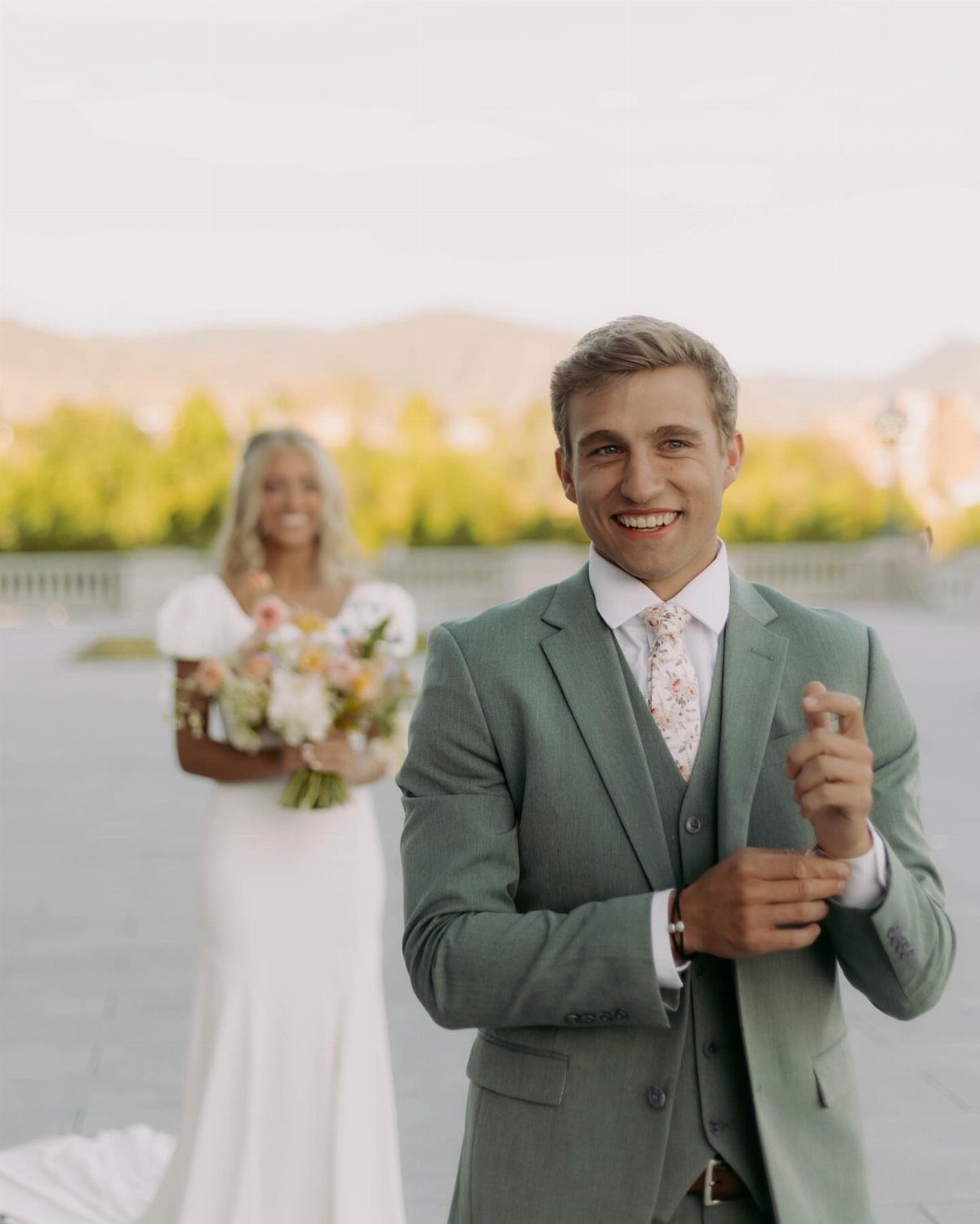
Seeing each other privately before the ceremony gives you a quiet few minutes that the aisle never will.
I like the version where one person waits facing away and the other walks up from behind.
You get the reaction, and the background stays soft. Pick a spot with open space behind the waiting partner, so the approach has room to unfold.
3. Pre-Wedding Shoot by the Water
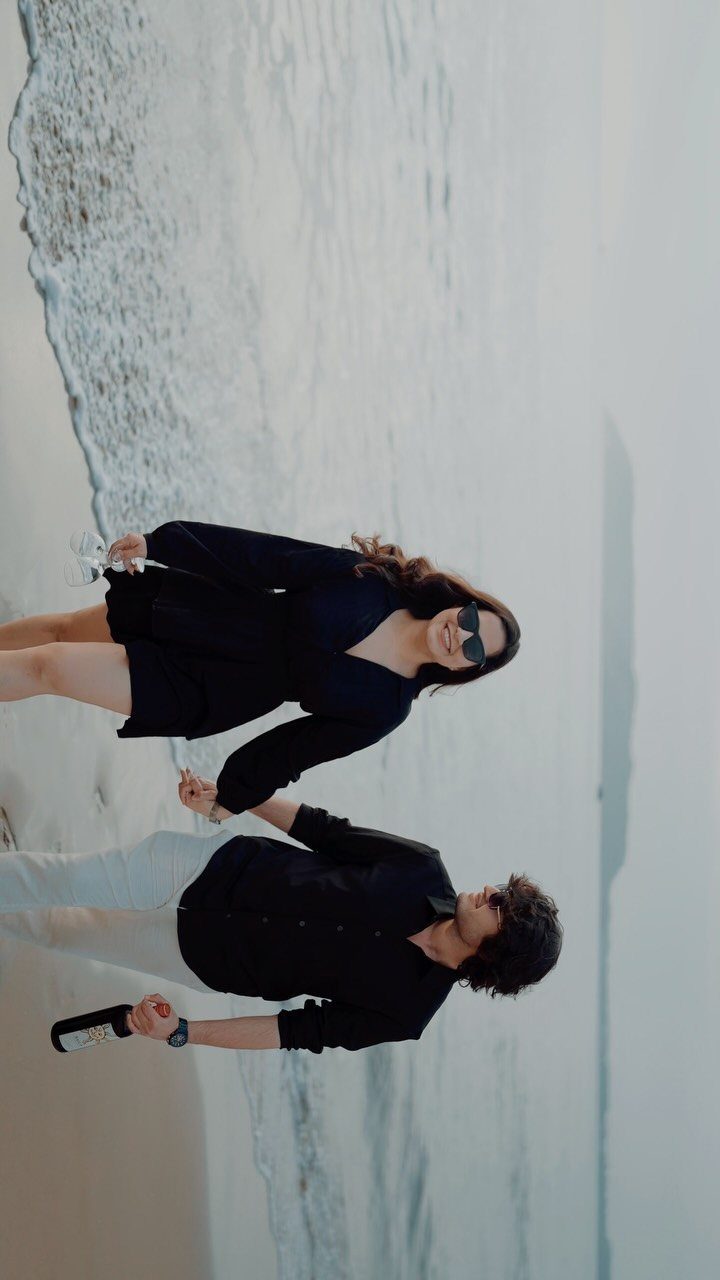
Water gives you a backdrop that needs no styling, and a beach asks only that you wear something that suits it. Dark outfits, like the black dress and black shirt here, stand out cleanly against pale sand.
Because this is a pre-wedding shoot, nobody is waiting on you.
Walk the shoreline, hold hands, and let the photographer follow. It is also a cheap way to practice being photographed before the wedding itself.
4. Golden Hour Portraits
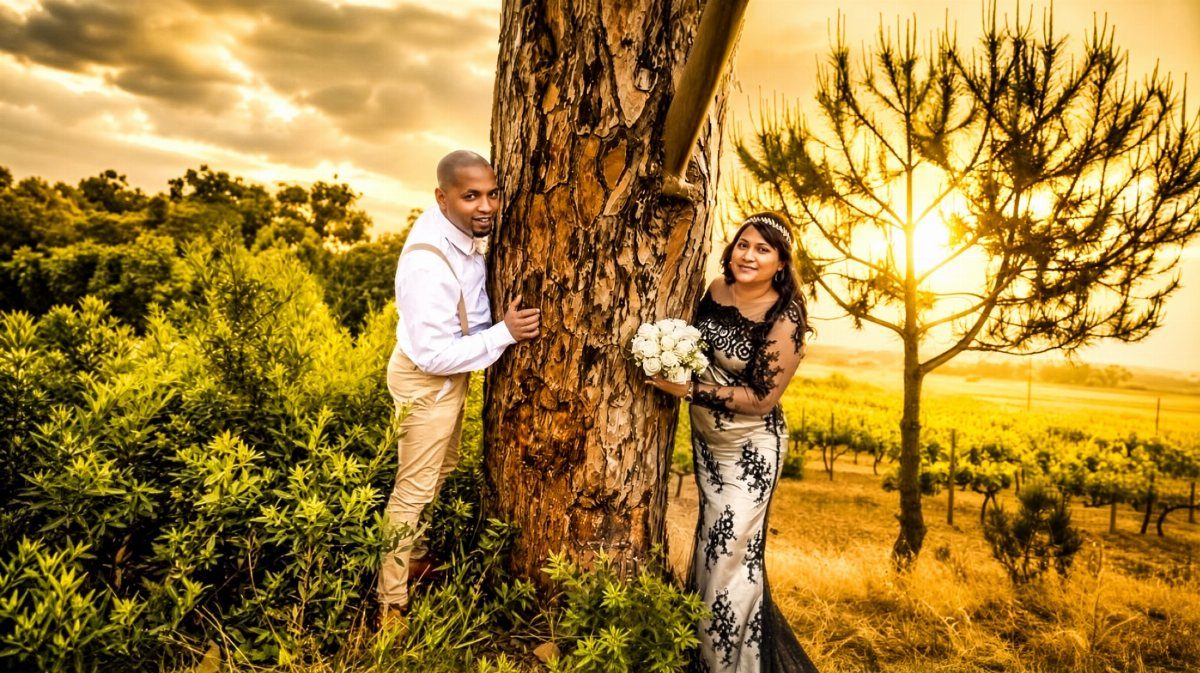
Plan the portraits for the last hour of sunlight, when the light turns warm and soft and every skin tone looks better for it. A vineyard or open field gives that light somewhere to spread.
Playing with a tree or other tall object, as this couple did by standing on opposite sides, adds a bit of play to what could be a stiff pose.
Tell your photographer the timing early, since the window is short and a late ceremony can swallow it.
5. Candid Moments
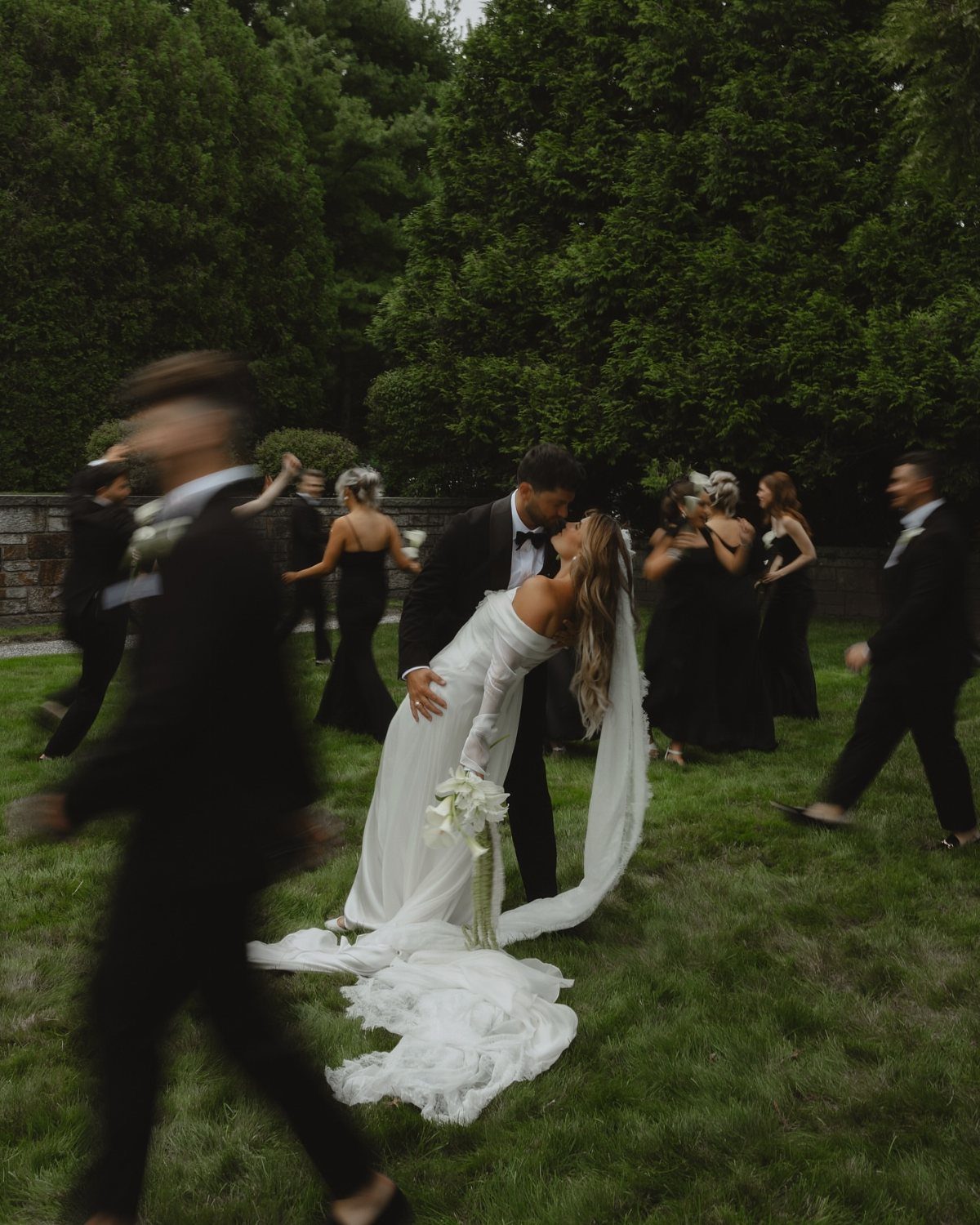
Candid shots happen when you stop performing for the camera. A kiss in the grass with the wedding party nearby, no one lined up, will show more feeling than any posed frame.
Tell your photographer you want these, then let them work from a distance.
Give the wedding party a loose job, like cheering or just standing close, so they react naturally. I would rather have honest frames than stiff ones.
6. Use Natural Backdrops
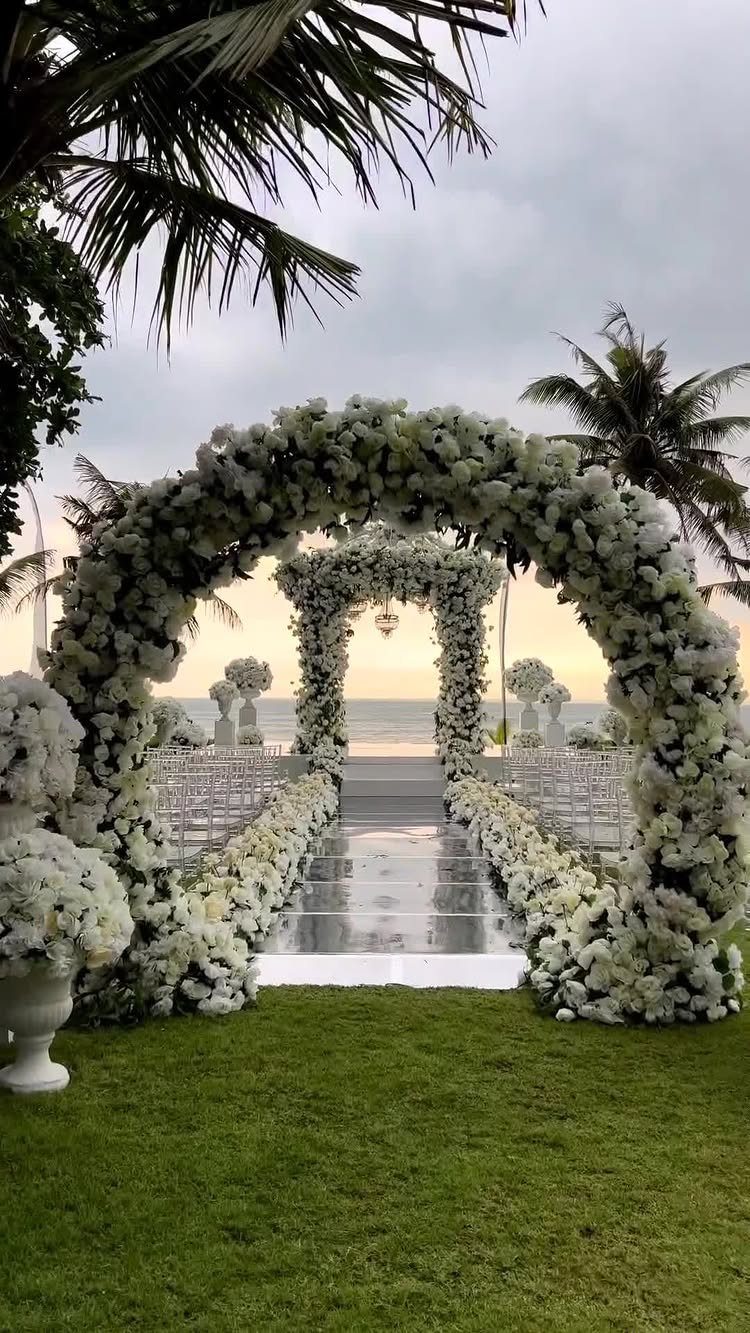
Let the setting do the decorating.
Keep the styling simple so it does not fight the view: white arches and white chairs let the water stay the star.
If you are working with a small budget, choosing a location with a strong view is cheaper than building a dramatic setup from scratch.
7. Walking Together
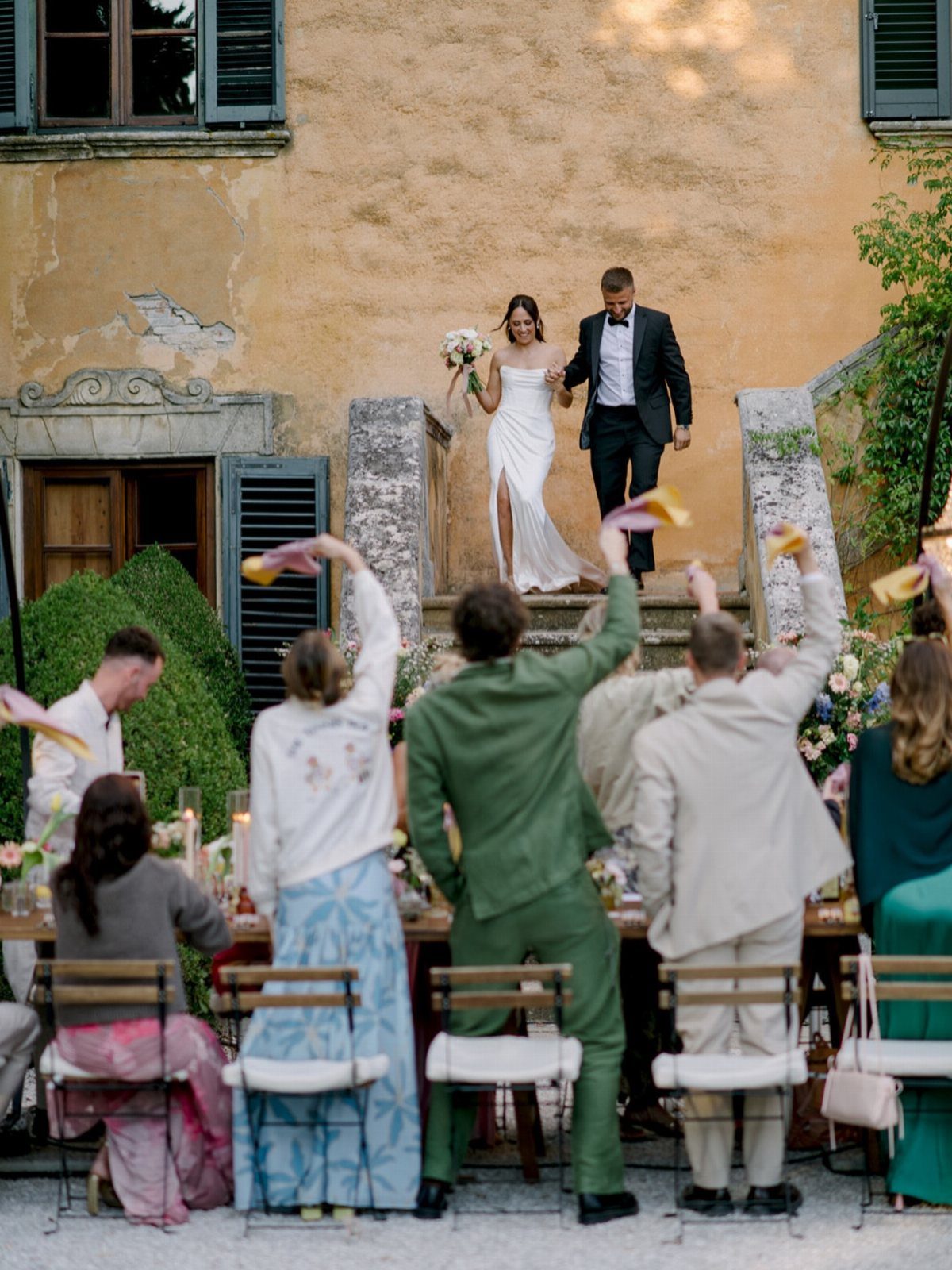
A walk down a set of steps, with guests watching and cheering, gives you a moment that needs no direction. Stone steps add a natural stage, and the old building behind makes a handsome frame.
Take your time on each step, keep hands linked, and let the guests react. Position your photographer low or to the side so the frame catches both the couple and the cheering guests.
8. Night Portraits
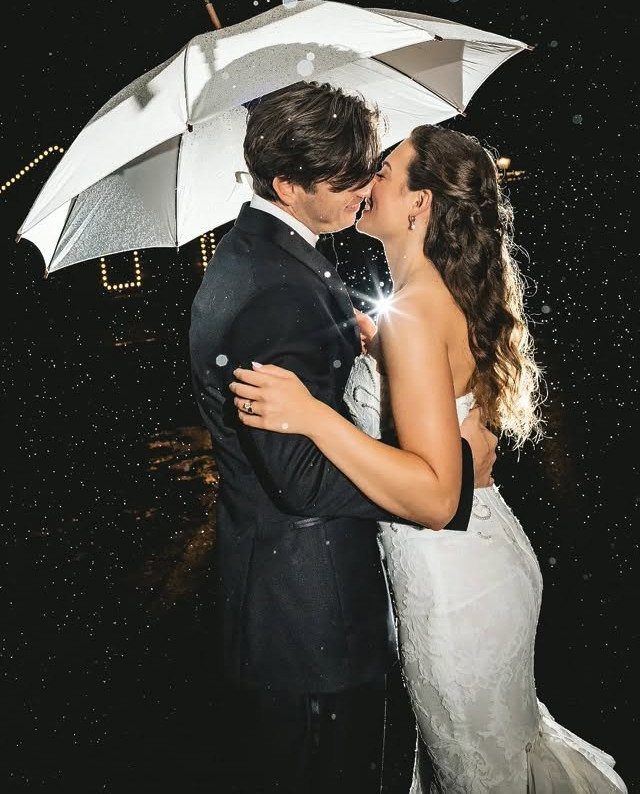
Rain on a wedding night sounds like a problem, but a white umbrella turns it into the best prop in the set.
It keeps the dress dry, gives the couple a reason to stand close, and glows against a dark background.
Pick a clear or white umbrella so it reads as part of the dress.
Dry skies work too: the same idea holds for a clear night with stars. Night shots need a photographer who has the lighting gear and the nerve for it, so ask to see low-light samples before you book.
9. Picnic Setup
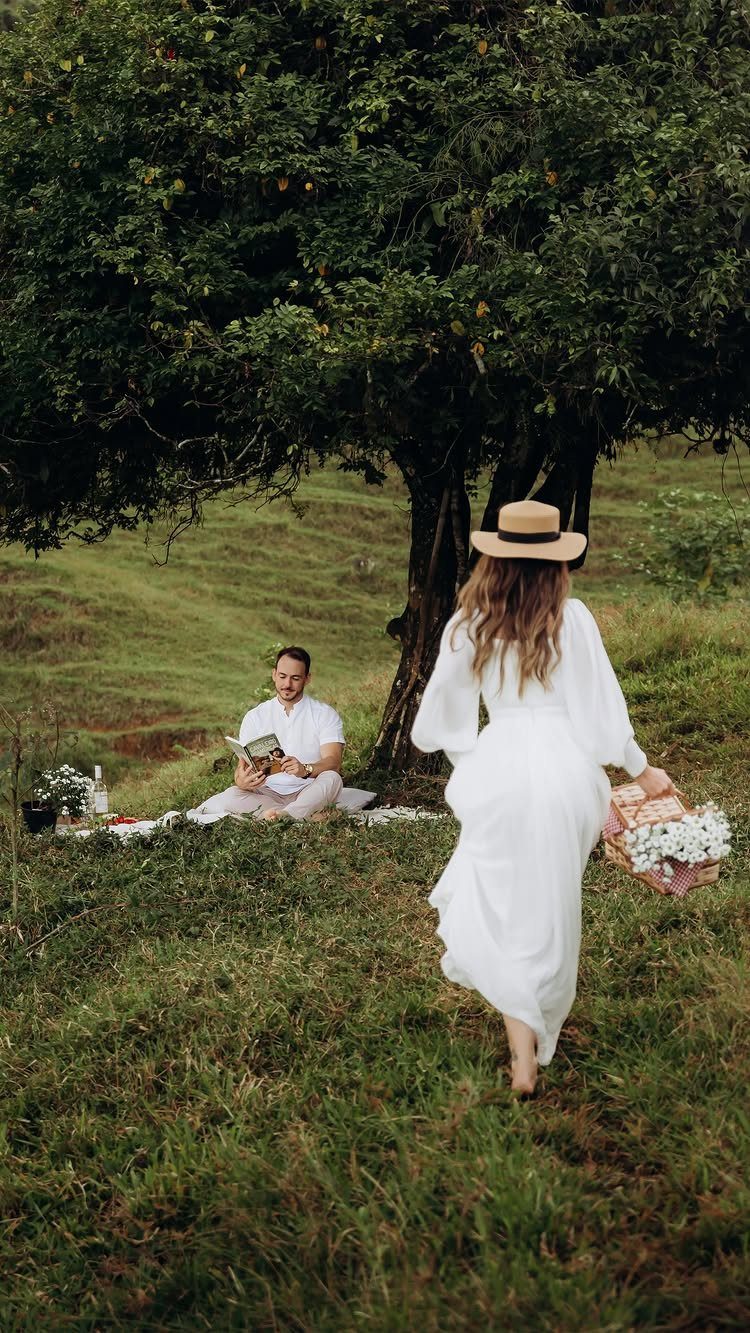
A picnic under a big tree asks for very little: a blanket, a book, a basket, and light clothing. Whites and creams settle down the green when a field runs right up to the edge of the setup.
For me, the basket is the detail worth spending on, since it gives the person carrying it something to do with their hands.
Skip the staged feast. Real sandwiches and fruit cost little, and you can eat them once the camera stops.
10. Forest Clearing Shots
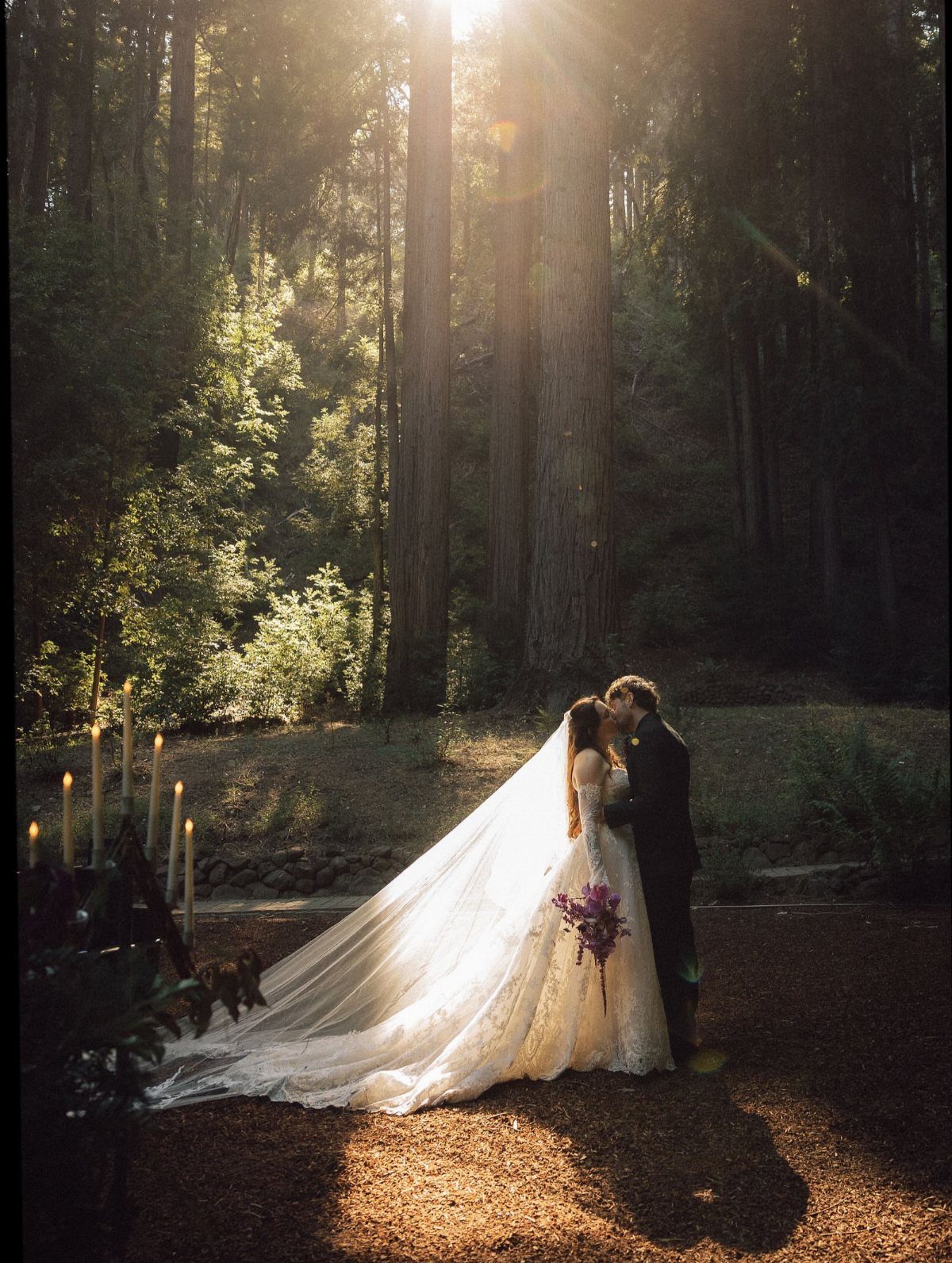
Tall trees do the work of a cathedral here, and a patch of sun through the canopy lights the couple like a spotlight. Go for a clearing where light reaches the ground, since deep shade flattens everything.
A long gown and veil look dramatic in this setting, but check the ground first: roots and damp leaves are hard on hems.
Bring flats for walking in and change shoes for the frames. Scout the spot at the hour you plan to shoot.
Best Times for Outdoor Photos
Golden hour is the 60 minutes before sunset, and it is the slot to protect. The hour after sunrise delivers that same soft light, and you get the location to yourselves before the heat sets in.
Slipping away for a sunset portrait session during the reception costs you just one short stretch of cocktail hour and tends to produce the images couples treasure most.
Blue hour, just after sunset, gives deeper, moodier contrast. Overcast midday also works, since clouds soften the light.
Avoid noon.
Overhead sun carves hard shadows under eyes and noses. If noon can’t be avoided, put the portraits in full shade, which makes the timeline more forgiving.
Weather Preparedness
Plan for weather you did not order. Outdoor weddings can give you perfect light and clear skies, or they can turn cold and wet with everyone under a tent by the time vows start.
Buy or borrow enough umbrellas for the whole wedding party, so portraits can still happen outside. Pack sunscreen and bug spray, and pick shoes that can handle rough ground.
For a winter date, ask your photographer about backup batteries, since cold drains them much faster.
A camera battery that runs all day in summer heat might drain halfway through a winter reception. A rain cover for the camera is also small and cheap, and worth asking about.
Keep a few spare layers or wraps on hand for guests and for you. Cold hands and shivering show in photos.
Location Scouting
Light changes the look of a place completely, so a location that seems plain at 10 a.m. may glow at dusk.
Walk the route from ceremony to portrait spot. Note where the sun sits, where shade falls, and which direction you would face for the best light on your faces.
Look at the background from a few angles. Check for power lines, parked cars, trash bins and crowds that you can’t control.
If you can, bring your photographer along. They will spot compositions you will miss, and you will settle the plan before the day, when there is no time to wander.
Frequently Asked Questions
How do I get golden hour photos if my ceremony ends early?
Slip away from the reception for a short sunset portrait session.
What should I do about rain or cold at an outdoor wedding?
Bring umbrellas, ideally white or clear ones, so portraits can still happen outdoors.
What can I do if I have to take photos at noon?
Put the portraits in full shade. Overhead sun creates hard shadows under the eyes and nose, and shade avoids that and makes the timeline more forgiving.