The ideas here run from flat-lay ring shots before anyone arrives to a sparkler exit that needs off-camera flash, and which ones matter depends on what happens once: details and getting-ready frames sit still for a reshoot, while the kiss and the walk down the aisle happen one time with everyone watching.
Pick by what you can’t stage twice: the ceremony, the entrance, the first dance, and any moment where all your guests are in one place.
1. Bride and Bridesmaids in Matching Robes
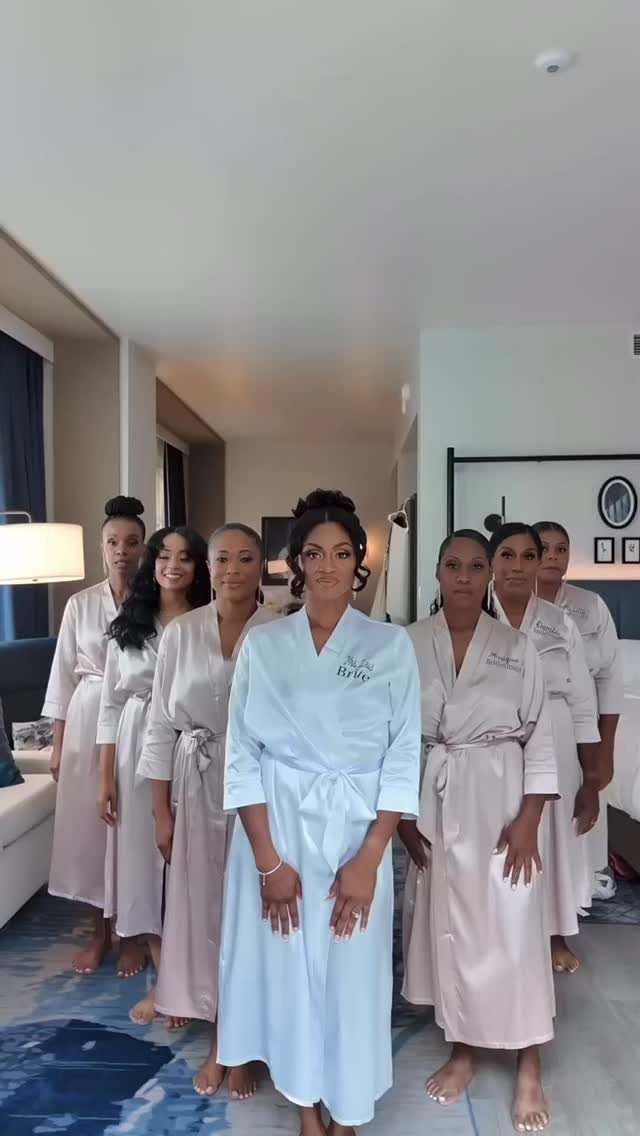
Matching robes make the getting-ready hour look like one scene instead of scattered outfits. Satin photographs well in soft window light, and a single color for the bridesmaids lets the bride’s white stand out.
Order them early, since robes arrive late more often than you’d expect.
Printing "Bride" on hers is a small touch that helps the album read clearly. Take the group shot once hair and makeup finish, while everyone is still relaxed.
2. Groom’s Suit, Tie, and Accessories
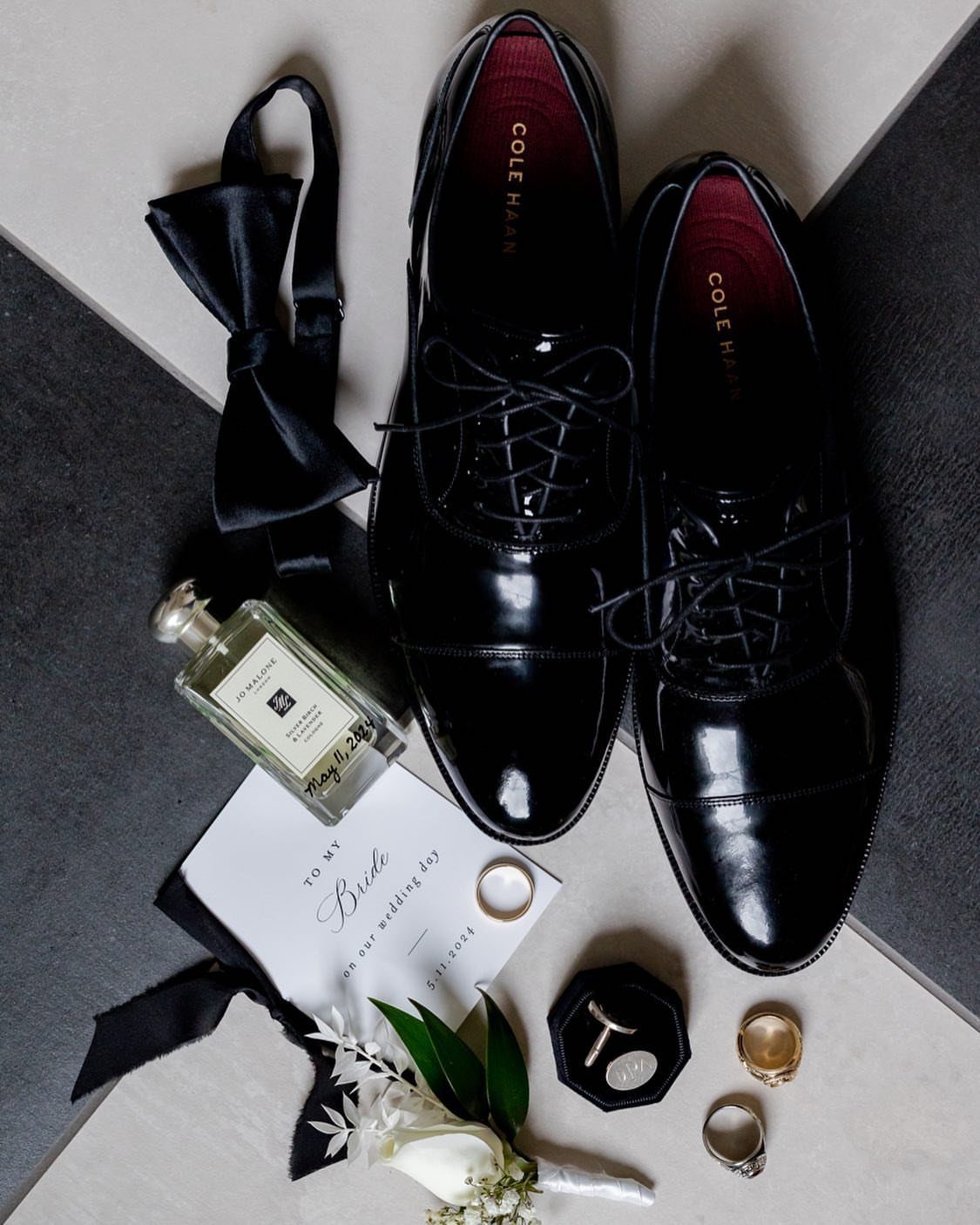
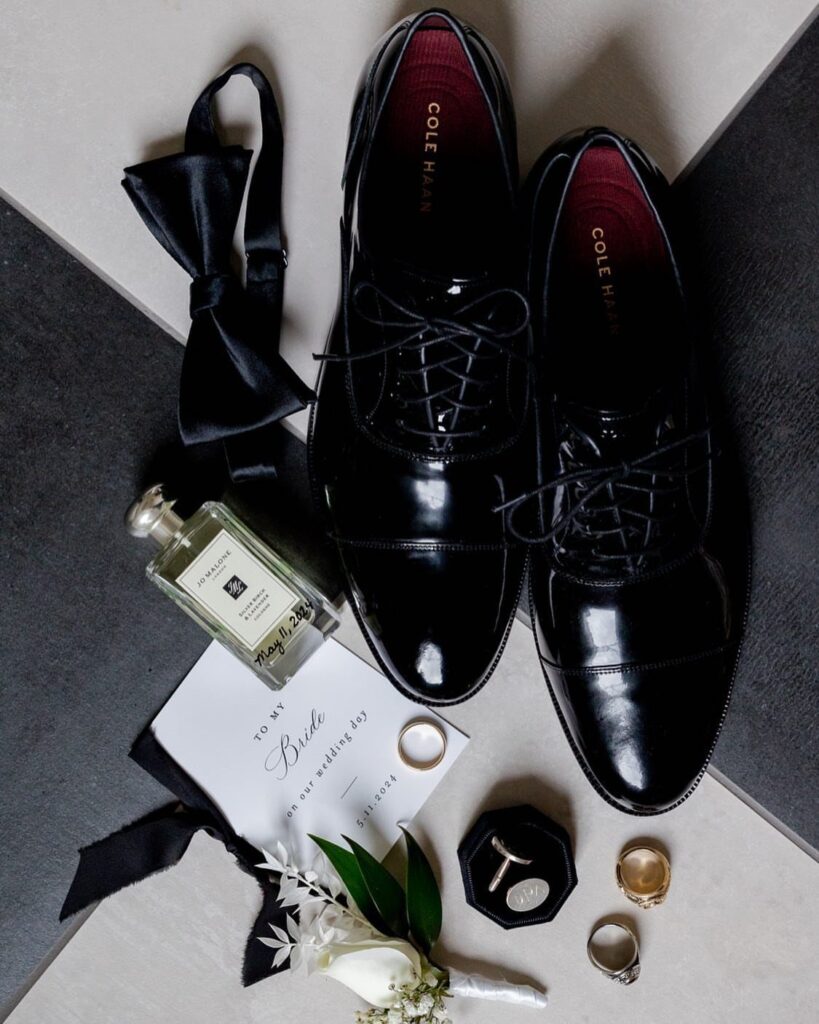
Before the groom’s jacket goes on, a flat lay can gather everything he wears or carries into one frame. Shoes, bow tie, cologne, rings, boutonniere: each one is cheap to photograph and slow to replace if it gets forgotten.
I like the handwritten note to the bride in this one, because it adds something no store-bought detail can.
Set it all on a plain, uncluttered surface near a window, and ask your photographer to shoot it before the morning gets busy.
3. Ceremony Moments
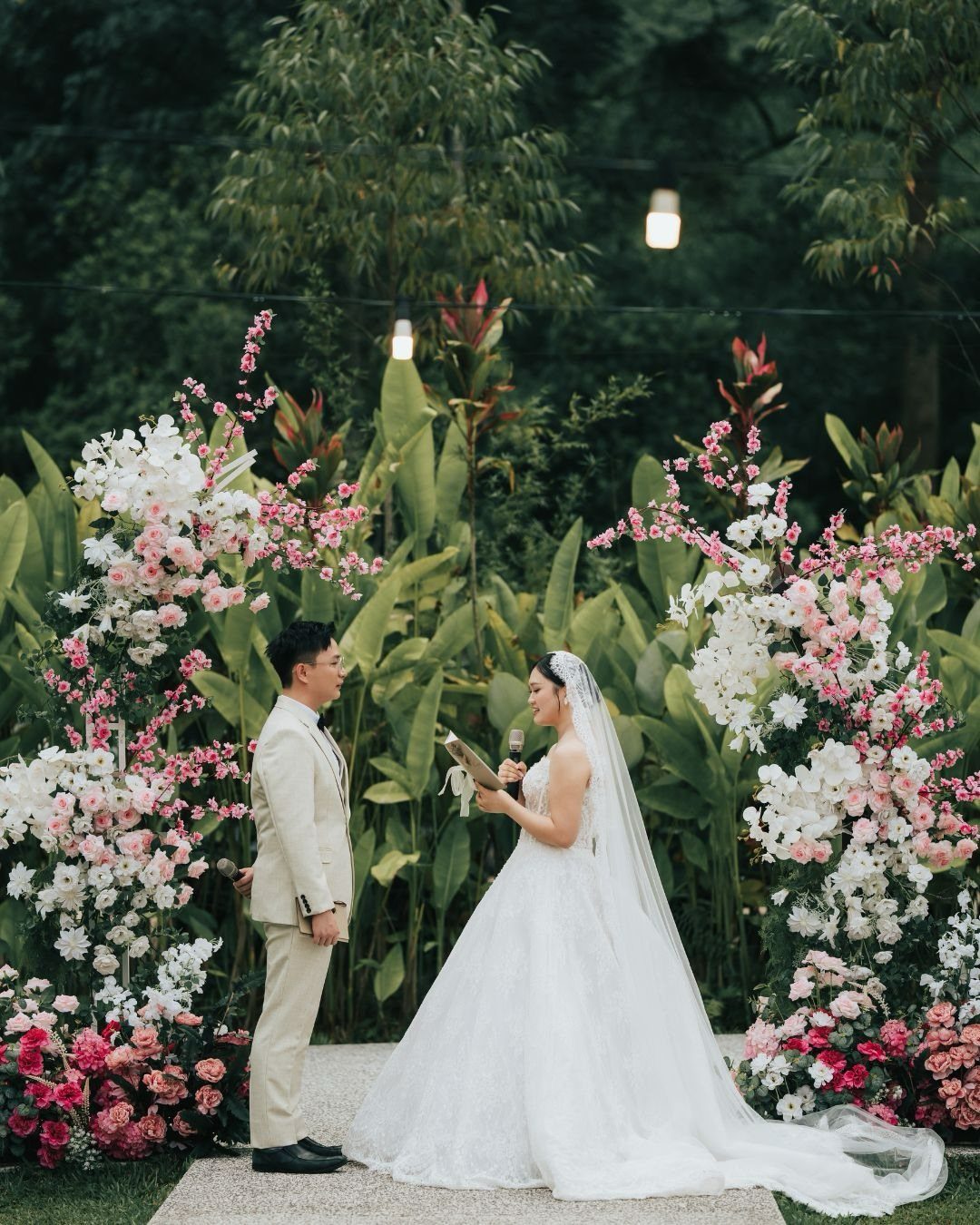
Vows read from a book, a glance between sentences, a laugh at the wrong word: ceremony moments are the unposed frames that fill out an album beyond the formal portraits.
Tell your photographer which moments matter most to you, such as vows, ring exchange or the processional, so they are in position before each starts.
A second shooter can catch the other partner’s face while the first covers the speaker. On a modest budget, ask whether a longer ceremony-only package beats extra hours at the reception.
4. Looking at Each Other
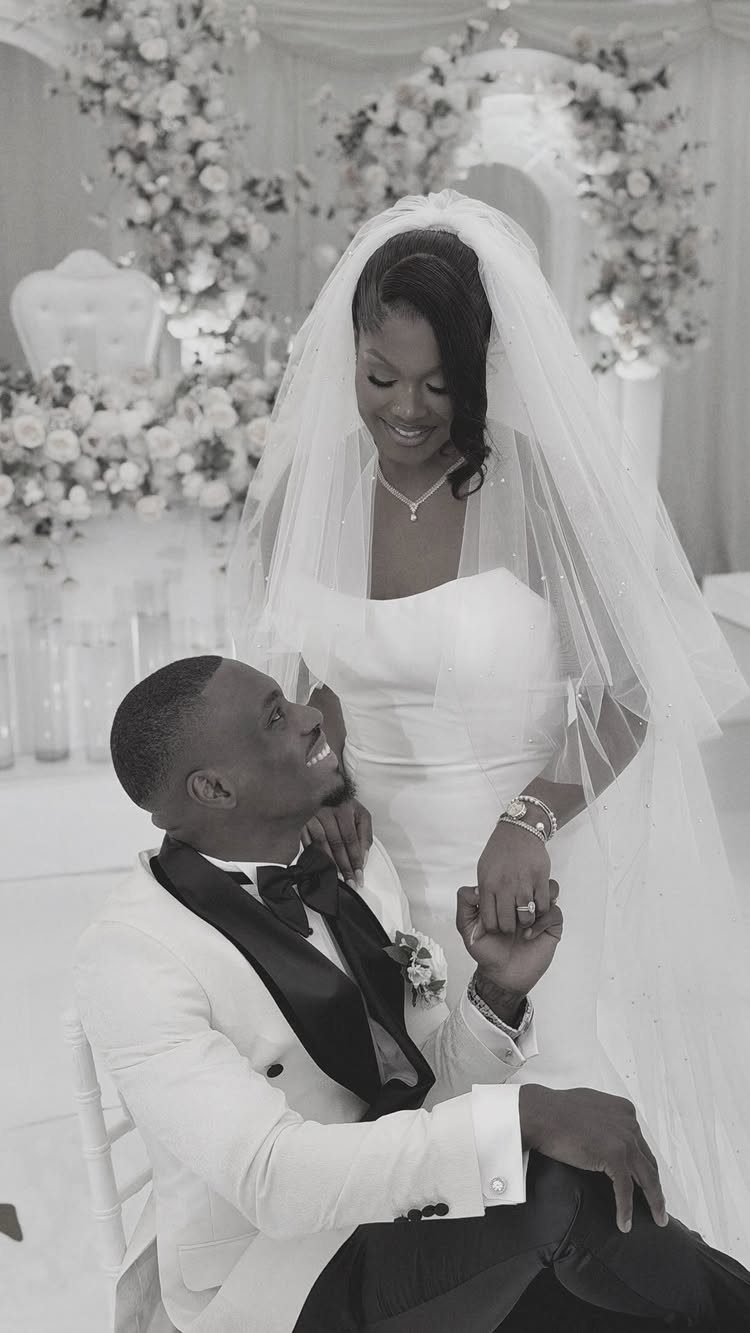
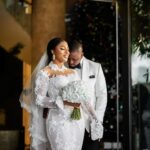
Gazing portraits depend on height difference more than on any pose: when one partner sits and the other stands, the eyes meet naturally without anyone craning.
Black and white suits this well, because it strips color and leaves expression.
Ask your photographer to give you a quiet minute with no direction, since the best frames usually come after the stiffness fades. Veil and gown fall best when the bride has room, so choose a spot with space around you.
5. The Walk Down the Aisle
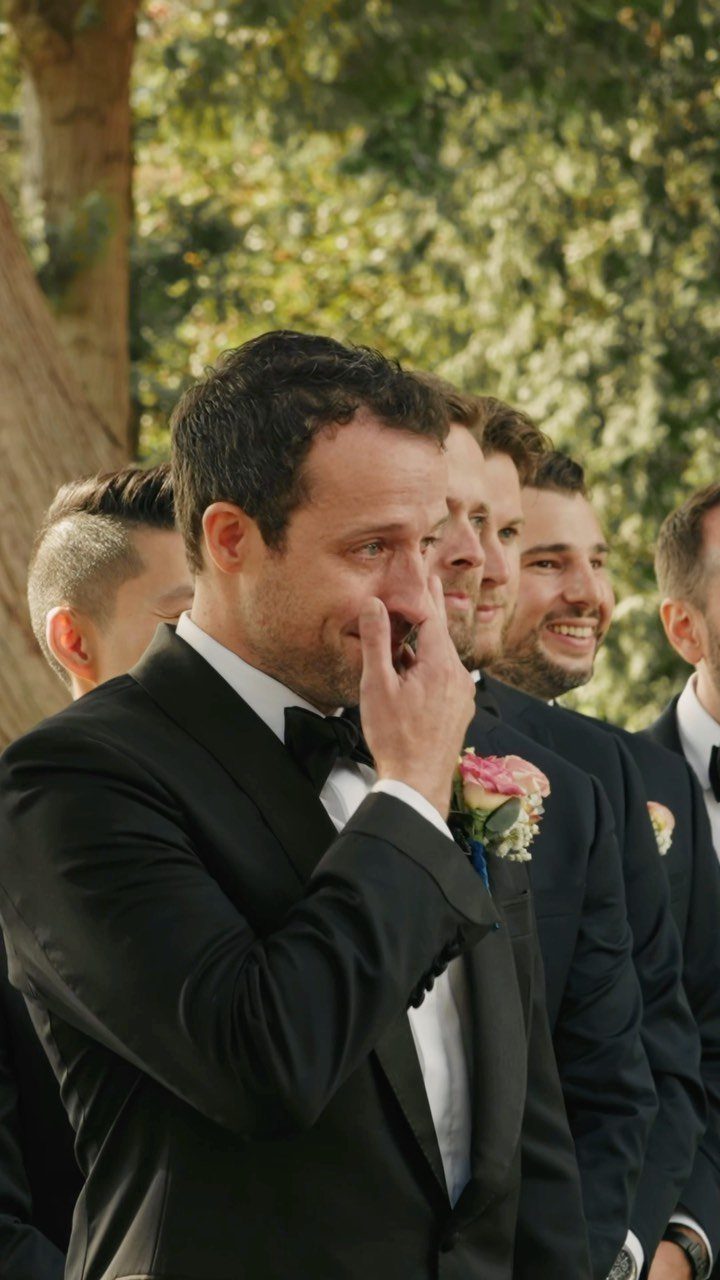
A groom wiping his eye as the bride appears is often the frame couples treasure most, and it only happens if the photographer is watching him instead of her.
Ask for two shooters, or one placed up front with a longer lens aimed at his face.
Groomsmen reacting behind him add warmth to the shot. Don’t coach him to cry; the real moment beats any staged one, and you will see the difference.
6. The First Kiss
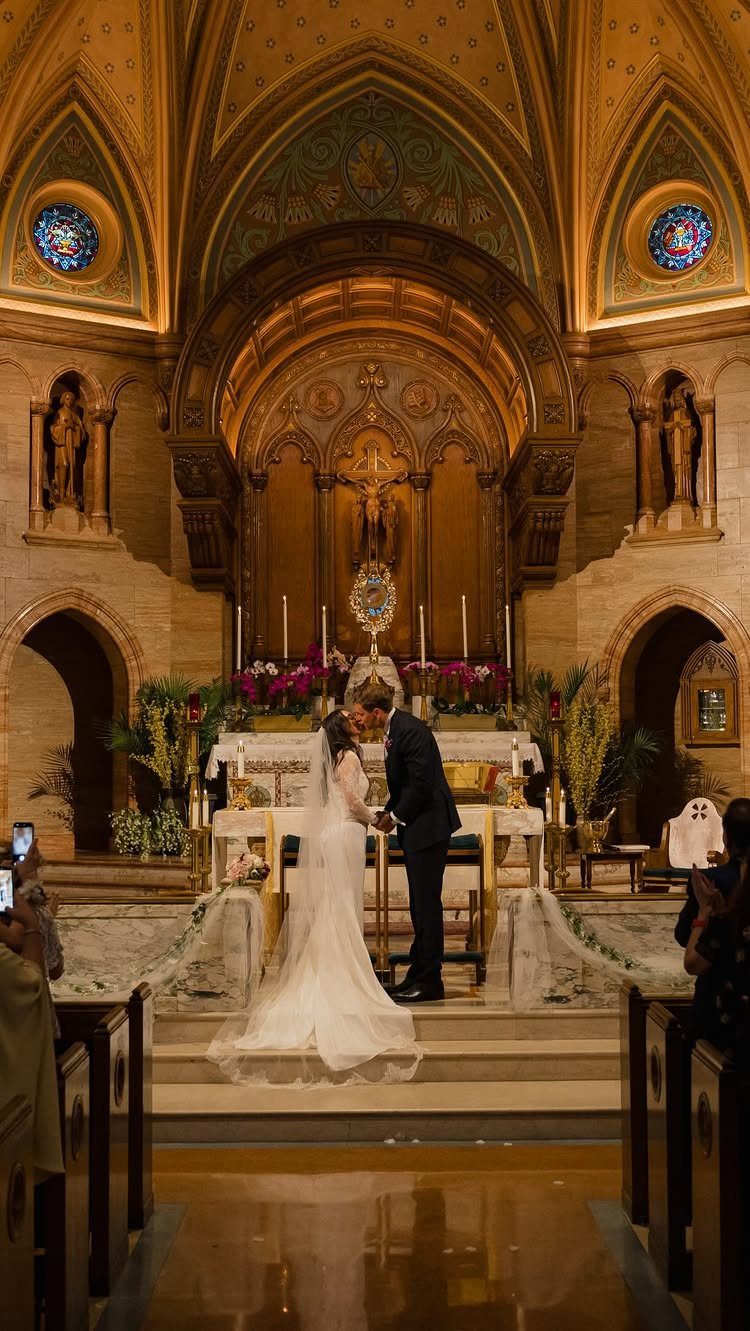
The first kiss lasts a few seconds, so the photographer needs to know it is coming. Talk through the timing in advance: who steps where, and whether you’ll keep it short or let it linger.
Pause a beat before leaning in. That tiny delay gives the camera time to catch it cleanly, and I would rather have one sharp kiss than three rushed ones.
7. The Grand Exit
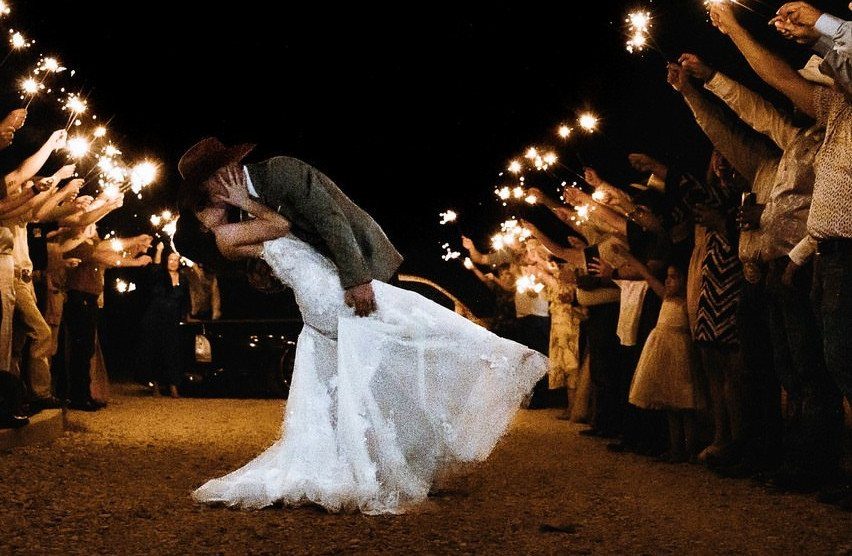
Sparklers make the send-off, and the dip kiss in the middle of the lit-up aisle makes the photo.
Guests need to be lined up and holding unlit sparklers before the couple appears, so assign a friend to pass out lighters and cue everyone at once.
Night shots need a photographer with off-camera flash, so ask about it before booking. If the send-off is the frame you care about most, say so early.
8. Jumping Wedding Party
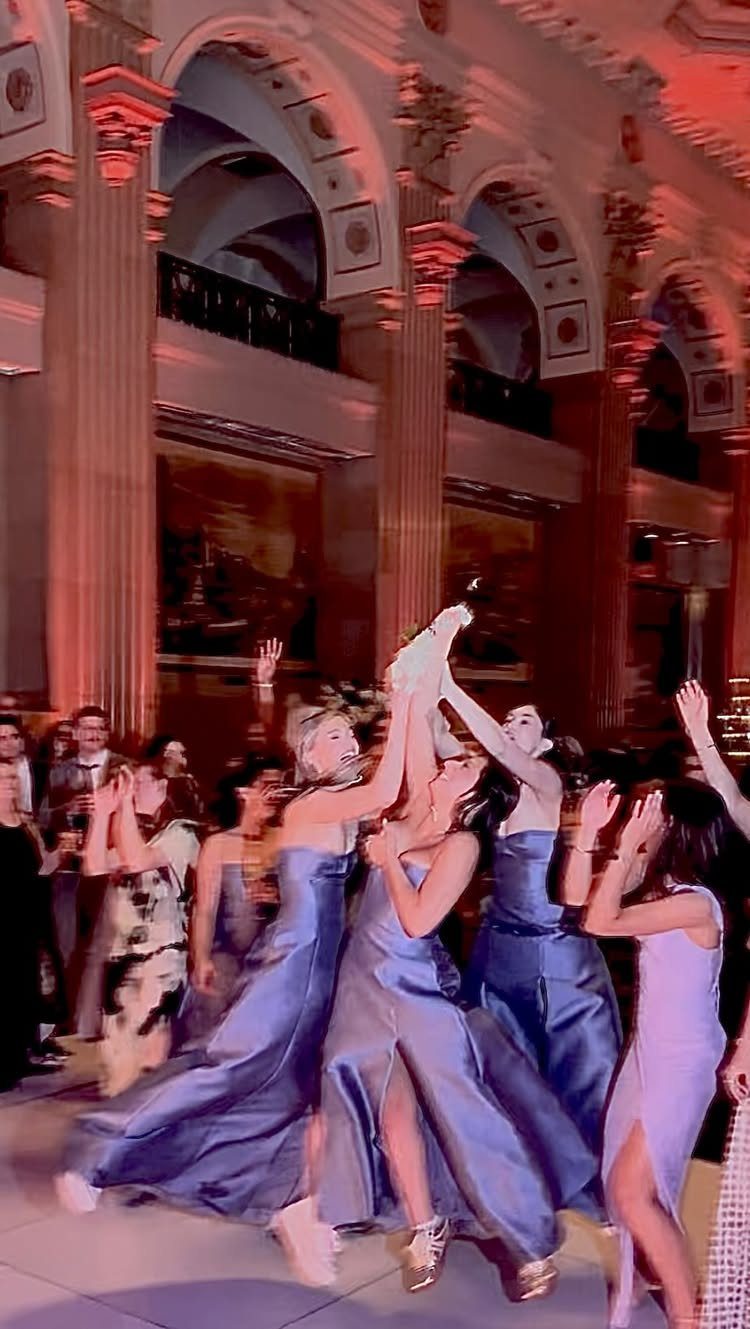
Bridesmaids mid-jump look like pure celebration, and a hall with columns and arches gives the leap a backdrop that matches the drama.
Count down from three so everyone leaves the floor together, and run it at least 3 times, because one jump will always have a stray foot.
Long gowns hide the legs, so hold the skirt slightly up. Ask your photographer for a fast shutter speed, and save this for after the ceremony, when everyone is loose.
9. Under the Veil
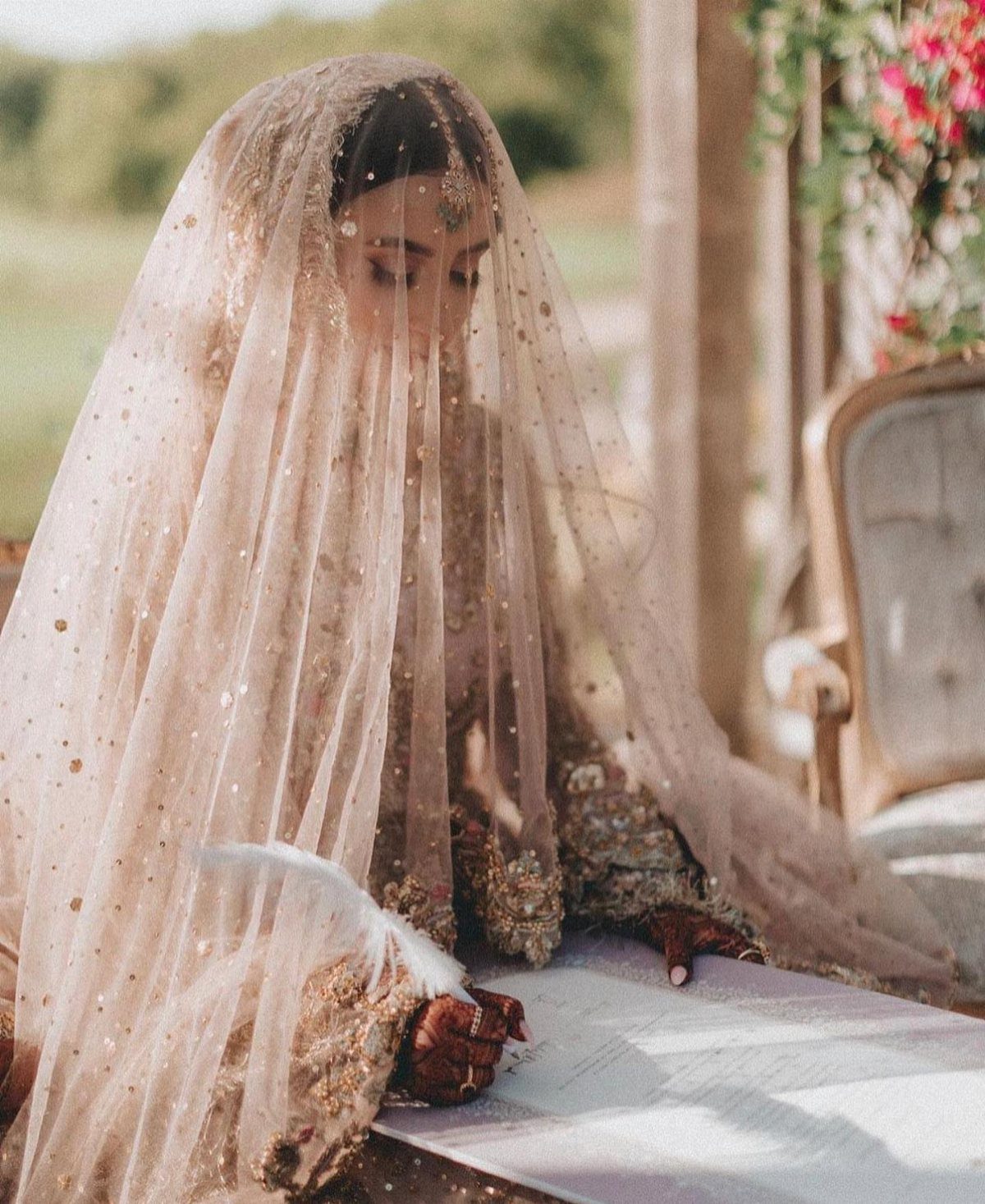
Signing the marriage license is a quiet moment that rarely gets photographed well, and a bride writing with a quill under her veil makes it feel older and more personal.
Henna on the hands shows up best in close framing, so ask for a tight shot of pen and fingers.
I would pick a plain quill over a fancy one; the detail is in the hands. Choose a spot outdoors in open shade, where the veil catches light without glare.
10. The Cake Cutting
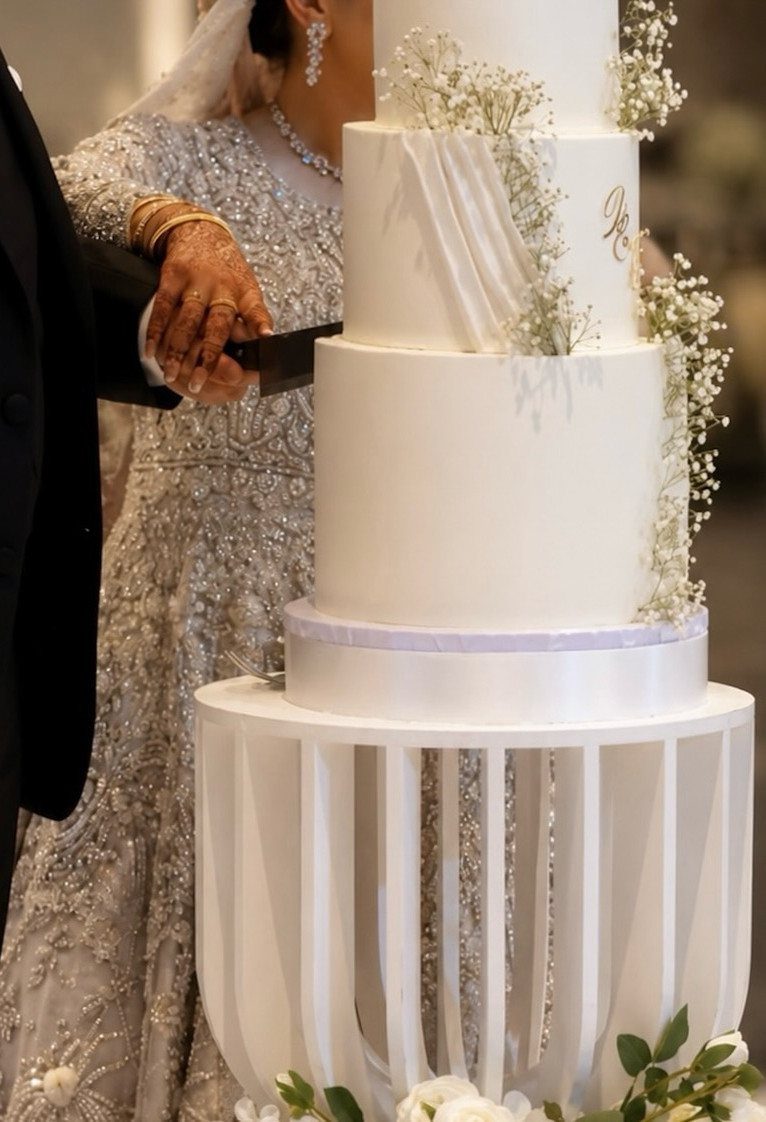
Cutting the cake is over in under a minute, so tell your photographer when it is happening. A tiered white cake with baby’s breath photographs cleanly and costs less in decoration than sculpted sugar flowers.
Hold the knife together and cut into the bottom tier.
Ask for a close angle on your hands and a wider one on the whole cake. Keep the cut small and neat; the feeding bite can follow.
11. The First Dance
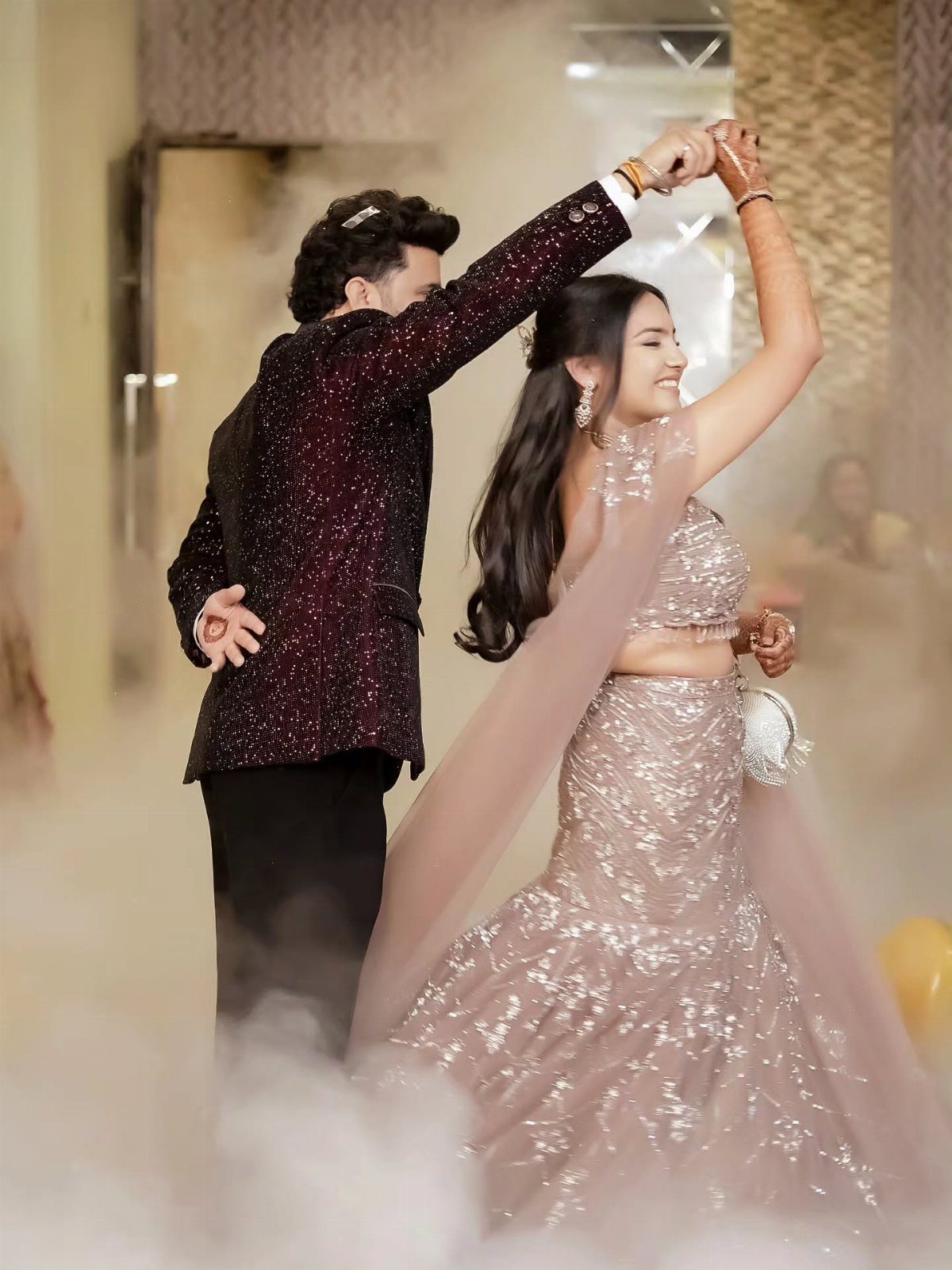
A fog machine turns a first dance into something cinematic, and sequins or sparkle on both partners catch every light in the room. Ask the venue before you rent one, because fog can set off smoke detectors in some spaces.
Pick a slow song so the fog settles around your feet instead of drifting off.
12. Heartfelt Speeches
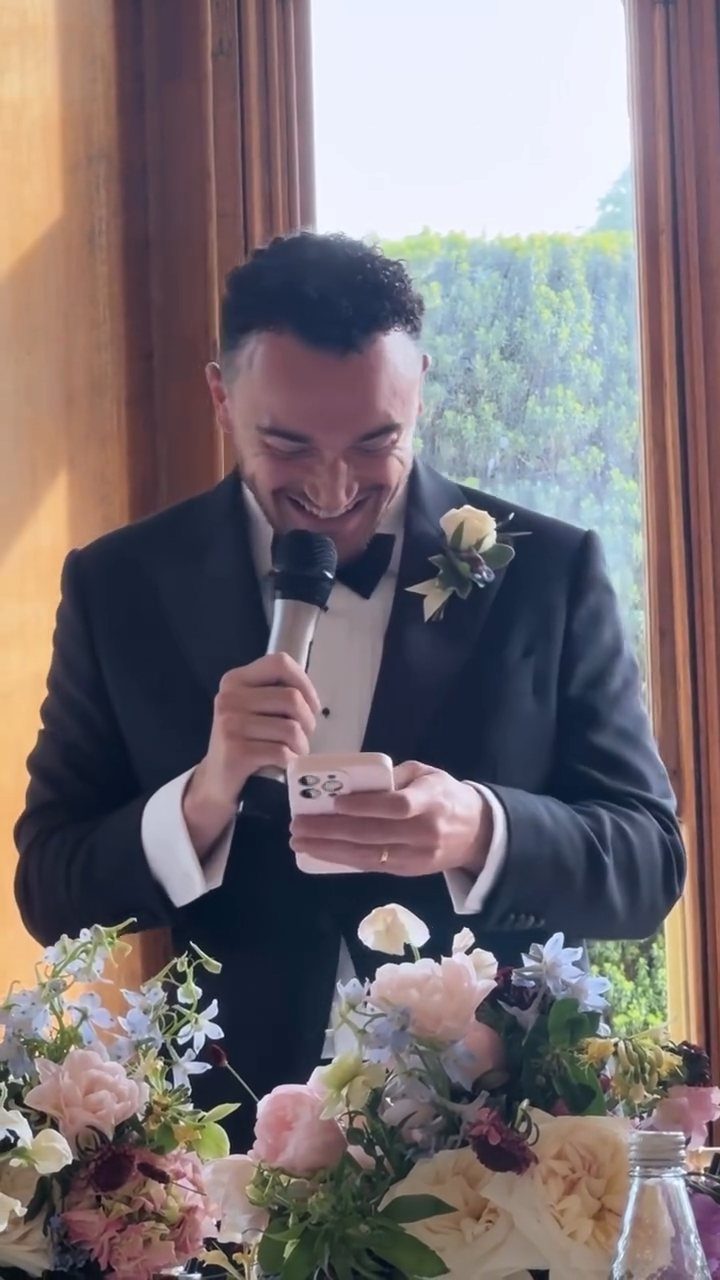
A speech read from a phone is perfectly fine, and the photo still lands if the speaker has a microphone and a clean spot to stand in. Tell your photographer who is speaking and in what order.
Ask them to catch the listeners too, since the couple’s reaction often beats the speaker’s face. Shorter toasts photograph better because people stay focused and smiling.
13. Traditional Group Photos
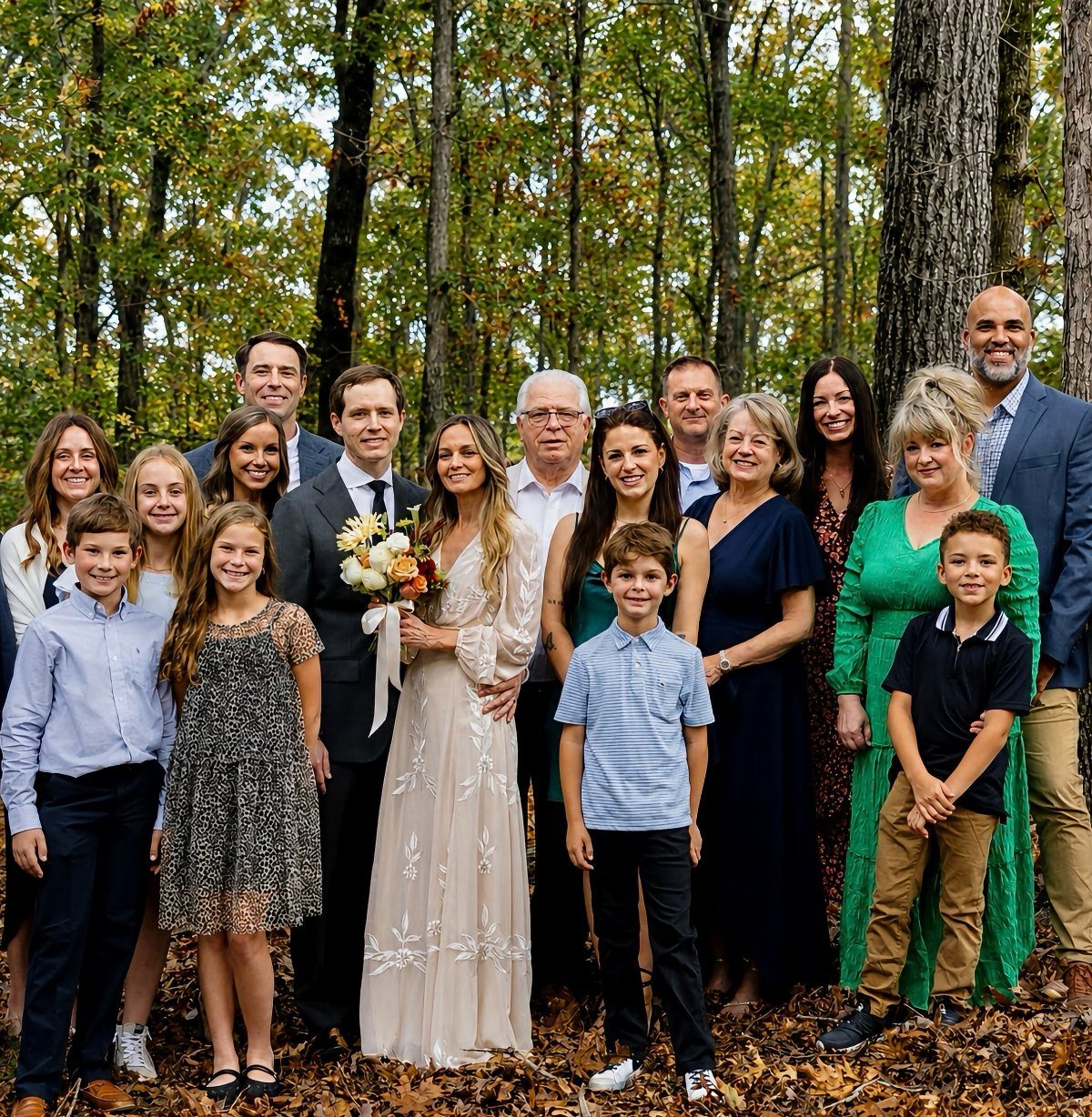
Large family groups with children in them need a designated herder, ideally a relative who knows everyone by name and can round up stragglers while the photographer frames the shot.
Give your photographer a written list of the groupings you want, and name one relative to call people forward so nobody wanders off.
Put the youngest kids in front and the tallest guests at the back. Shoot a few frames and stop; patience runs out fast once the little ones get restless.
14. Laughing Wedding Photo
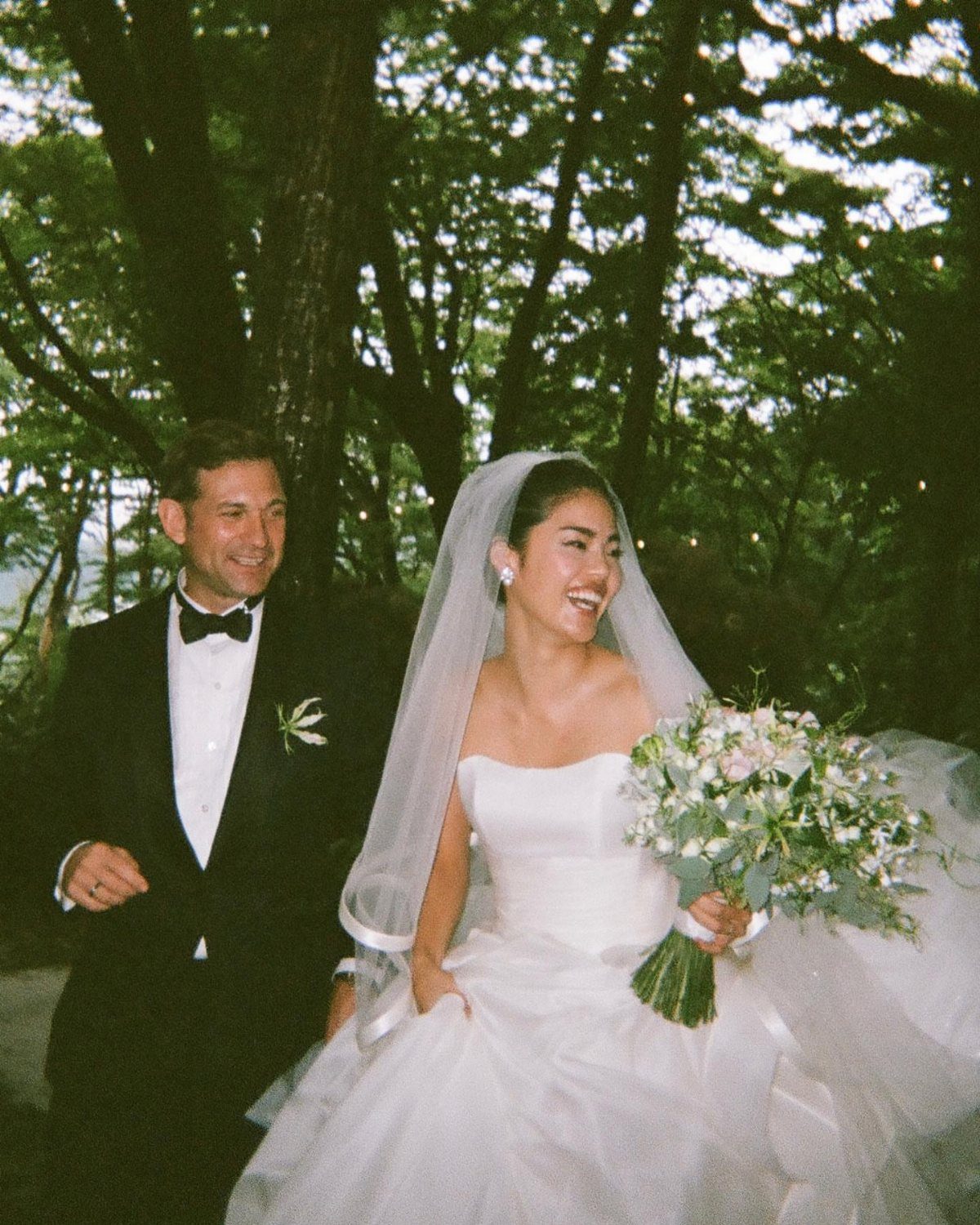
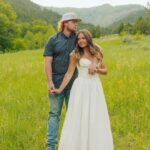
Laughter is hard to order up, and a couple told to smile usually freezes. Walk slowly and talk to each other instead, maybe about something that already makes you both laugh.
Green trees behind you keep the focus on faces, so a leafy path works well. I would ask your photographer to keep shooting between the jokes, since the frame you want often comes just after the punch line.
15. Reception Entrance
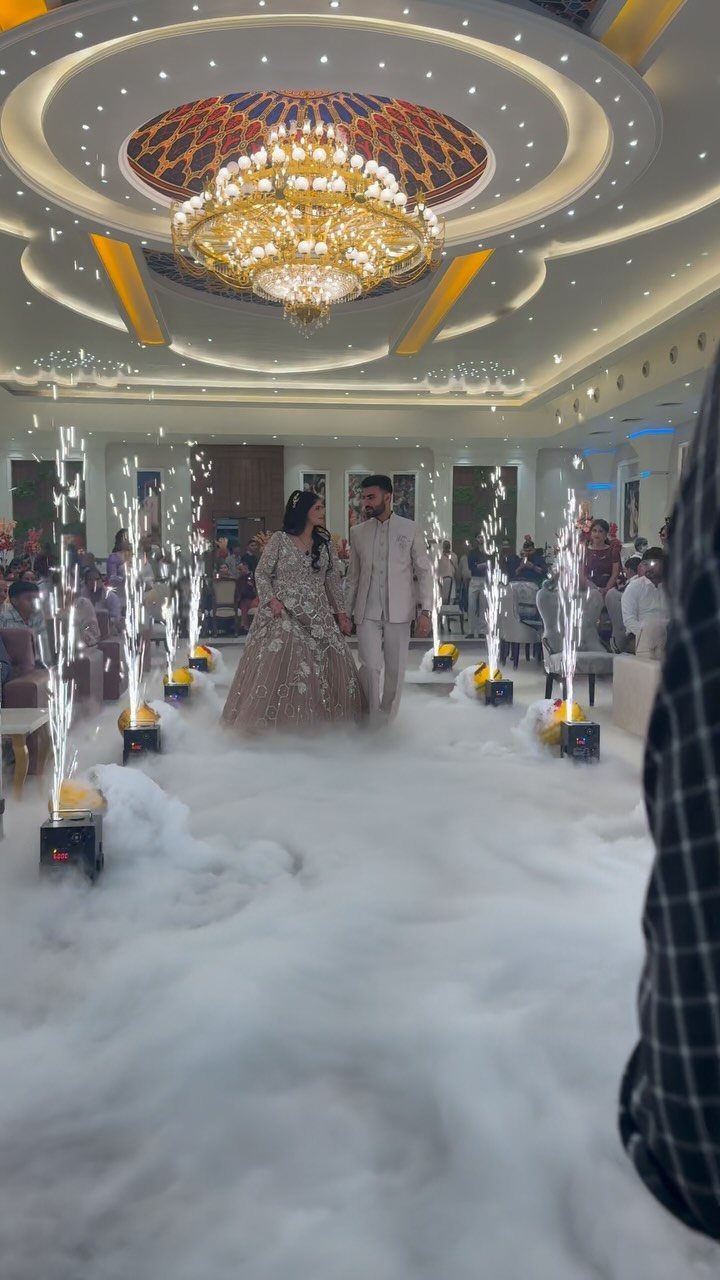
A reception entrance with fog and sparklers looks grand, but it needs planning before anyone walks in. Ask the venue whether sparklers and a fog machine are allowed indoors, because both can trip alarms or break rules.
Tell the DJ when to cue your music, and have the photographer stand at the far end of the room.
16. Tables and Centerpieces
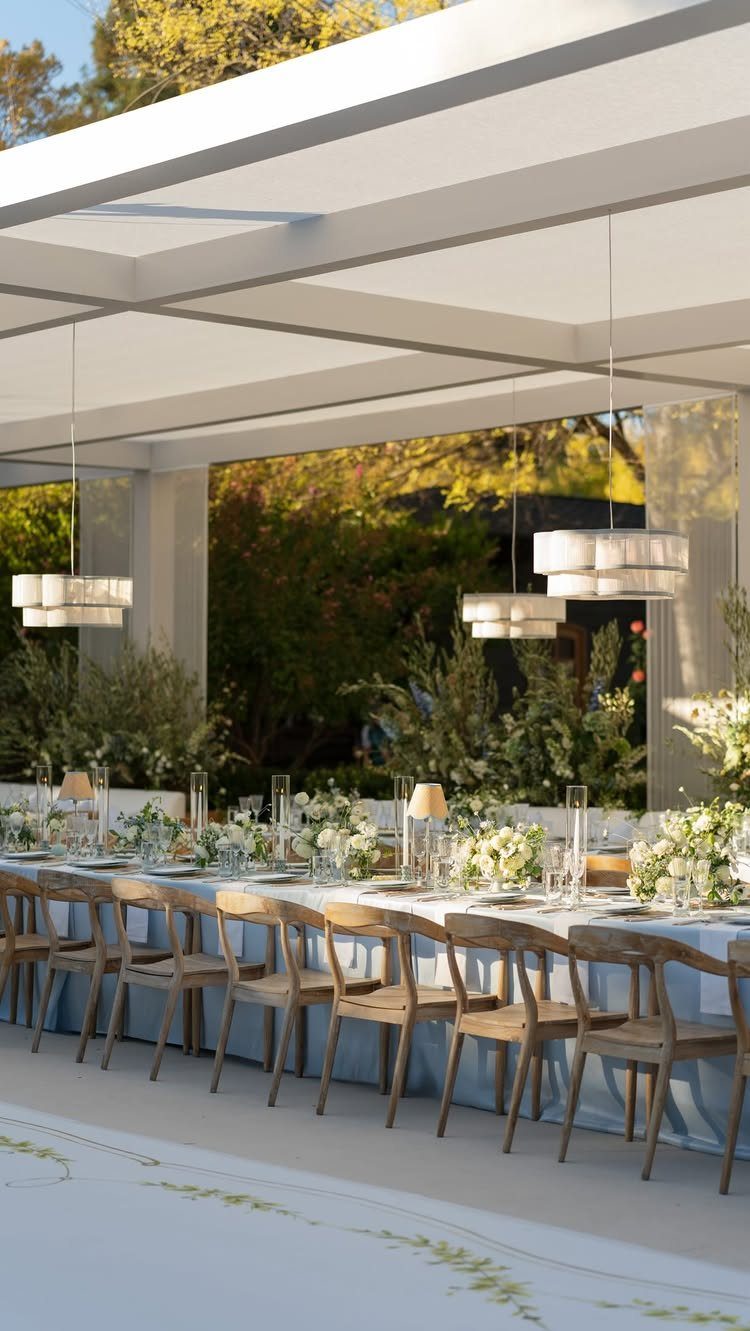
Blue linens with white flowers and plain wooden chairs make a calm, cohesive table, and they keep the decor cost low because only 2 colors do the work.
Book a few minutes with the long table before guests arrive, while the place settings are untouched and the candles are freshly lit.
Low arrangements work better than tall ones, since people can still see each other across the table. If budget is tight, I would spend on the flowers and let the chairs stay simple.
17. Bride’s Dress Lace and Beading
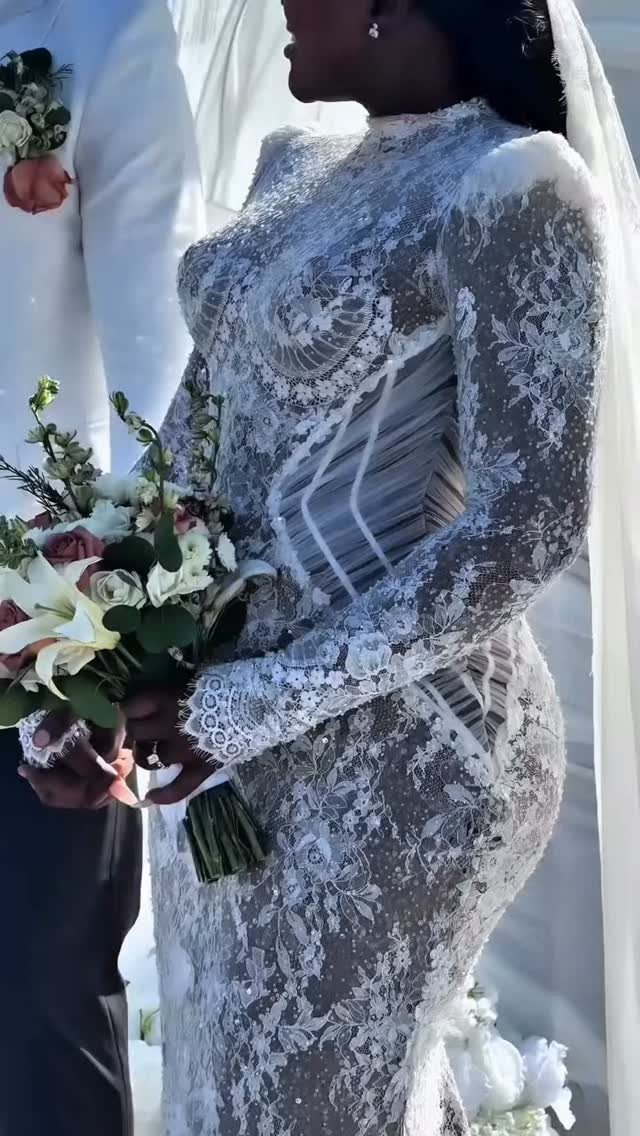
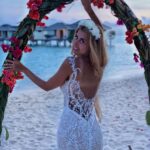
Lace and beading are the details that disappear in a full-length shot, so ask for a tight profile frame while the bride holds her bouquet. Have her stand still and turn slightly toward the light.
Add this to your shot list by name, since photographers often skip it when the schedule gets tight. Take it before the ceremony, while the dress is still pristine.
18. Wedding Rings on a Decorative Surface
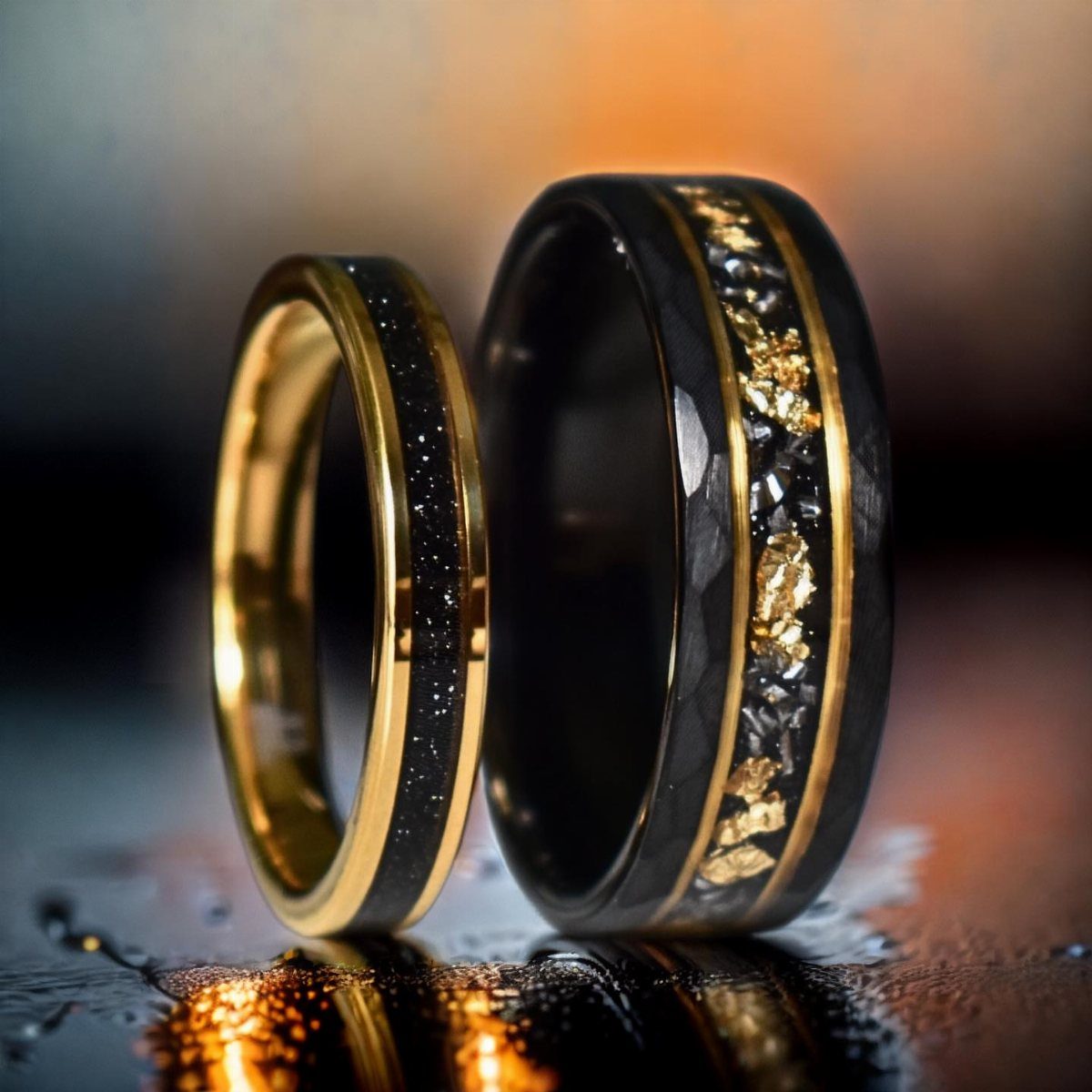
A dark, wet surface turns two black and gold bands into something moody, because the reflection doubles each ring and the gold stands out against the shadow.
Bring a small tray and a spray bottle, and ask your photographer to shoot a macro frame with the thinner band beside the thicker one.
Keep the rings clean and the background simple. Hand them over early, before the morning gets busy.
19. Close-ups of Bouquets and Decor Elements
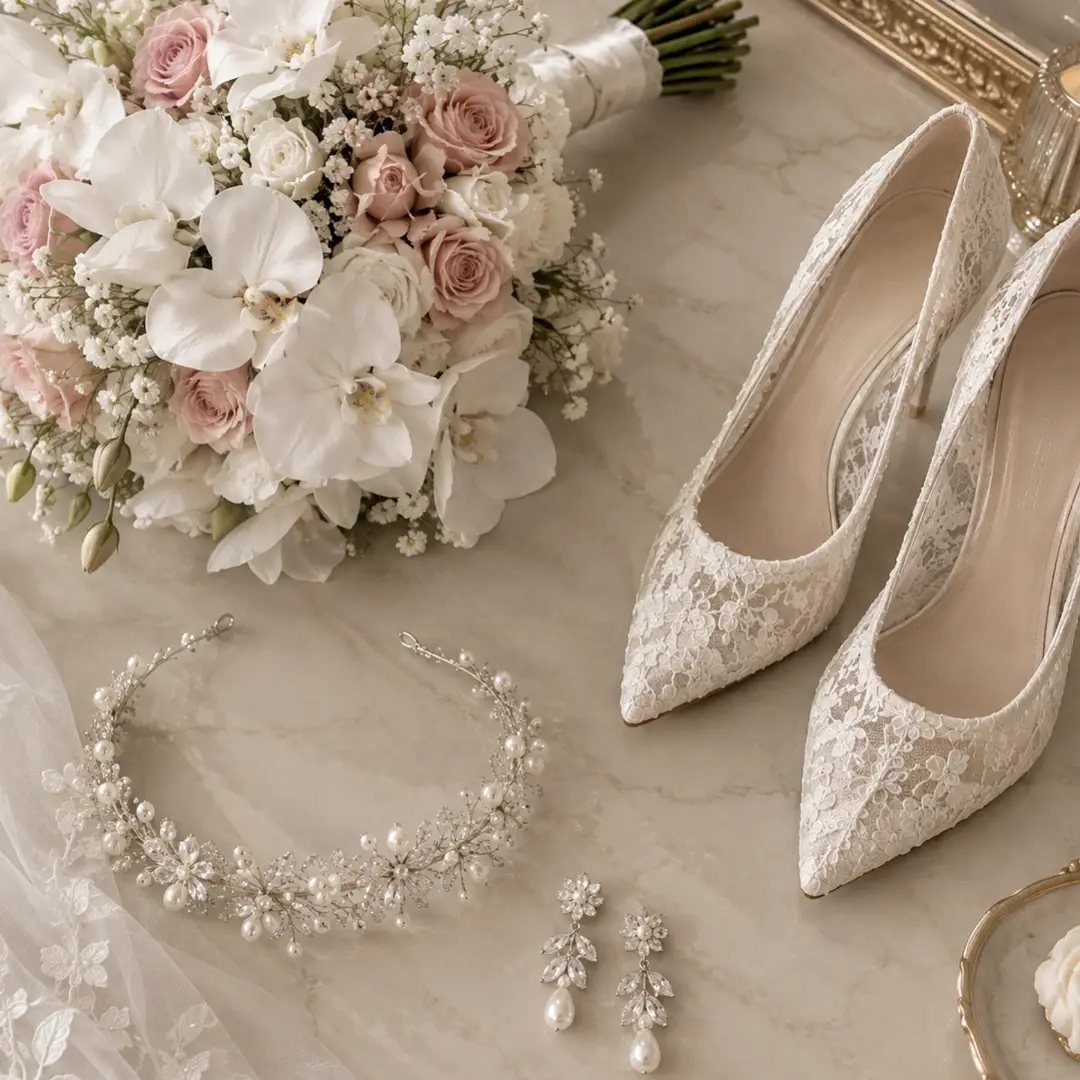
A flat lay of bouquet, lace heels, tiara and earrings on pale marble keeps the bride’s whole look in one frame, and the cool stone lets the white and pink roses read clearly.
Gather everything before the photographer arrives, so nothing is hunted for while the light is good.
Lay the bouquet down last, so the petals stay fresh. Wipe the marble clean of dust and fingerprints; jewelry shows every smudge.
If you don’t have a marble table, a white tray or a large piece of pale stone tile gives a similar backdrop for far less. Ask for this before the dress goes on.
Tips for Wedding Photography
Meet your photographer before the wedding day and walk through the schedule together.
Cover when hair and makeup people arrive, what the groomsmen have planned, and how much time sits between the ceremony and the reception. Those gaps decide how many portraits are realistic.
A written shot list keeps the must-haves from slipping. Share it ahead of time and check off the few shots that matter most to you, rather than listing everything.
Photography also covers more than the two of you. Getting ready, the wedding party, family, friends, and any children or pets all make the album fuller, so say which of those you care about.
Preparing for Wedding Photos
You can wing it and still get good photos, but you’re paying real money for them, so a little rehearsal helps.
An engagement shoot is the easiest way to do it. An engagement session pays off twice: you end up with photos, and your photographer learns how you move together and which side of your face works best before the wedding.
No engagement shoot? A friend with a phone camera is enough for home practice; 10 minutes of trying poses in the living room shows you which ones feel natural.
If the camera makes you stiff, have your photographer begin with the rings, shoes and pocket squares, since those shots warm you up gently.
Shooting details first means you get used to someone circling you with a lens well before your face is the subject.
Above all, hire someone you feel at ease with from the first conversation. Stiffness around your photographer shows up in the pictures, so pick someone you actually relax around; a stranger’s lens makes you look like a stranger.
Share any poses you like beforehand, too. Give yourselves a small task, like walking, whispering something or fixing a lapel, because movement with a purpose looks far better than standing still on a mark.
Creating a Shot List
Build the list around the moments most weddings share: the first kiss, the ring exchange, and family portraits.
Add anything specific to your day, and skip whatever doesn’t apply to you. Nobody is grading it.
Photographers who see your shot list in advance will either plan for those specific wedding ceremony shots or tell you plainly what’s possible.
Keep the list short enough to leave room for candids. Write down the 5–8 shots you can’t live without, hand the list over, and then let the photographer work, because the best frames are rarely the ones you planned.