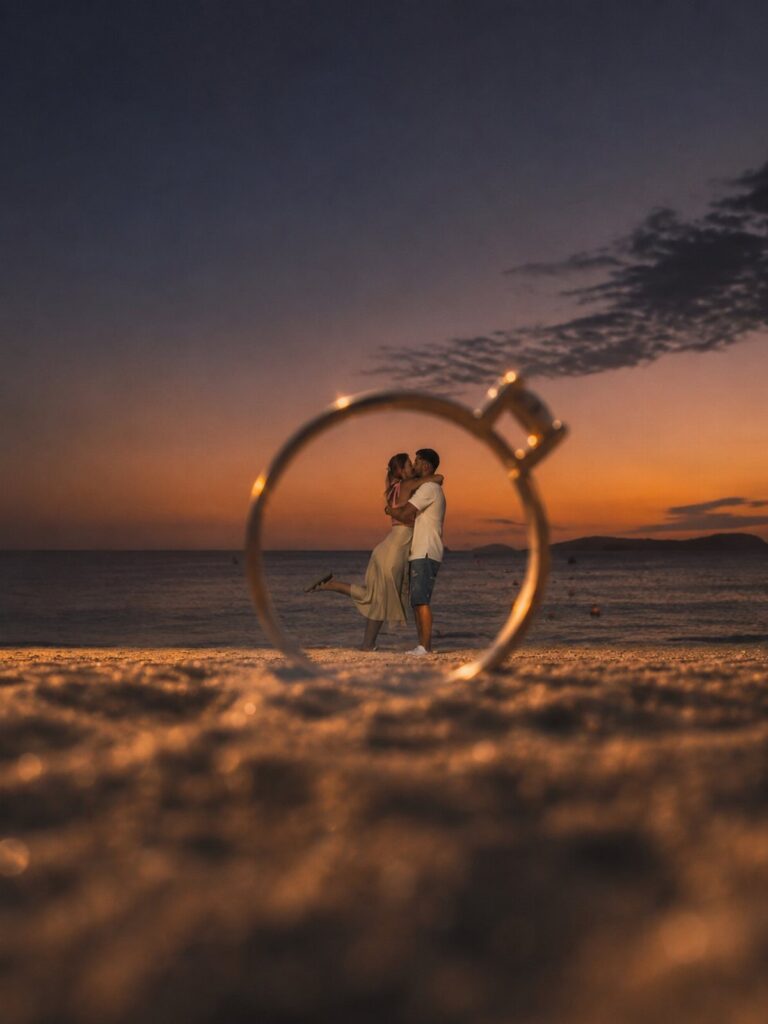
The ideas run from nothing-but-sand poses like sitting together on the sand to ones that need gear or timing, such as a beach picnic, a slower shutter for motion blur while dancing, or a tide chart for the tide pools.
Your comfort in front of a camera decides which one fits: if you freeze, pick a pose with something for your hands to do, like walking the waterline or a small beach picnic, and if you’re at ease, the dip kiss or the cliff overlook gives you more to work with.
Light and tide shape every one of them, and golden hour or sunrise gives the widest choice.
1. Tide Pools
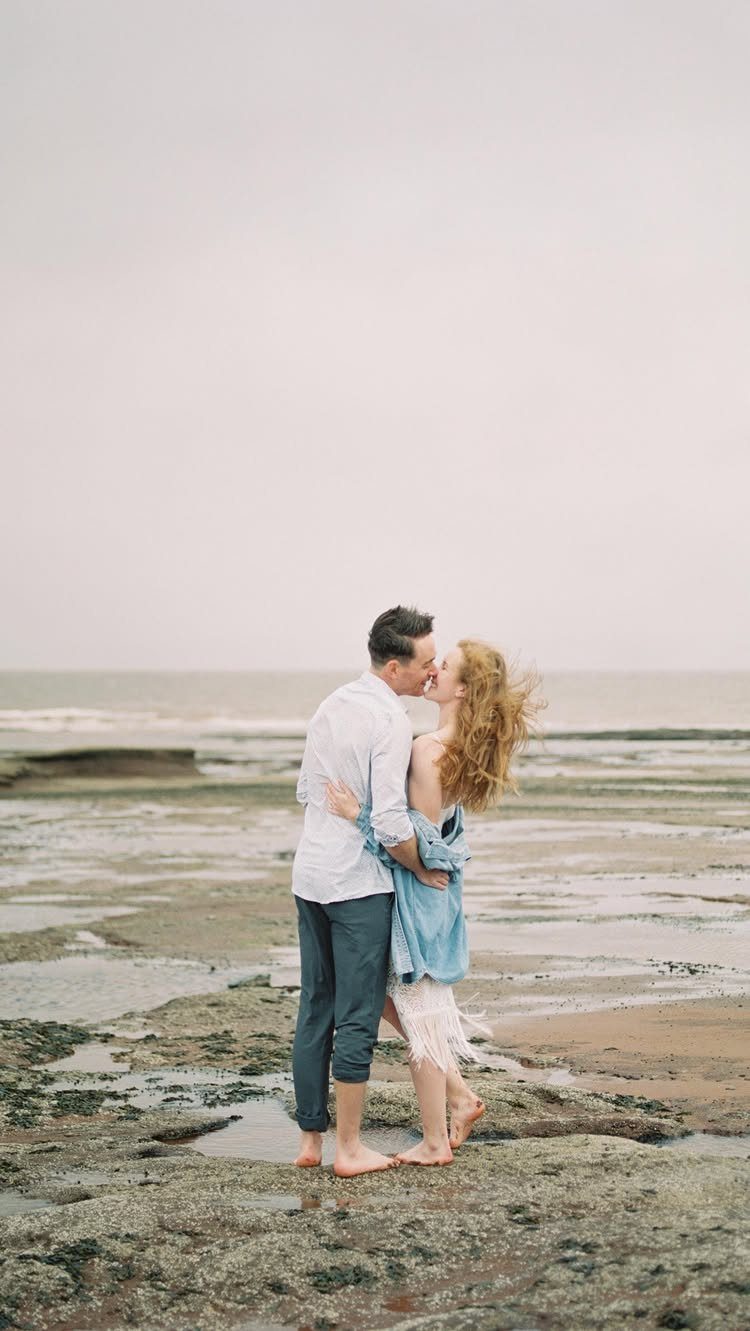
Low tide is what makes this one work, since it exposes the tide pools and the extra sand around them. Check a tide chart before you pick your day, and plan to arrive while the water is still pulling back.
Rocky ground is slick, so wear shoes you can kick off, or go barefoot and step slowly. Standing in a shallow pool gives you a reflection and a spot to kiss without moving much.
2. Walking Along the Waterline
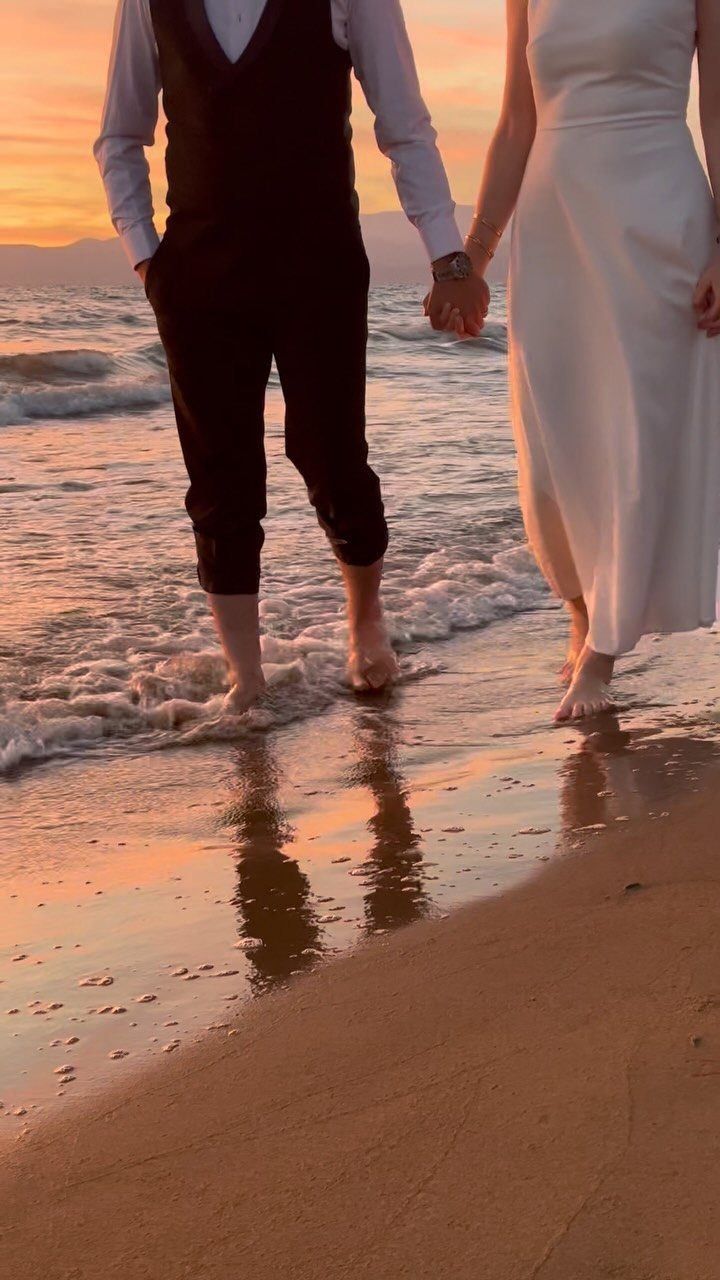
Hand in hand, barefoot, right where the waves slide over the sand: this is the easiest pose on the list to get right. Walking gives you something to do besides stare at the camera, and that settles nerves fast.
I’d skip any plan to keep your shoes in hand.
Leave them on the blanket or with your photographer so both hands stay free. Walk slowly, and let a wave reach your ankles.
3. Sunset Silhouette

A silhouette lives or dies on placement. Stand face to face with the setting sun right between you, and the outline of both profiles reads clearly while the light flares into a starburst.
Because faces go dark, this suits couples who feel awkward about expression. Keep your noses close, a small gap between your faces, and hold still for a few seconds as the sun drops.
4. Forehead Touch in the Breeze
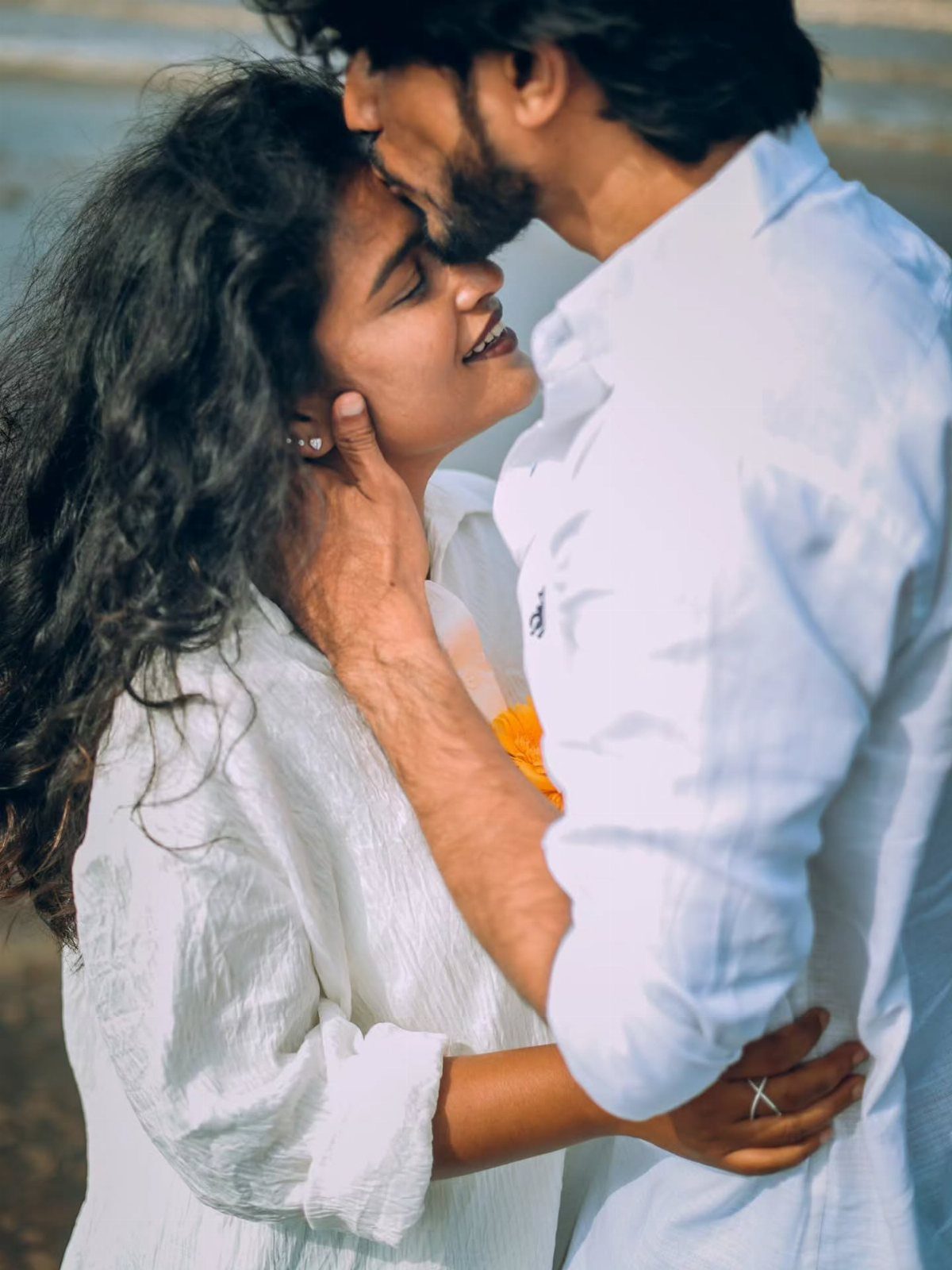
Wind does half the work here. Let it move her hair and the fabric of her dress, and a simple forehead touch picks up motion you could never stage on purpose.
Close your eyes, stay close, and breathe out slowly.
Stiff posing shows immediately in a pose this quiet. I’d choose a breezy spot over a sheltered one for this, even if a few strands end up across your faces.
5. Beach Picnic
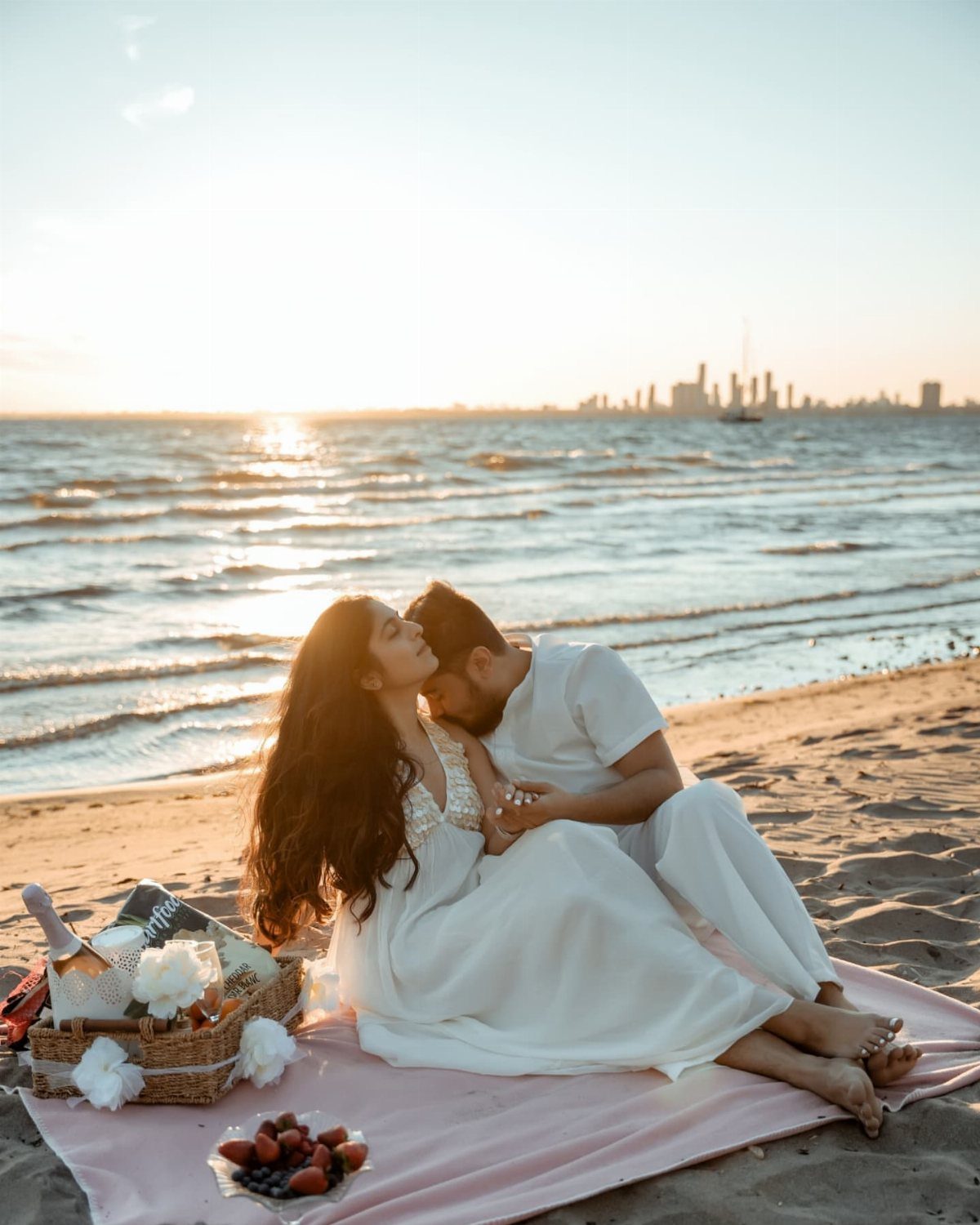
A blanket, a basket, some fruit and a bottle of sparkling wine do double duty at a beach picnic: they fill the frame, and they give your hands something to do so you stop stiffening up the moment the shutter clicks.
Berries in a bowl, a pour of champagne, a clink: each one is a small candid moment.
A pink blanket adds a soft color against sand, though any solid shade works.
Keep the spread small so the two of you stay the focus. Bring a cloth to wipe sticky hands before the cuddling shots.
6. Splash Fight
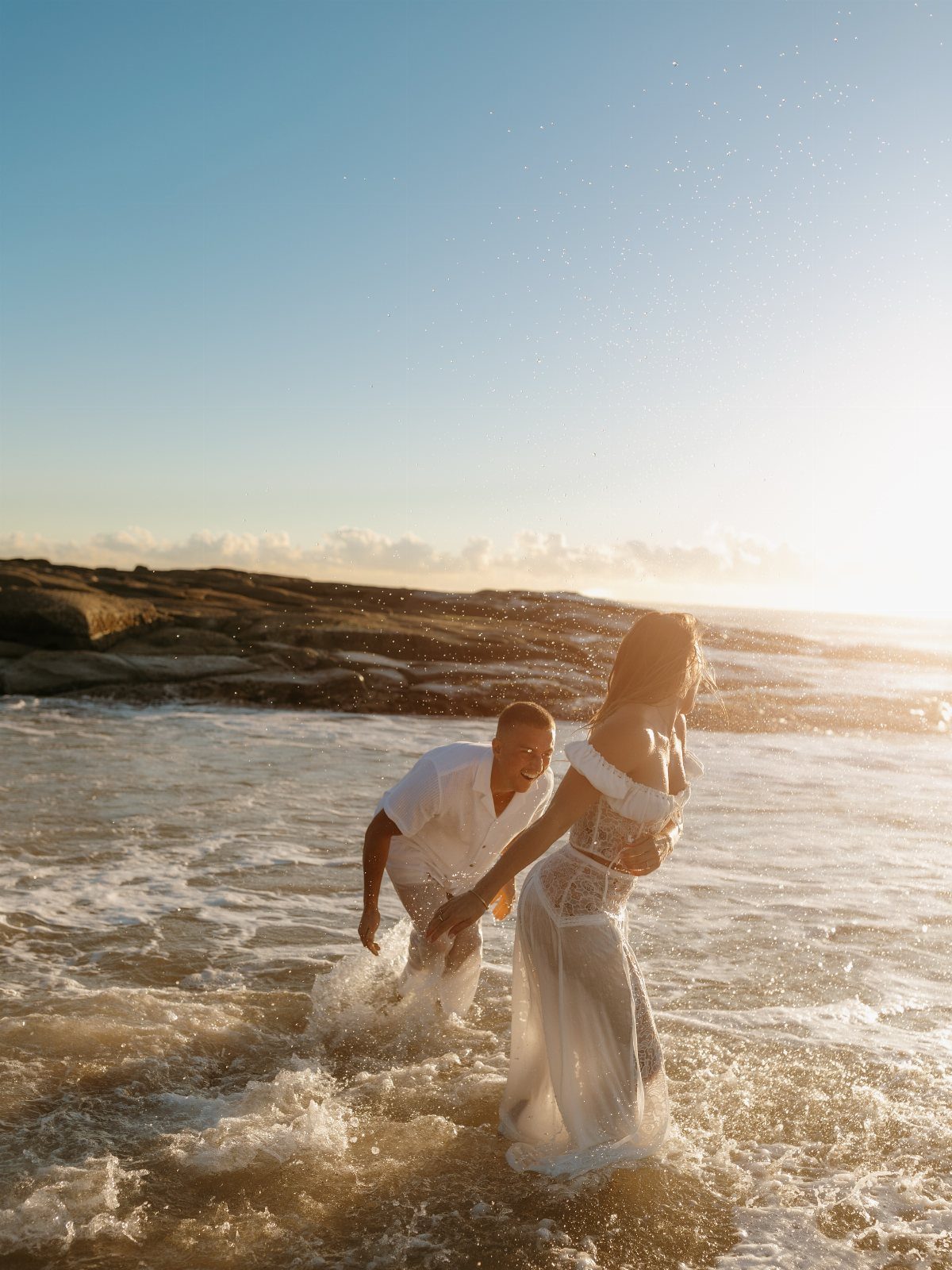
Splashing each other in the waves gets you real laughter, and that is the one thing a posed shot rarely delivers. Kick or scoop water toward your partner and let the reaction happen.
Wear something you don’t mind soaking, and keep the splashes low and away from the camera. Do it near the end of the session, so wet hair and clothes don’t spoil the earlier, polished frames.
7. Writing in the Sand
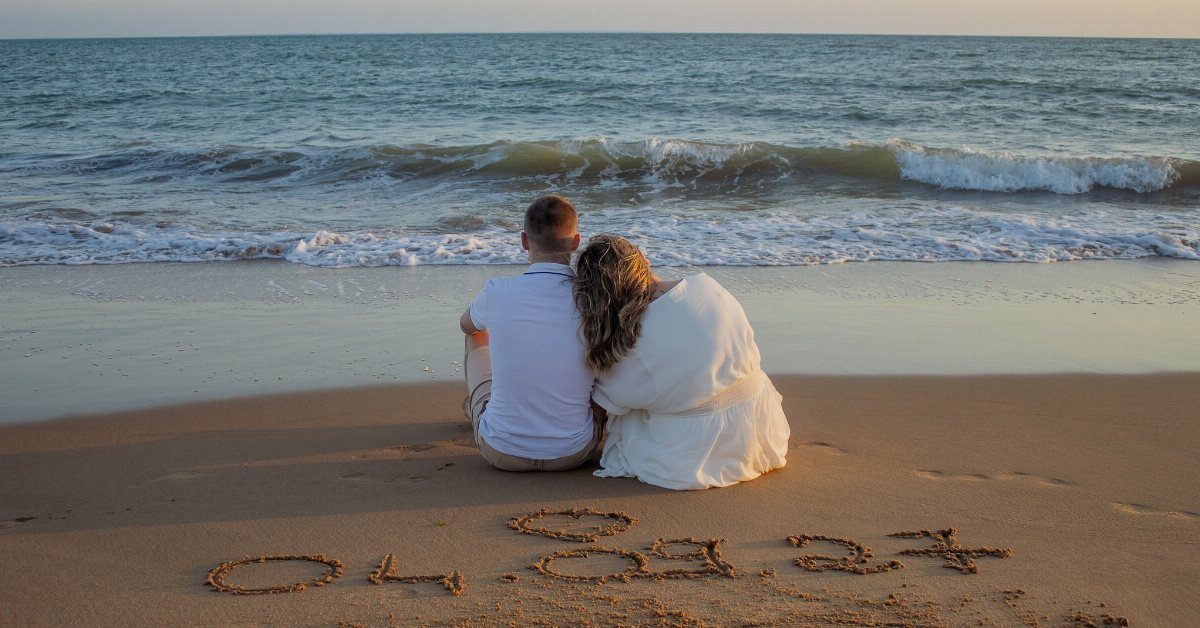
A date, a pair of initials or a heart drawn in wet sand turns the beach itself into your save-the-date. Draw the lines deep and wide, because thin scratches vanish in a photo.
Pick the firmer, damp sand just above the waterline, and write it before you sit down so your own footprints don’t clutter the frame.
Keep the message short; a date plus a heart is plenty. Have your photographer shoot it before the next wave arrives.
8. Ring Close-up on the Beach
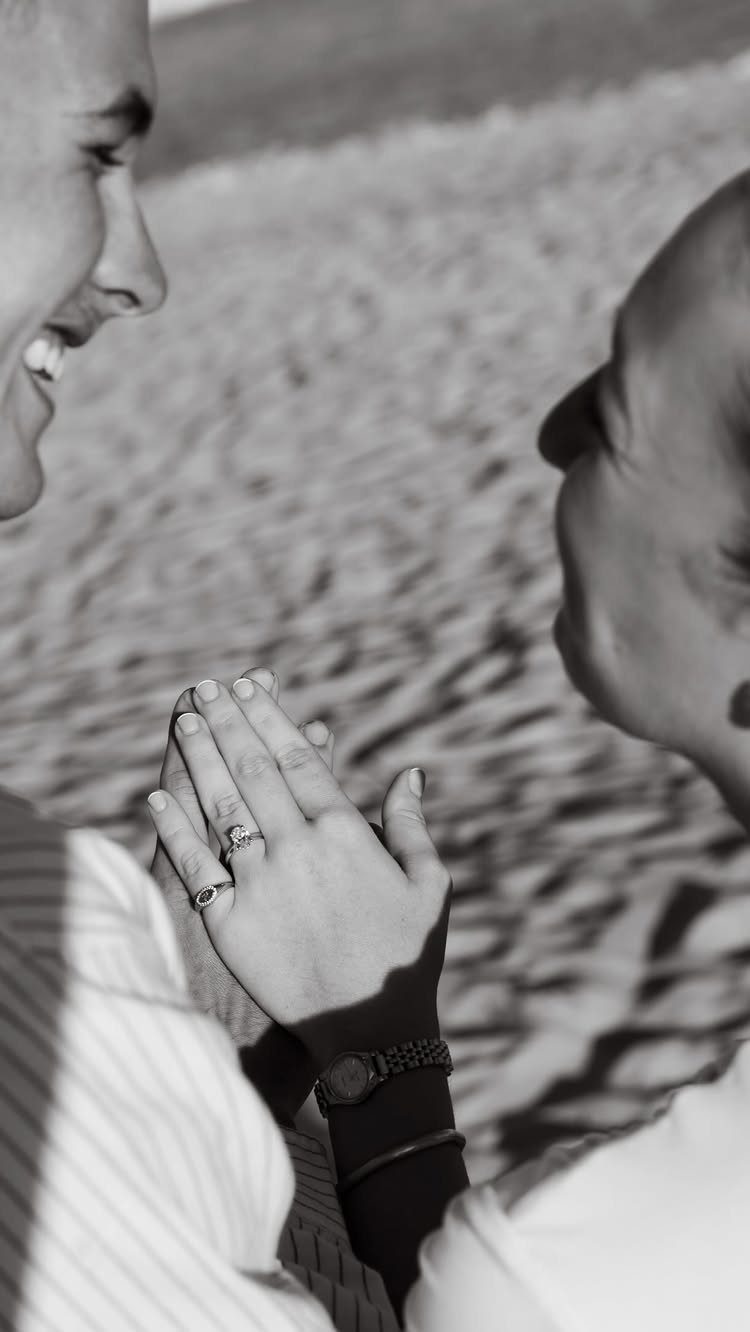
Soft focus on the couple and a sharp ring: this shot exists for the hand. Ask your photographer to focus on the ring finger and let the beach blur behind it.
Get a manicure beforehand, and clean the ring, since a close-up shows every smudge. Rest your hand against your partner’s chest or hold hands, whichever feels natural.
I like black and white for this one. It keeps attention on the ring and the gesture rather than the color of the sand.
9. Dip Kiss in the Surf
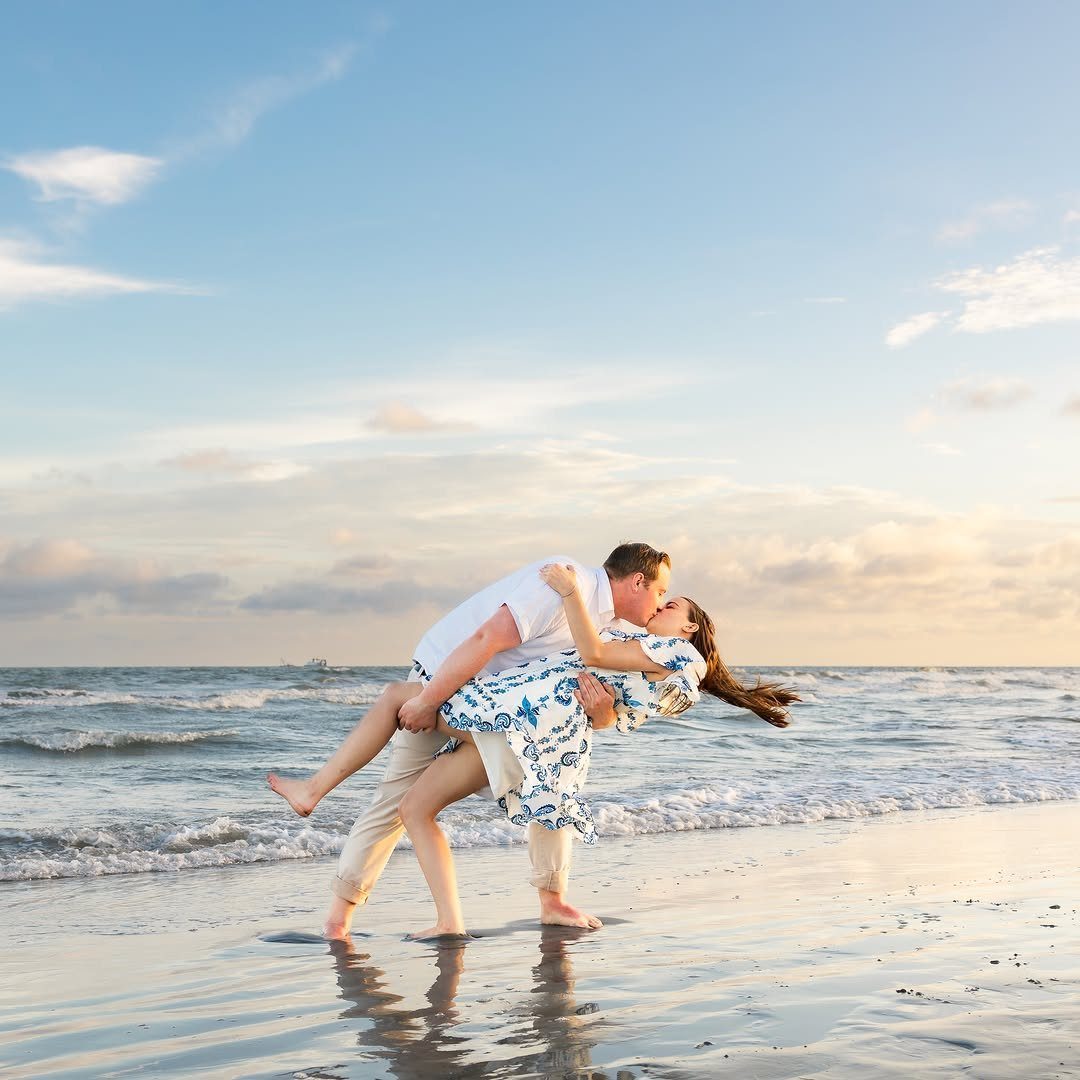
Dipping your partner at the edge of the waves looks dramatic, but the dip only reads well when one person is truly supporting the other. Plant your feet wide and hold her firmly across the lower back before you lean.
Keep the dip shallow, not a movie-poster drop.
She should arch slightly and hold onto your shoulder. Wet sand shifts underfoot, so test your footing first, and try it two or three times, because the first attempt is usually stiff.
10. All-white Beach Attire

White on white looks clean against sand and sky, and it keeps the focus on the two of you. Matching exact shades matters more than you’d think, since cream beside bright white looks like a mistake in sunlight.
Choose light, flowing fabrics that move with the wind. Check them in daylight ahead of time, because thin white can turn see-through in bright sun.
I’d pick this over bold colors if you want photos that still feel timeless years from now.
11. Sitting on Beach Driftwood
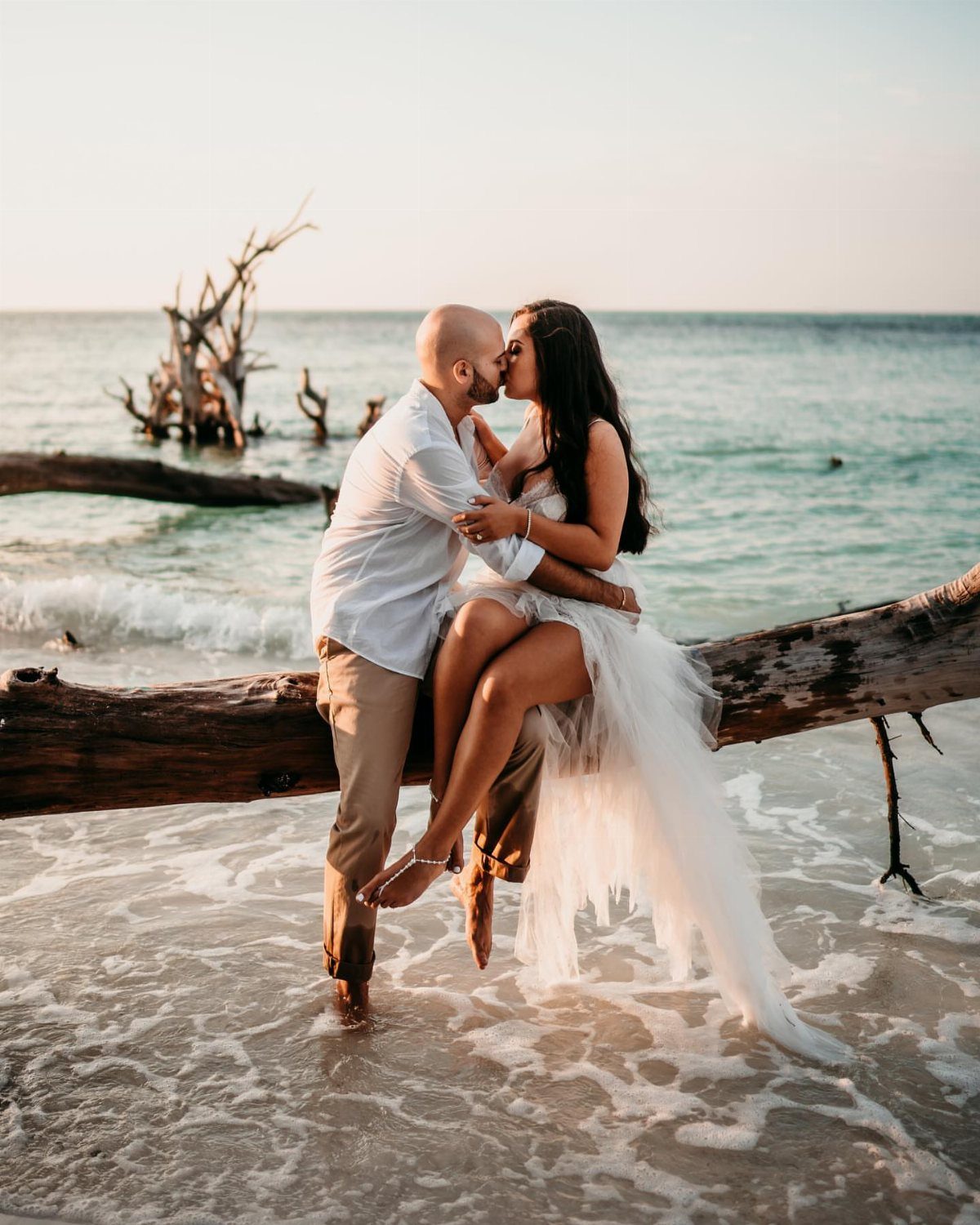
A big piece of driftwood works like a free bench, and its weathered gray tones soften the whole frame. Test it first: sit down, shift around, and make sure it’s steady and dry before you settle in.
Sit close, angle your bodies toward each other, and let one of you lean in for the kiss. Wear fabrics that won’t snag on rough bark.
If the log is high, a gentle lean beats a stiff upright pose.
12. Surprise Proposal on the Beach
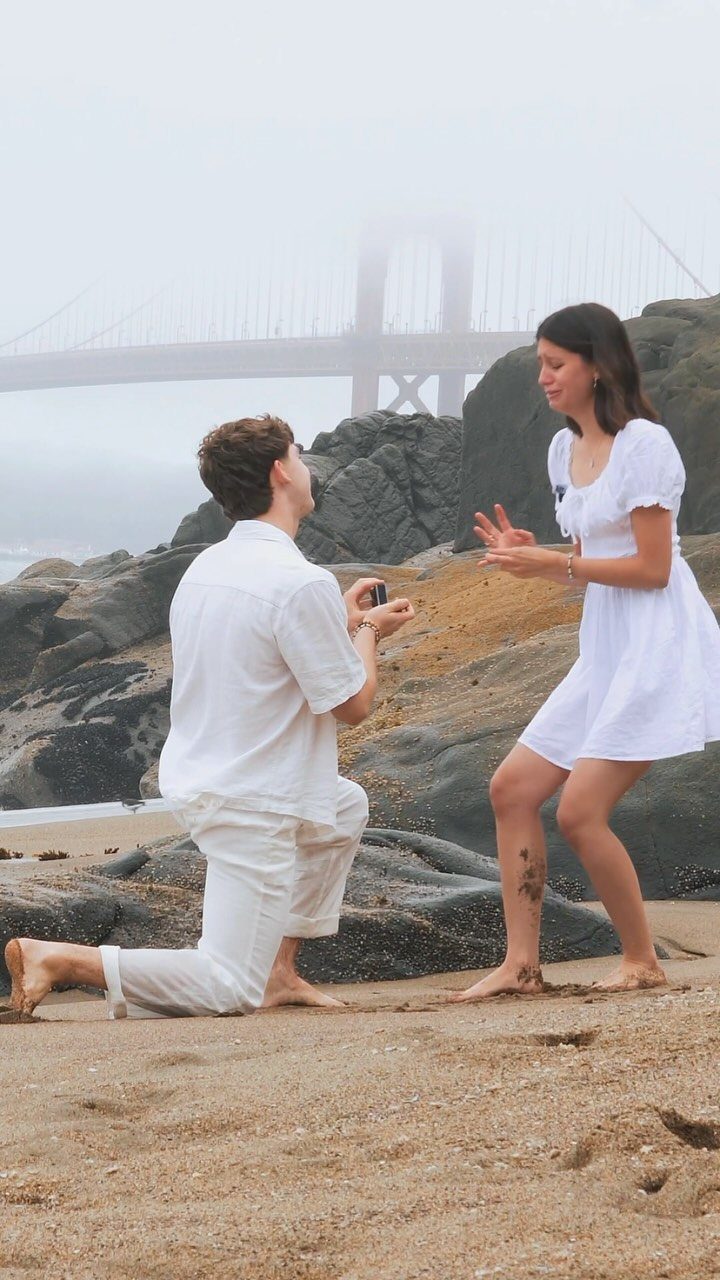
A knee in the sand, a ring and a quiet stretch of shore: a beach proposal needs very little. Fog softens everything and gives the moment a calm, private feel.
Tell your photographer the plan ahead of time and agree on where to stand. Pick a spot you can walk to together without suspicion, and keep the ring box in a pocket you can reach quickly.
Wear something you don’t mind kneeling in, since wet sand soaks through fast.
13. Carrying Partner in Arms
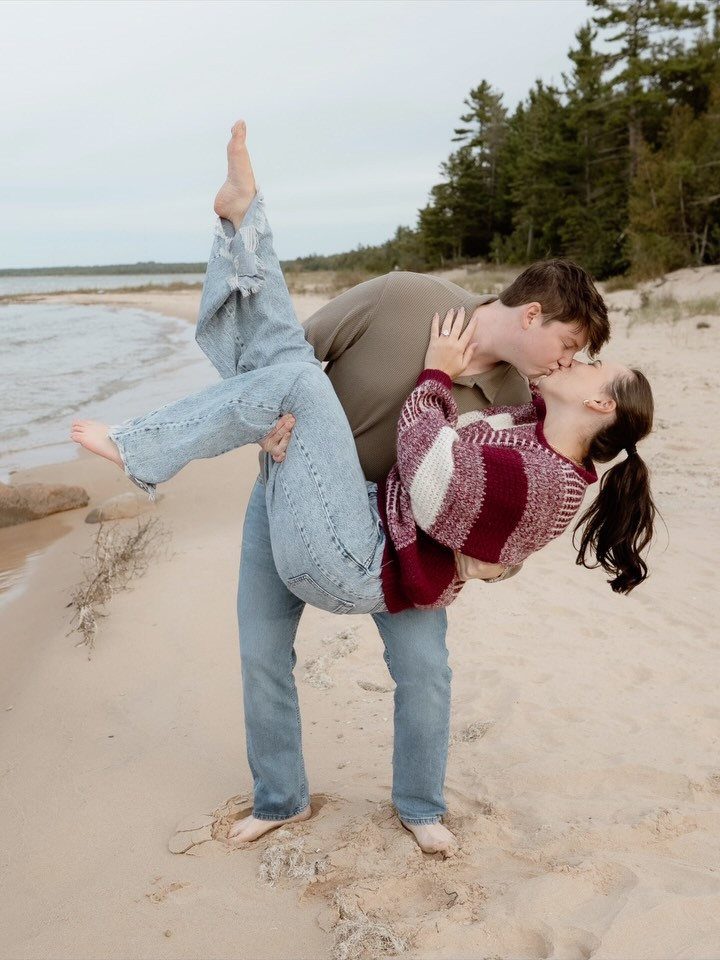
Scooping your partner up works best when you decide the plan before the moment: one arm behind her back, one under her knees, and a count of three.
Lift her only as high as you can hold steady, because a shaky carry shows in her face.
She can wrap an arm around your neck and let her head tip toward you for the kiss. Barefoot is safer on sand, and I’d keep the carry to a few seconds per take.
14. Sitting Together on the Sand

Sitting straight on the sand needs no props and no skill, which suits anyone who freezes in front of a camera. Settle in shoulder to shoulder, lean your heads together, and let the low sunset light do the rest.
Pick dry sand and plan on a little grit.
A flowing dress spreads across the sand in a wide, soft pool of fabric, and light pants hide sand better than you’d expect. Shift closer than feels natural; the camera tends to add distance.
15. Wooden Pier in Background
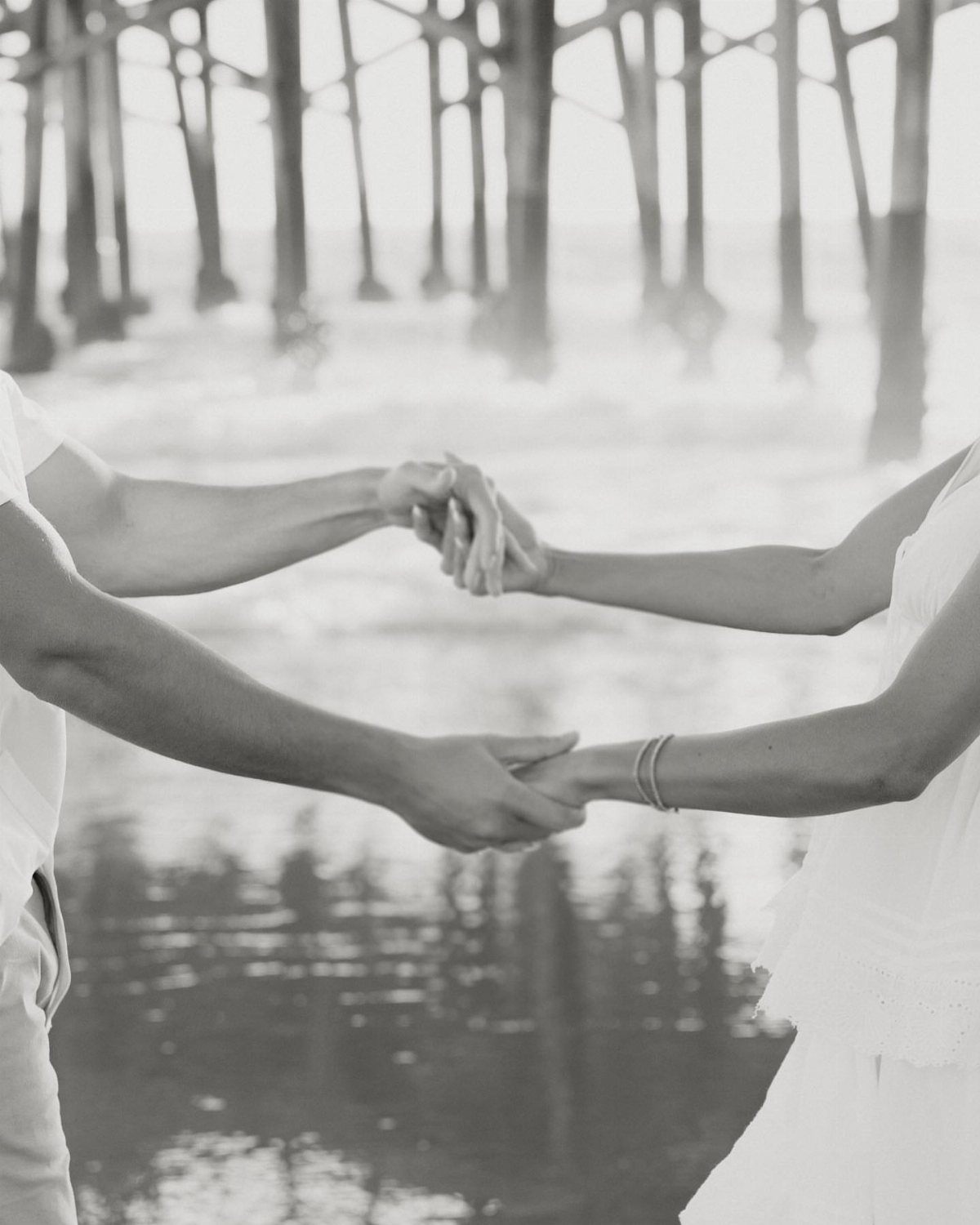
Pier pilings give the background some structure without stealing attention, as long as they stay soft. Ask your photographer to shoot with a wide-open lens so the wood blurs while the two of you stay sharp.
Stand a few yards in front of the pier, not against it, and simply hold hands.
Black and white suits this setup, since weathered wood and a quiet pose turn timeless fast. I’d pick it over color here.
16. Motion Blur Dancing on Sand
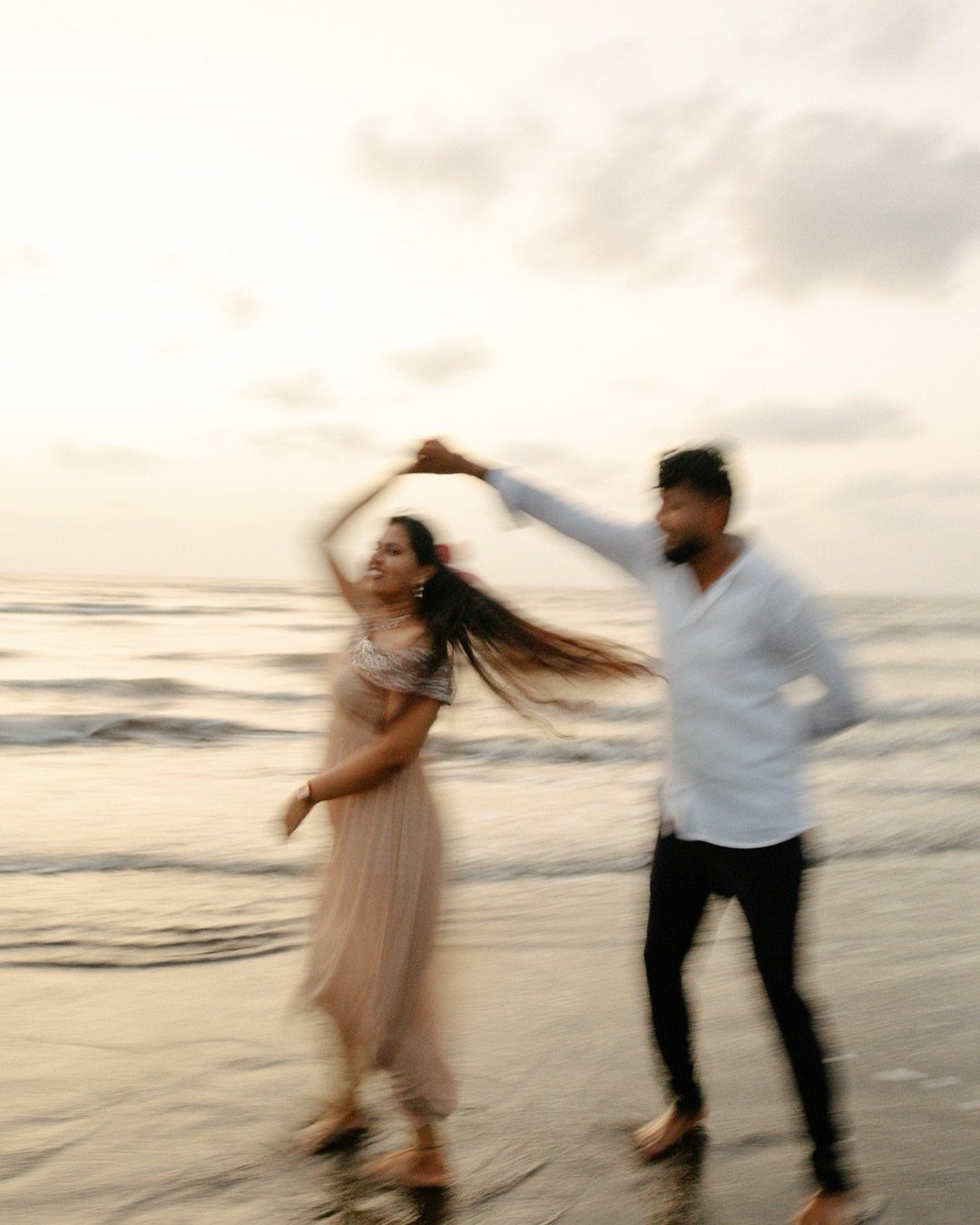
Motion blur is a choice, and it only works when the camera is set for it. Tell your photographer you want a slower shutter, so your movement smears while some of the shots stay mostly sharp.
Slow dance in small turns instead of big spins, and keep your faces close.
Expect plenty of misses; the keepers are a fraction of the take. Dress in flowing fabric, since a skirt trailing through the blur is what gives the shot its energy.
17. Coastal Cliff Overlook Portrait

A grassy bluff gives you height, open water behind you, and room to dress up more than sand allows. That makes it a good pick if you want one polished, smiling portrait among the barefoot frames.
Stand close, shoulders touching, and pick a spot where the water fills the background evenly.
Check the ground for slope and loose edges before you pose. I’d keep a safe distance from the drop; the view doesn’t need you at the very edge.
18. Rocky Shoreline Embrace
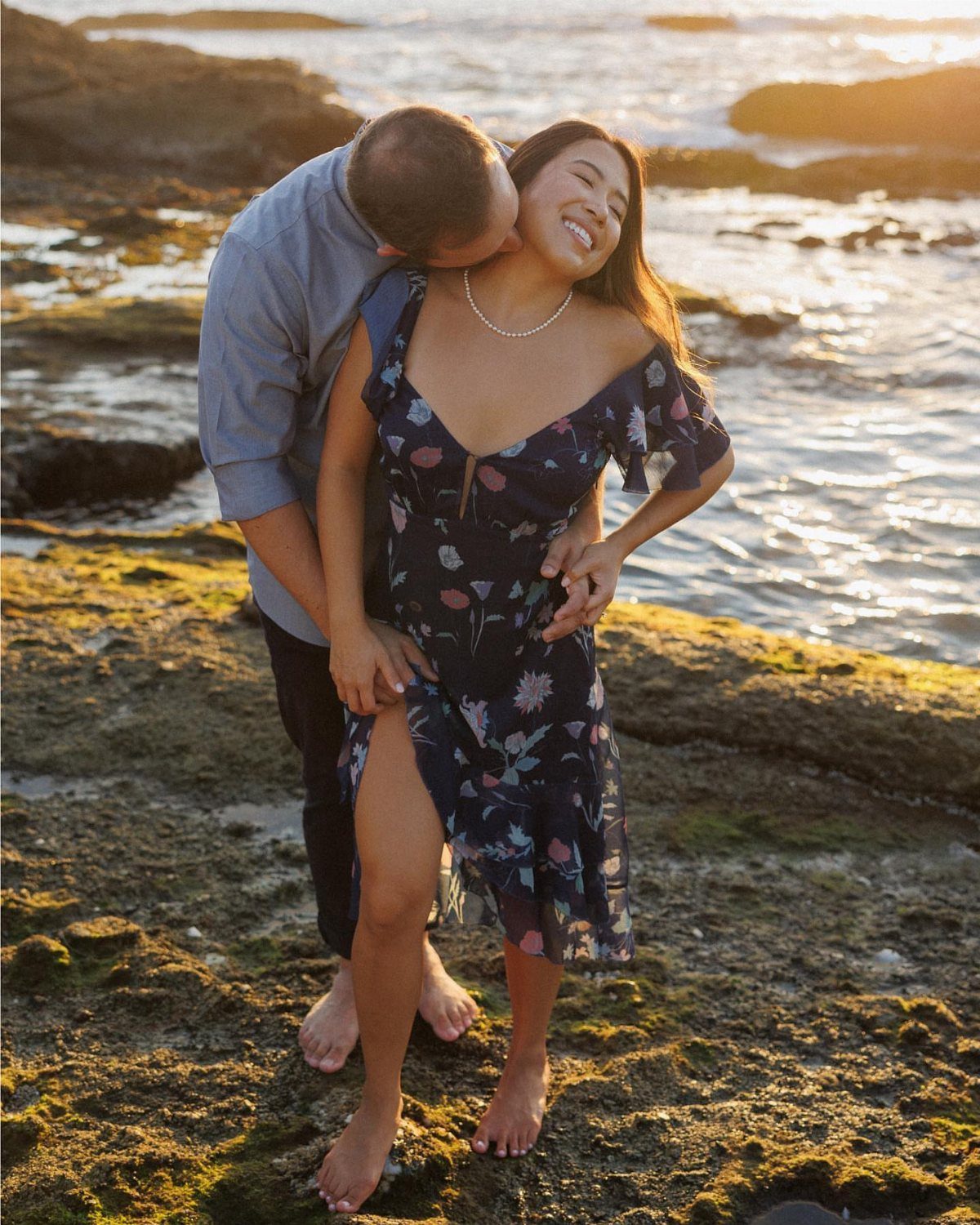
Mossy rocks add texture and a bit of drama, but they are slippery, and wet moss is worse. Go barefoot only if you can test each step first, and pick a flat, dry ledge to stand on.
Hold each other around the waist so you steady one another, then lean in for a kiss on the cheek or lips.
Waves in the background give the frame motion, but keep the water in view between takes and stay well back from the edge.
Best Time for Beach Engagement Photos
Golden hour, roughly the hour before sunset, gives you warm, flattering light and glowing water.
Sunrise is the other good window: the light is soft and the beach is almost empty, so you get room to move without strangers walking through the frame.
Midday is the slot to avoid. Overhead sun means squinting and harsh shadows, and no amount of editing fully fixes a frame full of narrowed eyes.
If you have to choose between sunrise and sunset, I’d lean toward sunrise for a budget shoot, since the crowds are thin and you can often finish quickly.
Sunset wins if you want that warm glow and don’t mind sharing the sand.
Tides matter too. Low tide often reveals more sand and reflective wet sand, so pair your time slot with a tide chart.
What to Wear for Beach Engagement Photos
Skip heavy fabrics, which look stiff and hot, and neon colors, which fight the sand and sky.
Coordinating beats matching. Outfits that share a color family or a similar mood can look as good as a matched set, so there’s no need to chase a perfect pair.
Solid colors and pastels are safe choices; olive green, peach, pink, maroon, khaki and white also work. Avoid busy patterns, which pull the eye away from your faces.
Your photographer can also help here. Ask them for outfit input when you book, since they know how colors read in the light at your location.
Frequently Asked Questions
Do you need a permit for beach engagement photos?
It depends on the beach. Some state parks and private beaches require permits or fees, while others don’t.
Permit rules vary by beach, so a quick call to the local parks office, or a question to your photographer, will settle it before you commit to a date.
Should I check the tide before a beach engagement shoot?
Yes, check a tide chart before choosing your day. Low tide exposes more sand, reflective wet sand, and tide pools, which give you room to move and extra photo spots.
Low tide is the better bet, since it leaves wide, firm sand to walk on and keeps the waves from crowding your feet.