These ideas range from a piggyback ride in an open field to a staged proposal down on one knee, and from real laughter to a dip that needs practice at home.
What decides your pick is how comfortable you two are being looked at: if you freeze under a lens, choose an idea with built-in motion or a task, like cooking together or a picnic setup, and save the stiller poses for later in the shoot.
Most couples book the session early so Save the Dates can go out months ahead, and the photographer comes first on the budget.
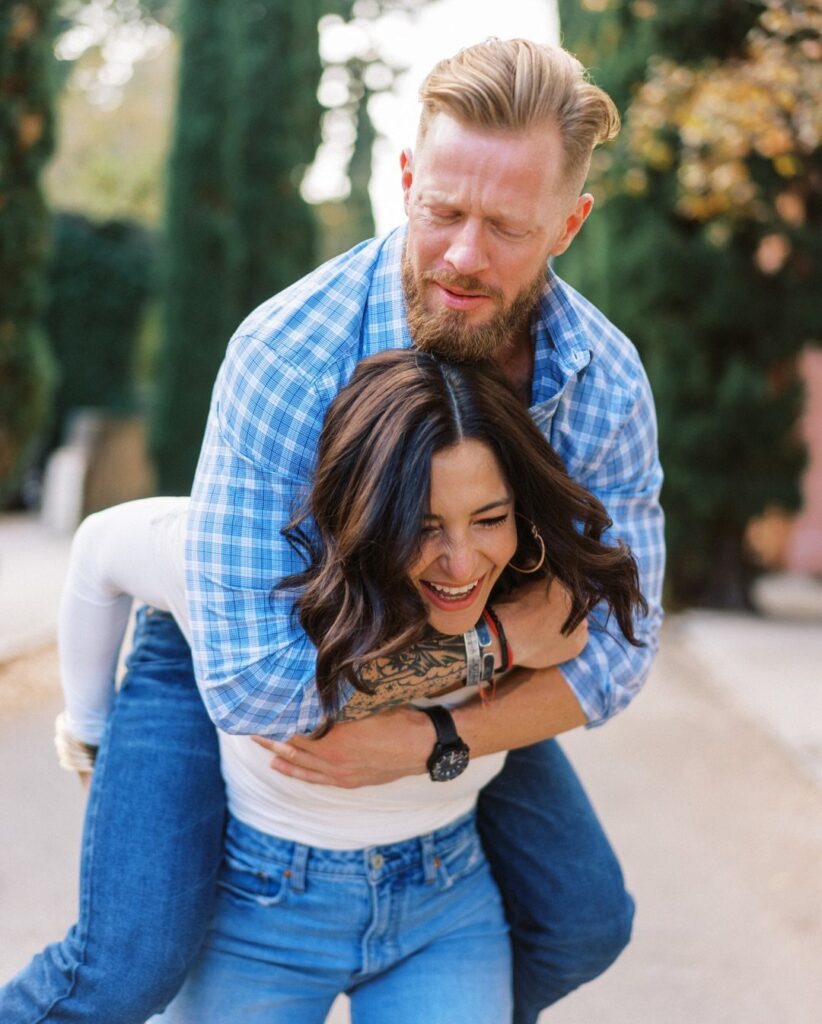
1. Piggyback Ride
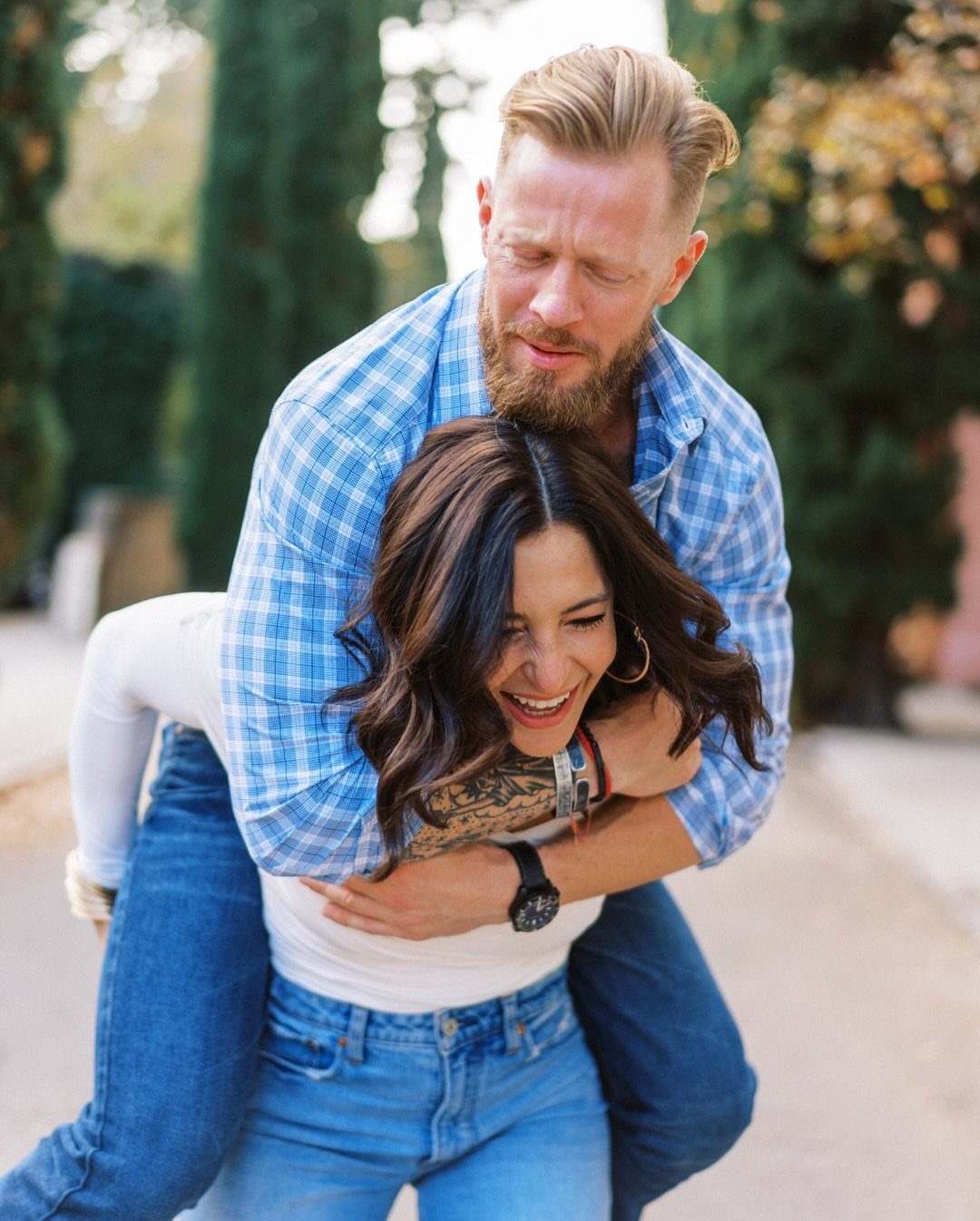
A piggyback ride gives you a pose with built-in laughter, which is why it works for couples who freeze up when a camera points their way. Nobody has to think about what to do with their hands.
Pick a flat, open patch of ground and wear clothes you can move in. Tell your photographer before you start so the shots come as you hop, bounce, and lean in.
2. Favorite Coffee Shop
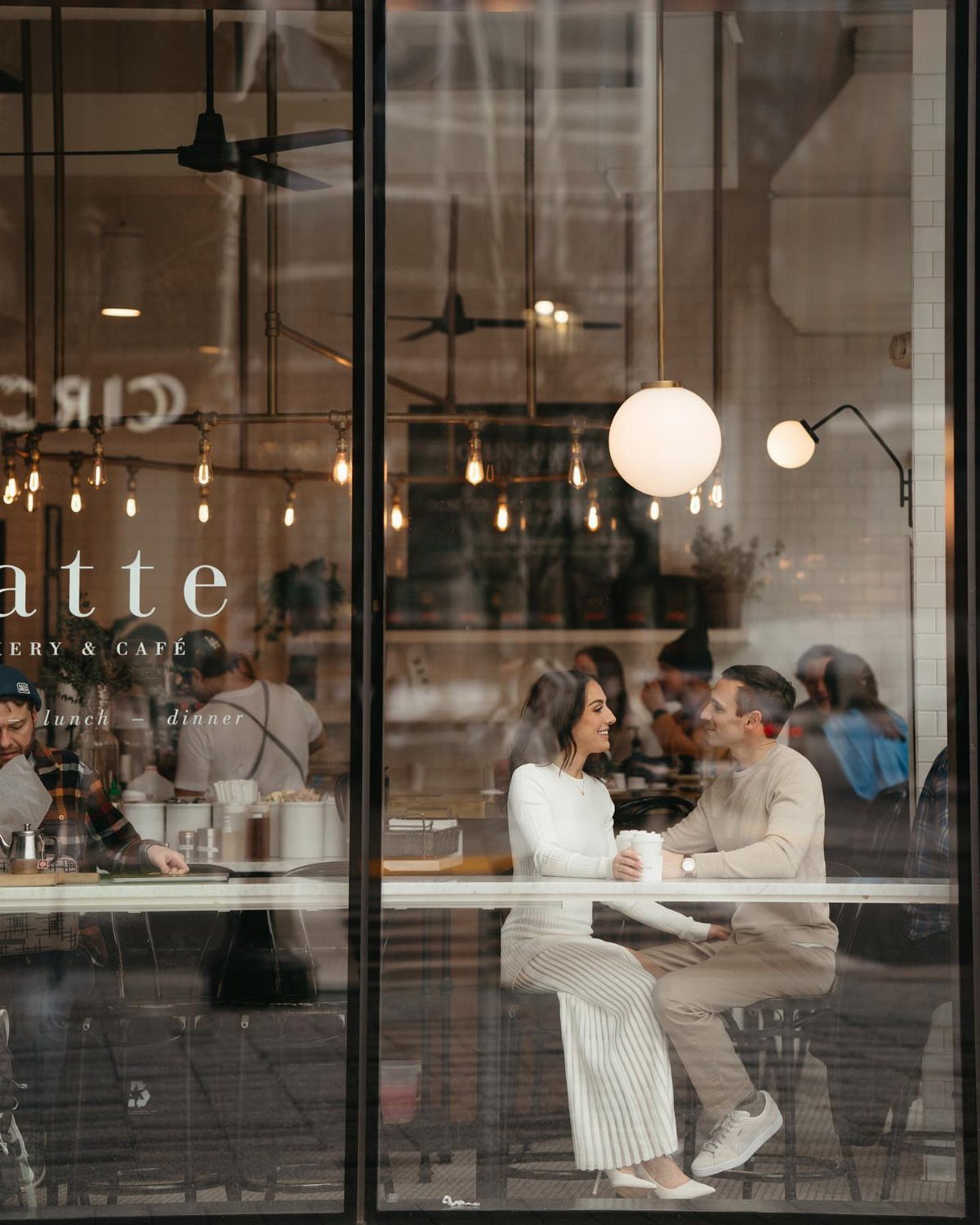
Your regular coffee spot already holds the habits you two share, so you stop performing and just sit there.
Photographing through the window, as this one does, adds a layer of glass and warm light that feels like a quiet peek into your morning.
Ask the owner for a time slot before you show up with a photographer. Order your usual drinks, then talk to each other.
3. Cooking Together
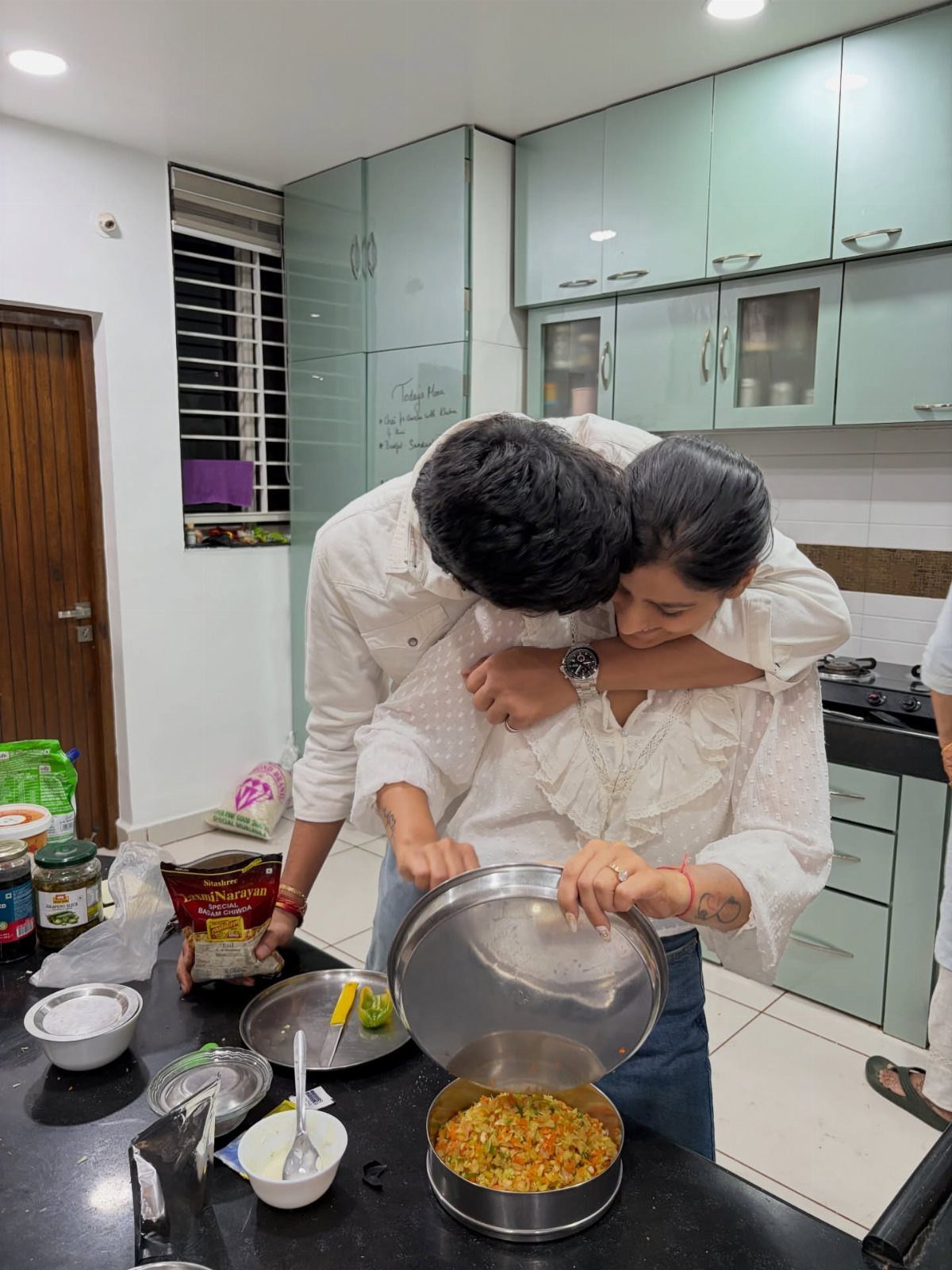
A kitchen session puts your hands to work, and that fixes the stiffness most couples feel in front of a lens.
Choose a dish you actually make together, something simple with a pot on the stove, so the stirring, tasting, and leaning against each other look natural.
I’d pick your own kitchen over a rented one.
4. Comfortable Clothing
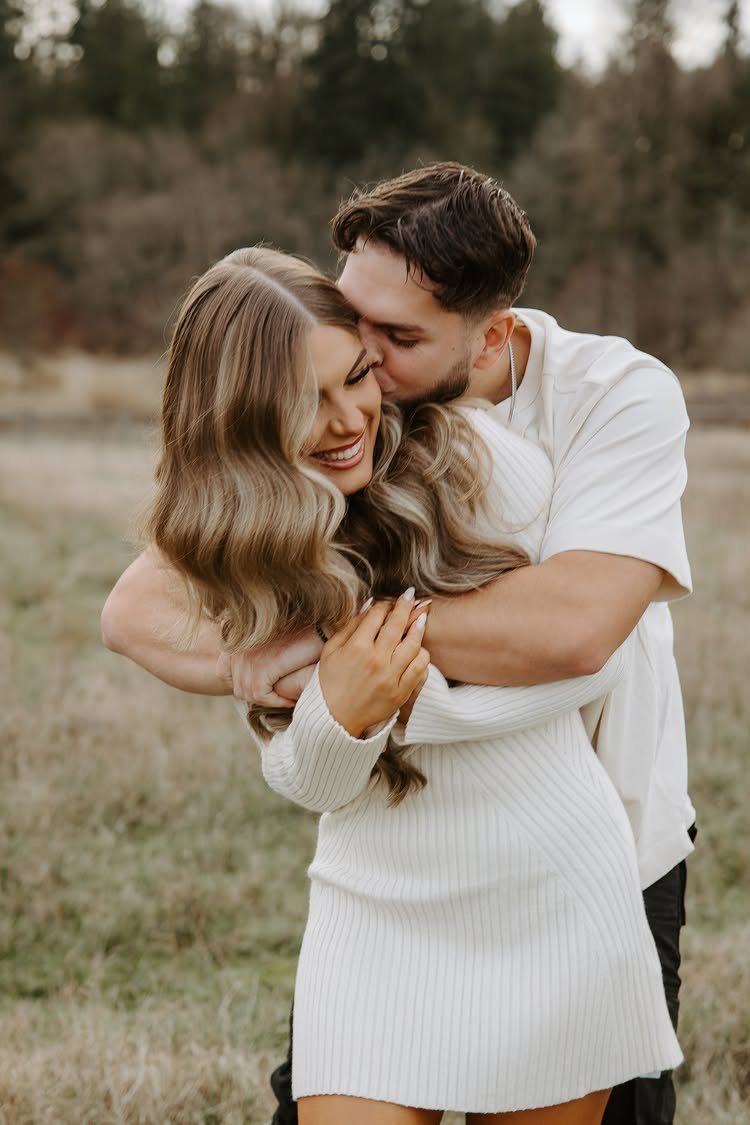
Wear what you already feel good in, because relaxed clothes make for relaxed bodies, and a hug looks warmer when nobody is tugging at a hem.
Soft knits and plain shirts, like matching whites, keep the focus on the two of you instead of the clothes.
Sit down in your outfits at home first. If you notice the fabric, change it.
5. Outfits That Pop with Color
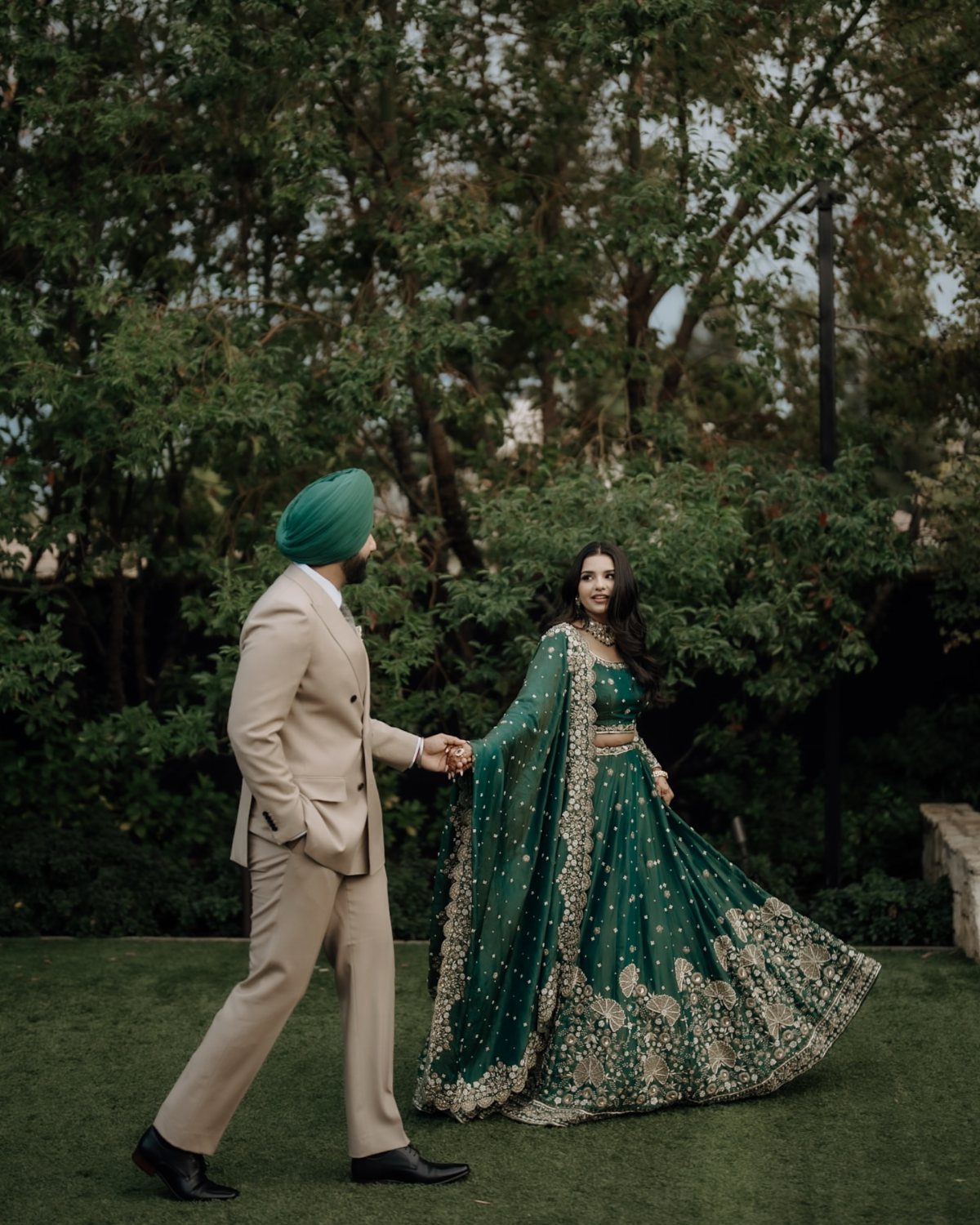
A saturated outfit against a neutral one, like jewel tones paired with tan or beige, gives the photographer a color story without needing a dramatic location.
Let one of you wear the bold shade and the other a softer neutral, so the pair reads as balanced rather than competing.
Choose a setting with similar tones behind you, such as trees, so the colors echo instead of clash. Check how the fabric looks in daylight before the shoot.
6. Scenic Outdoor Backdrops
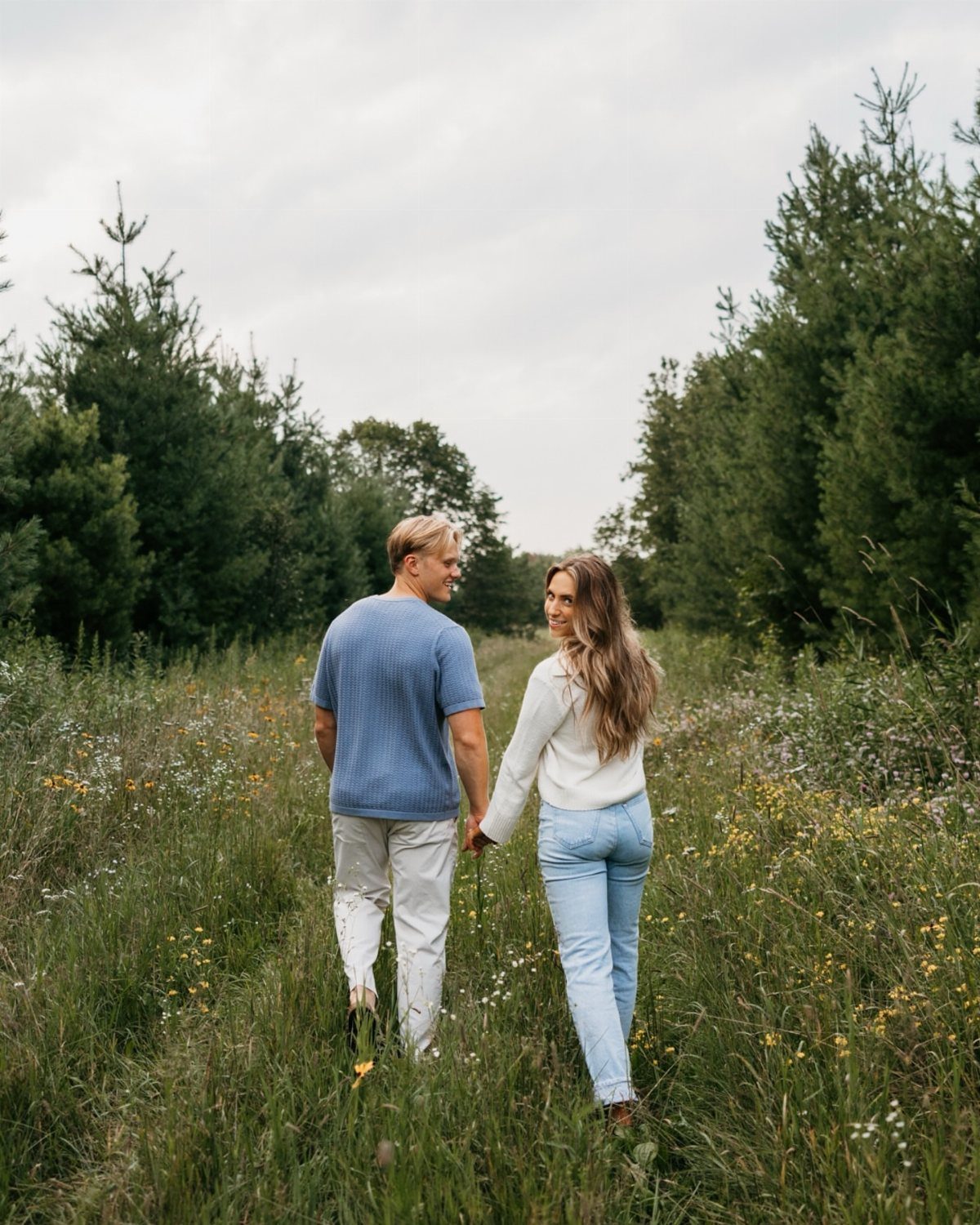
Walking hand in hand through grass is an easy way to look natural there.
Pick a spot that means something to you, whether a trail you hike or a park you return to. Scout it beforehand, and wear shoes you can walk in.
7. Hugging Poses
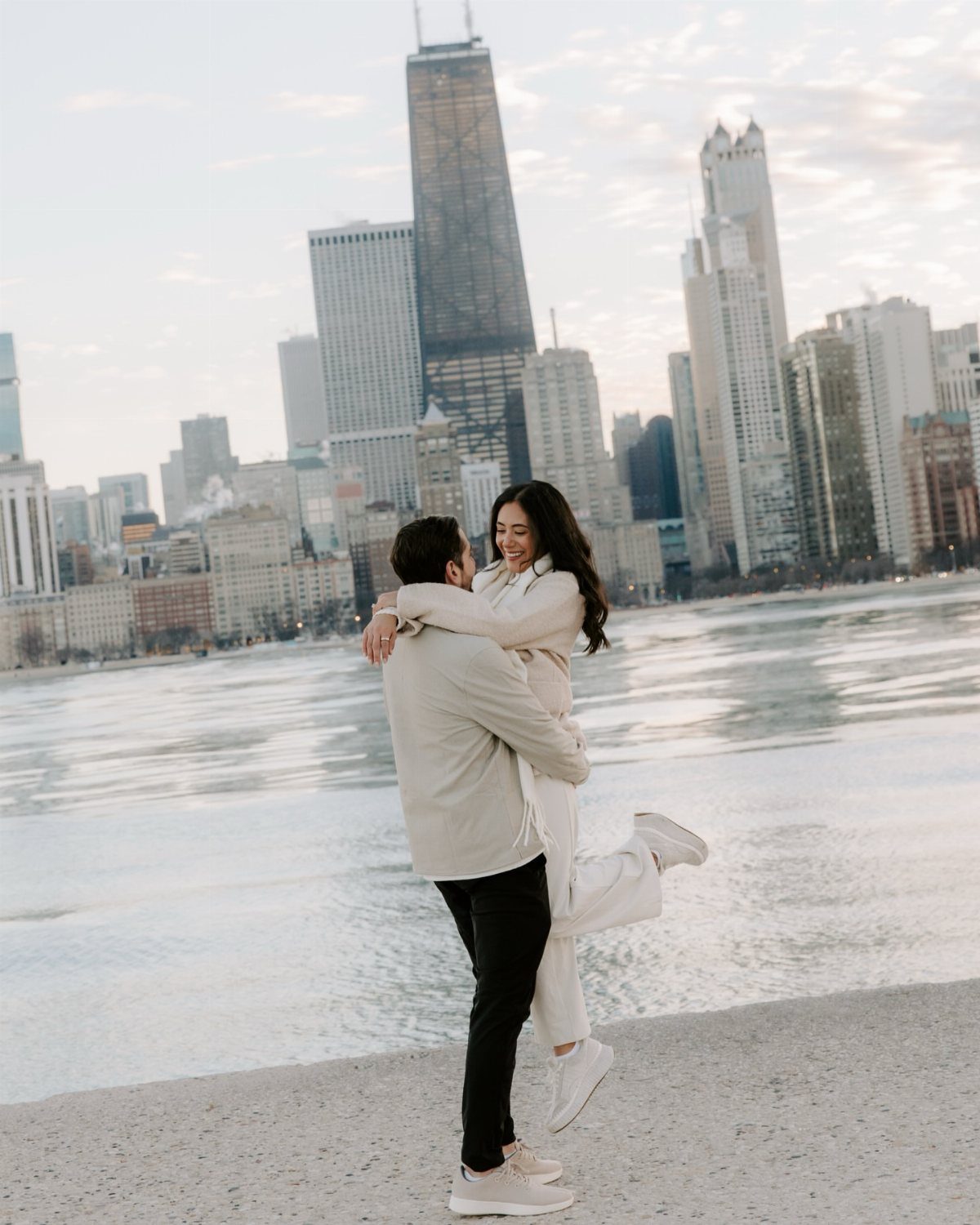
A hug is the simplest pose, and when one of you lifts the other, the laughing happens on its own.
Wrap your arms all the way around instead of patting, and let your faces tilt toward each other. Try one calm, still hug and one with a lift, then keep whichever feels less staged.
Skip the lift if either of you is unsure about it. A plain squeeze still photographs warmly.
8. Incorporating Movement
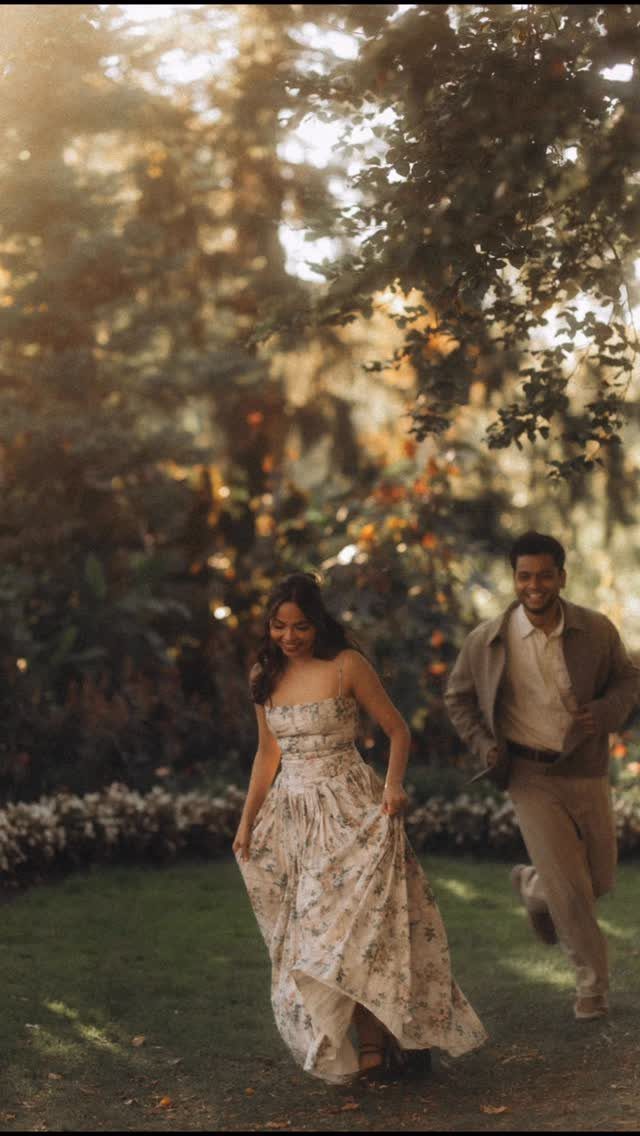
Walking or running together gives your photographer a moving frame, and the stiffness most couples carry into a shoot loosens once you have somewhere to go.
Pick a path that is clear and level, and wear shoes and a dress you can run in. A skirt with some swing catches the motion well.
Do several passes, since the first one usually feels awkward. Tell your photographer you plan to move so they can shoot in bursts.
9. Use of Color Palettes
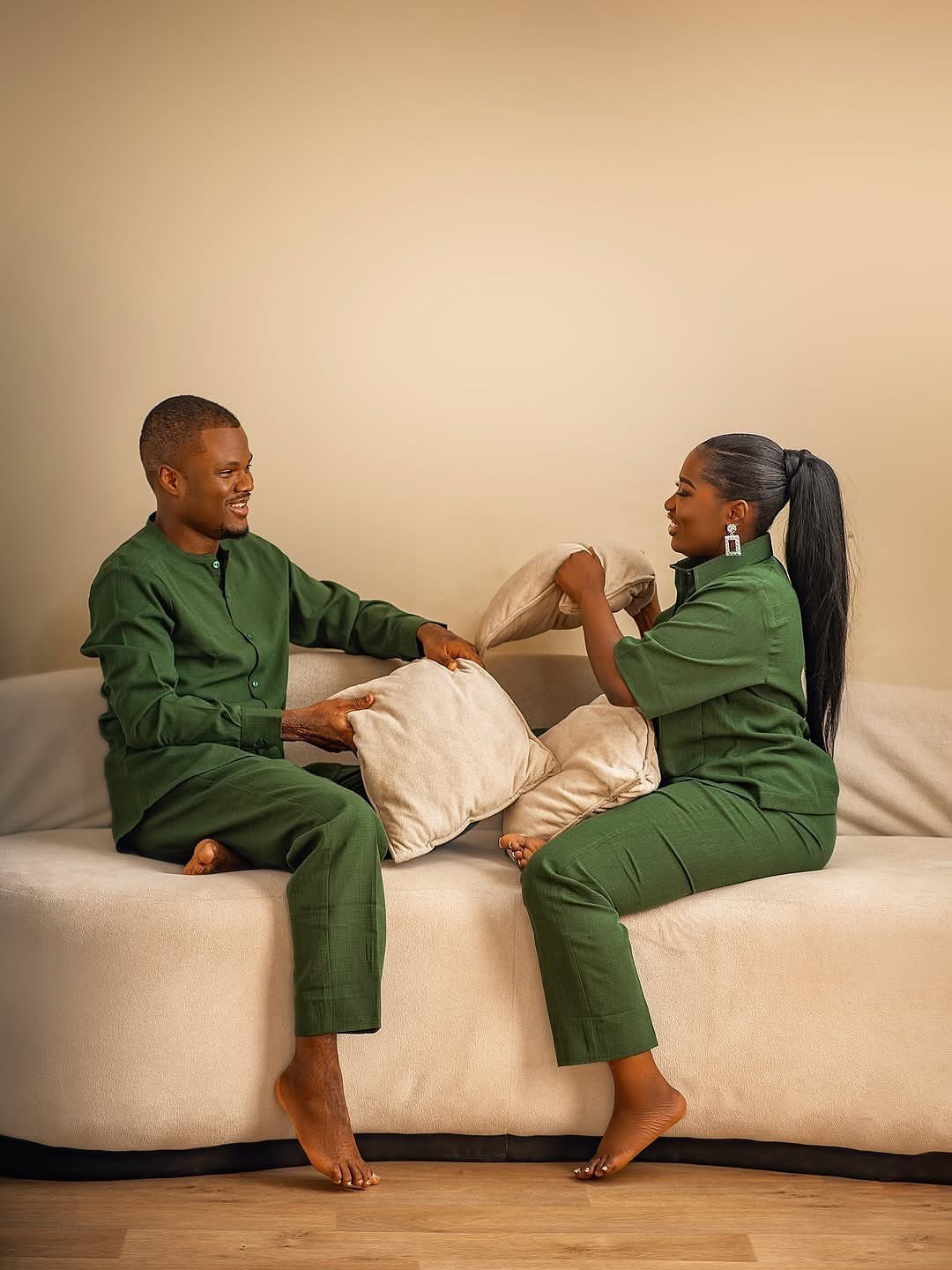
Matching colors make you read as a pair before anyone looks at a face.
Choose one shade and one fabric weight so nothing clashes. Hold the pieces side by side in daylight before the shoot, since greens can shift under indoor light.
I’d keep the room simple, like this one, so the color does the work.
10. Ring in Focus
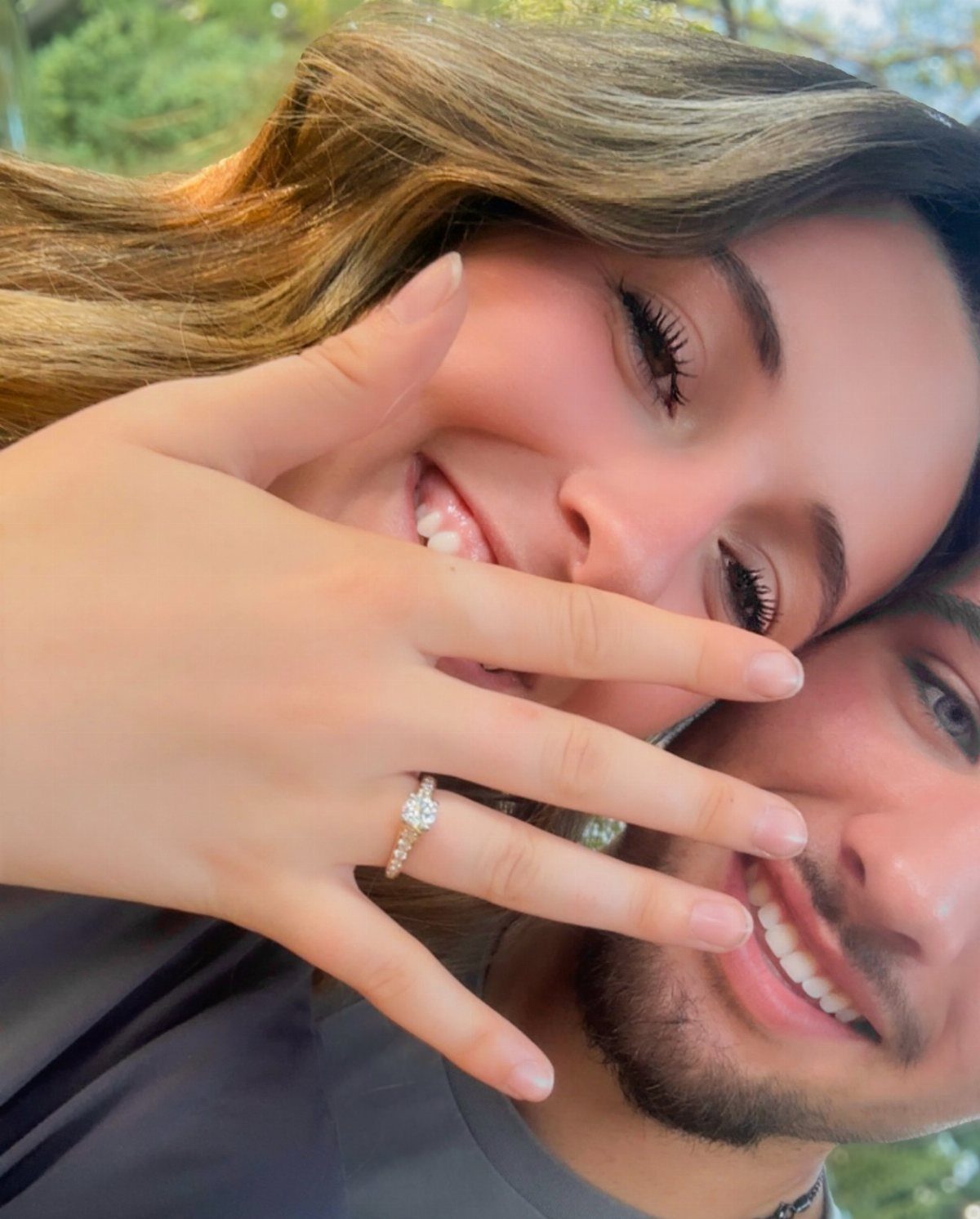
Keep the touch gentle and let your fingers relax. Pressing hard or splaying them looks tense.
Get a manicure a day or two before, and clean the ring, since a close-up shows every smudge. Tell your photographer the ring matters to you so they focus on it.
11. Facing Each Other
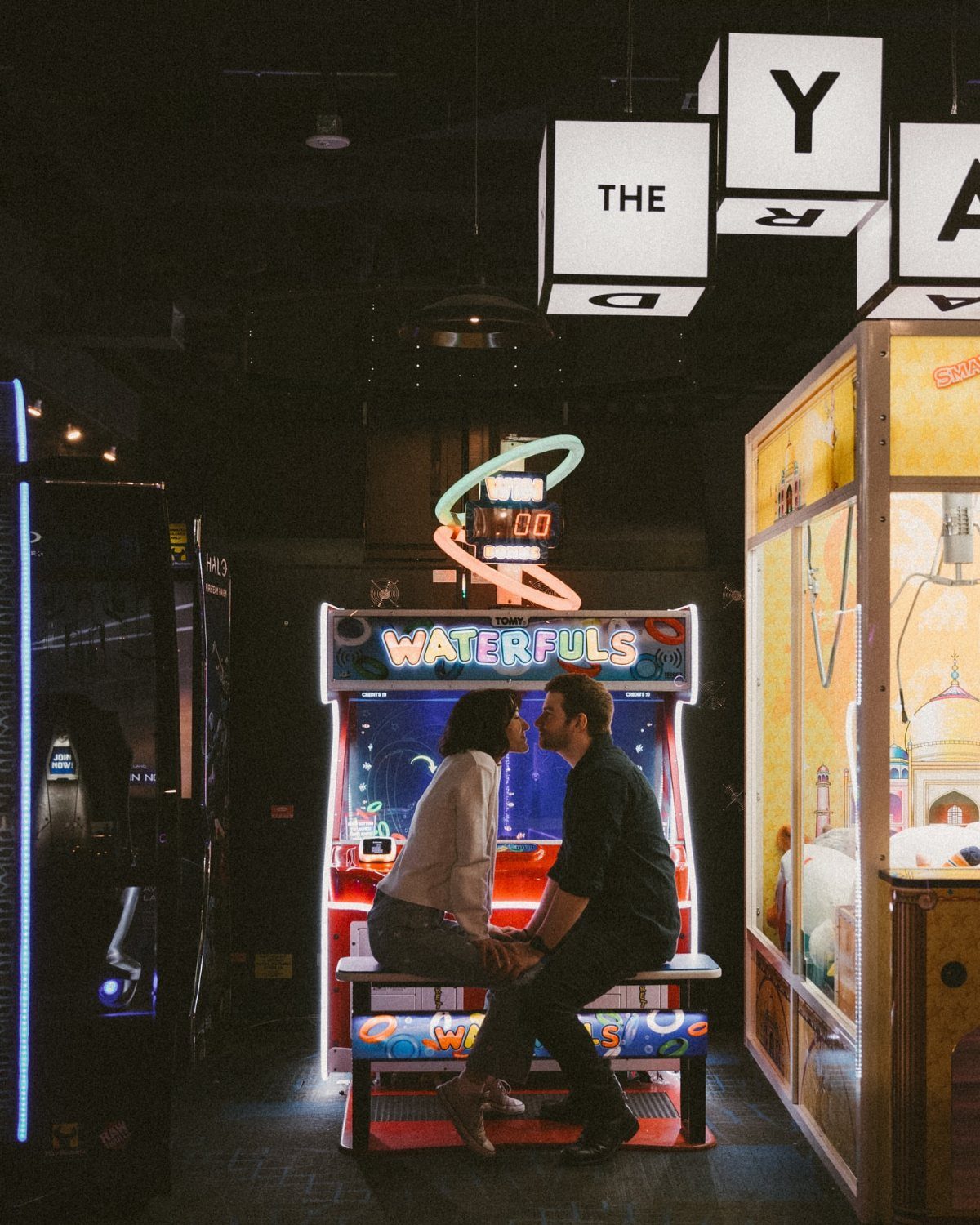
Stand or sit closer than normal, facing each other, and the camera sees what you see: only your partner. Closer almost always looks better than it feels.
Look at each other’s eyes or mouth, then let a laugh happen.
12. Golden Hour Photos
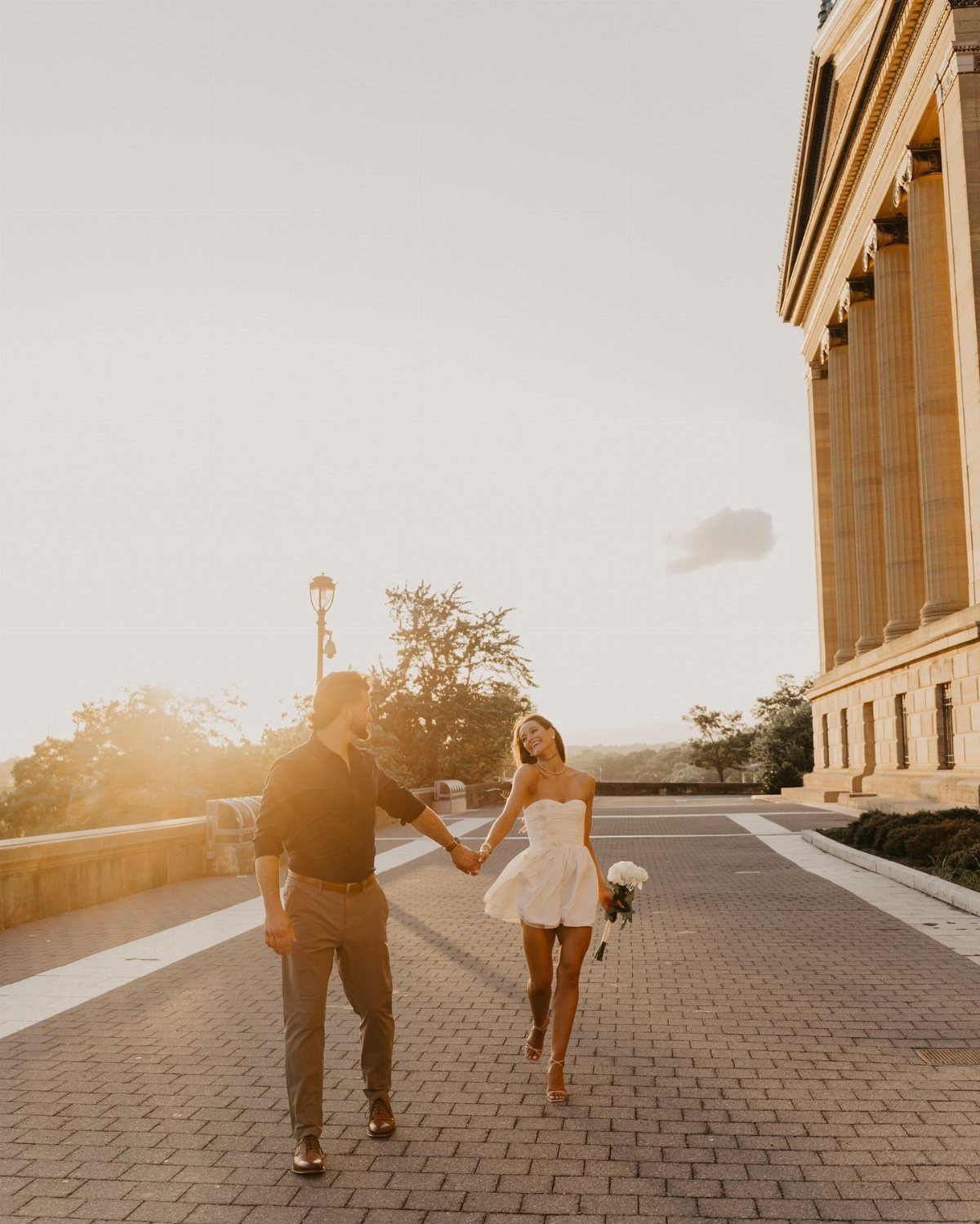
Golden hour, the stretch of low sun around sunset, flatters skin and wraps a path or building in warm light.
Check your local sunset time, then plan to start about an hour earlier. The light changes fast, so arrive dressed and ready.
A light dress catches that glow nicely. I’d walk a path hand in hand for the first shots, then slow down for closer ones as the sun drops.
13. Twirl or Spin
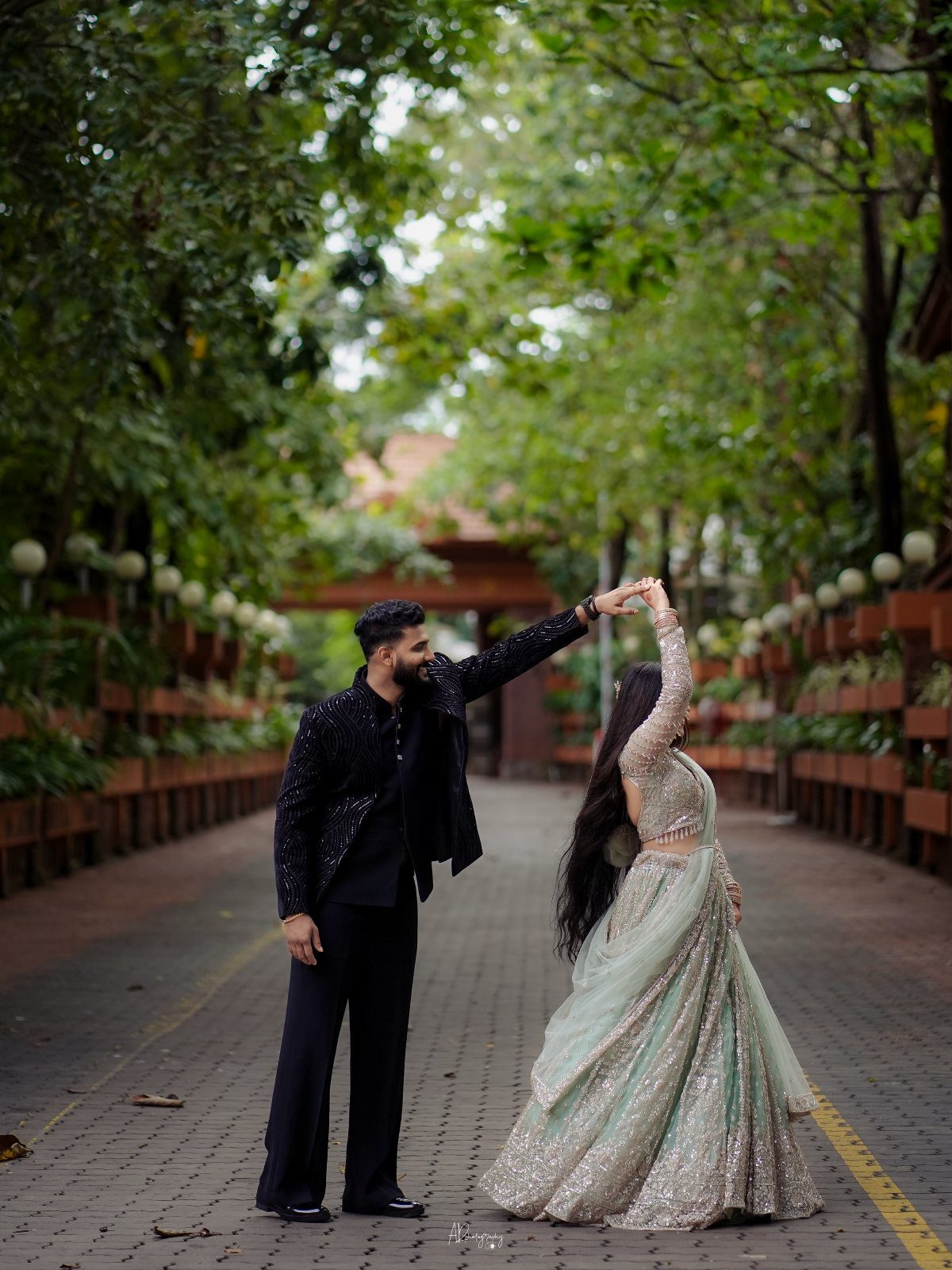
A full skirt is what makes a twirl worth photographing, because the fabric flares into a circle and holds the motion for a split second. A lehenga does this beautifully.
Spin slowly on a clear stretch of path, and let your partner turn you by the hand. Repeat it several times, since the best frame is rarely the first.
14. Include Pets
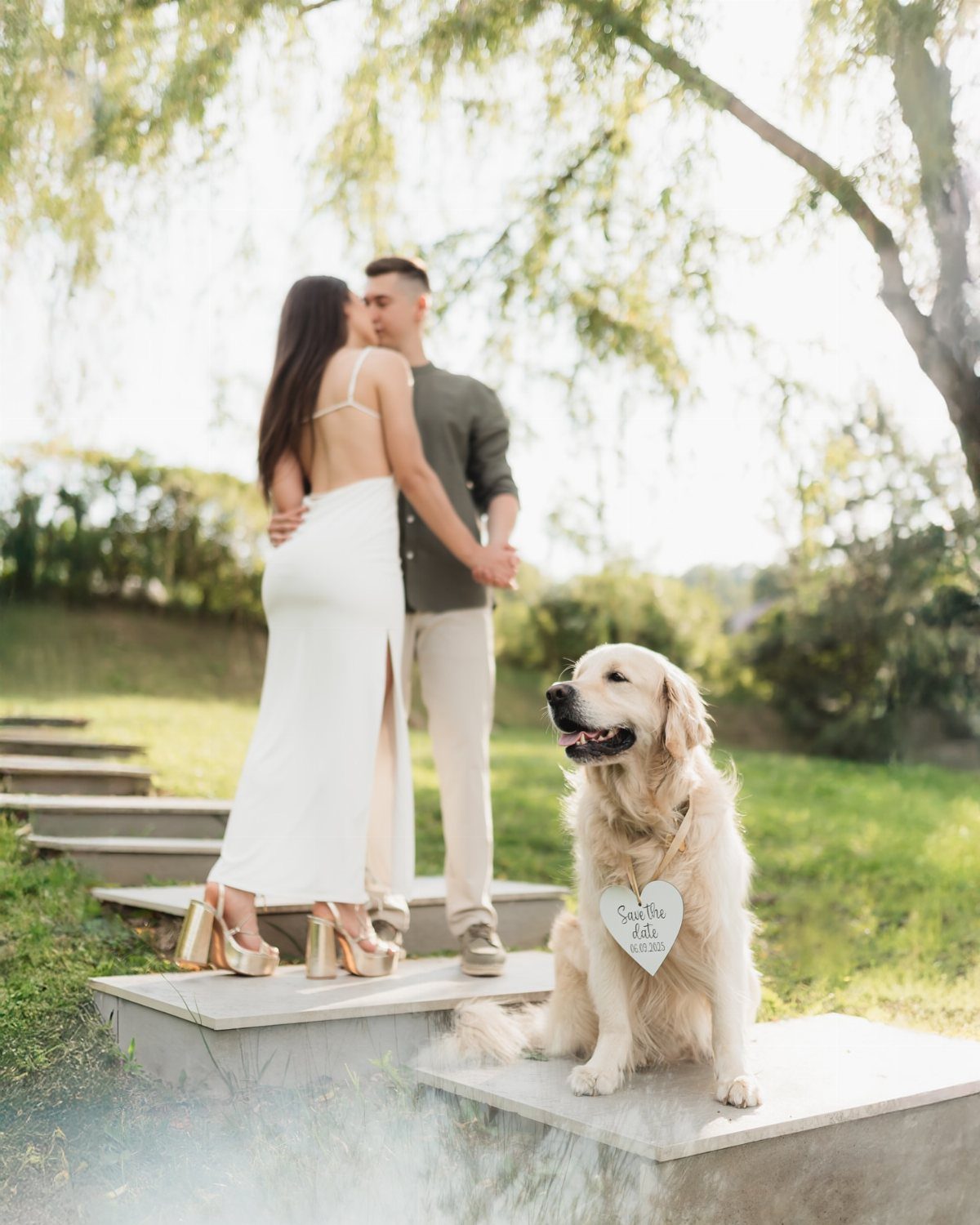
A dog sitting front and center turns an ordinary kiss into a save-the-date, and a small sign around the neck does the announcing for you.
Pick a spot where your pet can sit still, like a set of steps, and bring treats to hold attention.
Focus on the animal first and let yourselves sit soft in the background. Ask your photographer to shoot a few frames before the sign goes on, since animals tire fast.
15. Golden Hour Silhouettes
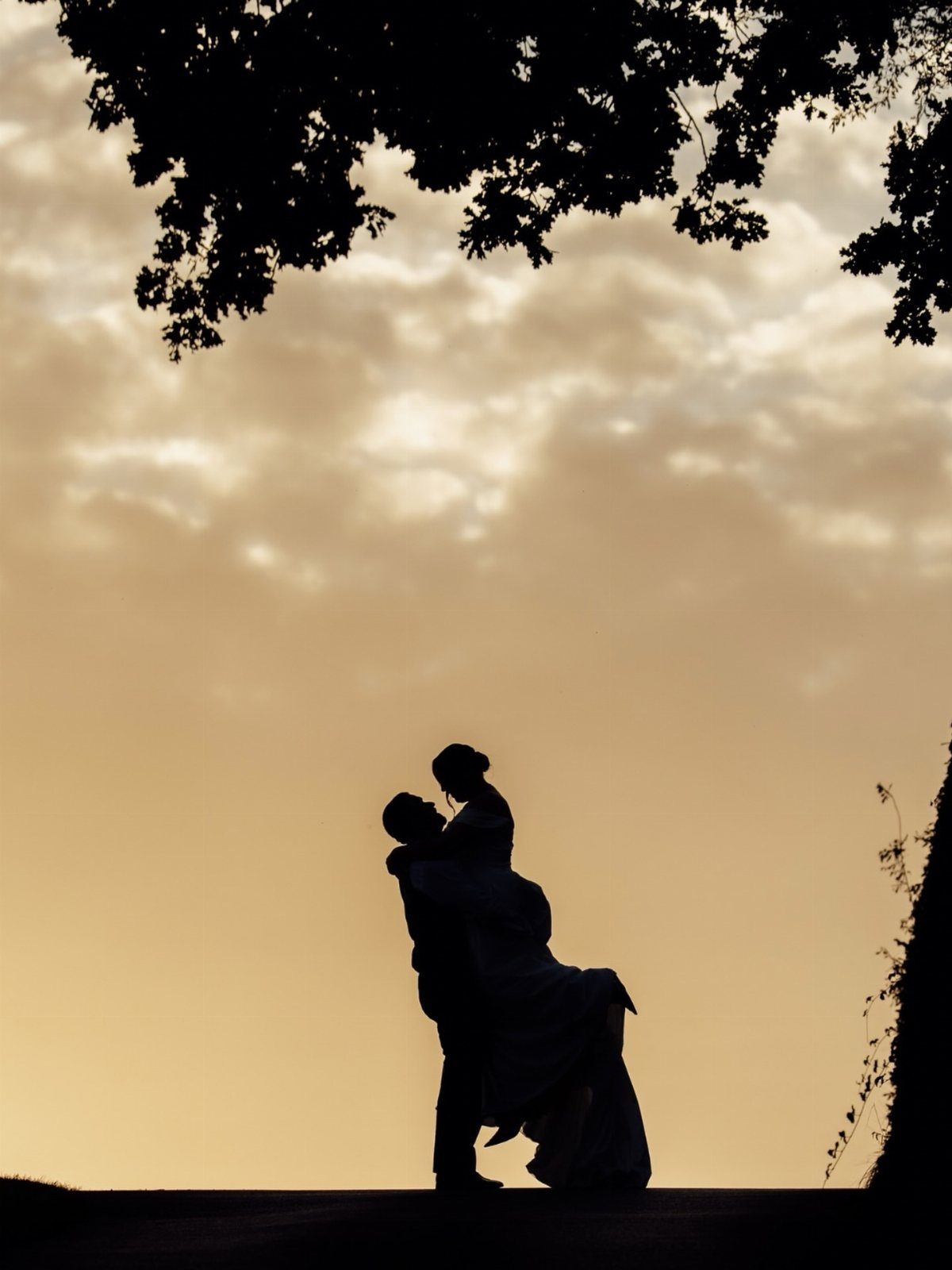
Against a sunset sky, you become dark shapes, so the outline of the pose does all the work. A lift, a kiss, or a dress with some volume reads clearly.
Stand with the sun behind you and ask your photographer to expose for the sky.
Keep your arms and bodies slightly apart where you can, because overlapping shapes blur into one blob. Trees overhead add a natural frame.
16. Nose to Nose
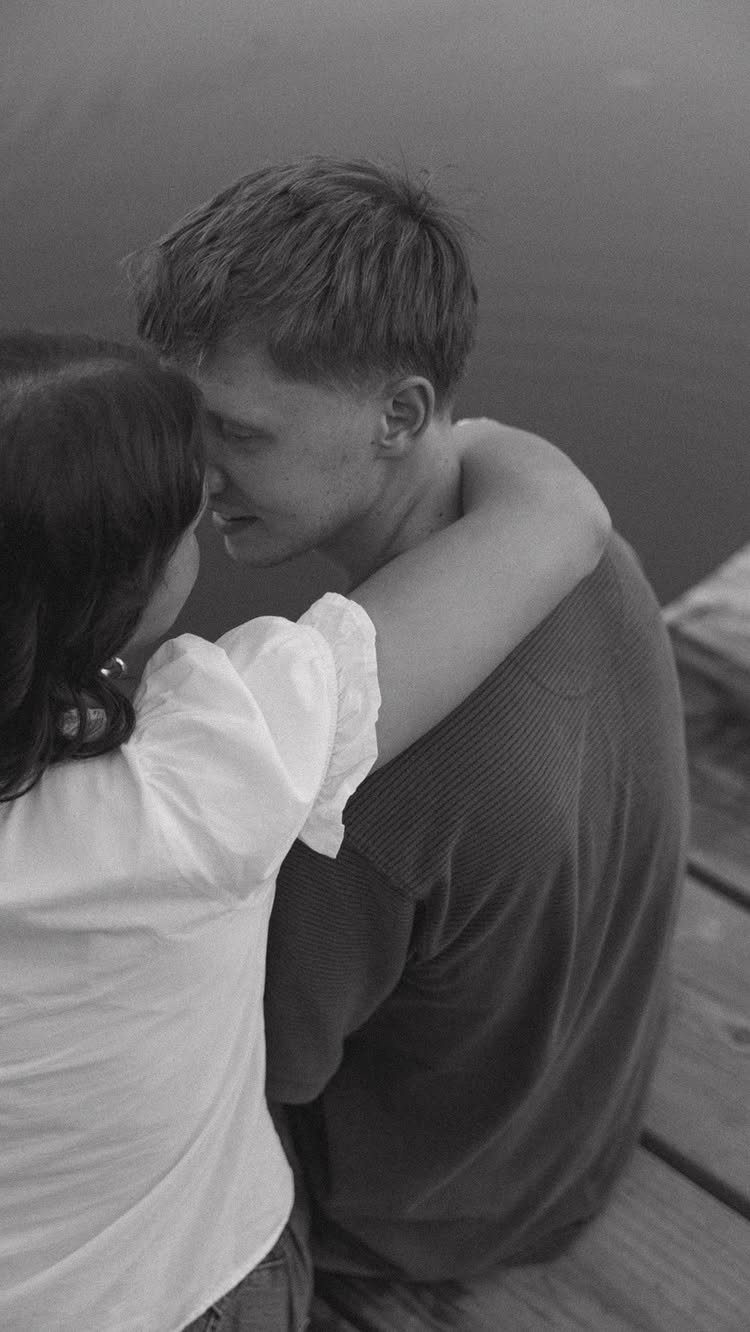
Touching noses is quiet and close, and black and white suits it, since nothing competes with the tilt of 2 faces. Sit side by side somewhere comfortable, like a dock, and lean in until your noses meet.
Keep the touch light and let your eyes close or soften. I’d skip any pressing; a barely-there contact looks sweeter.
17. Jumping
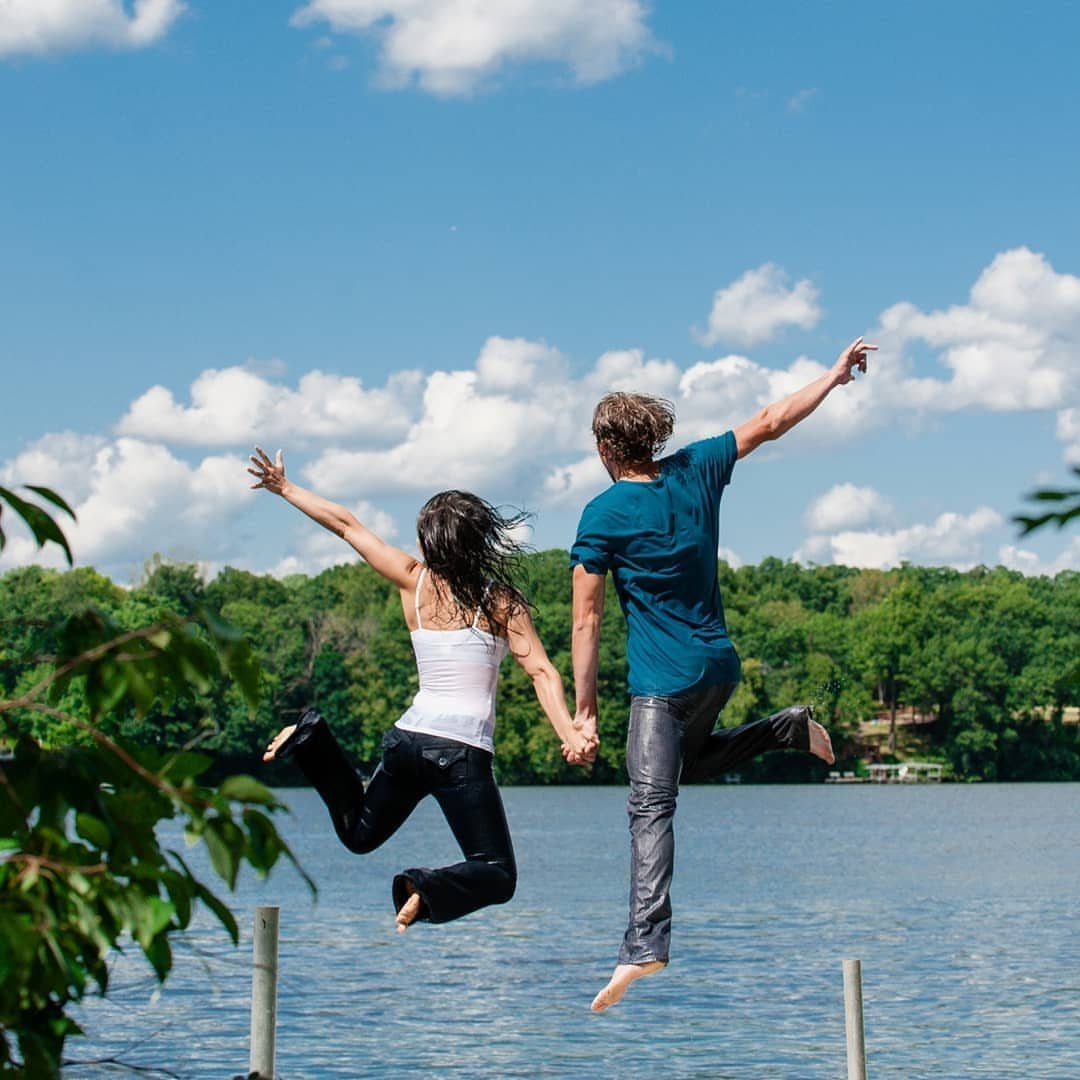
Jumping releases the nervous energy a shoot builds up, and holding hands mid-air keeps you a pair even when your timing is off. Open ground by a lake or field gives you room to land safely.
Count to three out loud and jump on three.
Expect to repeat it 5 or 6 times before heights and timing line up. Flat shoes, or none, save your ankles, and a photographer shooting in bursts catches the peak.
18. On a Bridge
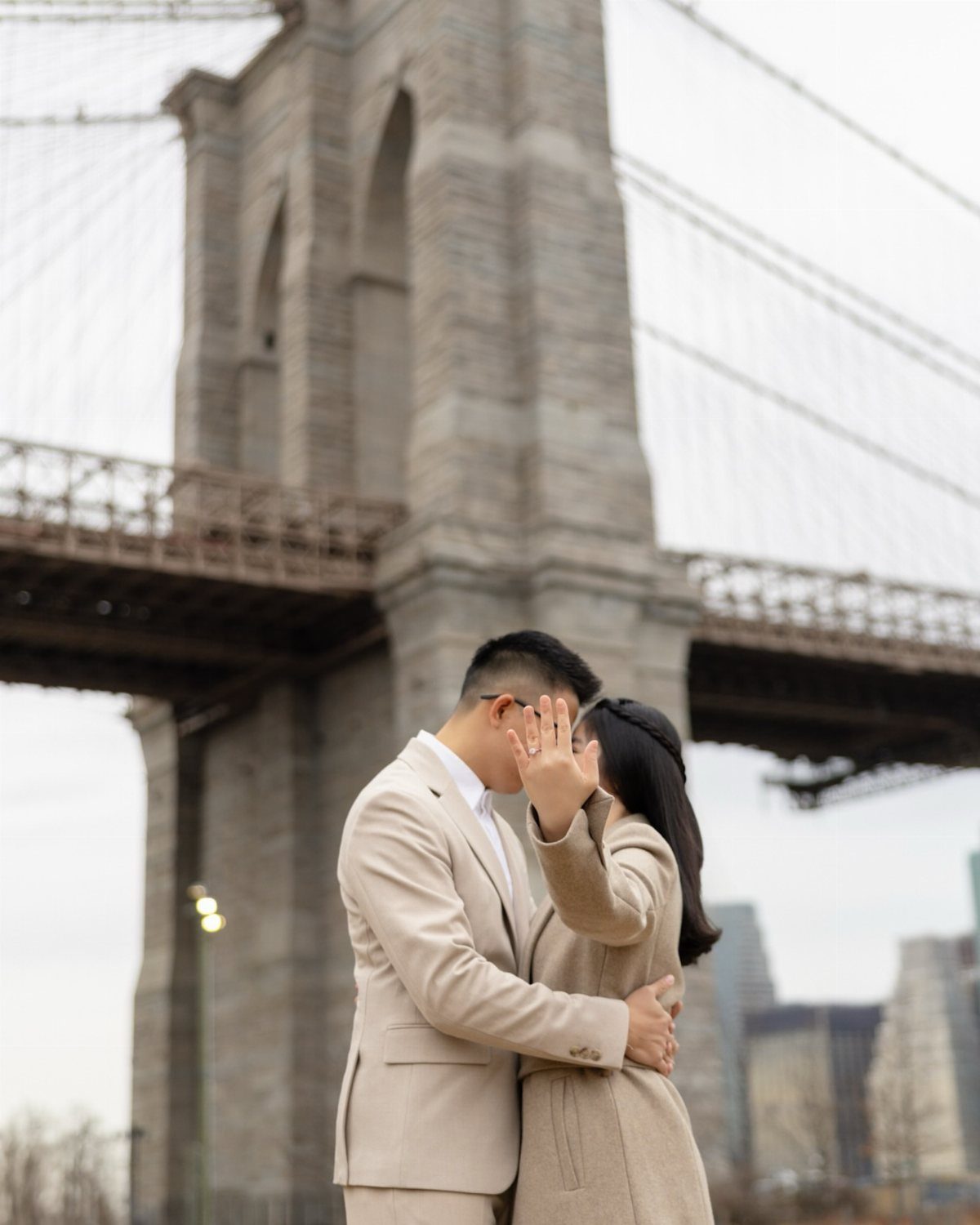
A landmark bridge gives you scale and skyline together, and stone or cable behind you makes a quiet moment read even stronger.
Neutral outfits like beige keep you from fighting the structure.
For something calmer, I’d choose a small bridge and sit on its edge. Pick early morning or late evening to avoid crowds walking through your frame.
19. Real Laughter
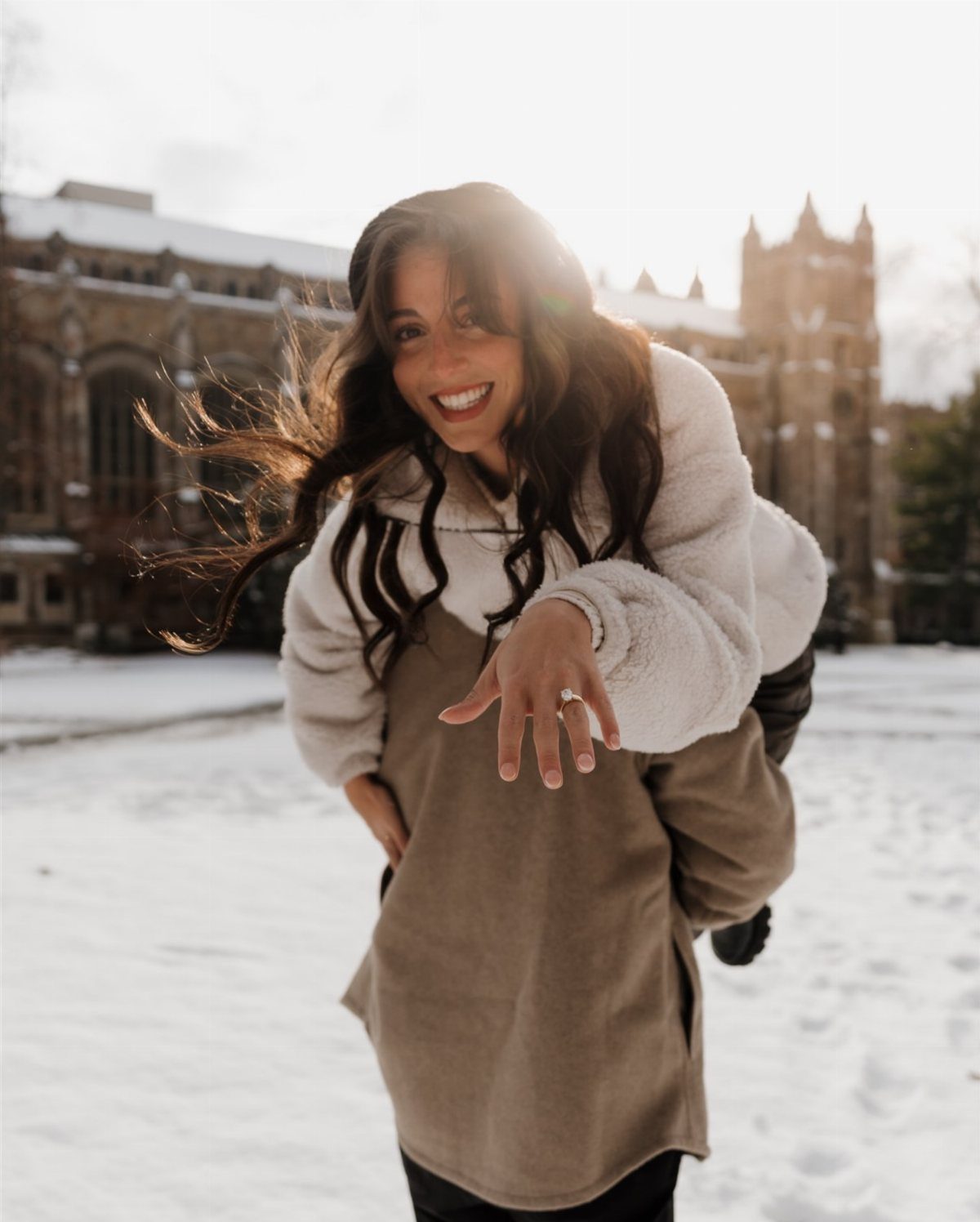
Real laughter is the shot most couples hope for and the one that disappears the moment you try to produce it. Piggyback rides, like this snowy one, work because the silliness does the job for you.
Tell each other something ridiculous, or ask your photographer to stay quiet and shoot in bursts. I’d keep the frames where the ring hand drifts into view, unplanned.
20. Down on One Knee
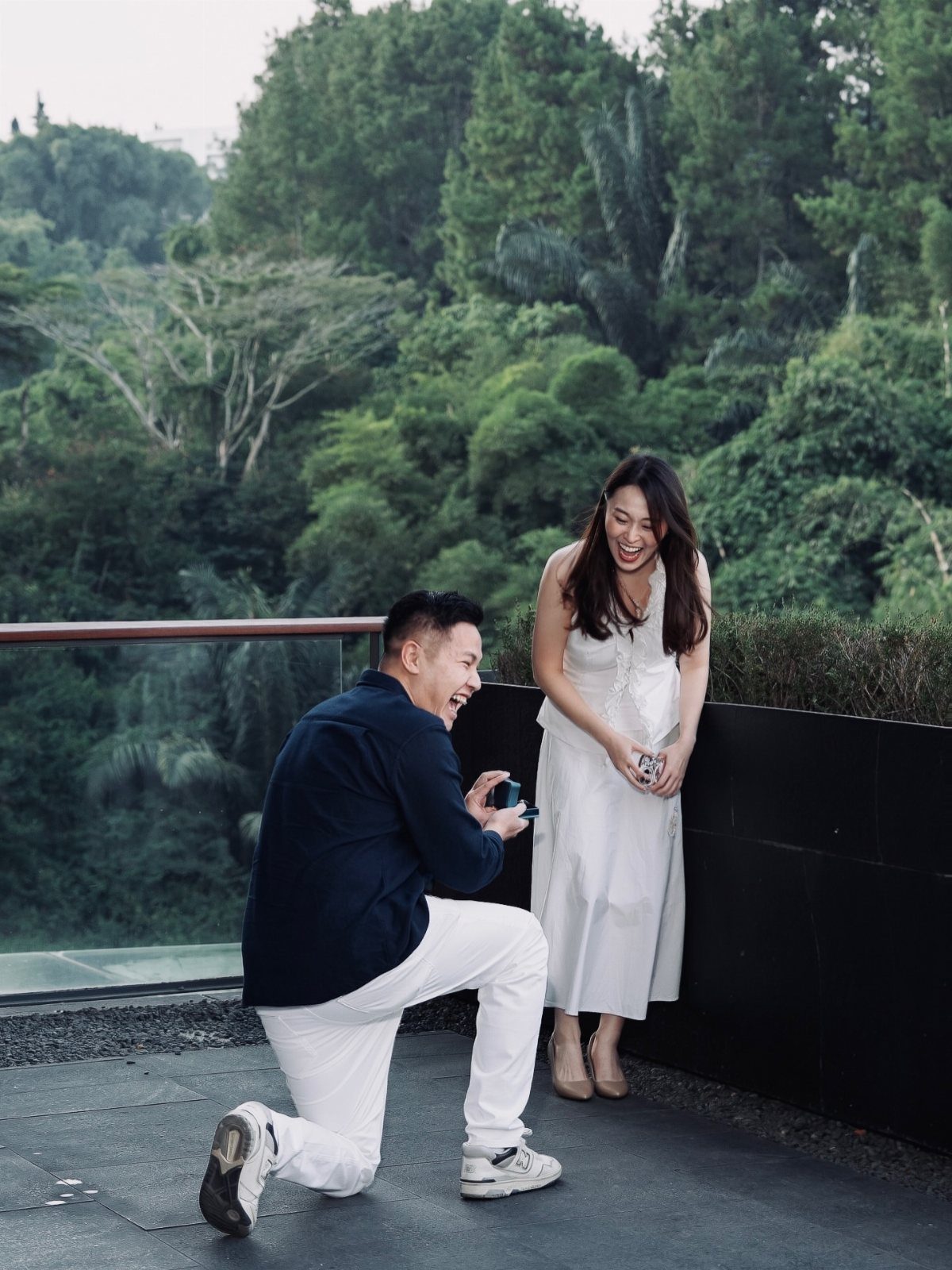
A kneeling proposal works best against a plain, open backdrop like a balcony railing over trees, because the greenery frames you both and you need no props.
If you’re staging one for your session, even though you’re already engaged, it becomes a fun re-creation.
Pick a spot with a clear floor, since a knee on gravel shows on your face. Let the person kneeling say something real, then keep the camera rolling through the reaction.
21. Picnic Setup
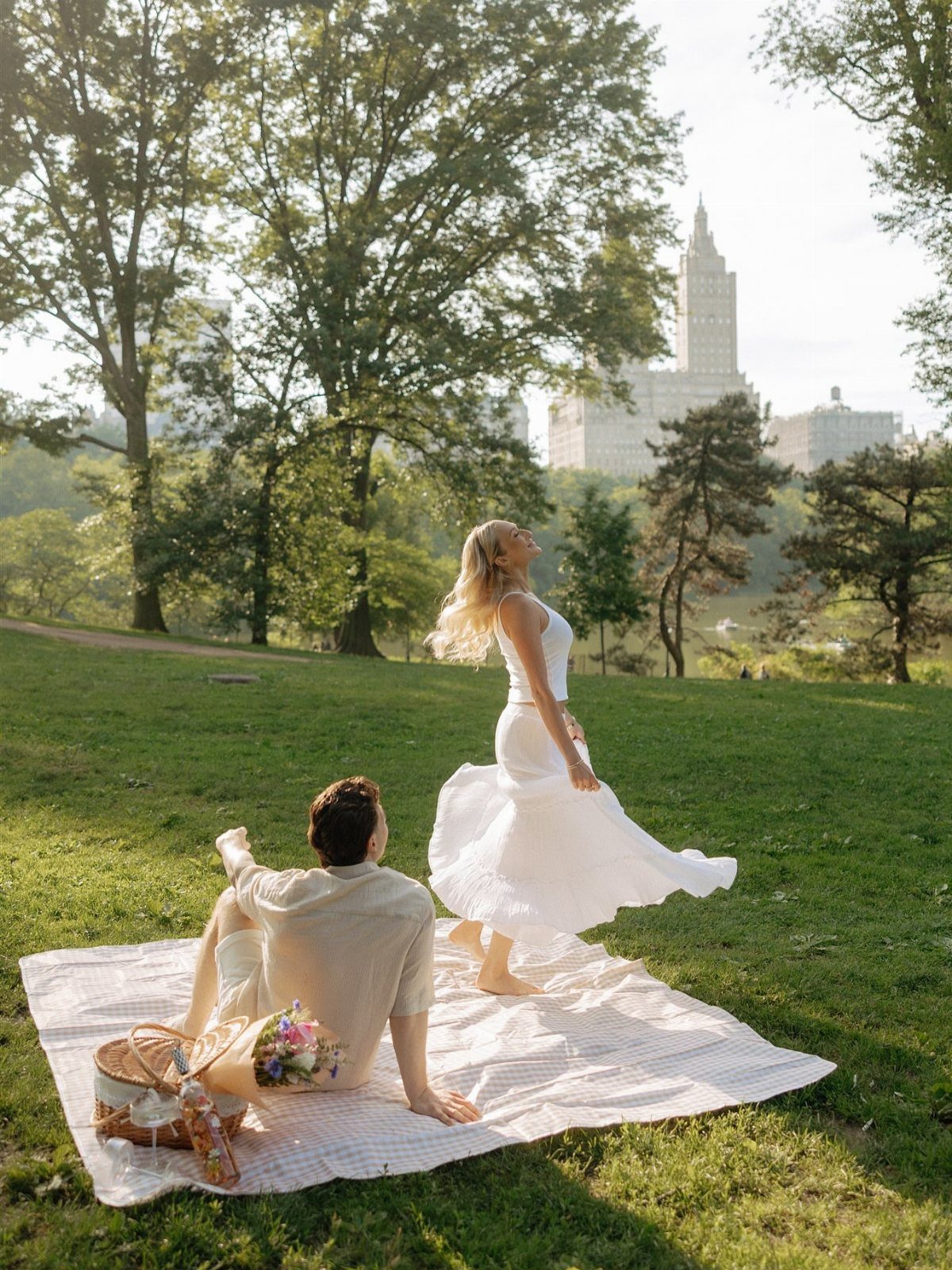
A picnic gives you a built-in set: blanket, basket, flowers, and a reason to sit close. Keep the food simple, since crumbs and spills show in a close frame.
Bring a blanket big enough that a skirt can spread without hitting grass.
I’d pack one drink each and save the dancing for after you eat. A twirl on the blanket, like this one, adds motion to a sitting scene.
22. Retro Elements
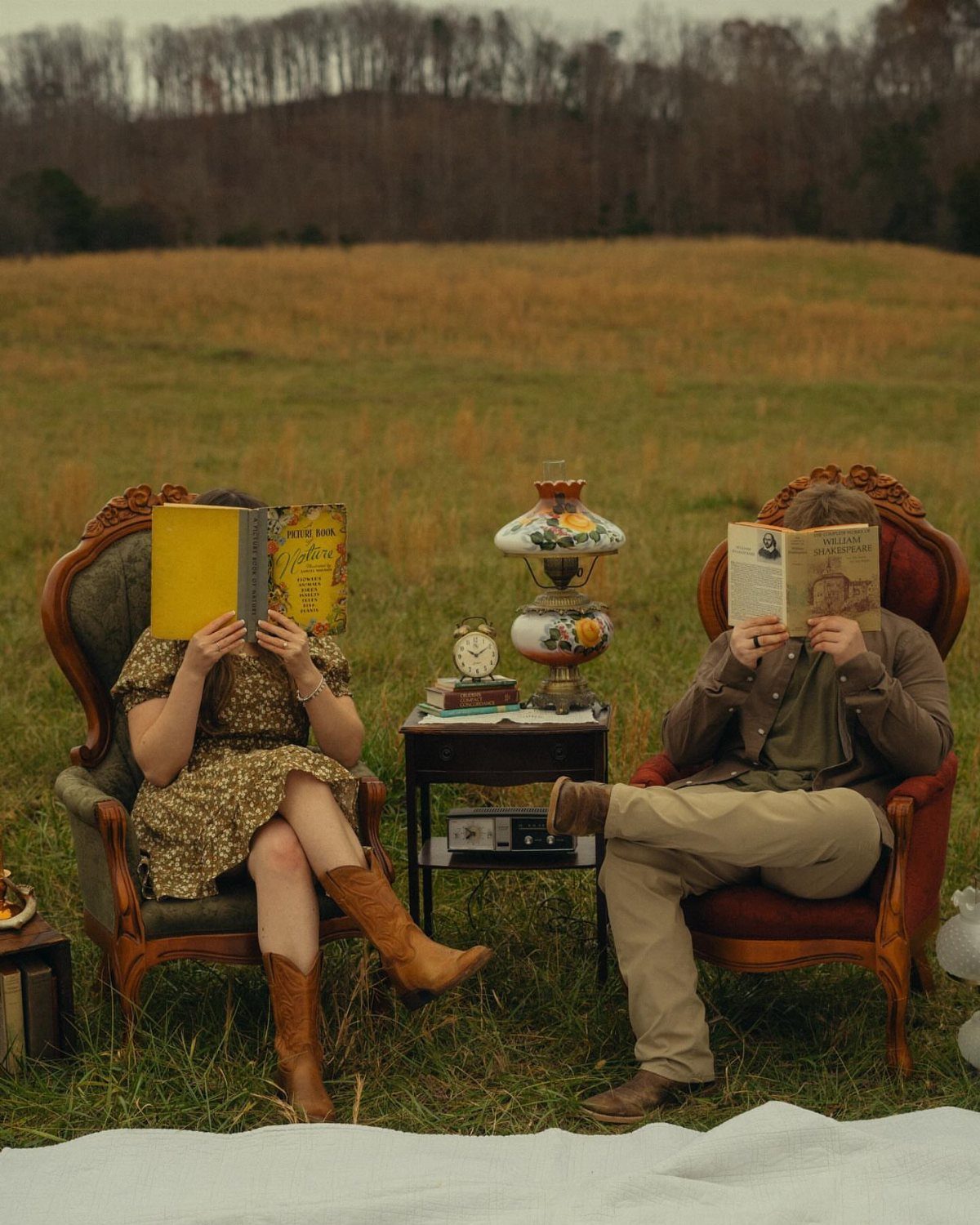
Vintage armchairs in a open field make an odd, funny living room, and a side table with a lamp, clock, and radio finishes the joke. Books held over your faces keep the mood playful instead of stiff.
Hauling furniture takes planning, so ask a friend with a truck, or borrow from a family attic. Choose pieces that look old rather than precious, since fields are rough on upholstery.
23. Holding Hands
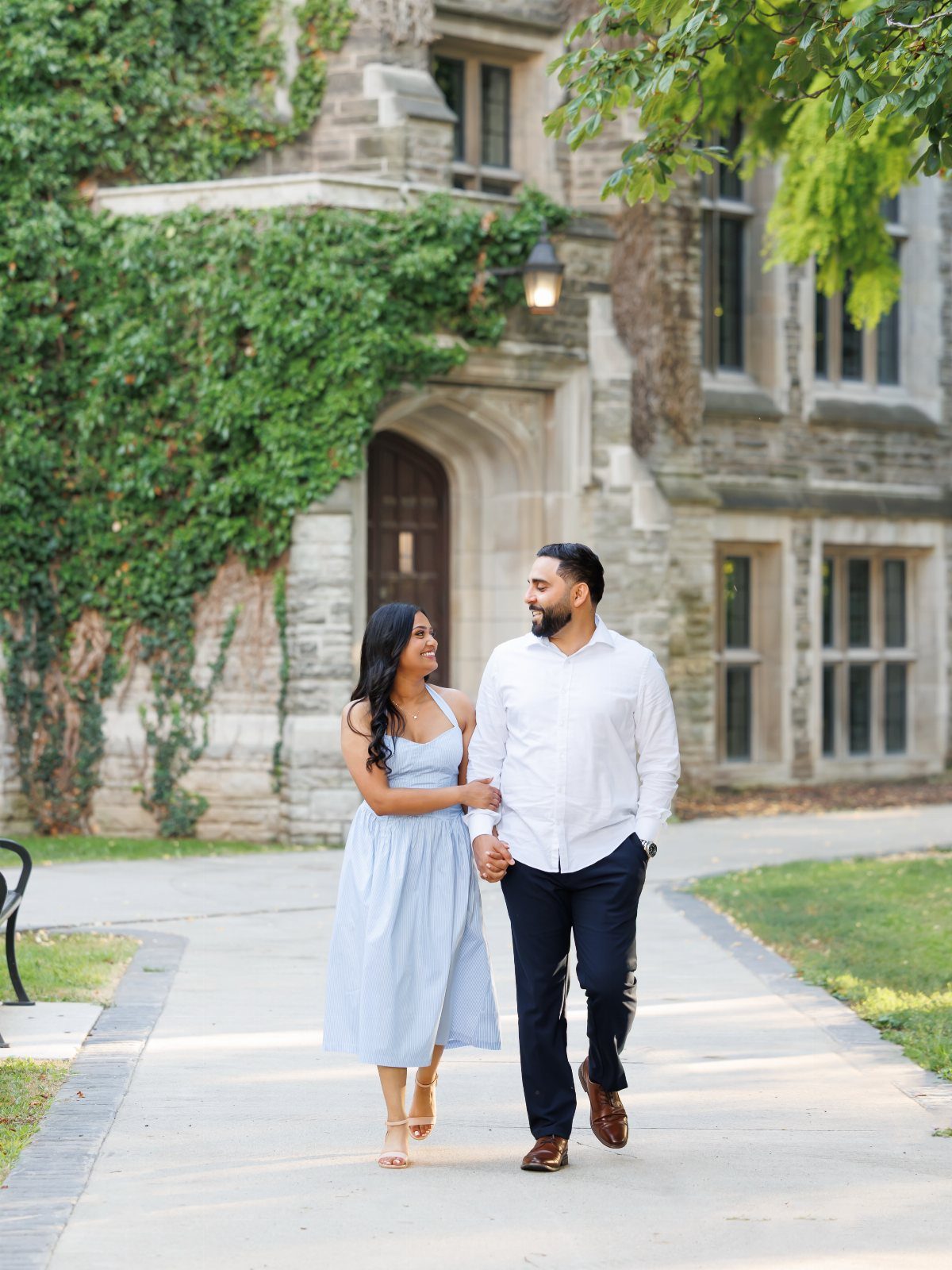
Walking hand in hand along a path is the easiest pose to pull off, since you only have to move and talk, and a textured background like an old stone wall or ivy adds depth for free.
Let your arms swing loosely instead of gripping.
Ask your photographer to try it from a few steps in front of you and again from behind, since each angle gives a different feel. Walk slowly, talk, and let the smiles come between steps.
24. Dramatic Dips
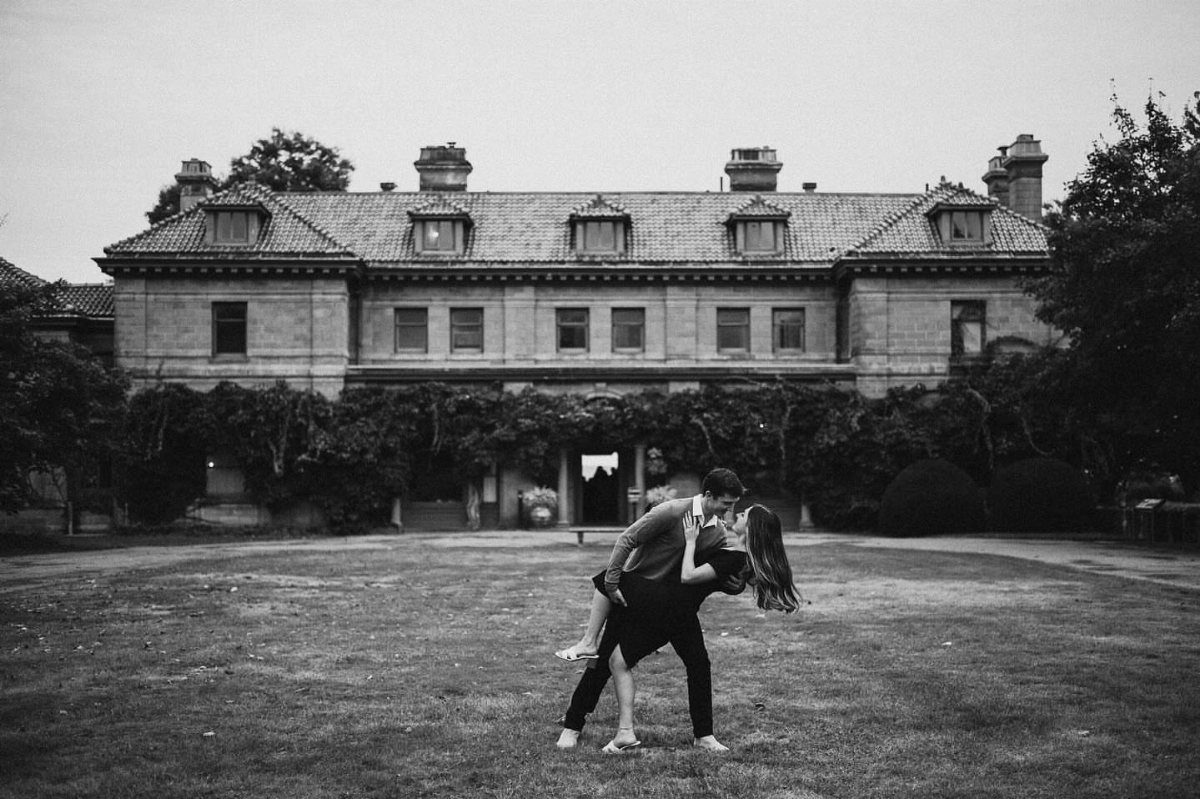
A dip looks grand against a stone manor, but it only reads well when the person dipping has a firm stance. Plant your feet wide, bend your front knee, and support your partner’s back with a strong arm.
Practice at home first, because a wobbly dip shows in the face.
Keep the dip short, hold the kiss for a beat, then come up. If either of you feels unsteady, skip it for a gentler lean.
Choosing the Right Photographer
Before you book anyone, ask to see a full gallery from a real session, not a highlight reel.
Look for whether the couples seem relaxed and different from one another. If every gallery has the same poses, you’d be paying for a copy of someone else’s Pinterest board.
A good one asks about who you are as a couple, not just your date and budget.
Documentary-style photographers tend to suit couples who dislike posing, because they prioritize real moments over fake smiles.
If you’re tight on budget, I’d still spend on this choice first. Comfort with the person behind the lens shows up in every frame, and no location or outfit makes up for its absence.
Posing Tips for Natural Photos
Talk to each other the whole time. Real conversation gives you genuine expressions, and it keeps your eyes on your partner instead of the lens.
Walk toward each other, lean in close, or say something that makes you both laugh instead of holding still. Start with something comfortable like a forehead touch or holding hands, then try anything bolder once you’ve settled in.
Then let your photographer lead. Your photographer has shot this hundreds of times and knows which moments look right, and most of those don’t feel like poses.
Engagement Photo Timing
Most couples book the session somewhere between half a year and a full year out, which leaves time to print save the dates.
Save the dates typically mail six to eight months before the wedding, or earlier if you’re getting married somewhere guests need to travel.
Work backward from your mailing date and leave room for editing time. Book the photographer early, since that timeline can arrive faster than you expect.
Coordinate colors and choose fabrics that work together, and skip busy logos.
An engagement photo session gets used for save-the-dates, invitations, the wedding website, and even reception décor, which is a lot of use from one shoot, so it’s a fair place to spend.