Outfits in this list run from soft pastels and all-white formalwear to black sequins, matching yellow Indian formalwear and a lavender gown.
Setting does the choosing: rust and deep earth tones suit autumn woods, soft pastels suit a gentle backdrop, and a bold shade like yellow can carry a plain wall.
Most of the advice here comes down to 2 outfits that share a tone without matching, and the pairings in this list, like the grey suit with a lavender gown, show how far that can go.
1. Pastels and Muted Earth Tones
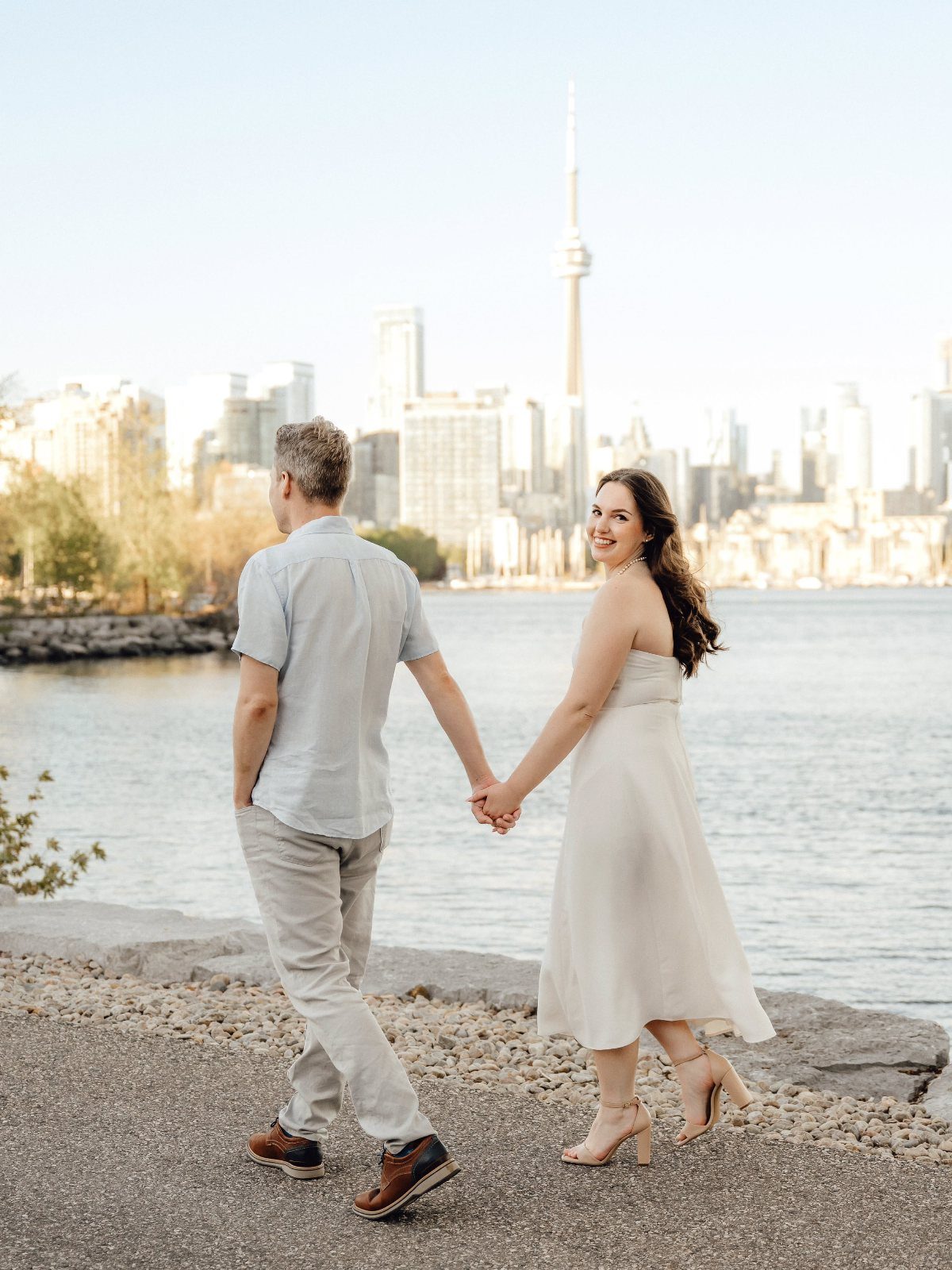
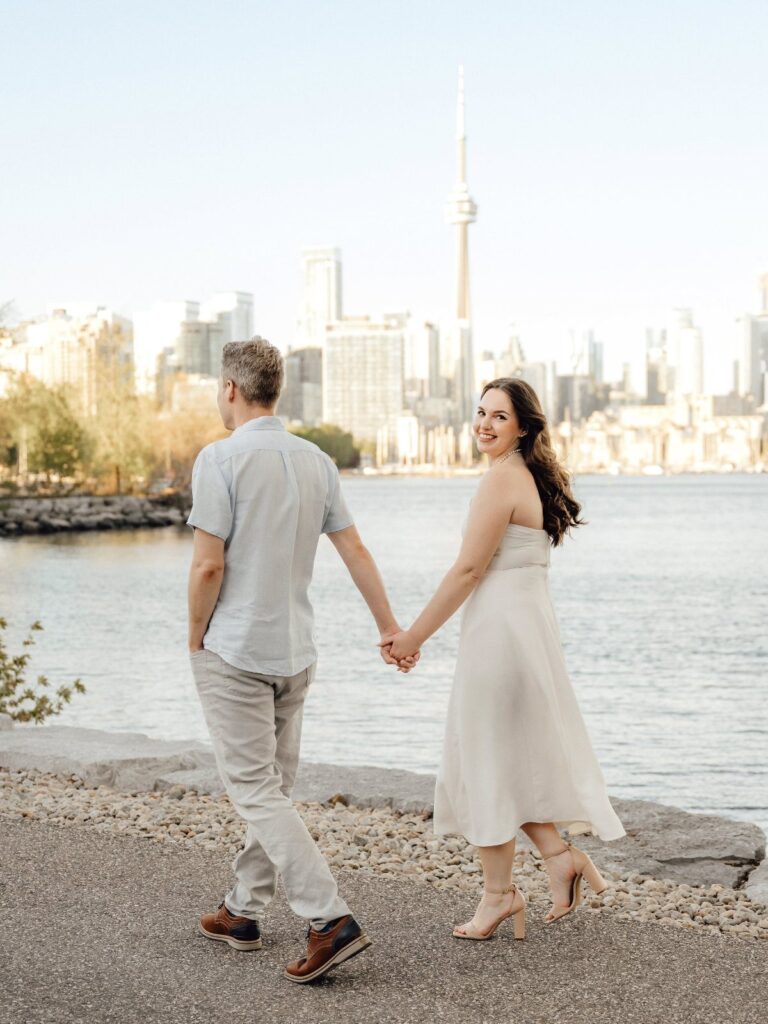
Light blue against white is the safest soft palette I know, and a waterfront with open sky gives it room to breathe.
Sage green, dusty blue, blush and warm beige all sit in the same quiet family, so any two of them will pair without trying.
Skip neon and anything very bright. Those shades fight the natural tones around you and pull the eye away from your faces.
Pick one color each, then let the other person’s shade echo it.
2. Warm Neutrals and Earthy Sunset Tones
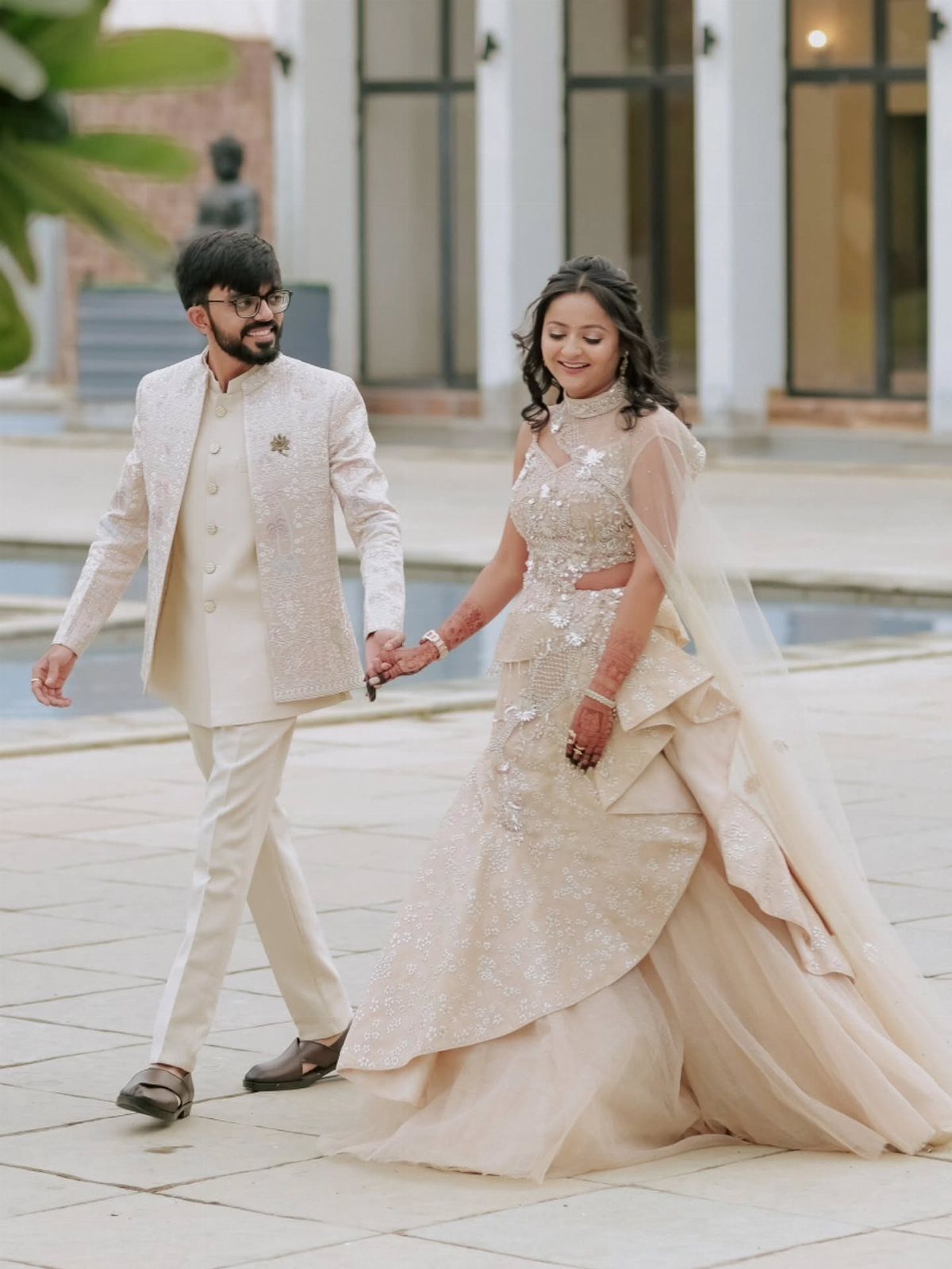
Ivory and cream turn formal wear into something warm, especially when the light is low. Terracotta, olive green, mustard and deep blue all belong in the same palette, and each one glows at golden hour.
I would skip hot pink and go with a deep plum instead. It keeps the richness without jumping out of the earthy range.
If you wear ivory like this, add one deeper accent, such as a mustard scarf or a blue jacket, so the two of you don’t disappear into the background.
3. Deep Earth Tones
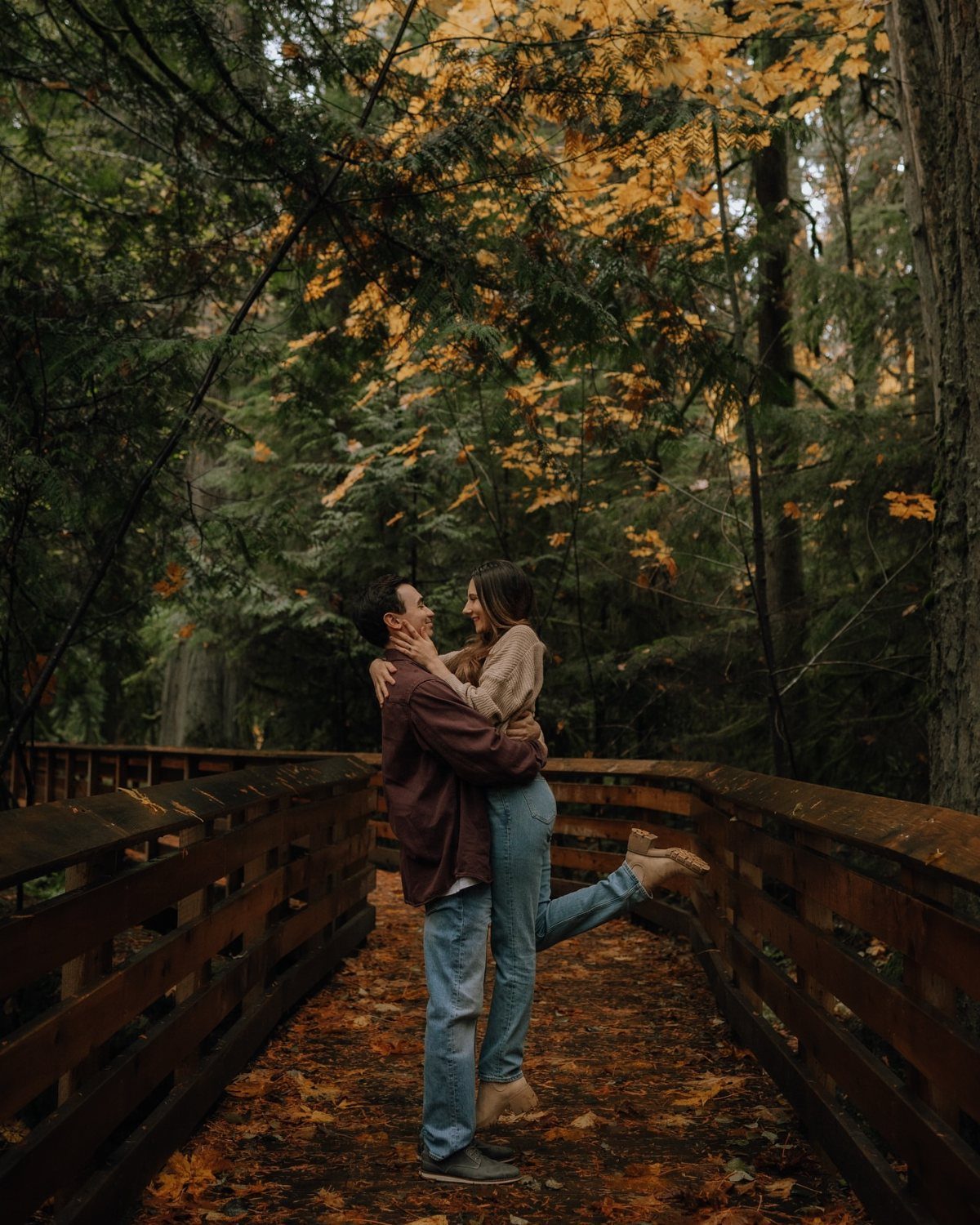
Autumn forest settings call for rust, burnt orange, forest green, deep burgundy, warm brown and soft cream.
Burgundy against cream and blue holds up well beside fall leaves because the deep shade sits below the foliage in brightness and doesn’t compete with it.
Leave out neon and cool tones. They contrast harshly with the woods and look pasted on.
Let one of you wear the darker shade and the other the lighter cream, so you read as a pair.
4. Outfits That Showcase Tattoos
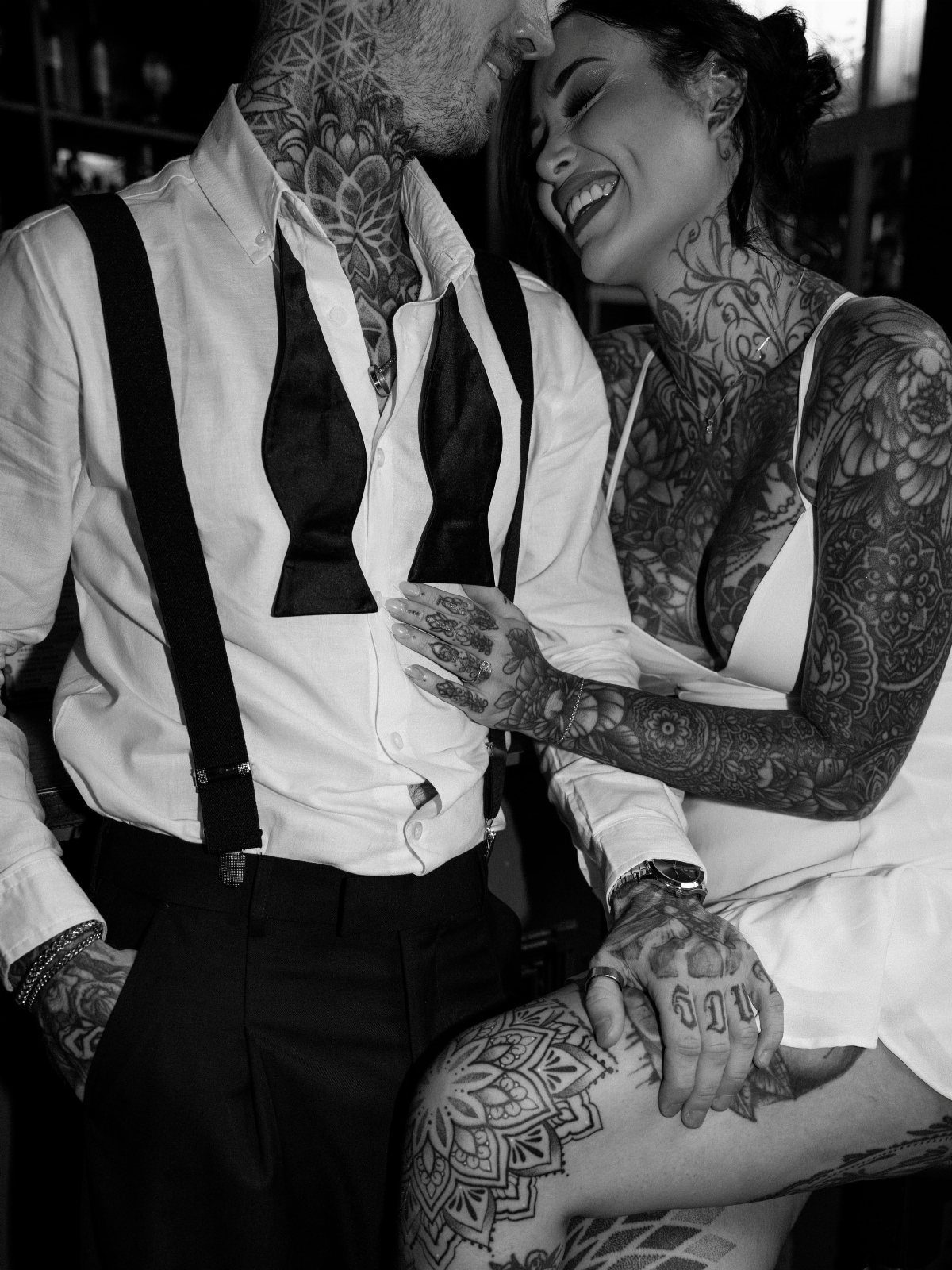
Plain white clothes let tattoos do the talking.
Black and white film suits this well, since color can’t fight the linework. Choose simple cuts with no prints, and pick necklines and sleeve lengths that show the pieces you care about most.
5. All-white and Cream Formal Outfits
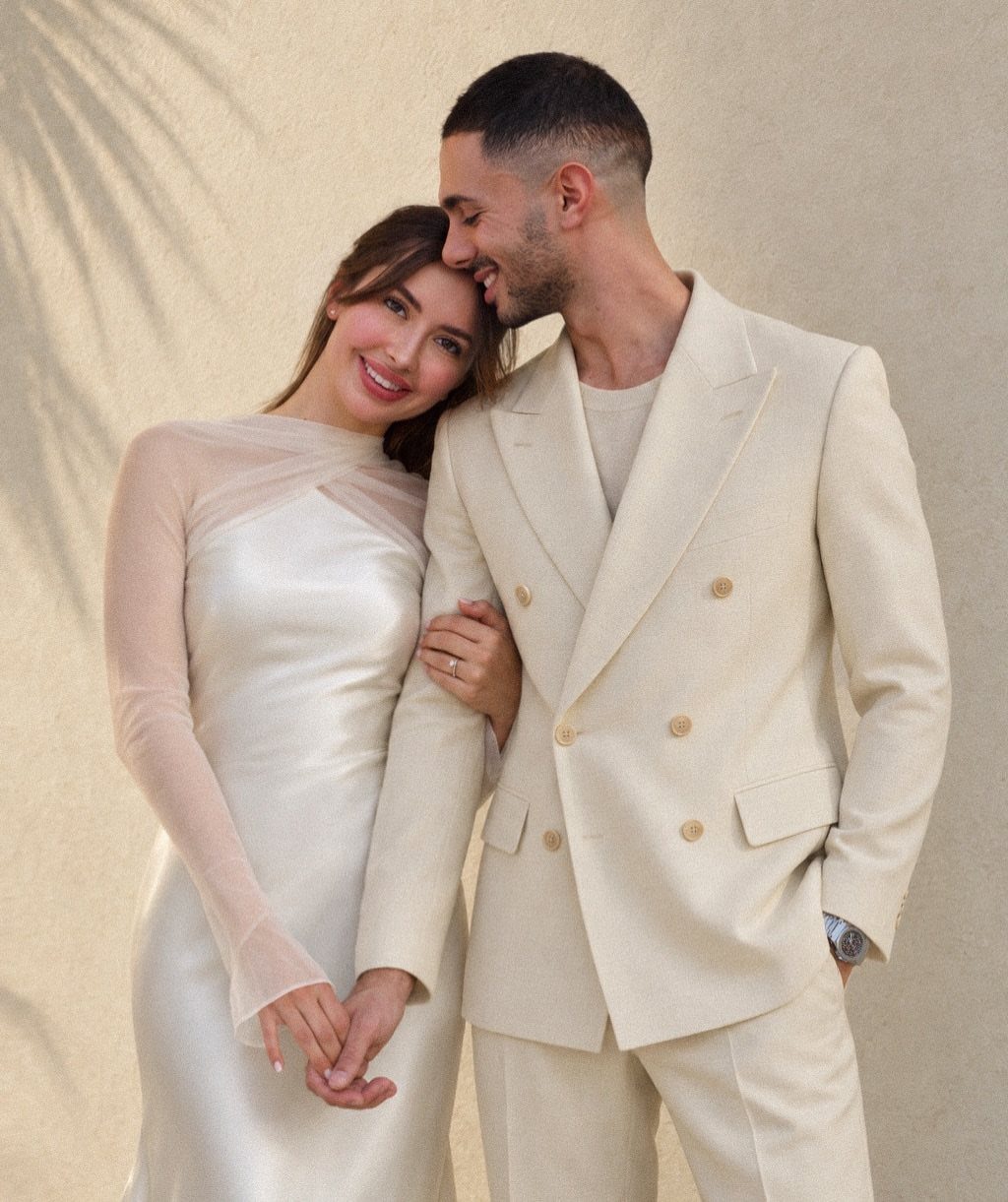
Cream and white, worn together, look polished against a plain wall.
Keep the fabrics in the same range of warmth so the 2 shades blend rather than clash, since a bright white next to a yellowish cream can look like a mismatch.
I prefer formal cuts here, because with so little color, the tailoring does the work. A neutral backdrop keeps attention on the two of you.
6. Short White Dress and Tailored Suit
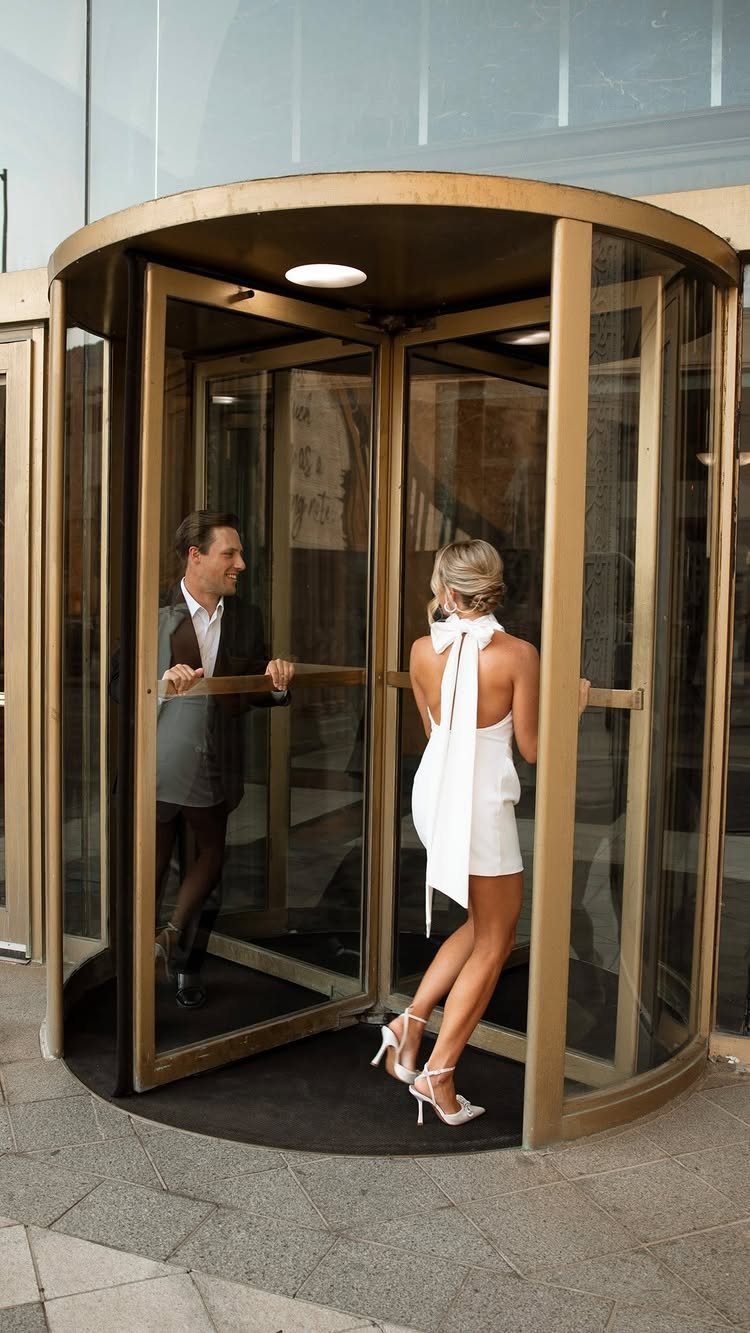
A short white dress with a bow back pairs well with a grey suit, and the contrast keeps both outfits clear.
The dress reads bridal without a full gown, and the short hem moves easily if you’re walking or turning through a city.
Choose a suit that’s tailored closely, since a loose fit looks sloppy next to something this crisp. I would also check the back of the dress, because the bow is a detail worth shooting from behind.
7. Classic Blue Shirt and White Dress
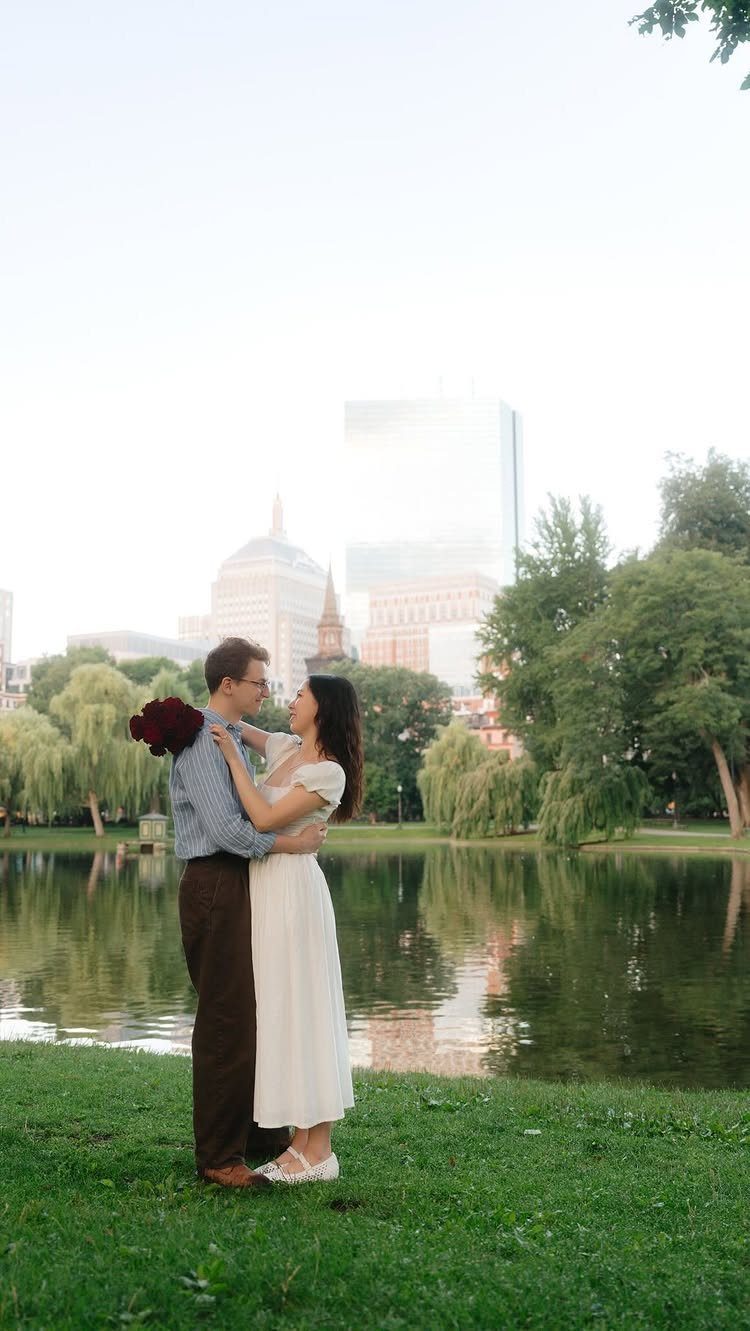
Light blue and white is a pairing I trust, and brown trousers keep the man’s side from looking like a uniform. A midi hem on the white dress moves well and feels easy for an outdoor walk.
Let the shirt be a soft shade, not a saturated one, so the two pieces stay in the same quiet range.
8. Coordinated Yellow Indian Formalwear
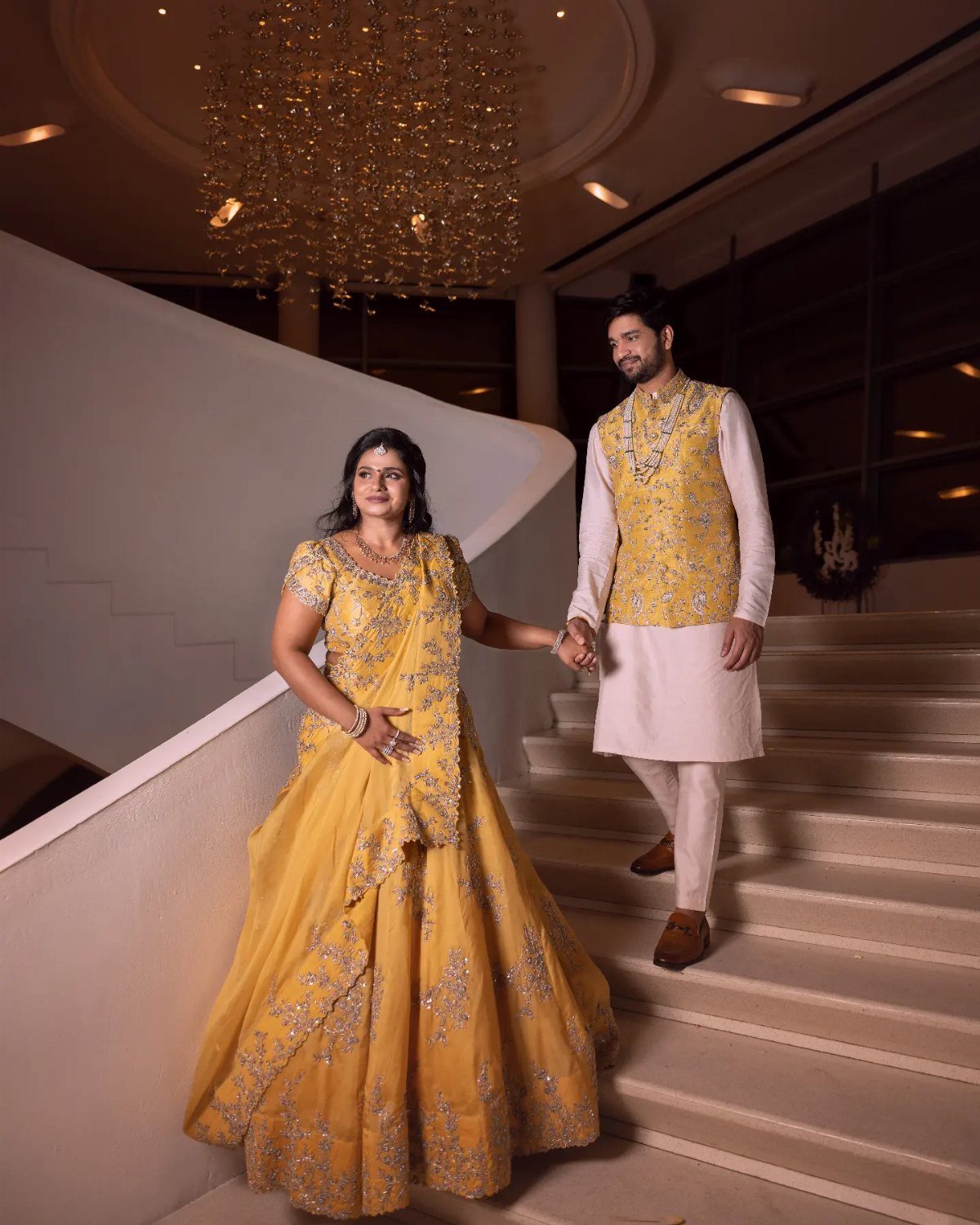
Matching yellow is a bold choice, and it works because both outfits share the same shade. An embroidered lehenga beside a patterned Nehru jacket gives each of you texture without adding a second color.
Pick an indoor spot with a plain white or pale backdrop, so the yellow carries the frame. A busy room would compete with the embroidery.
If the yellows differ, hold the 2 outfits together in daylight and compare them in the same light the photos will use.
9. Monochromatic Black Sequin Evening Wear
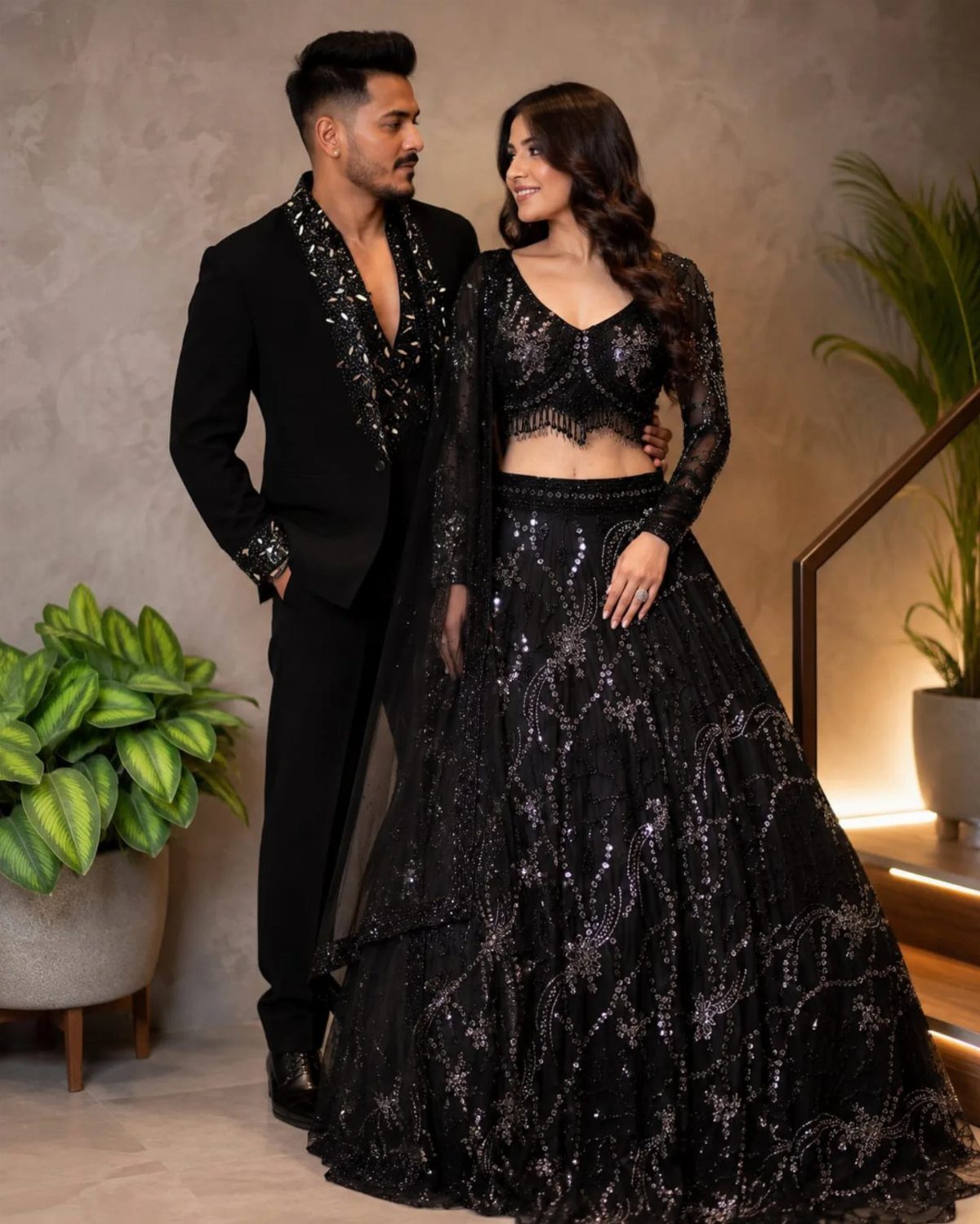
Black on black only reads as formal when the surface changes, and sequins do that. They catch light and give each outfit depth that flat fabric lacks.
Keep the sequin amount similar on both of you. If one outfit glitters far more, the pair stops looking coordinated.
10. White Dress and Casual Dark Shirt
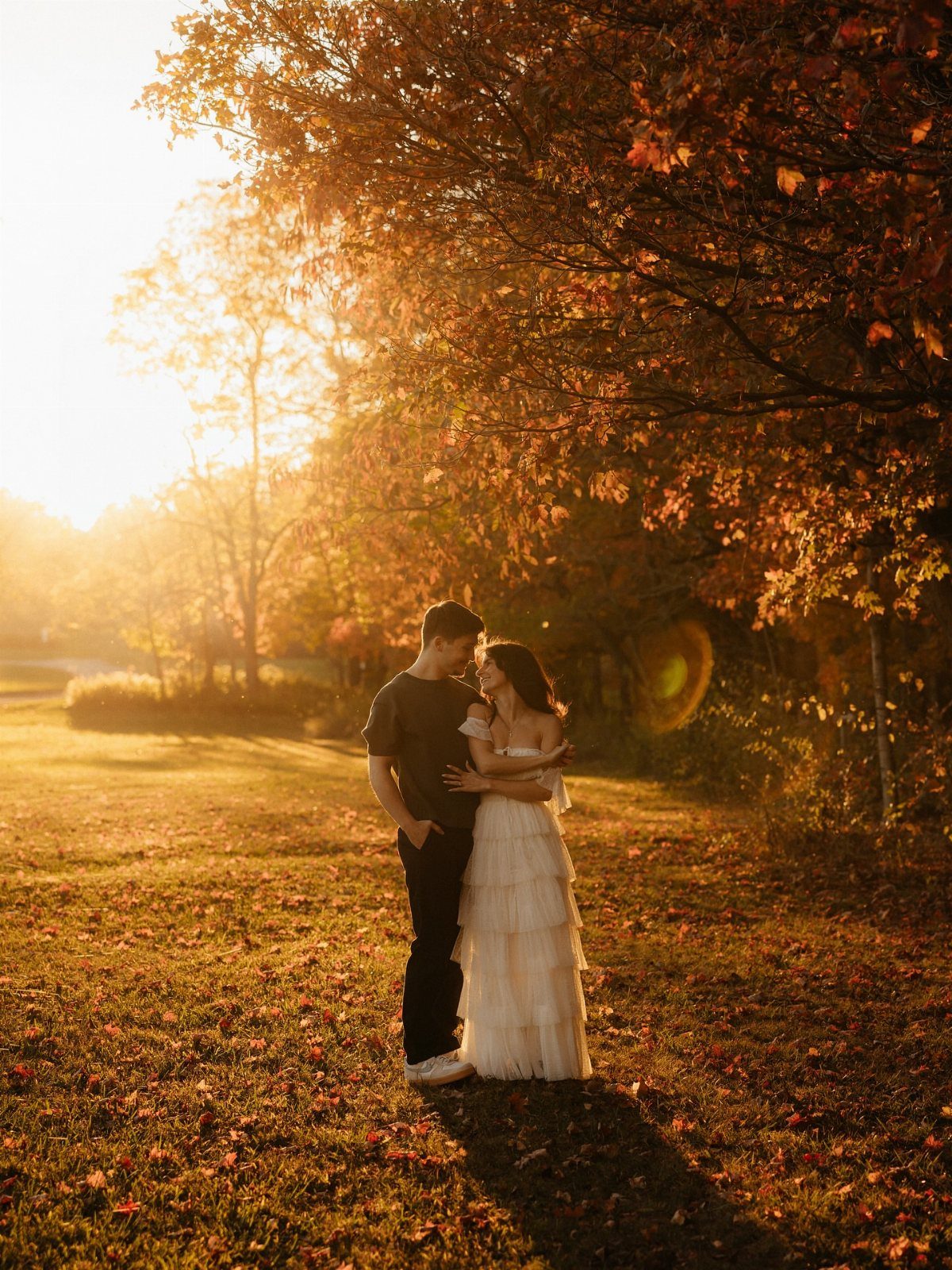
A dark t-shirt and dark trousers keep the man grounded and let the dress stand out against the trees.
I like this for couples who want to dress up one person without making the other wear a suit. Stay with solid dark pieces, with no logos or loud prints.
11. Grey Suit and Lavender Gown
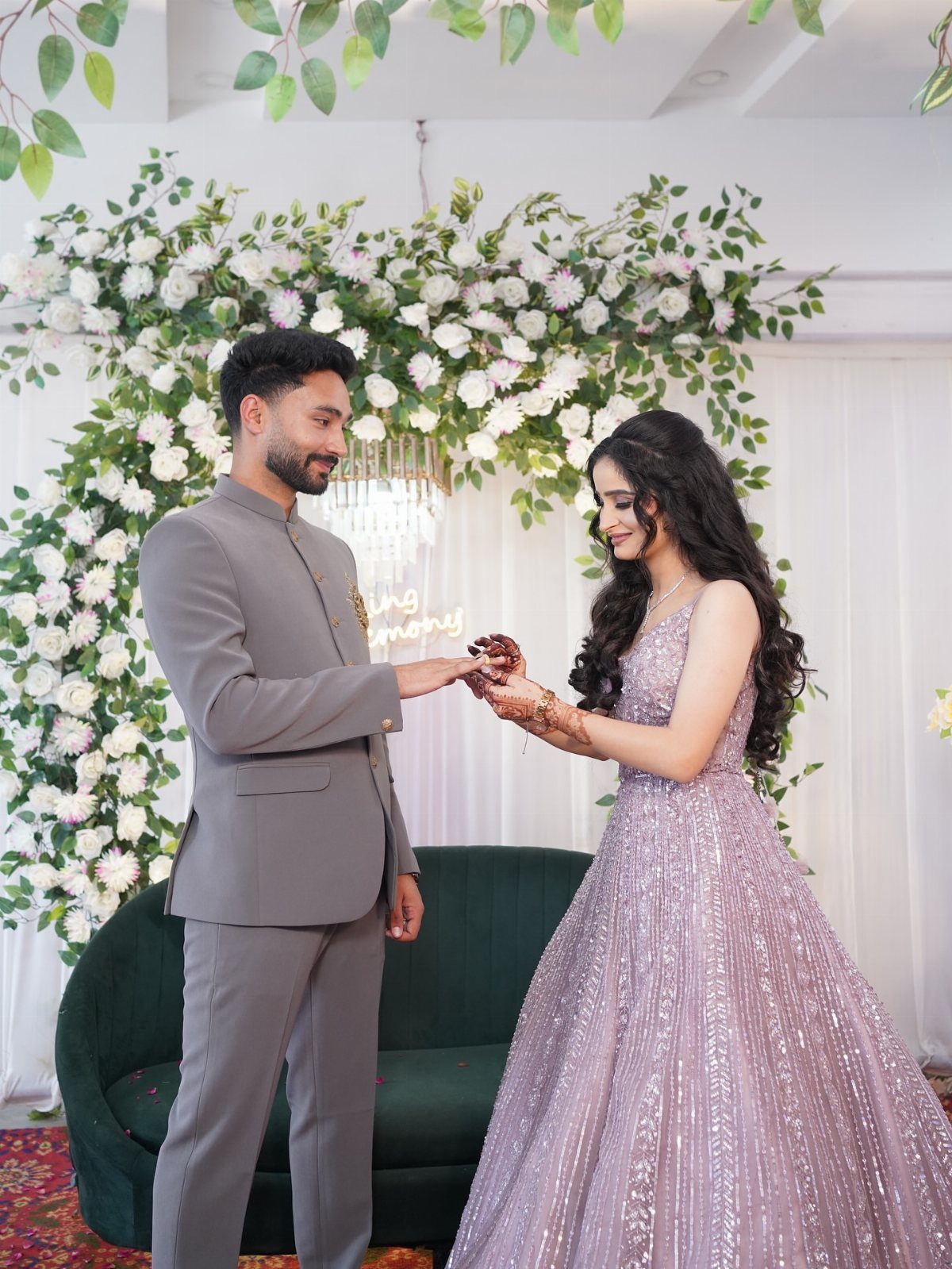
An embellished lavender gown is soft but still formal, and a tailored grey suit sits quietly beside it. Grey and lavender share a cool, muted tone, so neither one overpowers the other.
Henna on the hands is worth planning around: choose sleeves or a pose that lets it show. A solid tie or pocket square in a related shade would tie the suit to the gown.
12. Cream and Purple Indian Formalwear
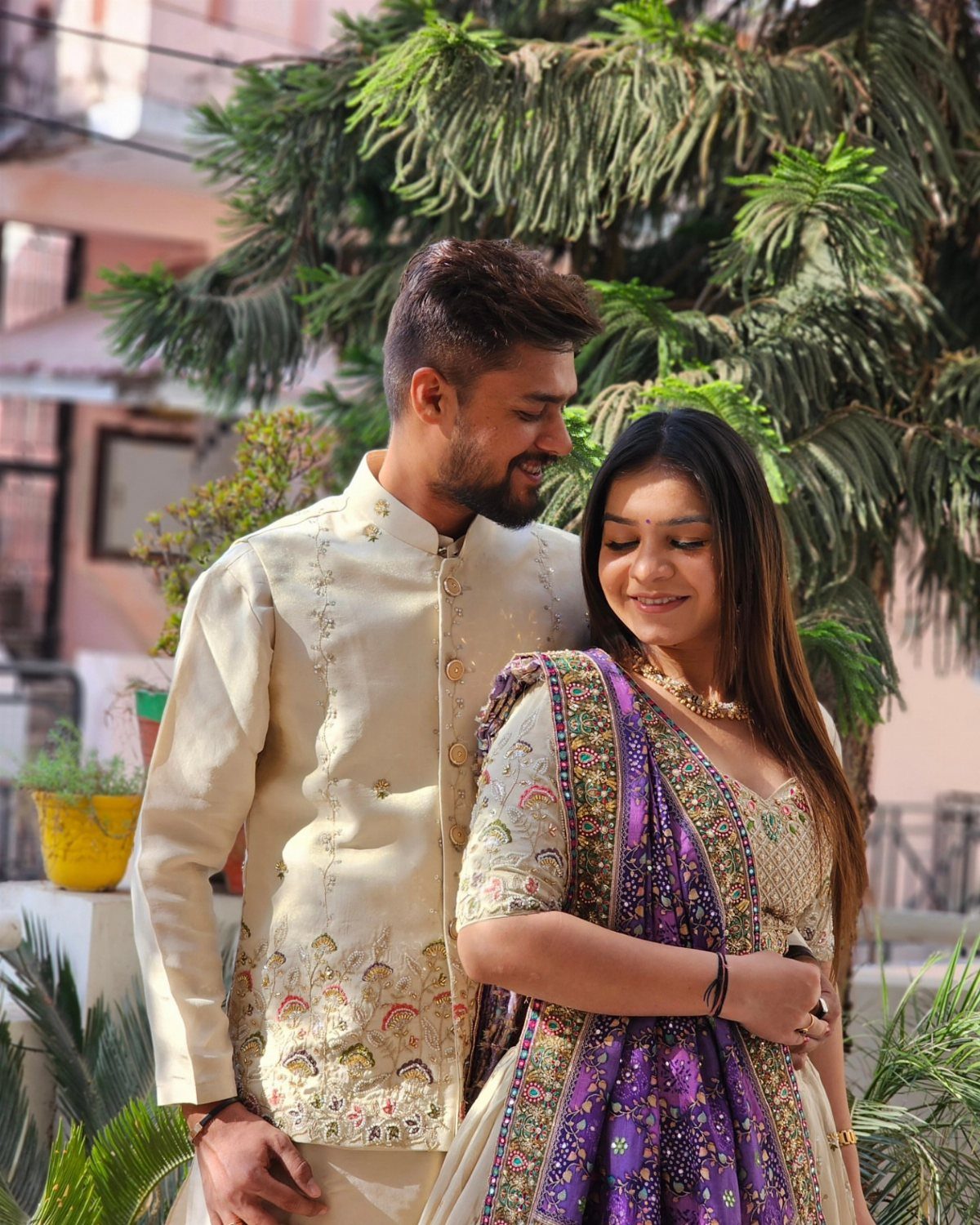
Cream with purple accents is a gentler take on traditional formalwear. A cream sherwani beside a cream and purple lehenga means he wears the base shade and she carries the color.
Purple reads strongly against green, so a leafy backdrop makes a deep shade stand out, while cream keeps the pair from looking heavy. I would avoid a backdrop with heavy flowers, which would clash with the embroidery.
13. White Lace Dress with Brown Shirt
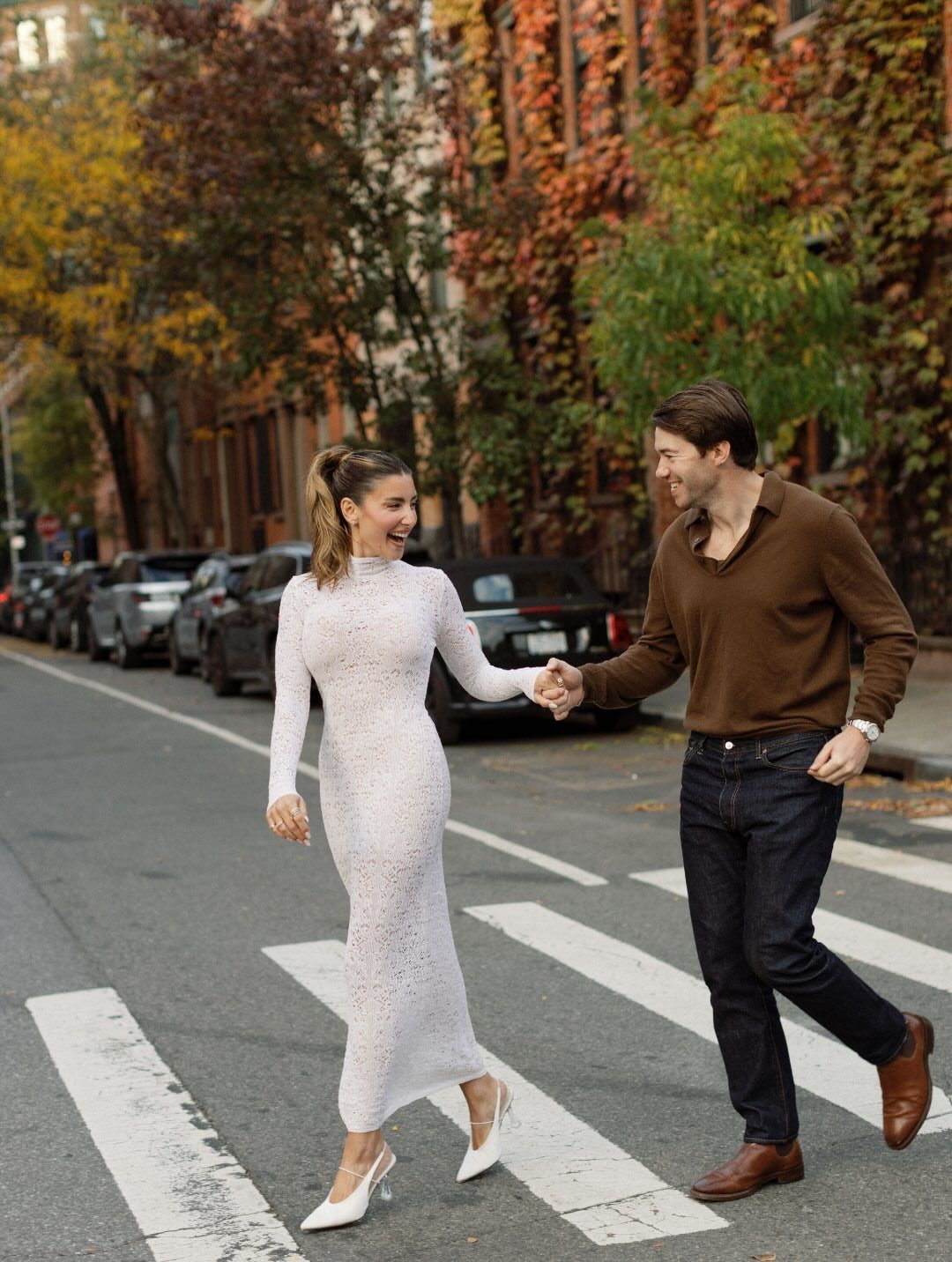
Long sleeves give a white lace dress a quieter, more grown-up look, and a brown shirt with jeans keeps the pair relaxed enough for a walk across a city street.
Brown sits close to the warm side of white, so the 2 read as friends rather than opposites.
Dark, well-fitting jeans look sharper than faded pairs next to lace.
14. Professional Hair and Makeup
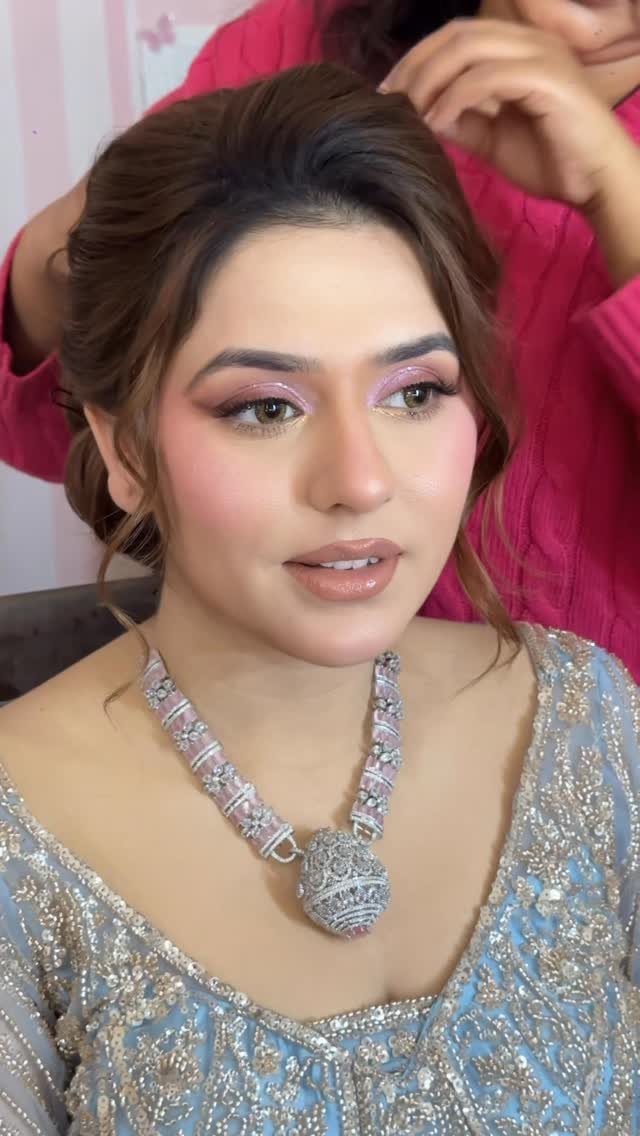
Professional hair and makeup is the one outfit decision I would spend on first, since a styled updo and polished makeup frame a dress like silver embellishment far better than any accessory could.
Hire someone who will do a trial first, so you can see how the look photographs. Then wear the same look for the wedding if you love it, which lets one booking serve both.
If the budget is tight, book the artist for hair or makeup, whichever you struggle with more, and do the other yourself.
Focus on Emotions, Not Clothes
Solid colors keep the attention on your faces and the way you look at each other, which is the real subject of the session.
A pattern can bring some play into the frame, so a small print or a soft stripe is still on the table.
Watch for tight, high-contrast, small patterns, especially on dress shirts. They can produce a swirly shimmer on camera called the moiré effect, and it can’t be fixed by posing.
If you love a pattern, a small print or a soft stripe is still on the table, so take a few test photos on your phone before the session to see how it reads on camera.
Relax and Enjoy the Session
Comfort shows on camera, and so does the lack of it. Wear what makes you feel like yourself, whether that’s a dressed-up look or a casual, polished one.
Two outfits work well for a session: a casual "cute date" look and a more formal one. I would start with the casual outfit, since it helps you settle in while everyone warms up.
Long, flowy dresses and skirts add movement that tends to look natural and flattering. Couples who live in jeans and hate dressing up should pass on any outfit they’d never pick for a normal Saturday.
If you’re envisioning a sweet and casual at-home session, look no further than a classic button-down and jeans. A pair of flats and your favorite personal jewelry are simple, sentimental additions to what are sure to be timeless portraits.
— Vogue
Plan a Date Around the Shoot
Turn the session into a date.
It gives you something to look forward to, and it lets you relax once the photos are done.
A short packing list helps the day run smoothly:
- A second outfit, plus the shoes and accessories that go with it
- Touch-up makeup
Frequently Asked Questions
What is the best color to wear for engagement photos?
Light pastels and warm neutrals are the safest. Each of you can choose a shade, then let the other’s color pick up a hint of it; that reads as a pair without looking like uniforms.
How to not look awkward in engagement photos?
Choose clothes you already feel good in; camera catches ease right away, and it catches stiffness just as fast.
Book dinner or drinks for right after the shoot; having that to look forward to makes the session feel lighter, and you can unwind once the camera is packed away.