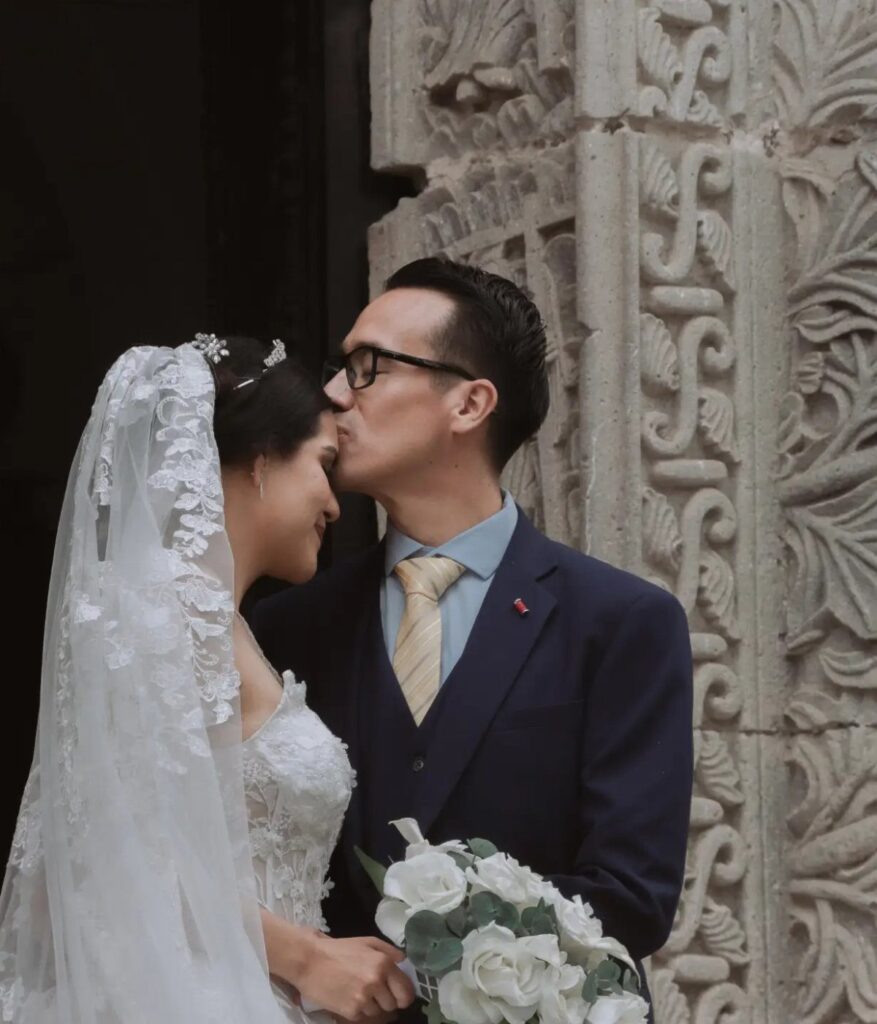
The poses here run from a glance and a forehead kiss, which cost nothing, to a dip, a carry, a champagne tower and a grand staircase kiss, which need rehearsal, the right shoes or a venue’s permission.
Your own setting decides which ones are yours: a staircase, a grassy field and an open stretch of nature each favor different shots, so pick from what the venue actually gives you.
Then match the effort to your comfort, because a dip or a carry on open grass is easier to laugh off than one on a polished indoor staircase.
1. Walking Together
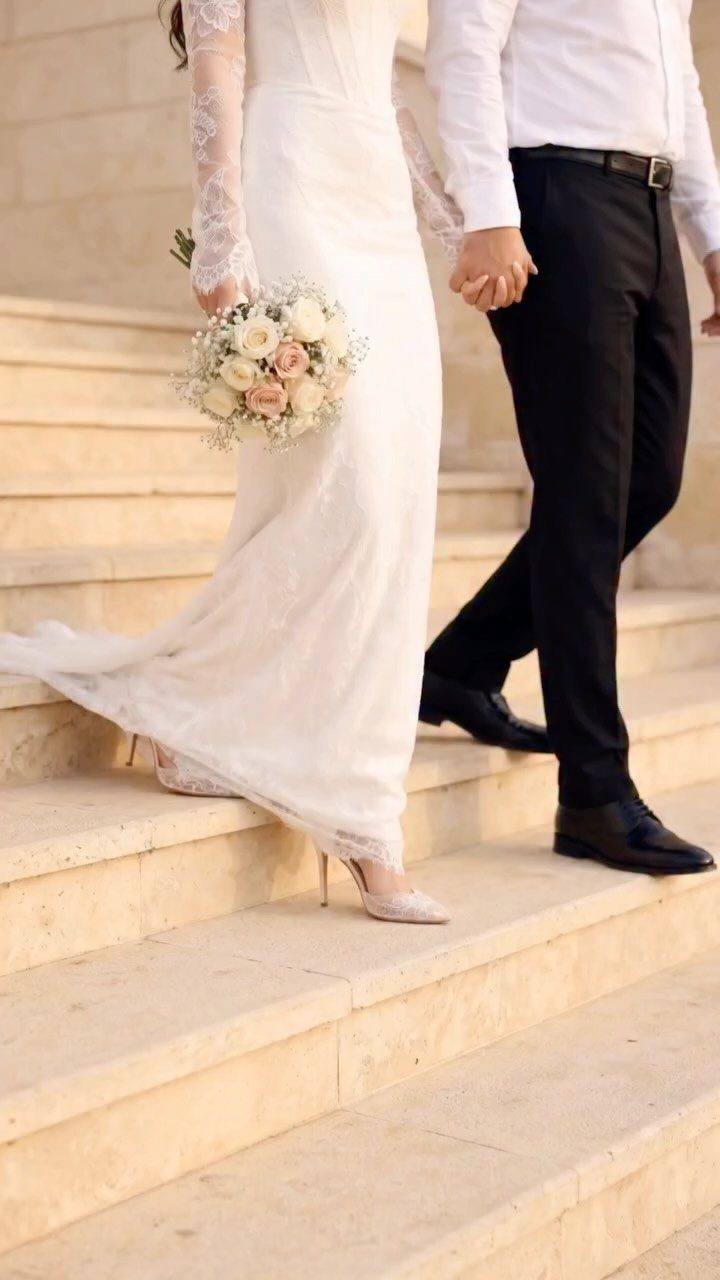
Stone stairs give the walk built-in depth and lines that lead the eye, so a pair of steps and a slow pace do most of the work for you.
Steps give the walk a natural rhythm and put the couple’s joined hands at a height the camera can catch.
Ask for a slow pace and tell each other something quiet as you climb; the motion looks candid because it mostly is. Skip the camera and keep your eyes ahead or on each other.
I’d pick a staircase over a flat path whenever the venue has one.
2. Close Up of Couple’s Expressions
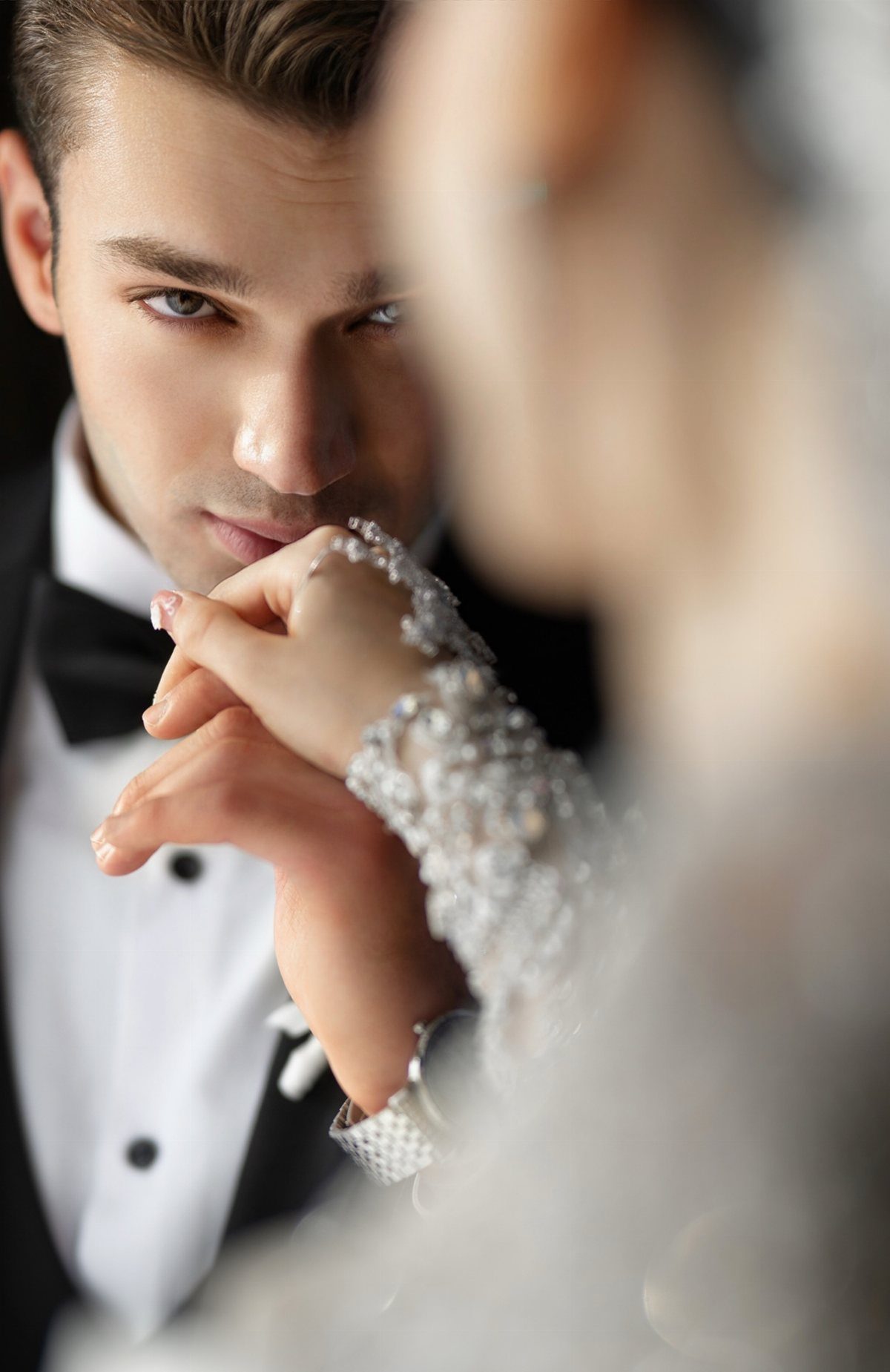
Tight framing turns a pose into a feeling. Here the groom’s look is the subject, and the bride is only a soft blur with a beaded sleeve near his face.
Your job is simple: look at your partner and think of something specific, like the moment you decided to say yes.
3. The Forehead Kiss
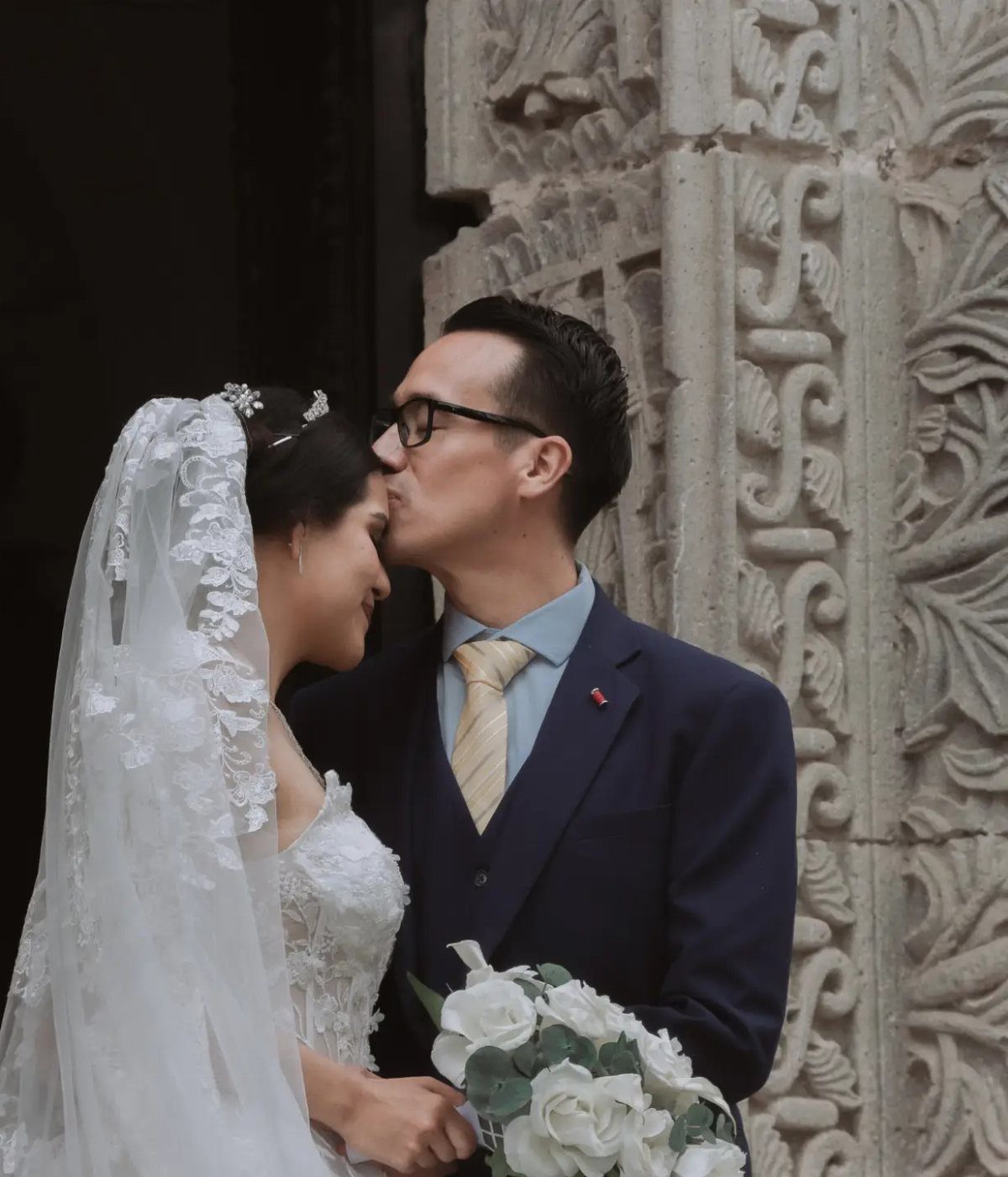
A kiss on the forehead says more than a bigger kiss would, and it asks almost nothing of you. The groom leans down, the bride tilts her head slightly, and both close their eyes.
I like it against a textured backdrop like carved stone, where the quiet gesture has something to rest against. A veil adds a soft line to the frame.
Hold still for a few seconds rather than a quick peck, so the photographer can catch the moment.
4. The Dip
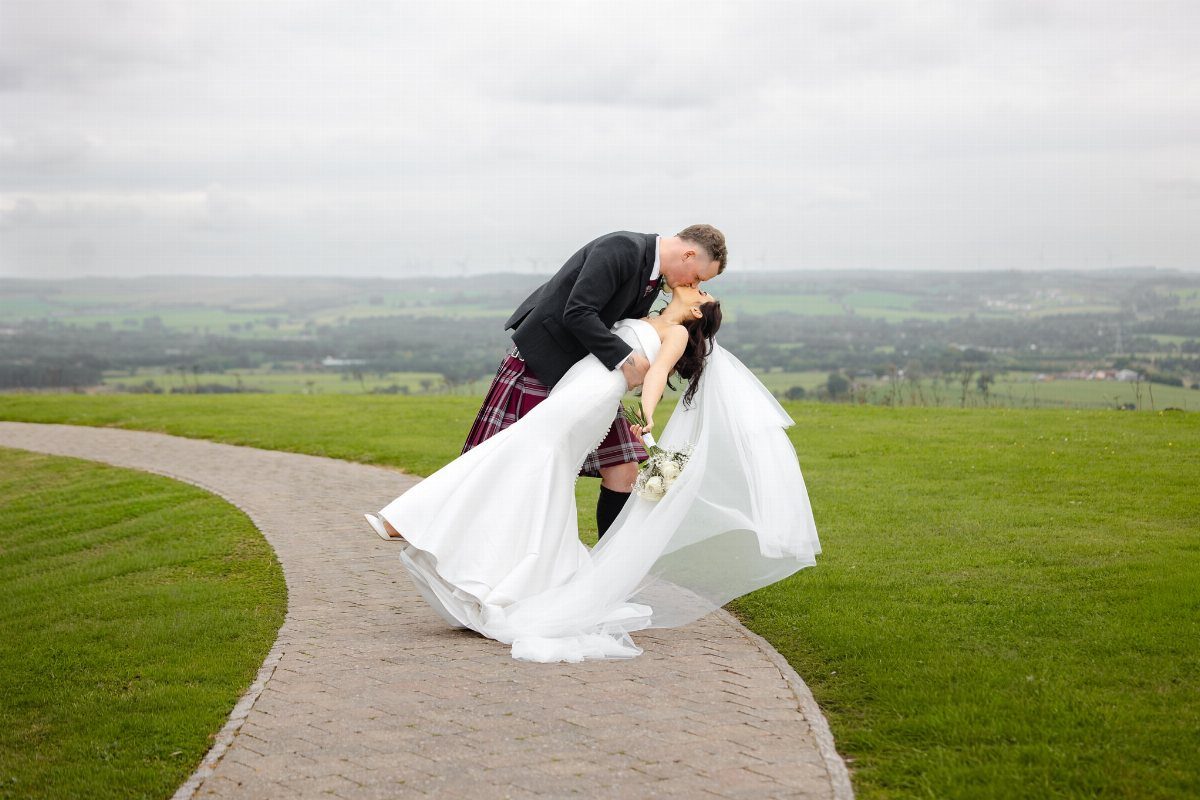
Dips look effortless and rarely are. The groom supports the bride’s back with one arm while she leans into it, and a kilt, as seen here, keeps his stance wide and steady.
Practice once or twice before the day, in your actual shoes. Bend his knees, not just his back, and keep her weight on his arm.
Stay in the dip for a couple of seconds, since a rushed one blurs. An open grassy field gives you room to laugh if it wobbles.
5. Joy and Laughter
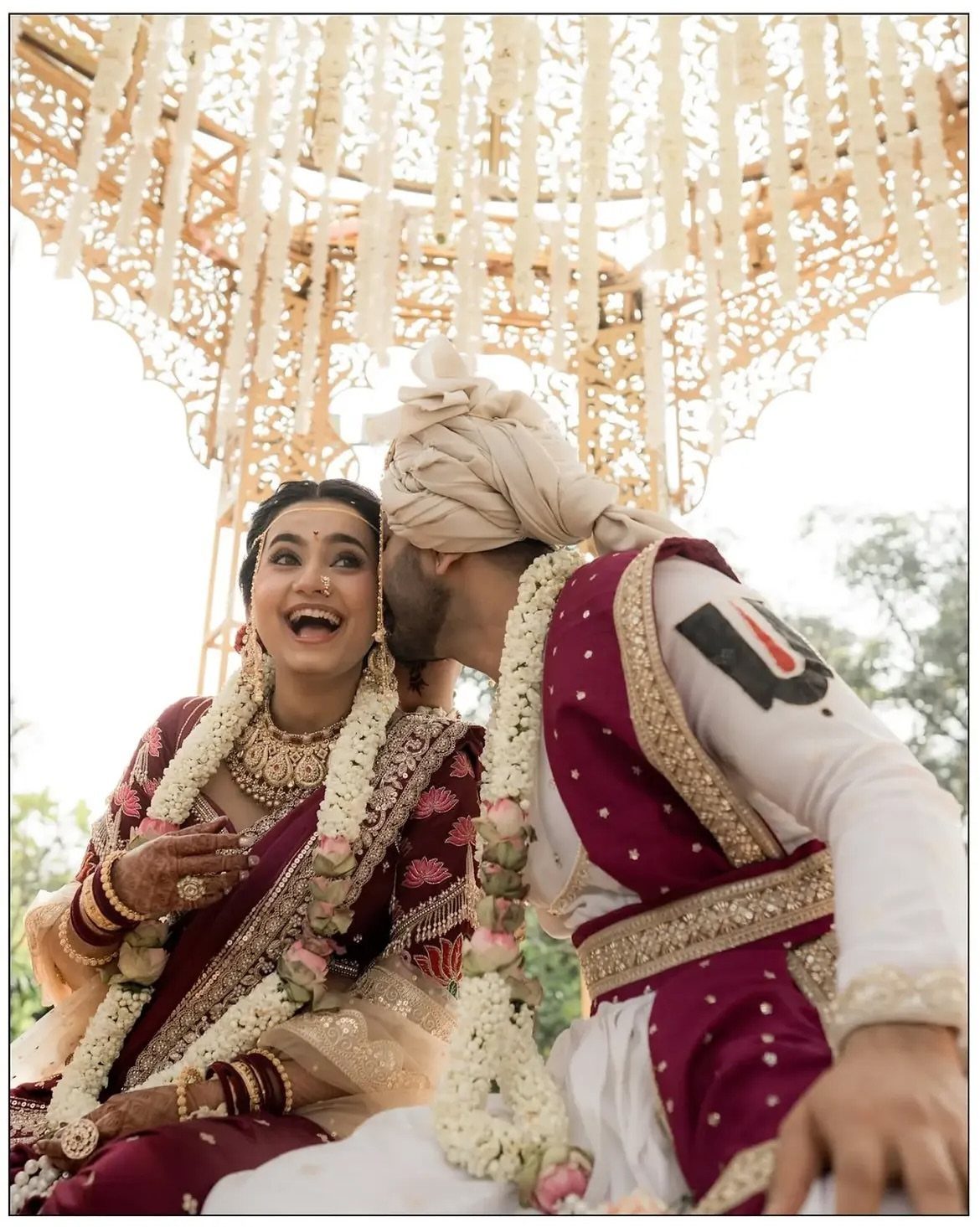
Nobody can script a real laugh, but you can set it up. Have your photographer shoot continuously while you whisper something silly, or while one of you steals a kiss on the cheek, as happens here.
The best frames usually arrive a second after the joke, when the laugh is real and the pose has dissolved.
I’d always choose this over a stiff smile at the camera. Ask your photographer to keep shooting between the formal poses.
6. The Classic Stolen Glance
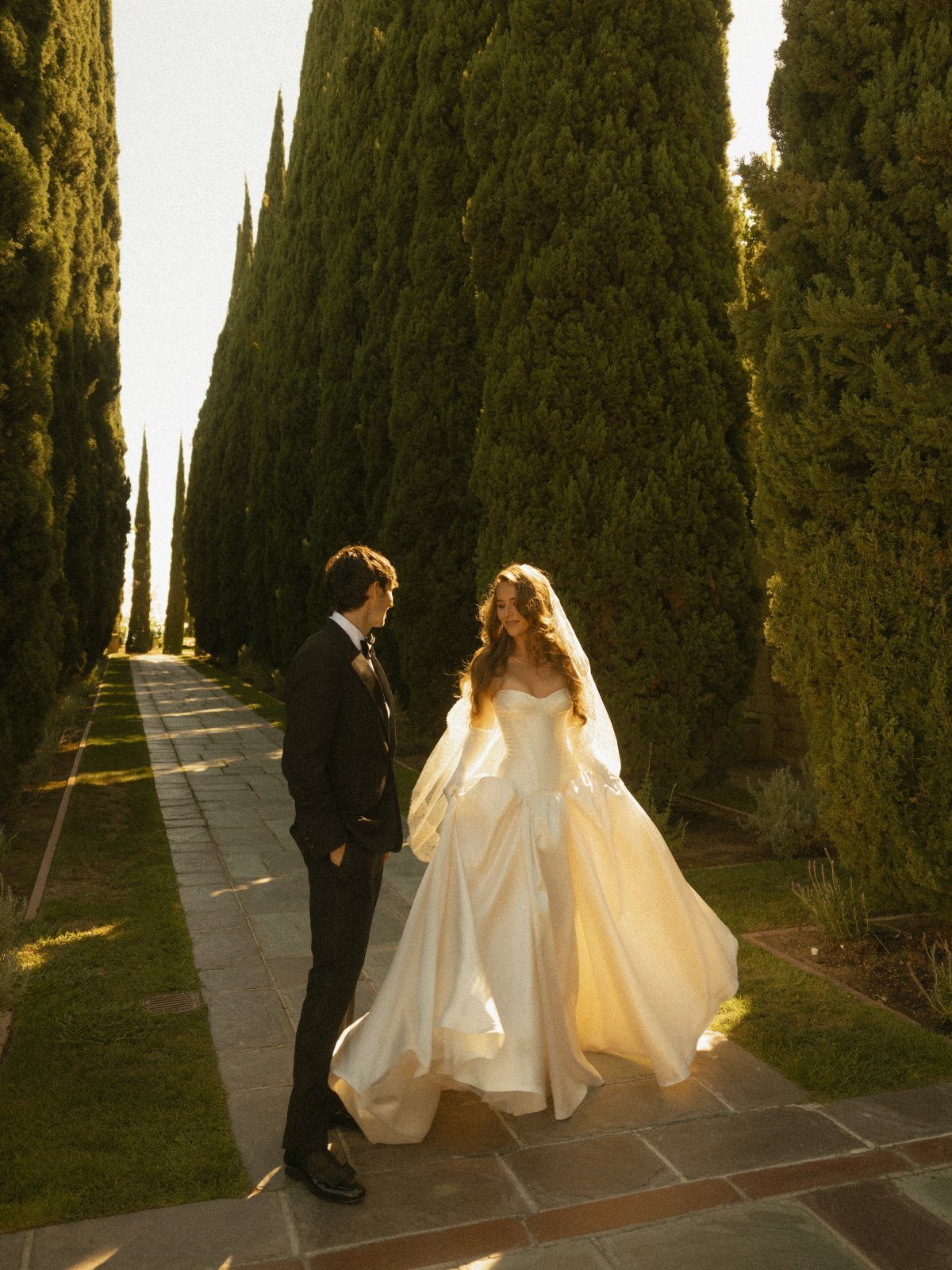
Looking at each other instead of the lens makes a portrait feel private. A long path lined with tall cypress trees adds depth and leads the eye straight to the couple.
Stand a step apart, face each other and let the moment run until a smile arrives on its own. Don’t hold the stare too long, because it starts to look forced.
If eye contact makes you giggle, good. Keep going.
7. Wide Angle Shot in Nature
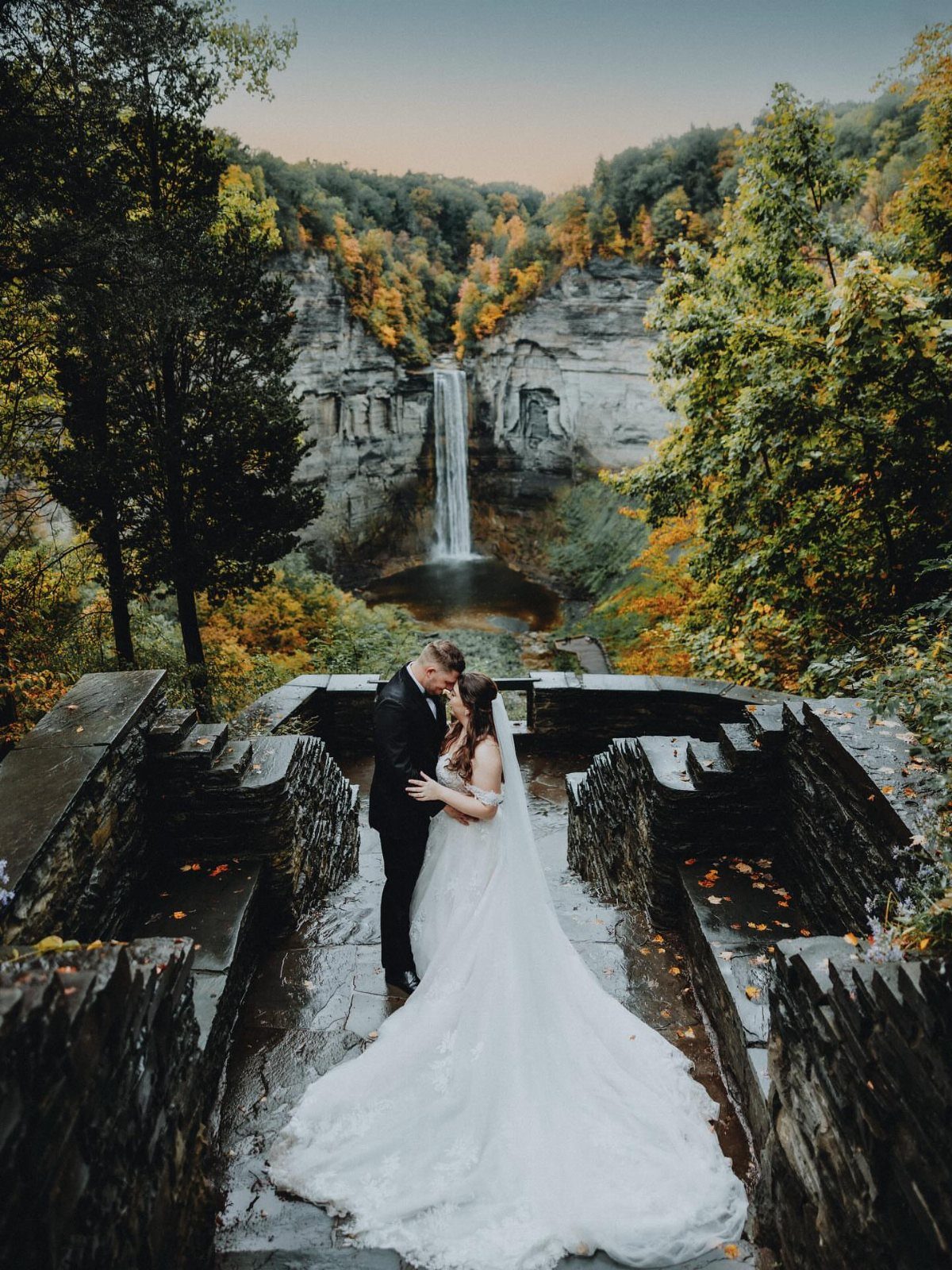
A wide frame shrinks you and your partner into one small part of a big scene, and that is the appeal.
The terrace, the waterfall and the autumn forest do the drama; you only need to stand close and stay still.
Ask your photographer to step back and shoot wide before moving in tight. Embrace and let your faces turn toward each other, since at this scale posture reads louder than expression.
8. Focus on Connection
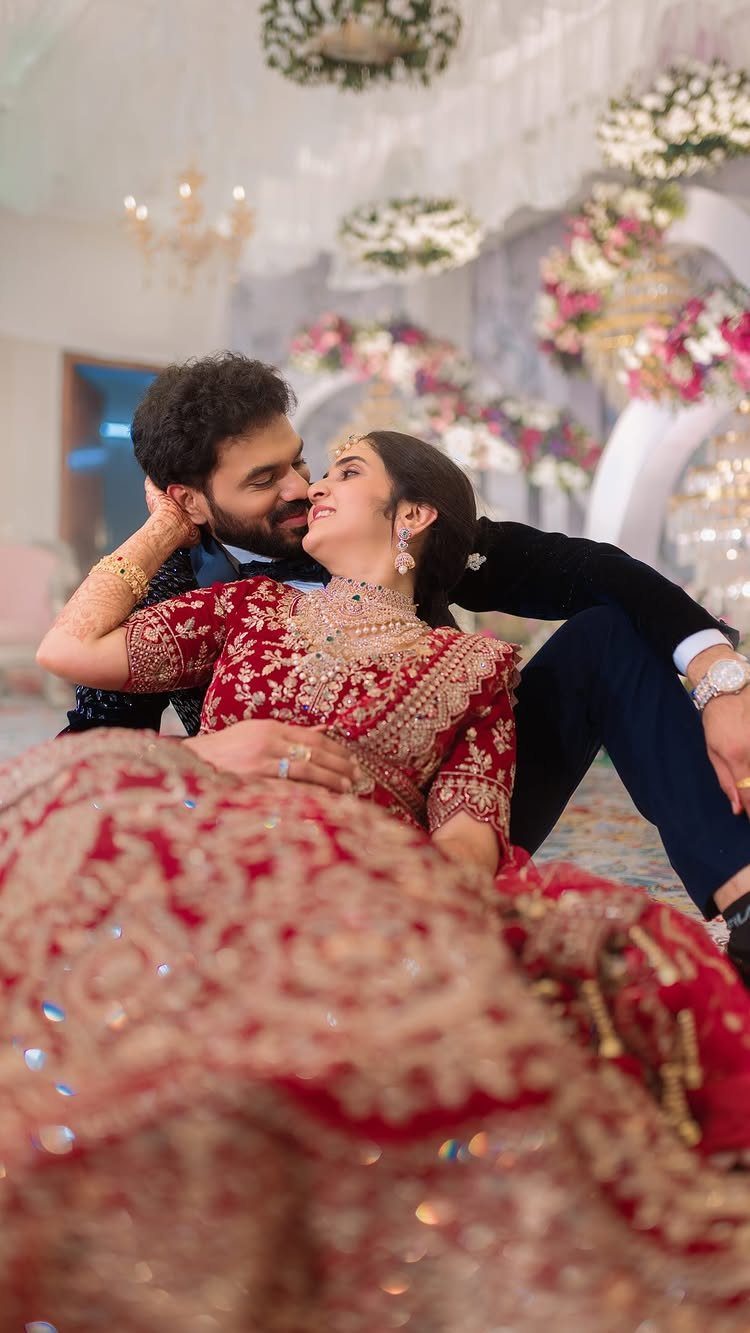
Connection poses ask you to stop performing and simply hold each other. Foreheads close, a kiss, a hand at the jaw: the closeness is the picture, and the setting plays second.
Decorated venues with flowers, like this one, give color without crowding you. Ask your photographer to let you stay in the pose for a few breaths instead of cutting it short.
Choose a gesture you would make at home anyway. It will look like you.
9. The Ring Exchange
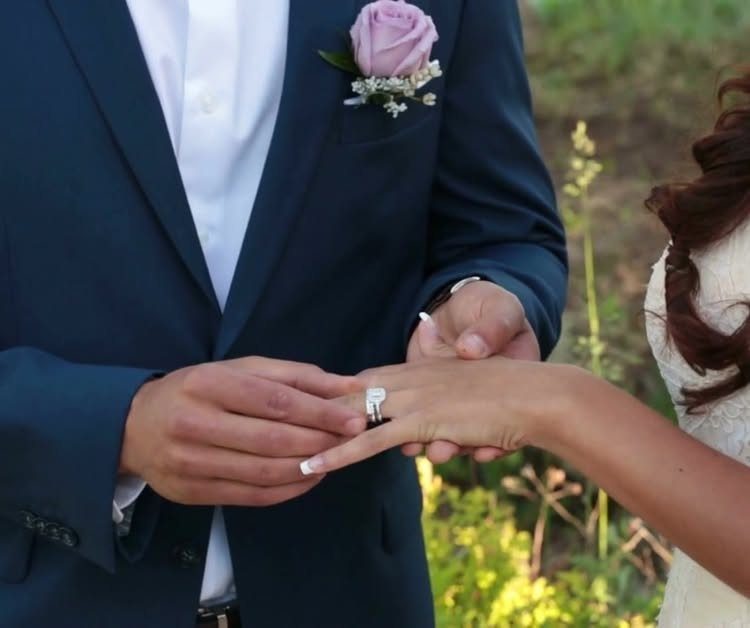
The ring exchange is the one moment of the ceremony that happens in hands, so frame it that way.
A tight shot of the groom sliding the ring on, with the navy suit sleeve in view, tells the whole story without a single face.
Ask for this close up in advance, since the ring exchange happens fast and the photographer needs to be near enough to catch your hands.
Hold the hand steady and pause once the ring is on, because the first attempt is often the best frame.
Keep your nails and rings tidy, since the camera will be inches away.
10. The Timeless Embrace
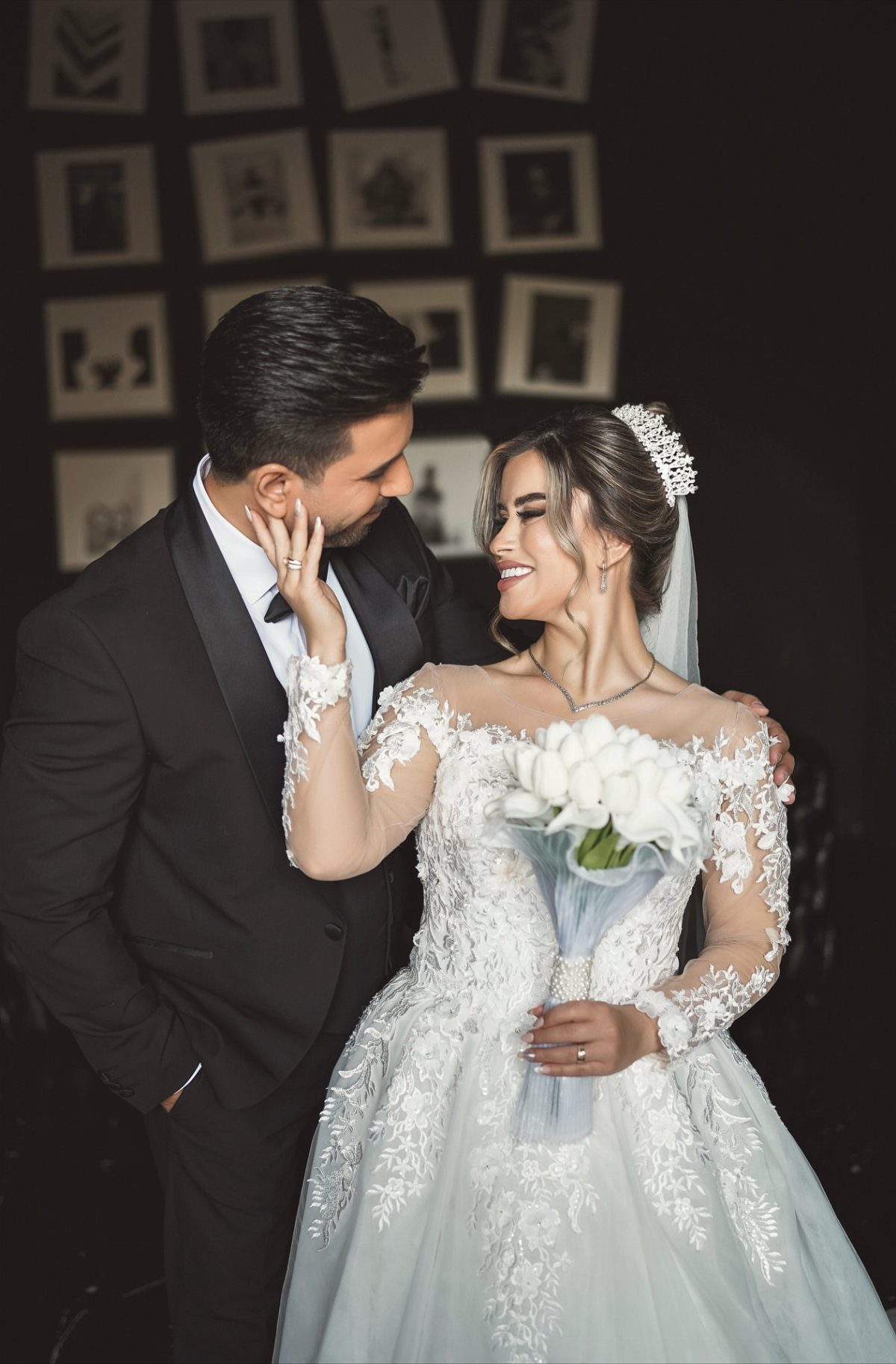
Standing face to face and holding each other close is the simplest pose there is, and it ages the best.
Here the bride rests a hand on the groom’s face, which gives the frame a tender detail and keeps her bouquet low and out of the way.
Pull in until your bodies touch, then breathe out and relax your shoulders. Stiff arms are what spoil this pose.
I’d say it earns a place on every shot list.
11. Pouring a Champagne Tower
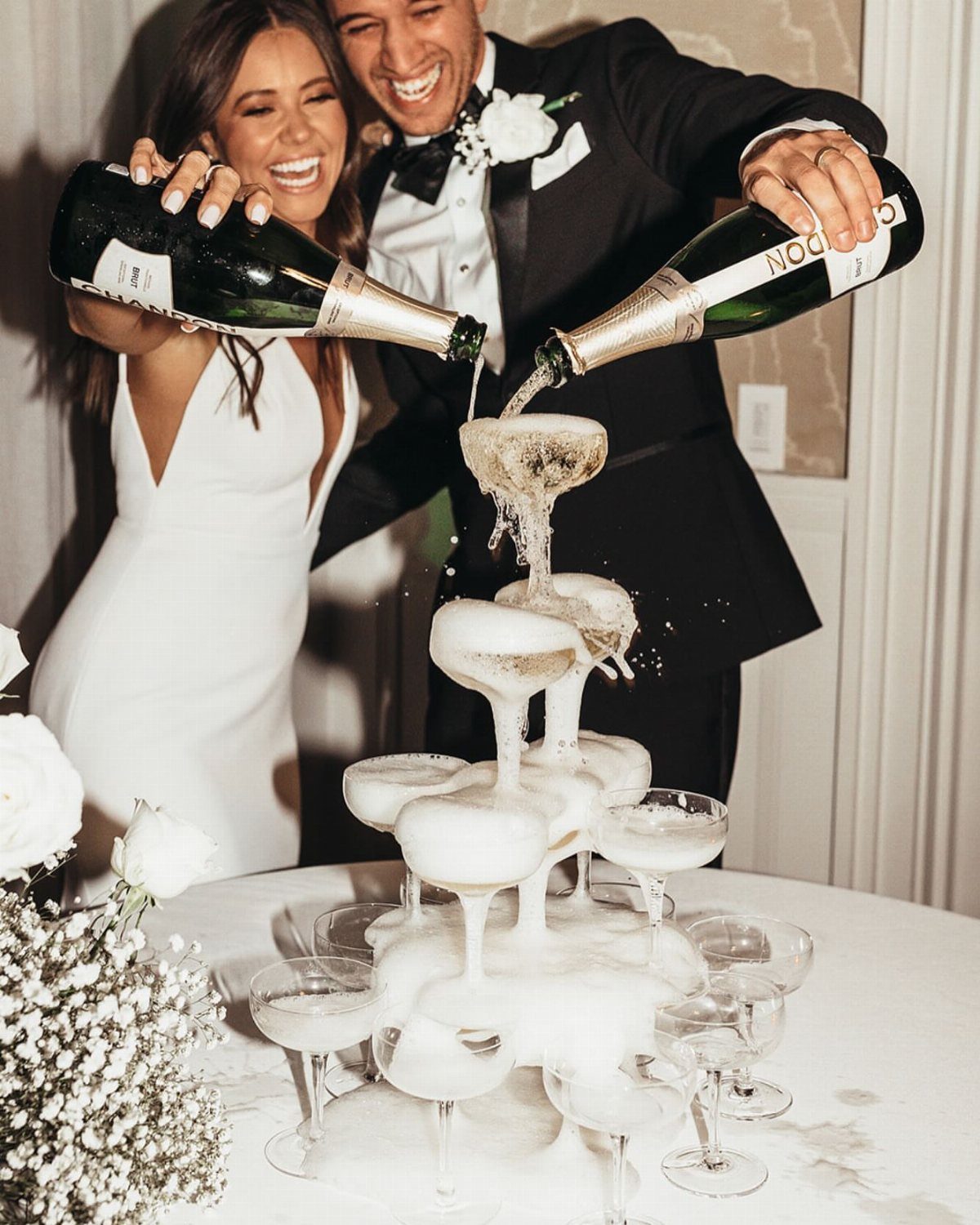
A champagne tower is a pose and a party trick at once, which is why people laugh through it. Pour from 2 bottles at the same time, slowly, so the top coupe fills and spills down to the tiers below.
Rehearse the pour once if you can, because rushing makes foam and a mess on the table. Let the laughing happen; the loose frames beat the tidy ones.
Fill the top glass first, then ease off and let gravity do the rest.
12. Groom Carrying the Bride
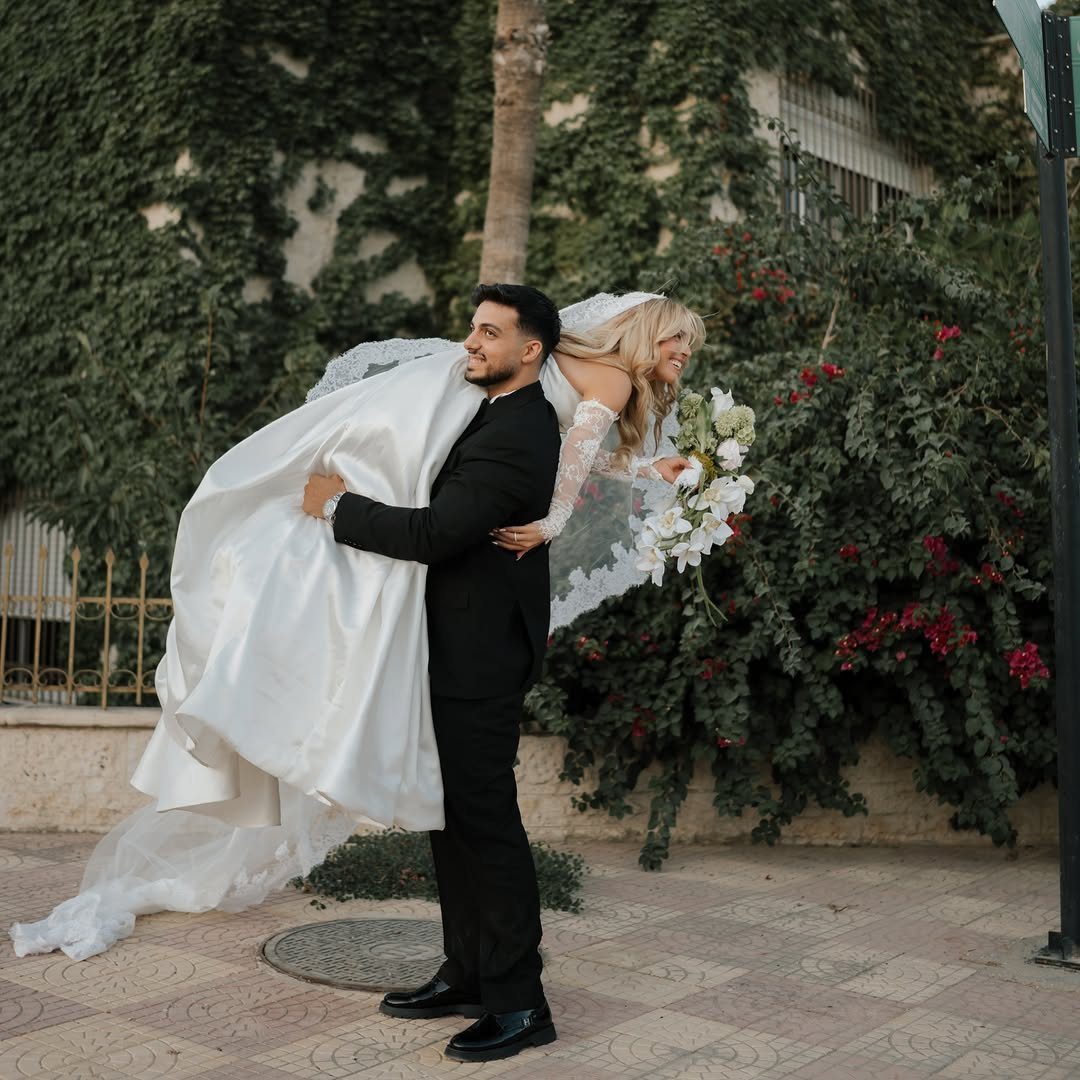
Carrying the bride is a pose that works best when you commit to it.
He holds her under the knees and across the back, she wraps an arm around his neck, and the dress falls in a long white line against the foliage.
Lift smoothly and keep the pose to a few seconds, since arms tire fast. Wear shoes with grip on paved ground.
If the dress is heavy, choose a short carry over a long one.
13. Lying on the Grass
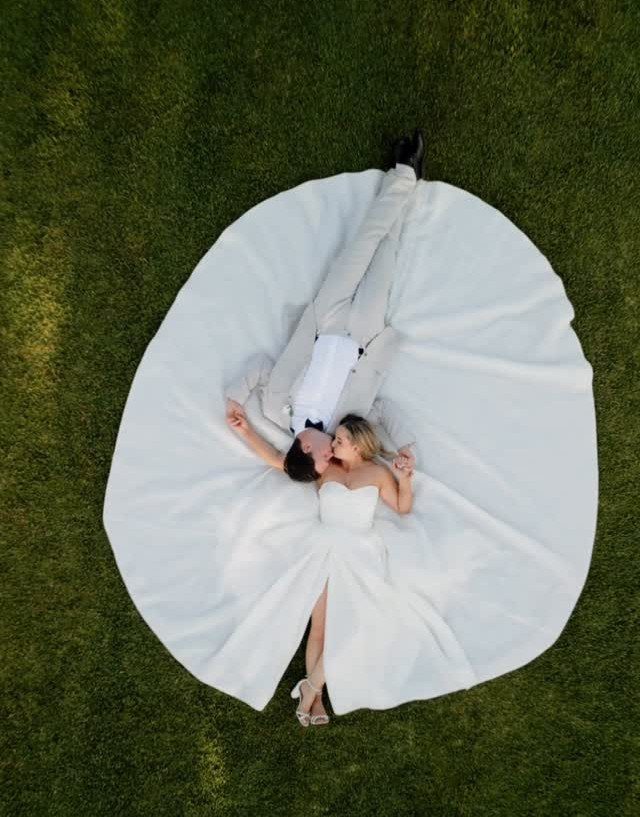
Lying on the grass works best when the photographer stands over you and shoots straight down, because a full skirt spread wide turns into a white circle against the green, with you and your partner at the middle.
The angle is what makes it work, so ask your photographer to stand over you, on a step stool or ladder if the venue allows.
Lie close, heads together, and let someone fan the train out evenly before the shutter starts. Check for grass stains first; a quick spot on the ground saves a bad surprise.
I’d save this for the end of the portrait session, once the formal shots are done.
14. Kissing the Bride’s Hand
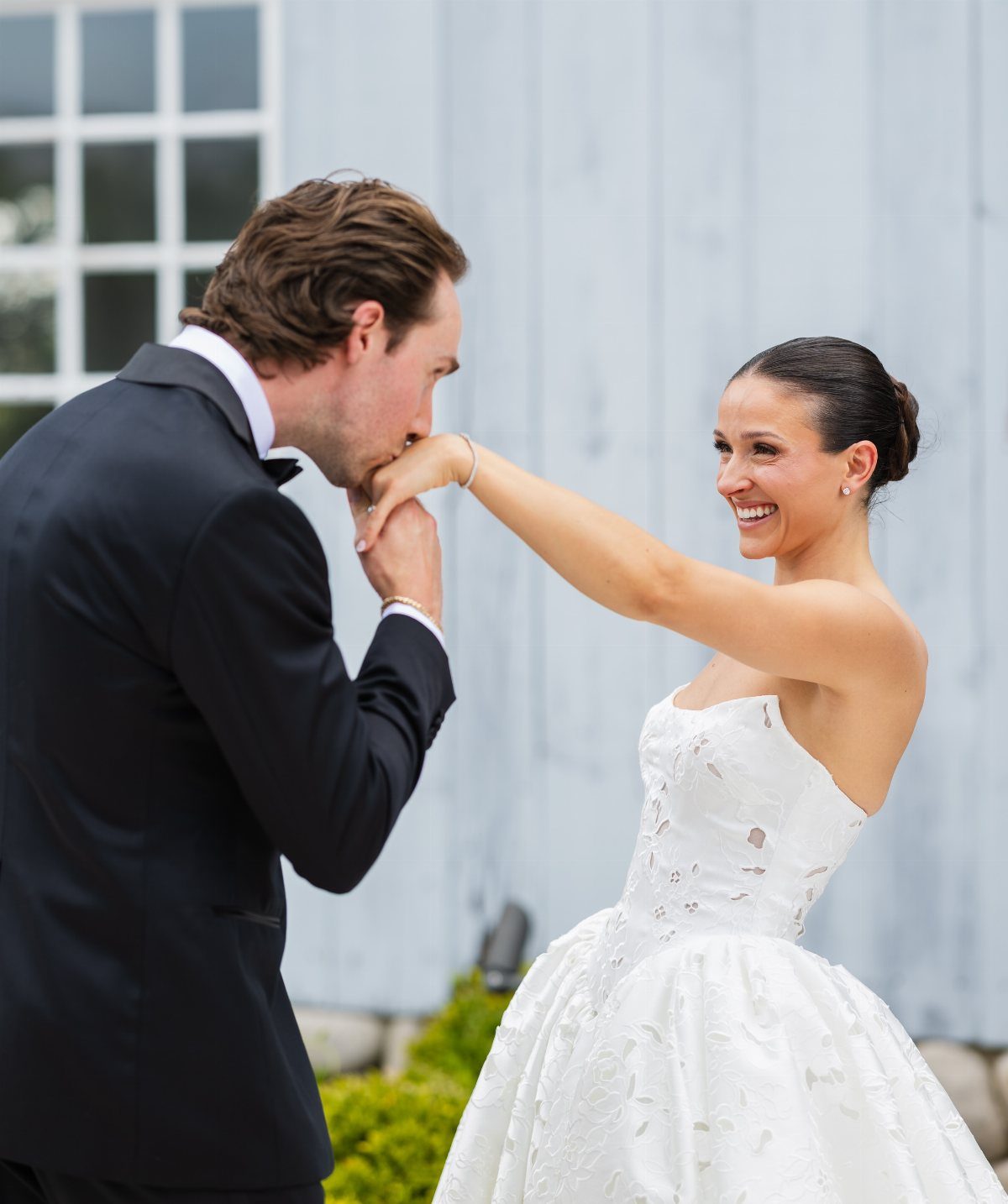
A hand kiss is old-fashioned in the best way, and it gives a quiet frame when a full kiss feels like too much.
He lifts her hand gently and bows his head to meet it, while she looks down at him and smiles.
Keep her wrist relaxed and her fingers soft, not stiff. A plain backdrop, like the painted wall here, keeps attention on the gesture.
Pause for a beat before he lets go. Her ring should face the camera.
15. Grand Staircase Kiss
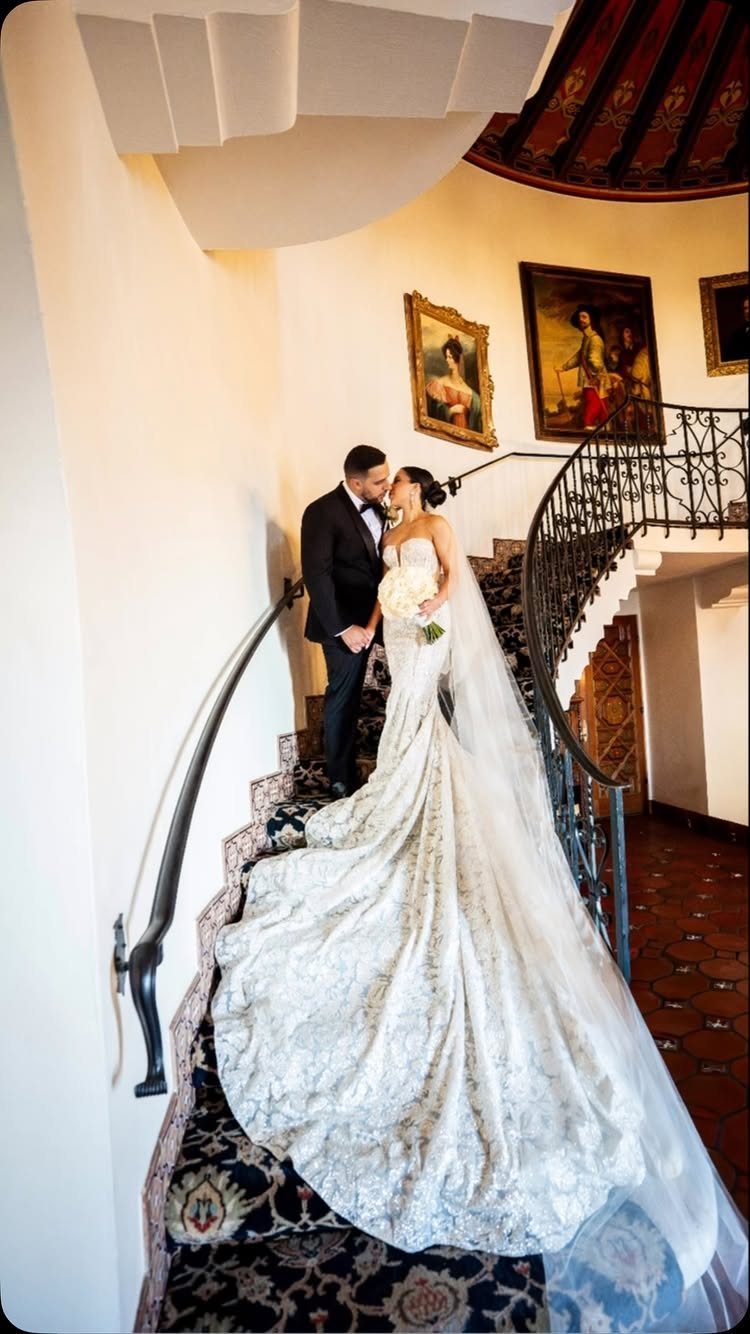
A staircase kiss works because the dress does half the job: let the train spill down the steps behind you and the whole frame gains length and movement. Ornate railings and framed art add richness without any props.
Have a helper arrange the train before each frame, since it shifts with every step. Stand a few steps apart in height, so he looks slightly up or she slightly down.
Check with the venue first, because many ask for permission to shoot indoors on a grand staircase.
Tips for Effortless Posing
Tension shows first in the shoulders and the face, so take one slow breath before each setup and let both drop. Stiffness is what makes a frame look posed, and a breath fixes more than any adjustment of your arms.
A relaxed lean or a smile that came on its own reads better than anything stiff.
Talk to your photographer as you go. Gentle direction works better than rigid instructions, and you will relax faster if you know what they want.
Creating Natural Connections
Motion works because your body stays busy and your mind stops overthinking the camera.
Walk, turn, spin or shift your weight, and self-consciousness fades. Start the session this way, or switch to it whenever you both look tense or flat.
The photographer loses some control over when and how the frame lands. When the space is tight or the composition matters, a still pose works better.
For a relaxed standing pose, angle your bodies toward each other and keep your arms loose.
He can hold her hands lightly or rest his on her waist. She can put a gentle hand on his chest or shoulder.
Talk or laugh softly while you do it. The expressions that come out of that look like you.
Importance of Lighting
Natural light flatters more than almost anything you can bring, so plan your portrait time around it. Golden hour, the stretch right before sunset, delivers warm and flattering light for romantic shots.
Soft, diffused light also works. An overcast sky can be gentler than harsh sun.
Your photographer can angle you to make the most of the light on hand. Then check the sunset time for your date and schedule portraits to land just before it, not after.
Frequently Asked Questions
Which poses are best for shy couples?
Walking together, the stolen glance and relaxed standing poses suit shy couples best. Your body stays busy or your eyes stay on each other, so you think less about the camera.
Slow walking does the work on a staircase or path: keep your pace easy and murmur something to each other, and the movement reads as candid because it is.
What are the best poses for post-wedding photos?
For post-wedding photos, I’d pick tight shots of your faces mid-expression, a sunset silhouette, and a few frames of you actually laughing.
Tight framing makes the feeling the subject, and a laugh caught a second after a joke beats a stiff smile.
How many poses should I try?
Plan on roughly 15–20 poses, and spread them across soft, playful, romantic and dramatic moods so the gallery doesn’t feel repetitive.
That range gives you options for the album without wearing you out. Tell your photographer to keep the camera going in the gaps between setups, because the in-between moments often beat the posed ones.