A DJ works for almost any venue and budget, a string quartet fits a ceremony or cocktail hour, and a full band with horns takes more space and cost than anything else on this list.
Most bands and sought-after DJs book 12–18 months out, so start this search once the venue is confirmed.
1. Cocktail Hour Music
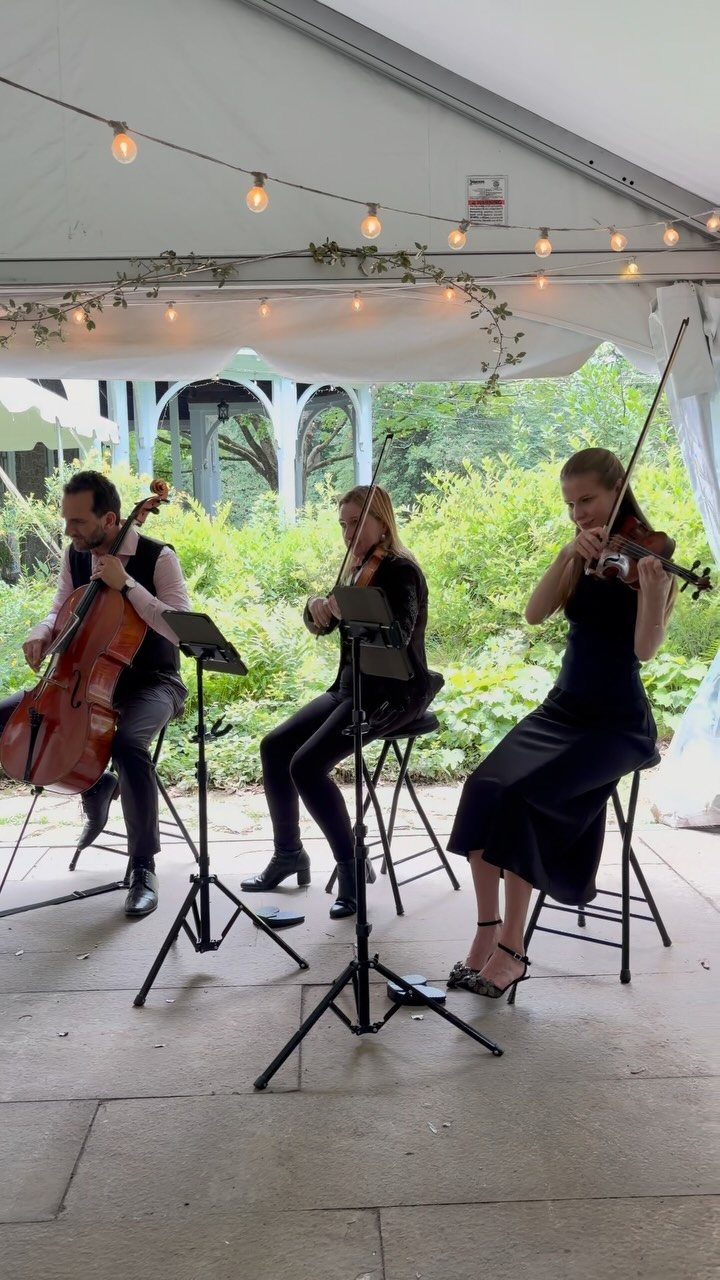
A cello and 2 violins under a tent give guests something to listen to while they wait for the room to fill.
Cocktail hour is the stretch where people mingle, find a drink and wander, so music here works as background that lifts the mood without competing with conversation.
A trio also keeps the volume low enough that grandparents and strangers can still talk. I would pick strings for this hour and save the louder act for the dance floor.
2. Live Wedding Bands
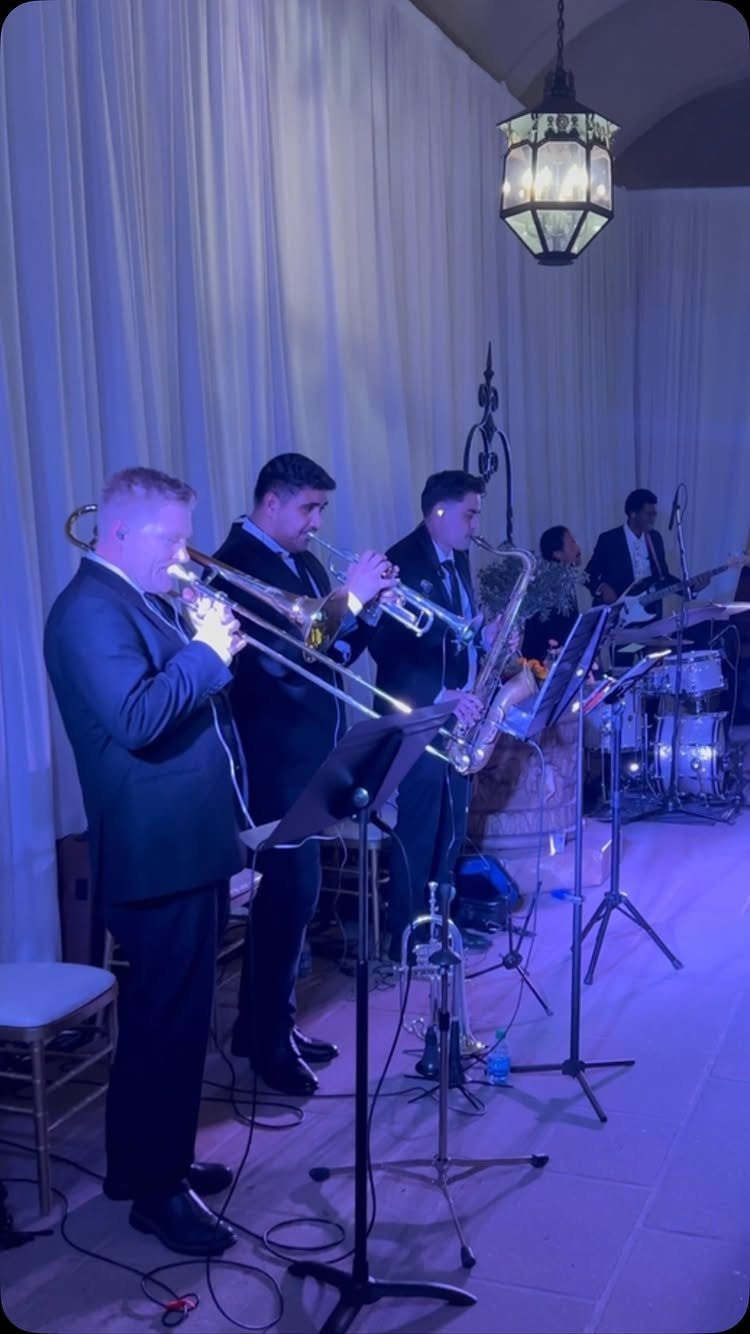
Trombones, a saxophone and a guitar on stage make a sound no playlist can copy. A live band fills the room with its own energy, and horns in particular pull people toward the dance floor.
Budget is the real limit, since a band takes more of it than recorded music does.
If the number stretches, I would put the money here and skip pricier extras like elaborate centerpieces. Ask for a set list before you sign.
3. DJs
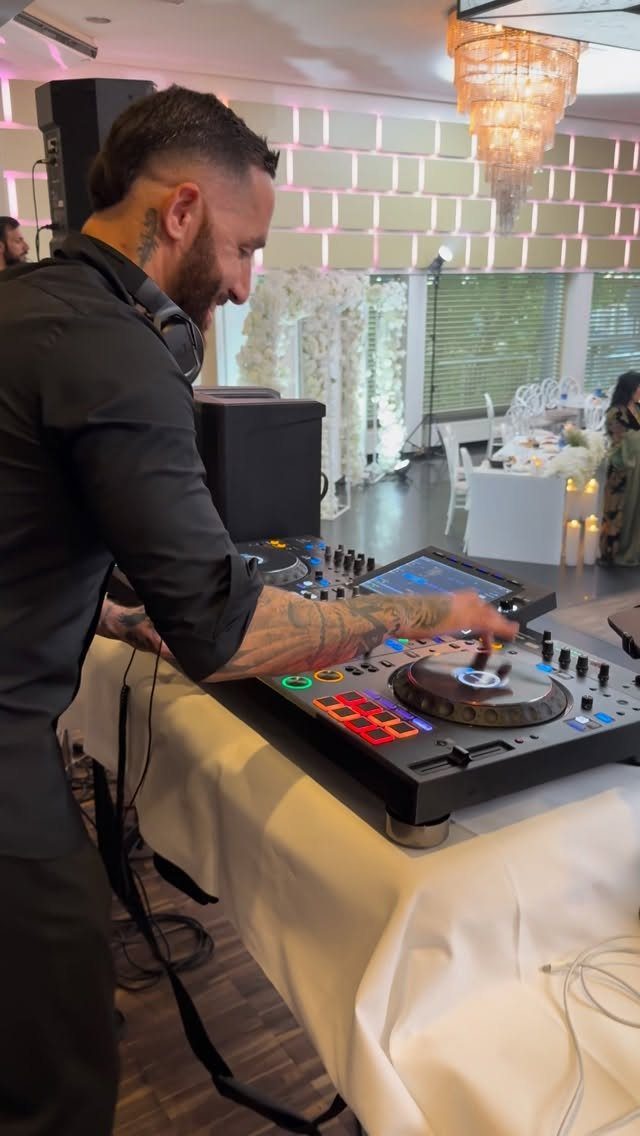
A DJ covers a huge range of music, from a grandparent’s favorite to the song your friends request late in the night, and can also act as emcee, announcing the toasts and the cake cutting.
That second job matters more than people expect. Before booking, I would ask for a short list of songs you want played and a shorter list of songs you never want to hear.
4. R&b Soul Singer
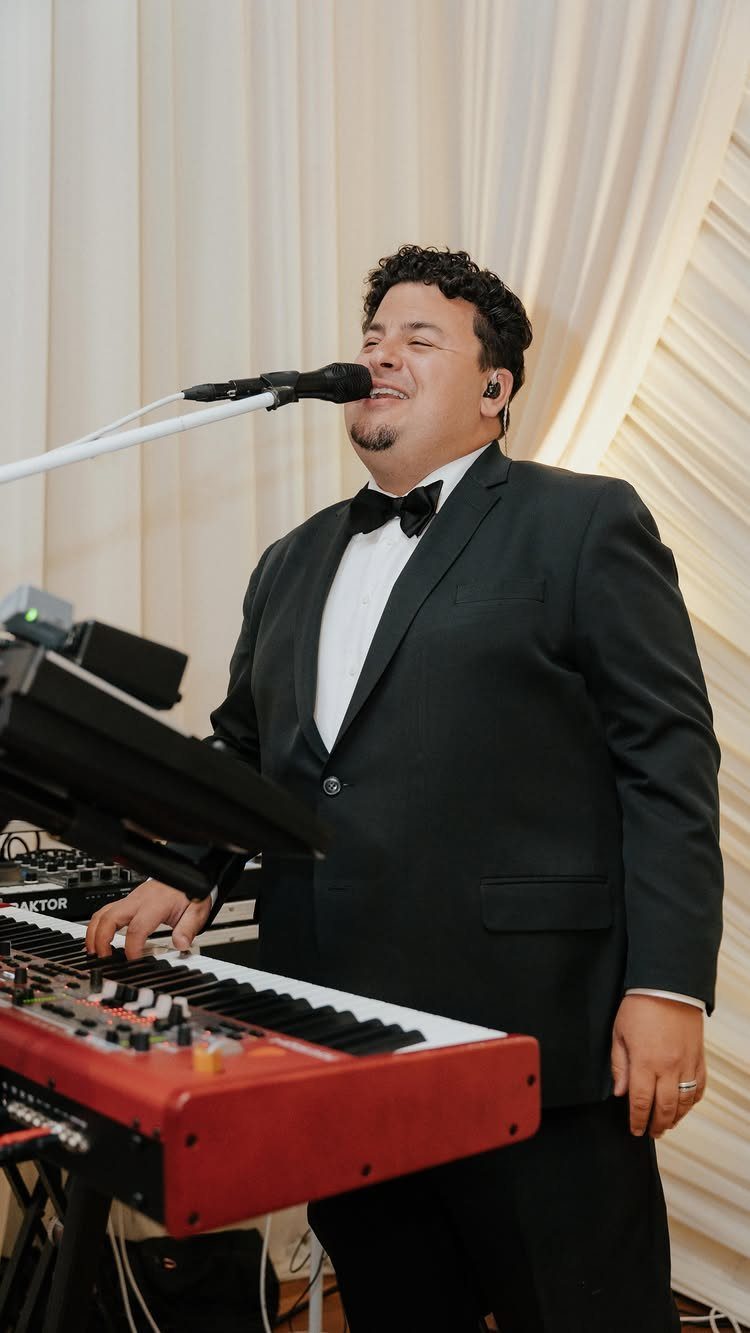
A singer at a red keyboard in a black tuxedo gives you one performer who plays and sings at once, which keeps the setup small.
R&B and soul suit a slow dinner hour or a first dance. I like this option for couples who want live vocals without paying for a full band.
5. Ceremony Music
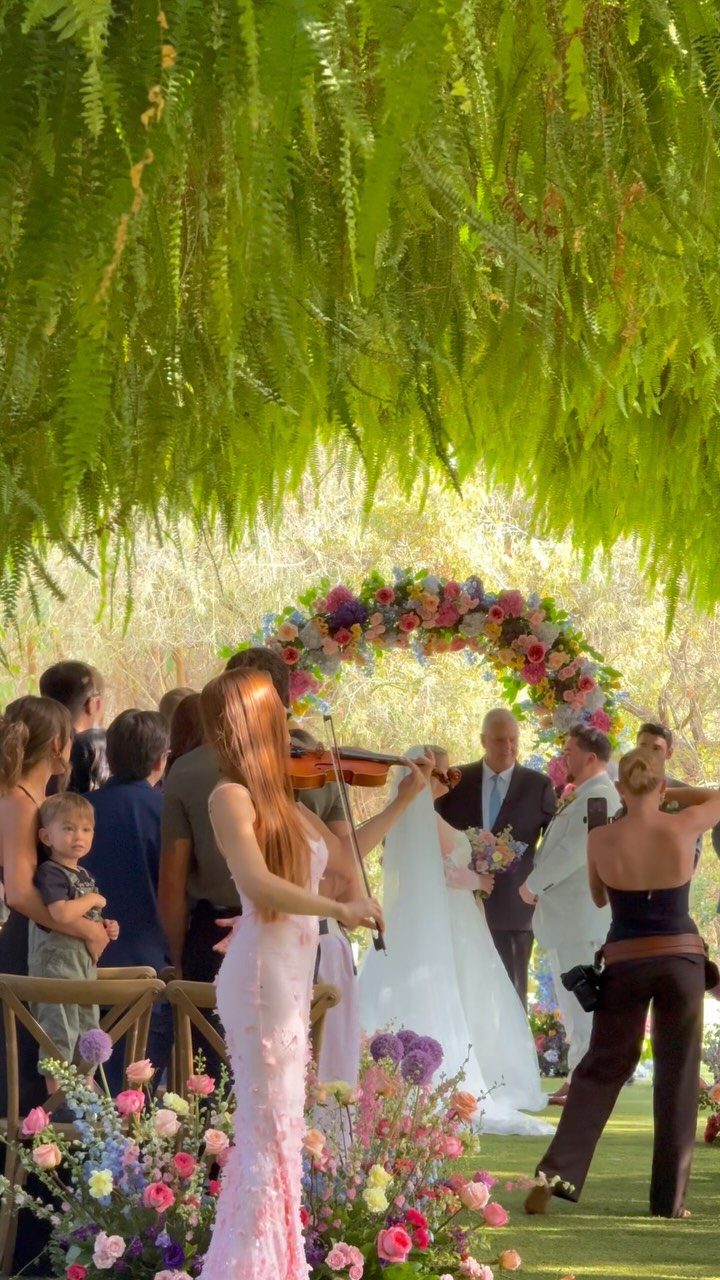
A single violin under a floral arch can carry the entire ceremony. The music sets the tone before a word is spoken, so choose the processional piece with care, since it is the one guests remember.
Outdoors, a solo player keeps things light and easy to place near the aisle. I would pick the processional and recessional first, then let the musician suggest what fills the quiet moments in between.
6. Jazz Music Groups
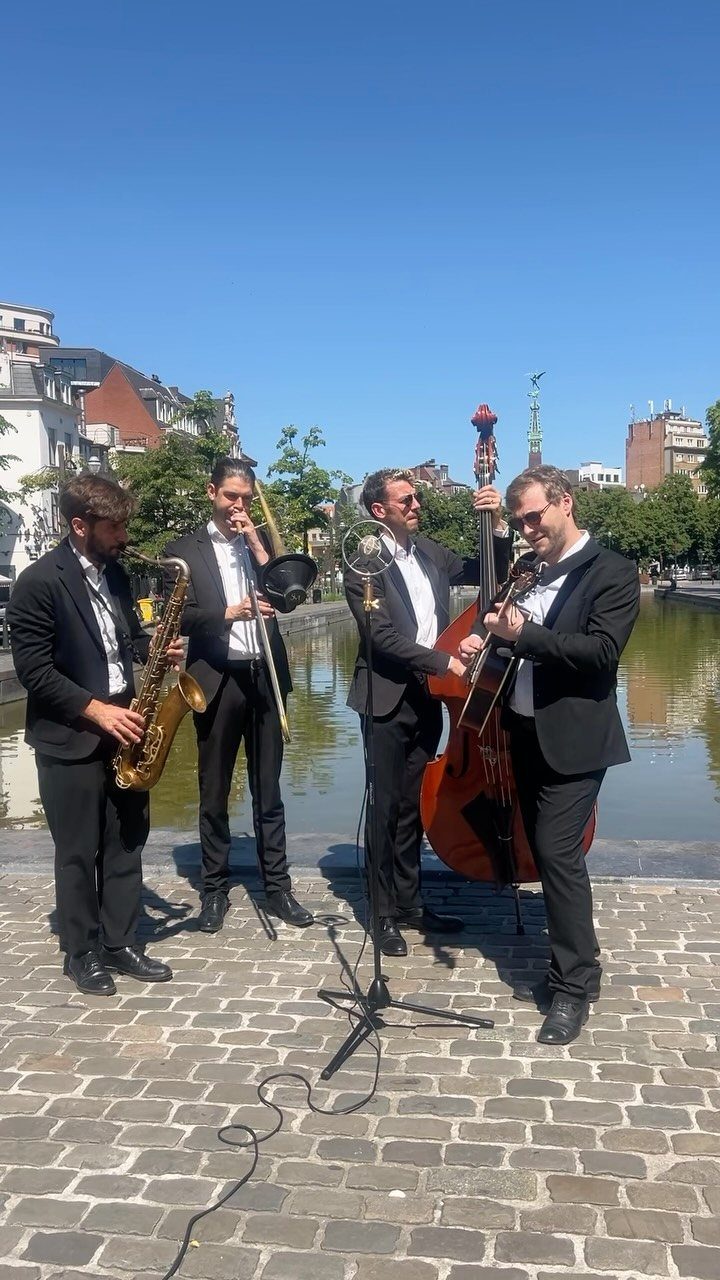
Without drums or amplifiers, a lineup like this travels well and suits an outdoor cocktail hour.
Tuxedos give it a formal look, so it fits a dressed-up evening. Ask whether the group can play on a street or path, since uneven ground matters for a double bass.
7. String Trio or Quartet
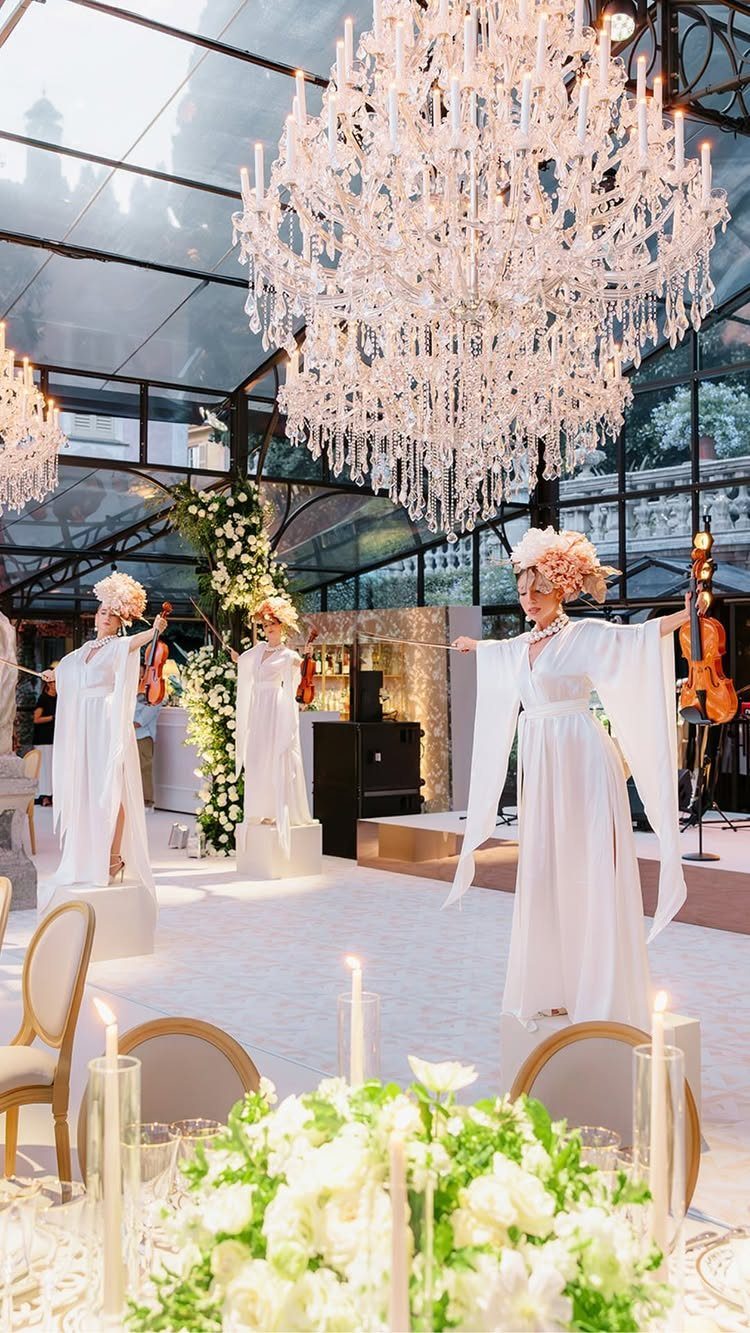
3 players in formal gowns under a chandelier make a room feel finished before anyone sits down. A trio keeps the footprint small, which helps in a glass-roofed space where sound carries.
If the budget allows one more player, I would choose a quartet for the ceremony and keep the trio for dinner. Ask which pieces they play from memory, and send your processional choice early.
8. Solo Cultural Instrumentalist
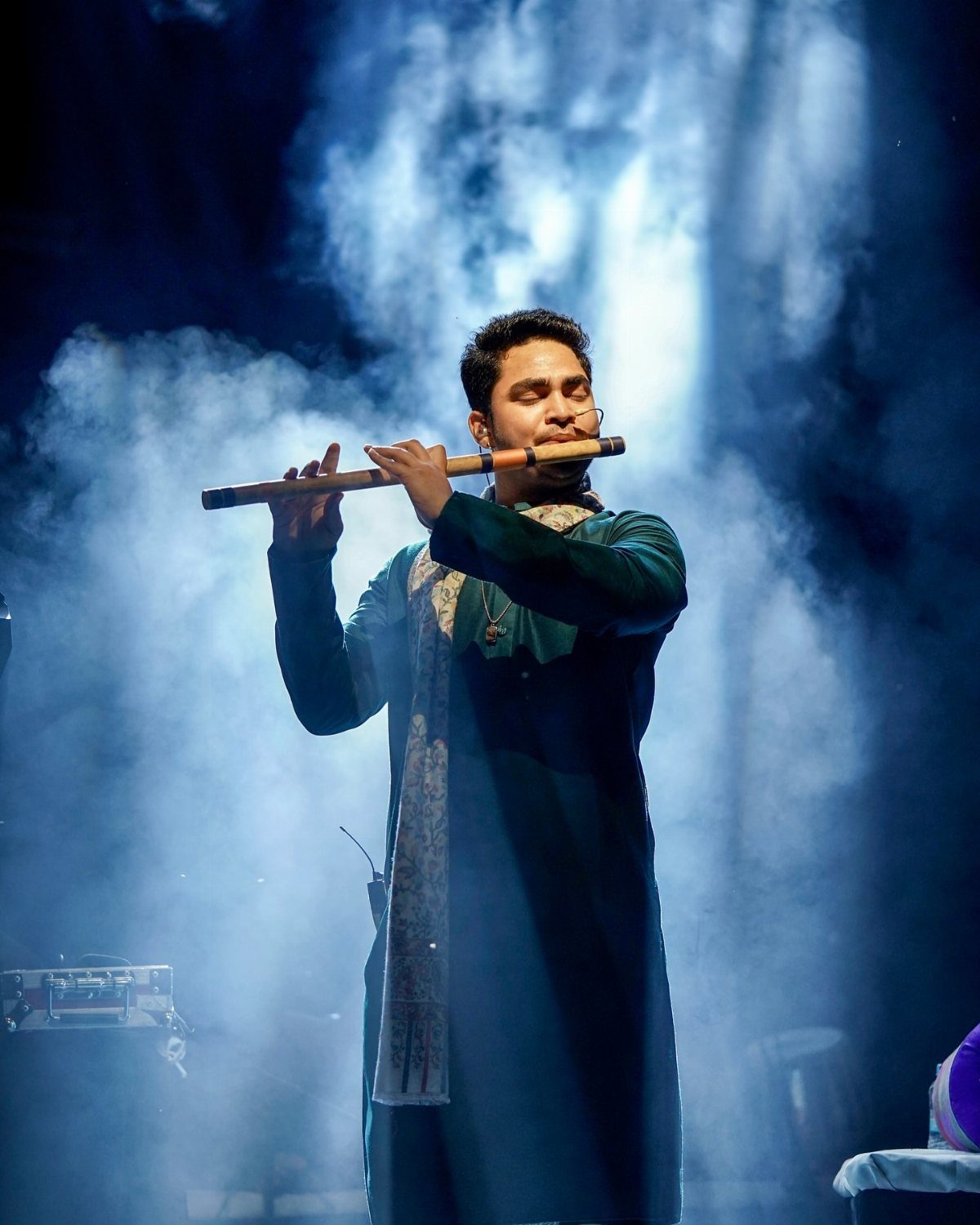
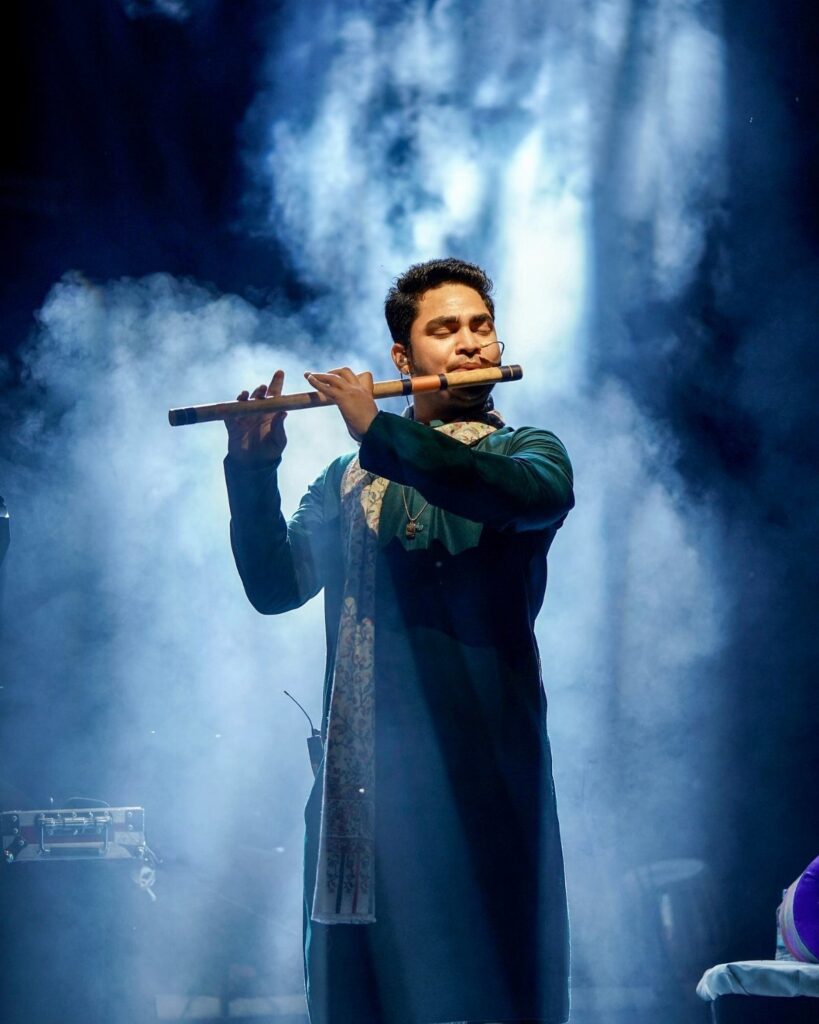
A wooden flute played by a musician in traditional dress gives a wedding a sound guests rarely hear, and it can anchor a moment like an entrance or a blessing.
Smoke and blue spotlights suit a stage set; for a ceremony, daylight works just as well.
I would give this player one clear moment rather than a full evening. Talk through the tradition behind the music first, so the piece matches what you mean by it.
9. Live Saxophone Player
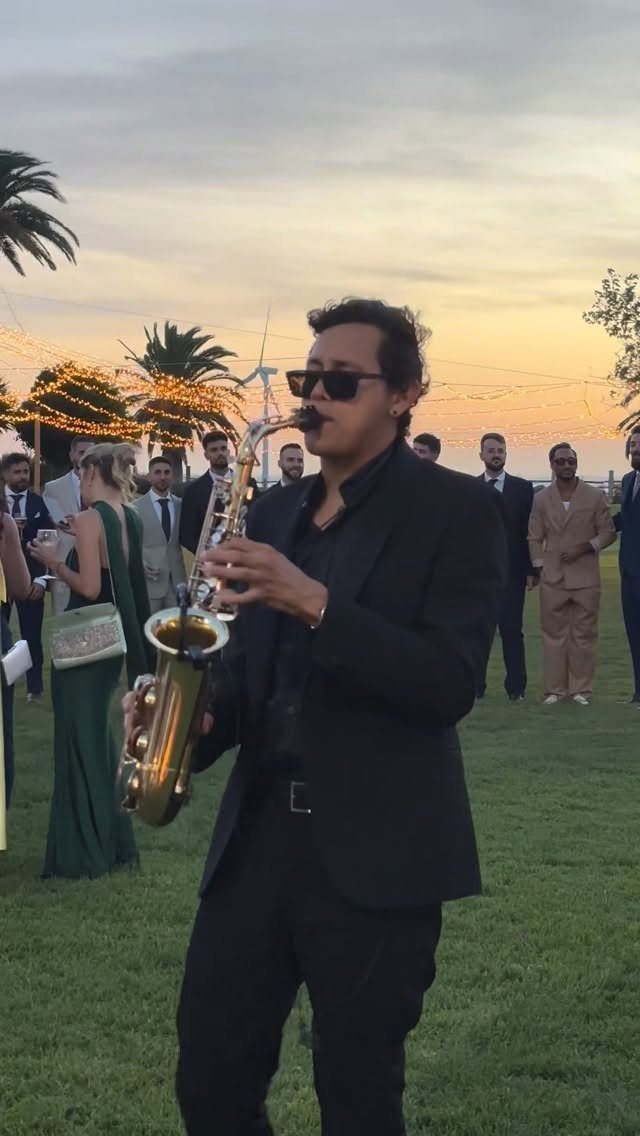
A saxophone carries across a lawn without a speaker stack, so a single player can fill an outdoor reception at sunset.
Guests tend to drift toward the sound, which makes it a good way to pull people in as the string lights come on.
Pair the player with a backing track or a DJ, and get their amplification details in writing at the time of the inquiry, not after the deposit is down.
My preference is short sets, with the sax stepping in on a few songs everyone knows.
10. Acoustic Duo
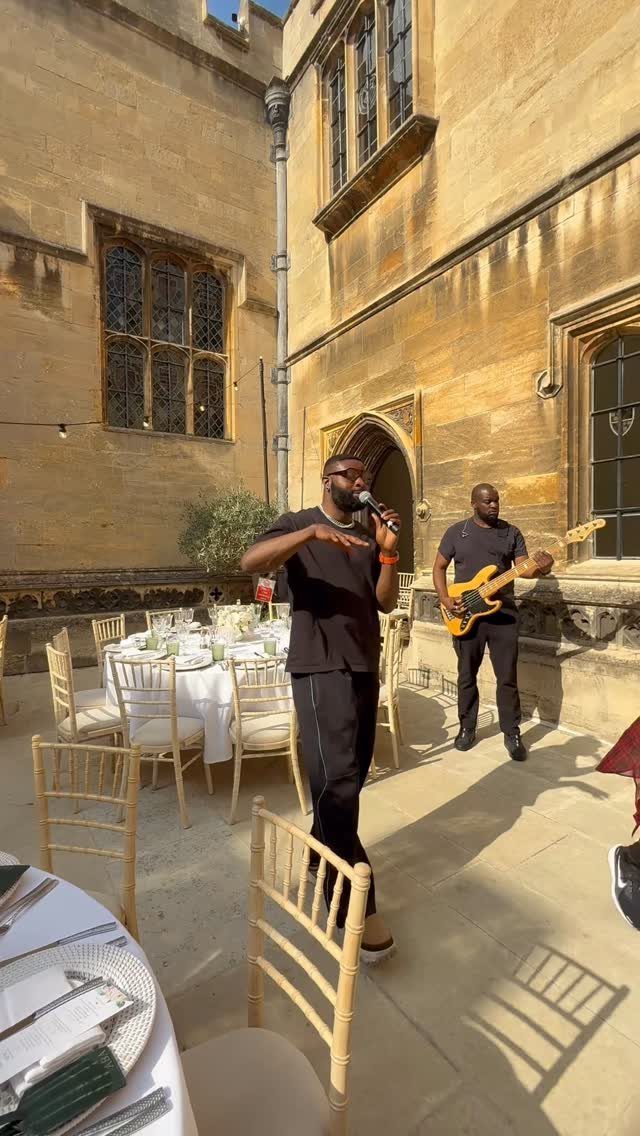
One singer and one guitarist can play a courtyard dinner with just a microphone and a bass or electric guitar, and the setup stays small enough to fit between tables.
That makes an acoustic duo a sensible middle step between a playlist and a full band.
Choose a pair that can cover both quiet dinner songs and a few upbeat ones. I would ask how much power they need, since stone walls bounce sound around.
11. Solo Wedding Violinist
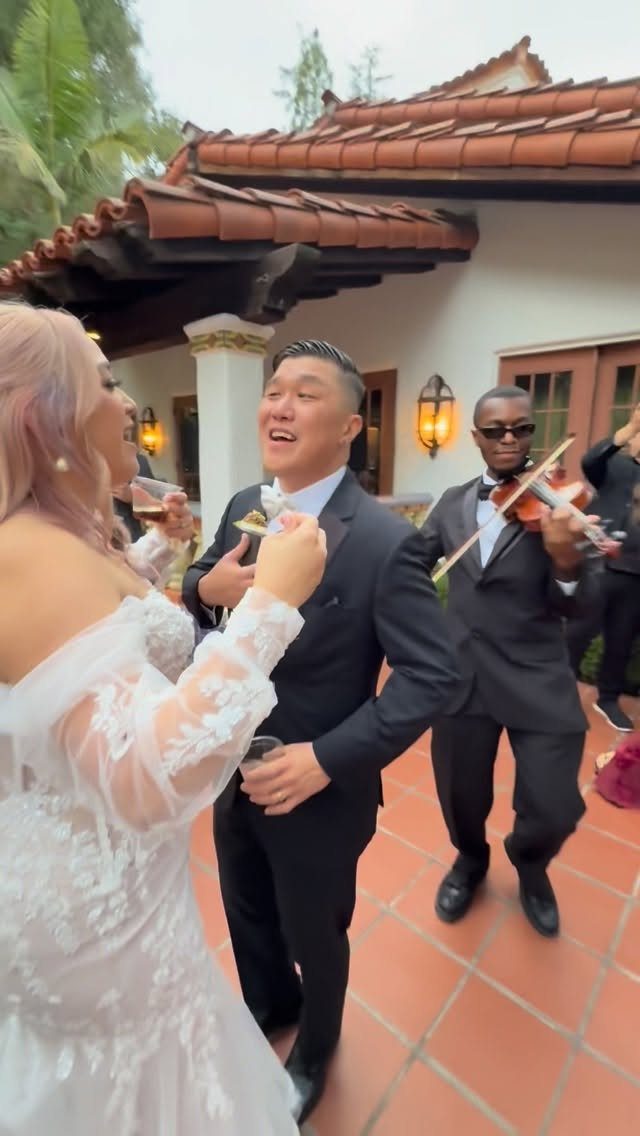
A lone violinist can stand a few steps behind the couple while they eat, and the music fills the meal without anyone raising their voice. Laughter and a violin get along well on an outdoor patio.
Cost stays lower than with a trio, so this is the option I would pick for a modest budget. Hand over a short list of songs, then give the player room to choose the order.
Choosing the Right Entertainment
Start with the room, then the guest list. A full band needs more floor space and a bigger budget, while a DJ fits almost anywhere and can play nearly any request.
A band playing from a song list you’ve approved can do what a playlist can’t at the aisle walk or the first dance: watch the room and breathe with the moment.
If you want a full sound without hiring a full band, ask a solo performer whether they use a loop pedal. It layers guitar and vocals live, so one person can sound close to a small group.
Some bands double as DJs, so one booking can cover both the ceremony and the dance floor. Many musicians offer a free consultation, and I would take it before you compare prices.
Communication with Musicians
Write your timeline down and send it to the band or DJ well ahead of the wedding date. Include the ceremony start, cocktail hour, dinner, toasts, first dance and the hour you want the music to stop.
Name the moments that matter most to you, such as the processional or a parent dance, and say who gives the cue for each. A musician can’t read your mind, and a clear cue saves an awkward pause.
Share your do-not-play list in the same message. Confirm it all once more a week or two out, and hand them the name of one person to call on the day who isn’t you.
Booking Timeline
Most couples book their band 12–18 months ahead. Live music has been in higher demand since 2020, so I’d book the moment your date and venue are locked, even if that means 18–24 months ahead.
Popular acts fill their Saturdays first, and a venue plus a date is all most of them need to hold you a spot.
If your wedding is closer than a year away, don’t give up. Ask about weekday or off-season dates, and have a second and third choice ready so a booked calendar doesn’t stall you.
Frequently Asked Questions
What kind of music do people play at weddings?
Most couples choose a live band, a DJ or a solo musician, and many mix them by moment.
Strings suit cocktail hour and the ceremony, a band or DJ carries the dance floor, and a singer or sax player fits dinner or sunset. Matching the sound to the moment keeps the day from feeling like one long playlist.
What is the average cost for wedding bands?
Pages covering the topic put wedding bands at roughly $2,000 to $15,000.
The range is wide because date, band size, venue location and event type all move the price. A band costs more than recorded music, so I’d ask for a set list and a full quote before signing.
How much to hire a band for 2 hours?
Expect prices to start around $2,000, though they vary a lot.
One source estimates most band packages land between $9,000 and $15,000, depending on your date, the band’s size and your venue’s location. A smaller act, like a solo violinist or an acoustic duo, costs less and works for a modest budget.
Does the groom walk down the aisle to music?
Yes, the groom usually walks to music too, whether he enters with his parents, with the officiant, or from the side with the groomsmen, and a solo violin suits any of those entrances.
Guests tend to remember the processional piece, so I’d choose it first, along with the recessional.
How far ahead should I book wedding musicians?
Book when you sign the venue contract, not when you remember to.