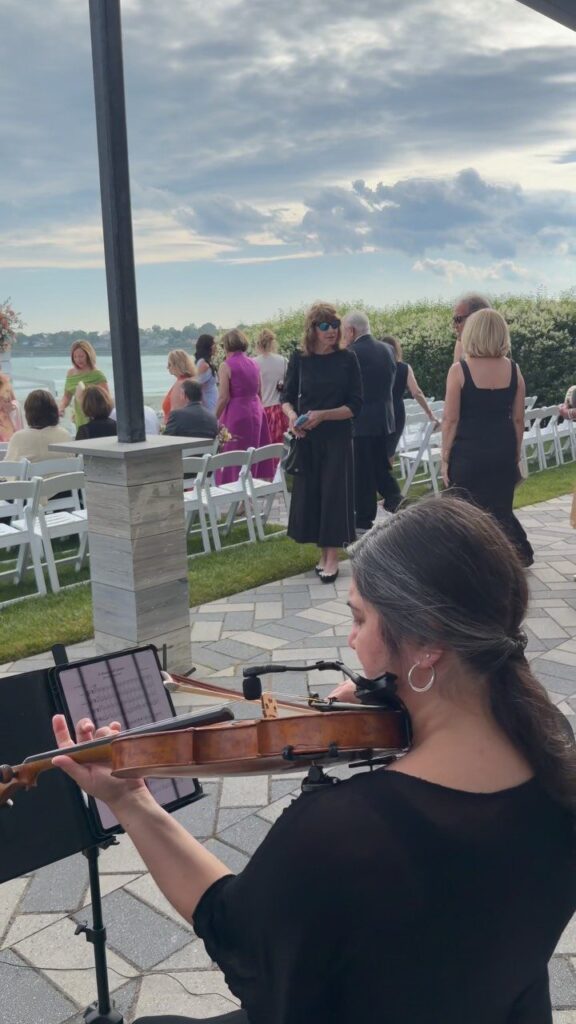
A wedding can run on one solo violinist at arrival or on a full plan of music for every moment, and what sets your count is how many gaps your day has where guests are walking in, waiting or watching.
1. Guest Arrival Music
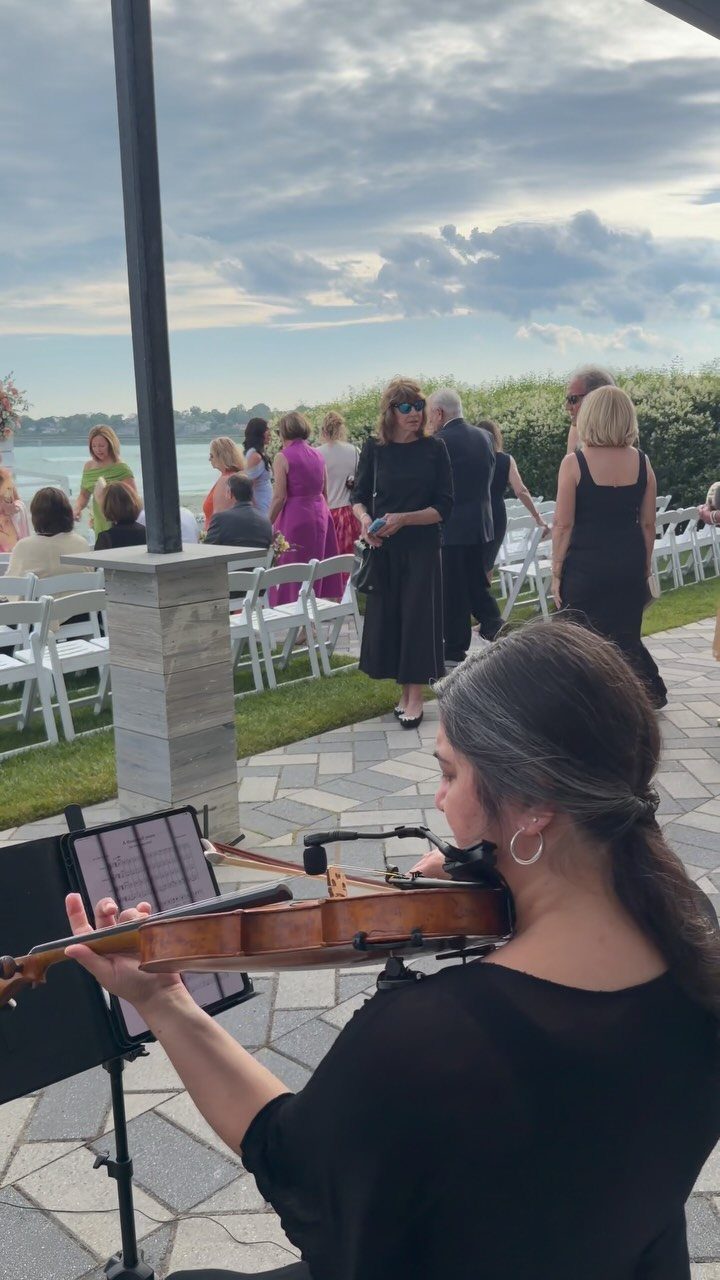
A solo violinist is enough for arrival music, and a single player costs far less than a quartet. Soft, steady pieces work best while guests find seats, since nobody is listening closely yet.
Start the music about 30 minutes early so the first arrivals aren’t sitting in silence. Outdoors by the water, ask the player how amplification will work, because wind and open space swallow an unamplified instrument.
A short playlist on a speaker is the budget version, and I’d still choose a live player if there’s room for one.
2. Wedding Recessional
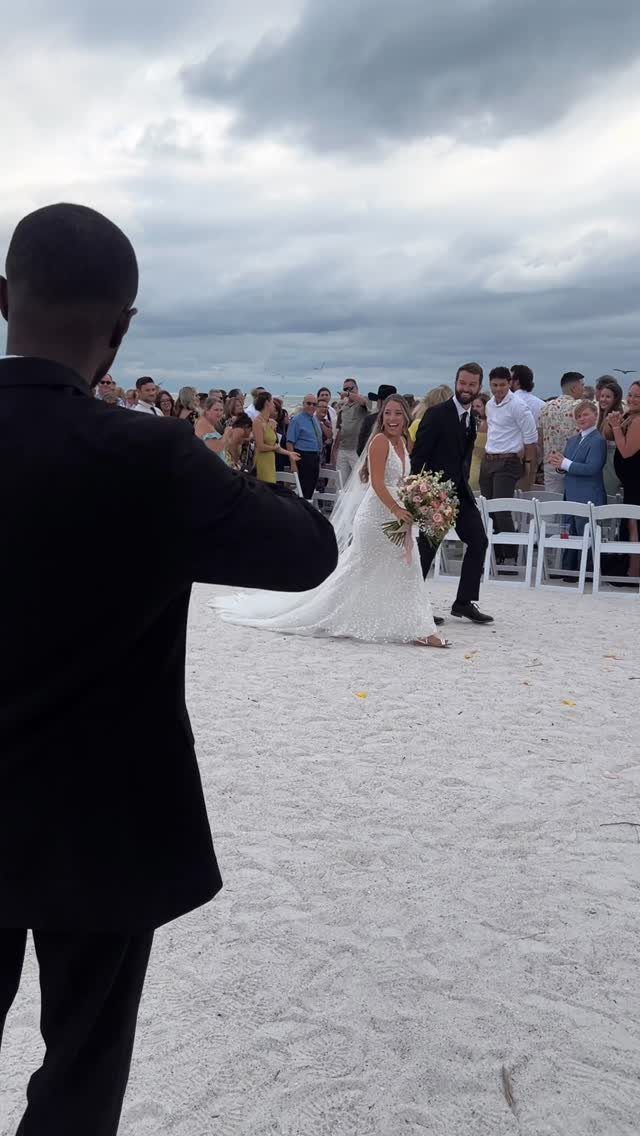
Recessional music sets the mood for your first minutes as a married couple, so pick something upbeat that you’d happily walk to while smiling at everyone.
A beach aisle is slow going in sand, which means the song needs to be long enough to cover the whole walk.
Cue a track long enough to cover the full walk back up the aisle and ask whoever runs the sound to start it the moment you turn to face the guests.
I’d pick a song with a clear, joyful opening beat, since it gives you something to step to.
3. First Dance Song
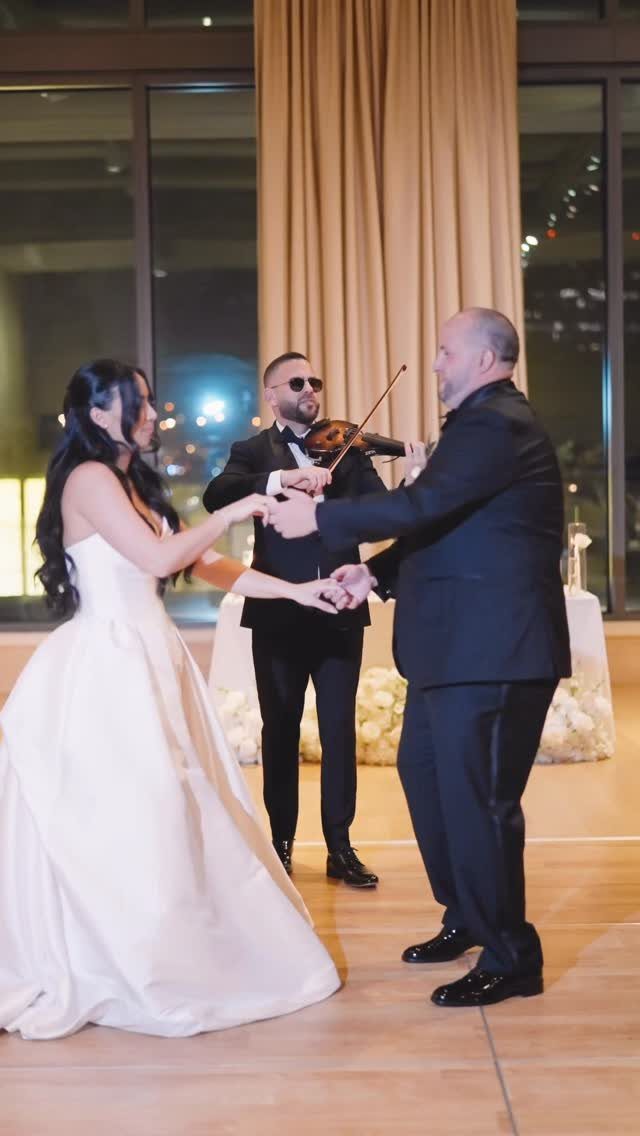
Choose a first dance song you can actually move to, and then decide how much of it you’ll use.
A full 4-minute track feels long on a floor with everyone watching, so many couples trim it to about 2 minutes with a clean fade.
A live violinist, as in this ballroom, can play your song as an instrumental, which keeps the melody while softening the lyrics. Practice a few times in your own living room first.
I’d favor a song with personal meaning over a popular pick every time.
Planning Music Cues
A cue sheet turns your song choices into instructions someone else can follow.
Specific beats vague.
If your family setup is unusual, if several kids are walking, or if anyone needs a hand down the aisle, spell out the order by name.
A rehearsal helps, but on the day everyone is busy, excited and taking photos, and the sheet is what people will actually check.
Say the officiant cues the guests to stand while the DJ watches the aisle and stretches or trims the track to fit; the ceremony then neither drags nor feels rushed.
Avoiding Awkward Silence
Most couples plan music for about 5 moments, and a wedding needs closer to 25. The missing ones are where silence creeps in: the unity candle, guests shuffling to cocktail hour, a reception entrance that fizzles.
Walk through your day minute by minute and mark every gap where people are moving, waiting or watching.
Each one needs a song, a playlist or a deliberate decision. Then hand that list to your planner and your DJ or band.
Silence can also be a choice. Vows, readings and other spoken moments often land better with no music underneath, so add a track only where it supports what’s happening.
An unplanned quiet breaks the spell, but a planned one adds to it.
Choosing the Right Vibe
Settle the vibe before you pick a single song. Traditional, modern or a mix are all fine, and mixing genres works better than people expect: elegant classical pieces can sit beside a Beatles tune without clashing.
Some couples build the whole ceremony on modern pop and timeless love songs. If yours is religious, hymns and other sacred music belong in the plan from the start.
Next, write down any song you love so much it has to be in. Those few picks give you an anchor, and the rest of the music can be chosen to match them.
I’d start with the feeling you want guests to leave with, then test each song against it. If a song fights that feeling, cut it, even if it’s popular.
Frequently Asked Questions
How many songs should you play at a wedding?
A short list of about 6 songs covers the big moments: processional, recessional, first dance, parent dances, cake cutting and last song. The extra ones cover things like a unity candle, the walk to cocktail hour and the reception entrance.
What song brings everyone to the dance floor?
An upbeat song nearly everyone knows works best, such as ‘Dancing Queen’, ‘I Wanna Dance With Somebody’, ‘September’ or the ‘Cupid Shuffle’.
A song with an intro everyone knows in 2 seconds pulls people up from their chairs, and Motown does that for grandparents and cousins alike.
Deeper cuts belong later in the night when the floor is already packed, and slow ballads work against you at this point.
Does the groom walk down the aisle to music?
Usually the groom has no song of his own; the music is tied to the wedding party and the person being married as they enter.
Grooms sometimes get their own entrance song too, played as he walks in beside the officiant or just ahead of the officiant.
Without some music at that moment, the wait can feel awkward, so a short phrase or a continuation of the seating music fills it well.
How early should wedding guest arrival music start?
Begin playing roughly half an hour ahead of the processional, so the first guests through the door don’t sit in a quiet room.
One violinist handles this job well and runs well under what a quartet charges. Pick gentle, even pieces; people are chatting and hunting for seats, so nobody is following the melody.
Should wedding vows and readings have music playing underneath?
Often they land better with no music at all.
Silence can be a deliberate choice, and a planned quiet adds to the moment while an unplanned one breaks the spell. Use a track only when it adds to the moment in front of you.