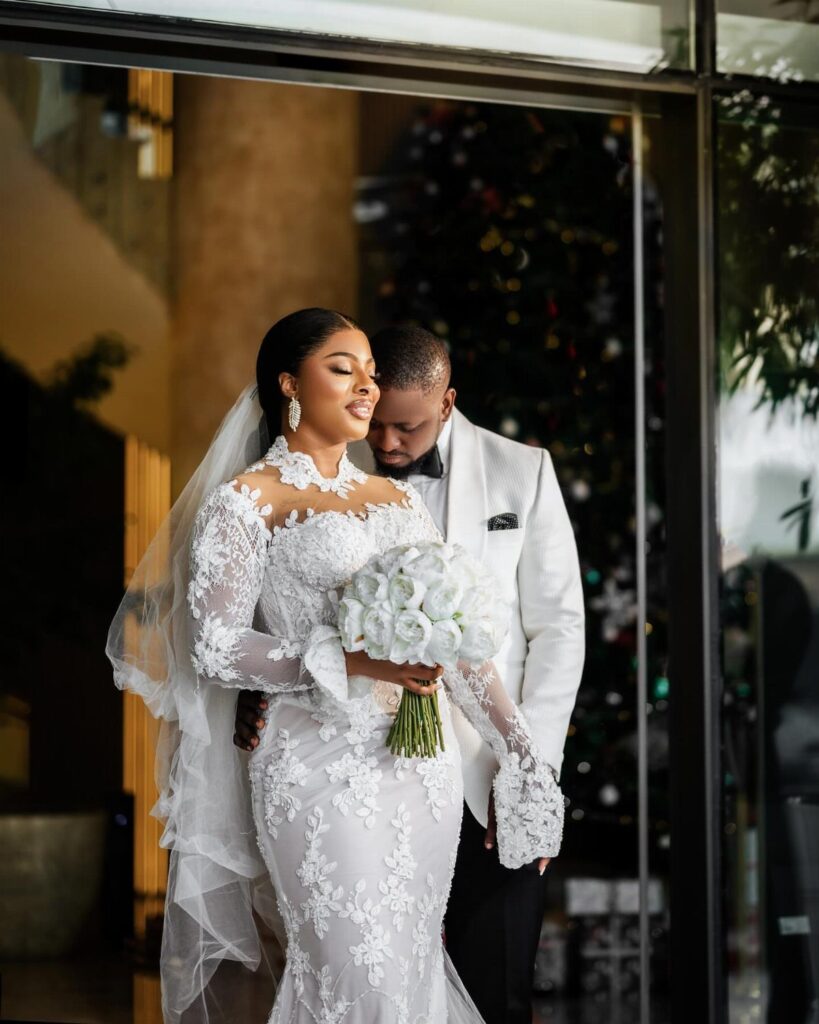
Most of these shots cost nothing but a conversation: getting ready, a quiet first look, close-ups of the rings, an empty ceremony space before guests arrive.
Which ones belong on your list depends on how much of the day your photographer covers, and the timing for photos decides what gets shot first. Family formals show why.
1. Getting Ready
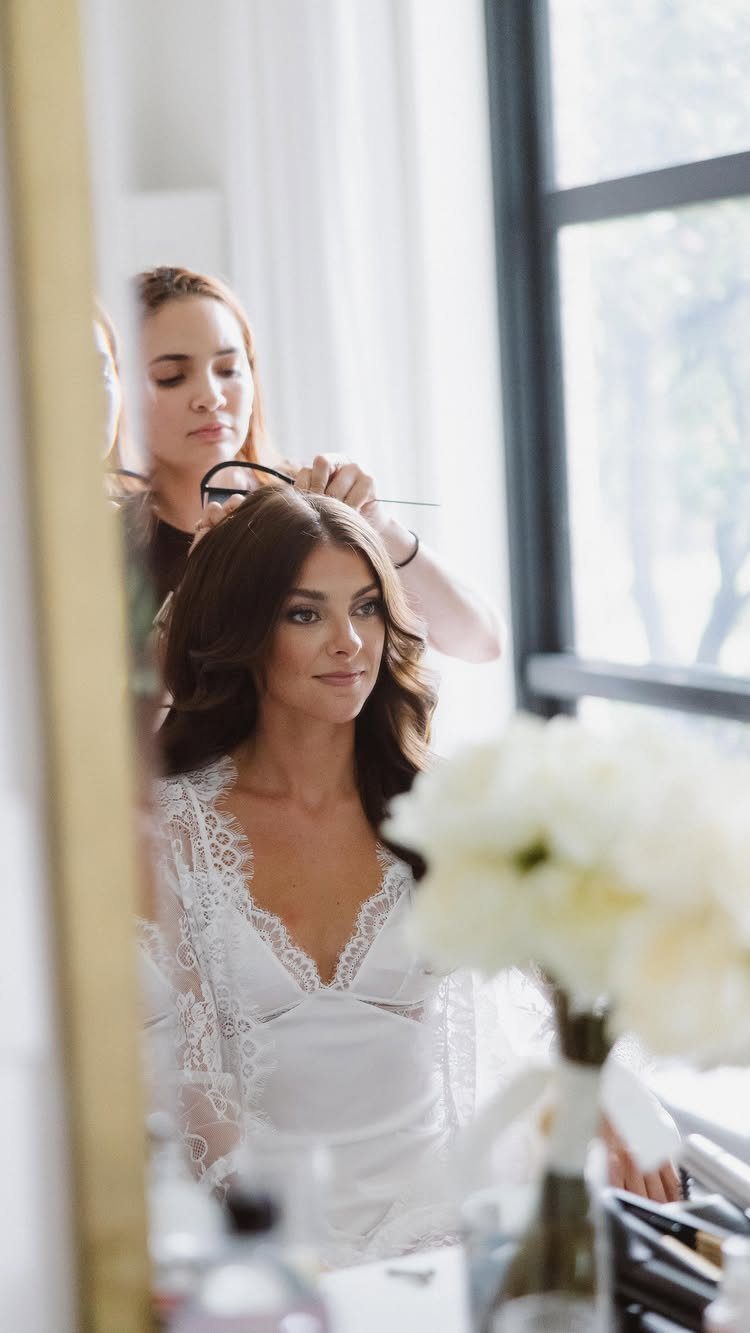
A robe is the detail that makes getting-ready photos work. White lace reads as bridal at once, and it keeps the shot clean while hair and makeup are still in progress.
Book the hair stylist beside a window, as in this bright room. Natural light flatters skin and makes the whole sequence look calm, even when the morning isn’t.
Ask your photographer to arrive while styling is underway, not after it.
2. Bride Walking Down the Aisle
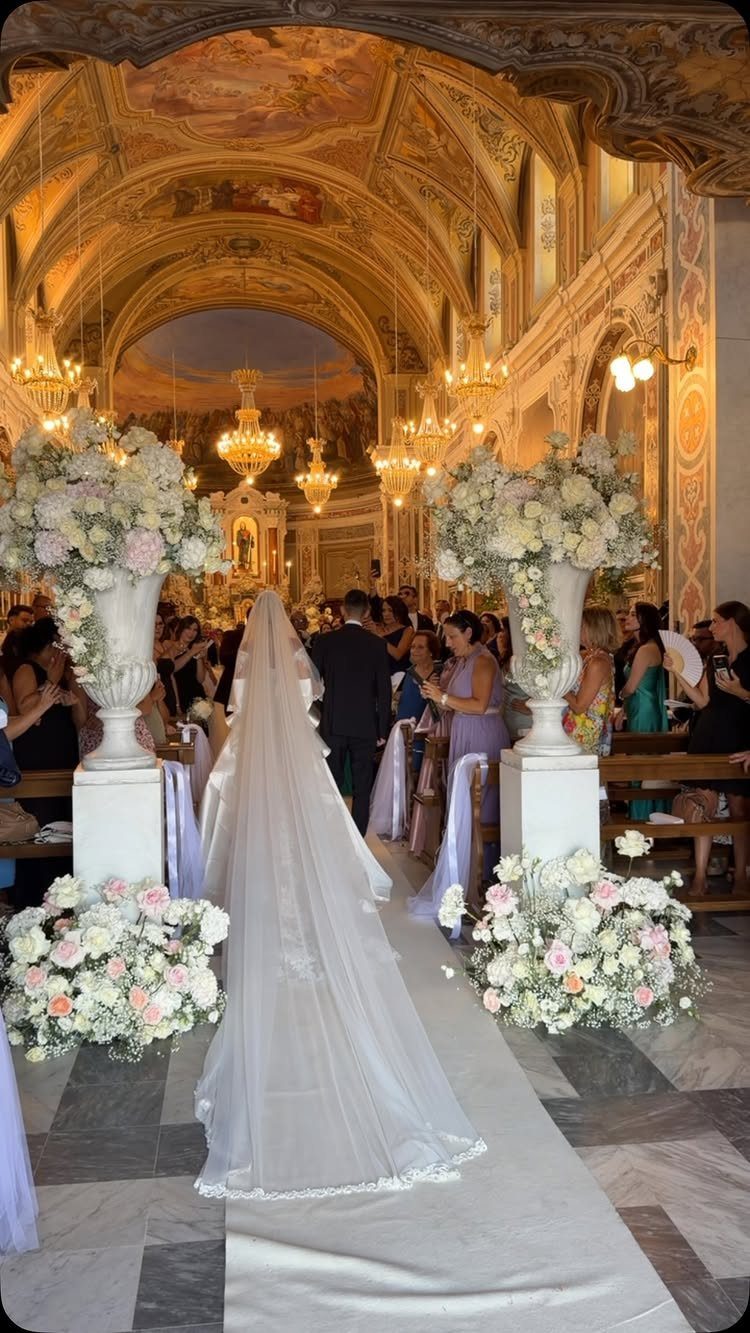
A long veil does most of the work in an aisle shot. The train trails behind and moves with each step, giving the shot a sense of motion.
In a church this ornate, the guests, the flowers and the groom waiting at the far end all share the frame.
Tell your photographer which spot you want covered: your face as you walk, or his face as he sees you.
Walk slower than feels natural. Fast steps blur the veil and shorten the moment.
3. Wedding Party Group Portraits
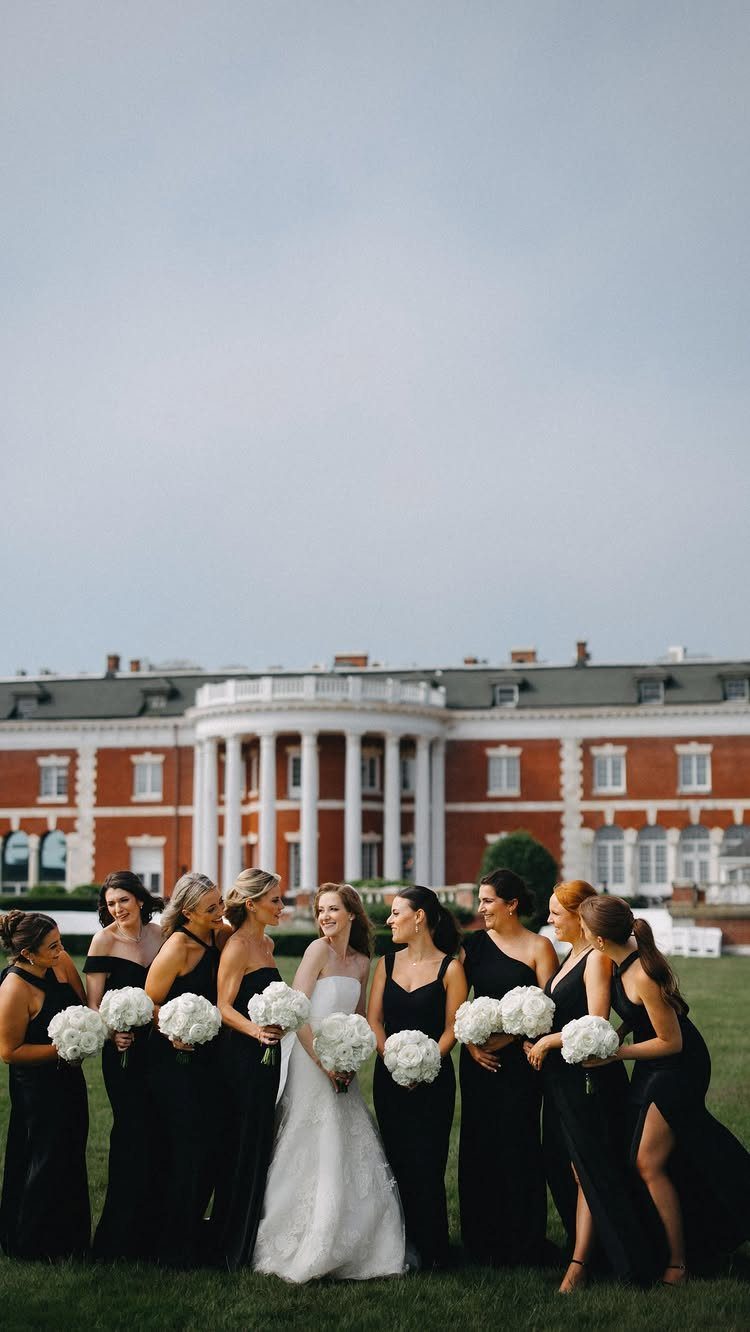
8 bridesmaids in matching black dresses with white bouquets make a strong, graphic group. The contrast pops against red brick, and matching bouquets keep a large group looking tidy.
Pick a backdrop with a simple texture, like a brick facade, so the dresses stay the focus.
Split the full group into smaller combinations after getting everyone together. I would always take a few frames of the bride with each bridesmaid alone, since those are the prints people frame.
4. First Look
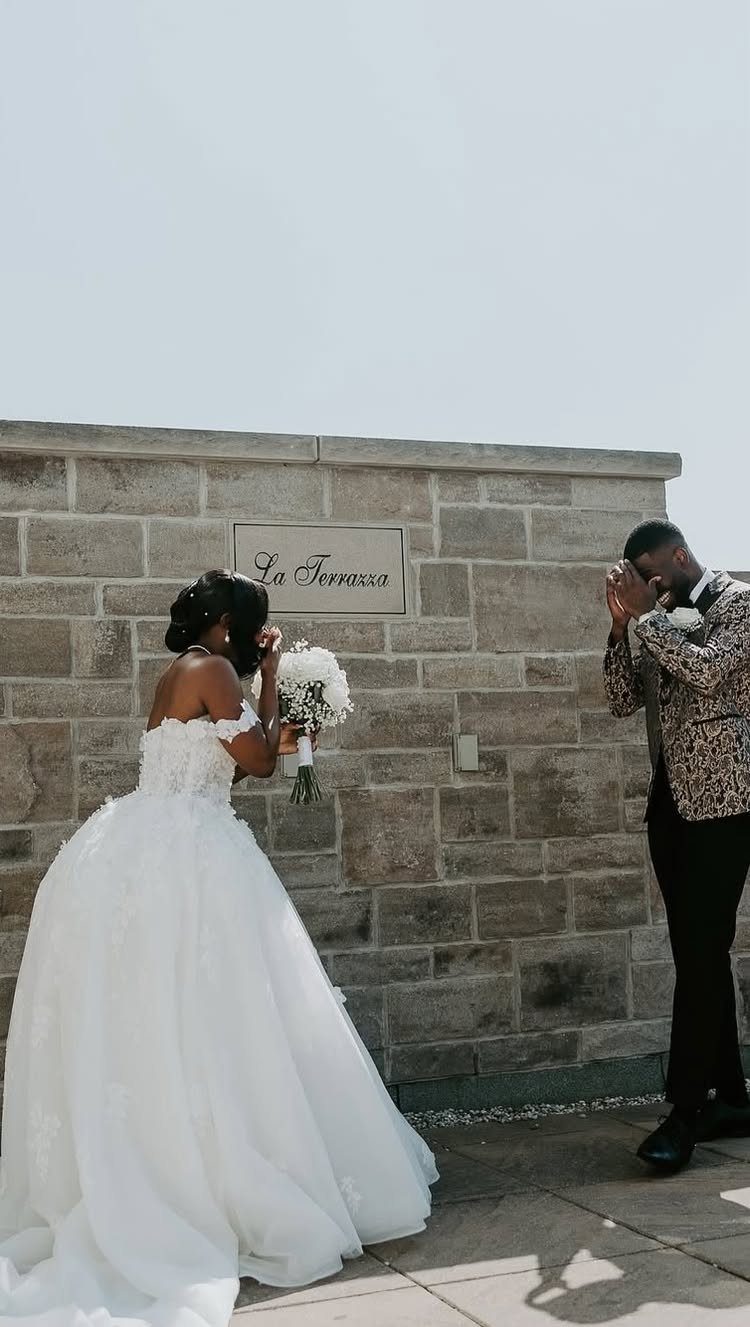
Seeing each other alone, away from guests, lets both reactions happen for real. Nobody is performing for a crowd, so the laughter and the teary pause come out honest.
Pick a quiet corner with a plain backdrop, like a stone wall, so nothing competes with their faces. Ask your photographer to shoot from a distance at first, then step in closer.
You’ll see each other before the ceremony, which some couples want to avoid. For me, the calmer nerves and extra portrait time are worth it.
5. Couple Portraits
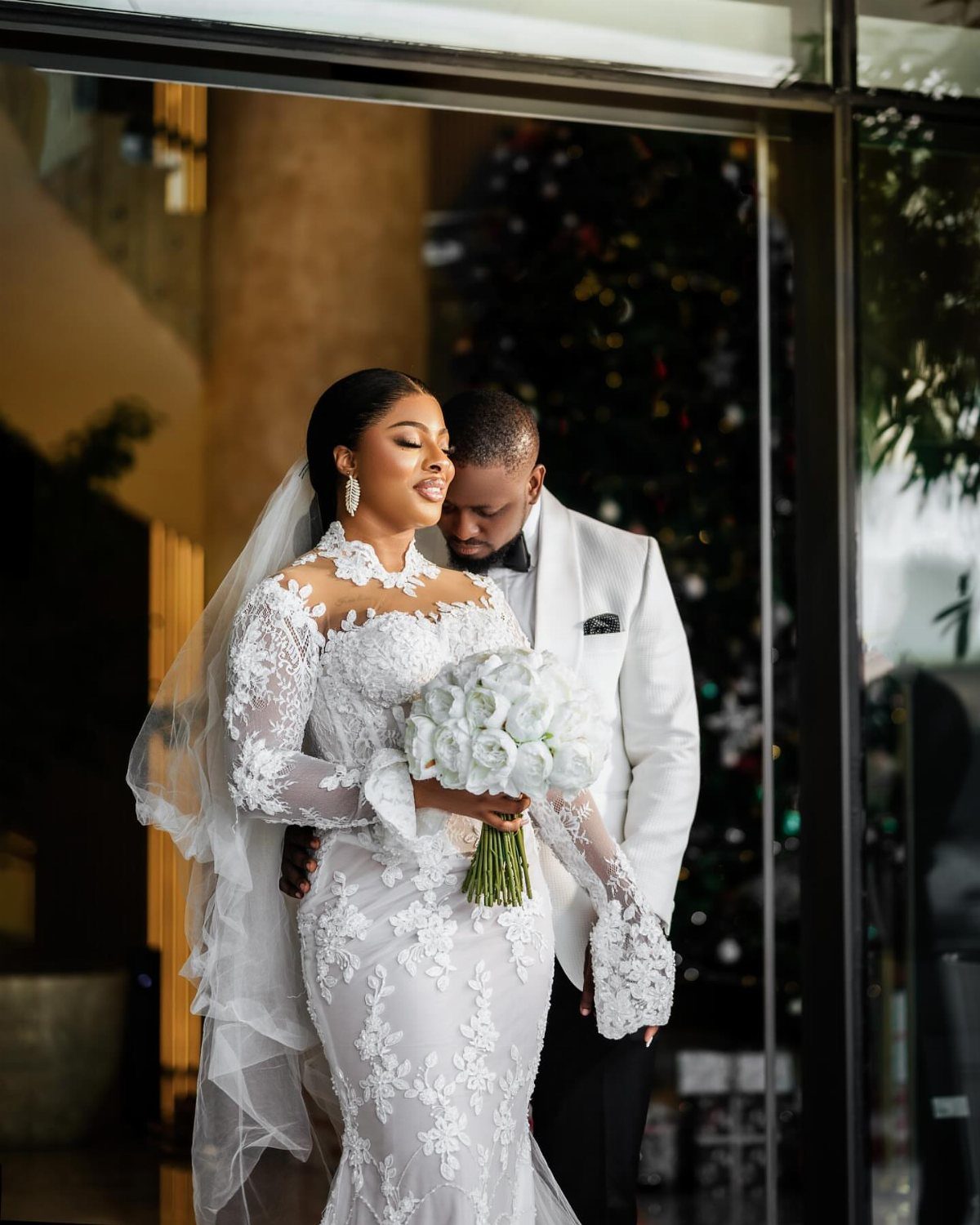
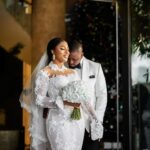
Slow down and hold still. In an embrace like this, one couple fills the frame, and the photo works because nobody is looking at the camera.
Soft daylight through a window or glass door handles the lighting without setup. A lace gown and a white tuxedo both reflect it, so check with your photographer that the whites stay detailed instead of washed out.
Let your foreheads touch, breathe, and talk quietly. The best frames usually come after the posed ones.
6. Reception Table Settings
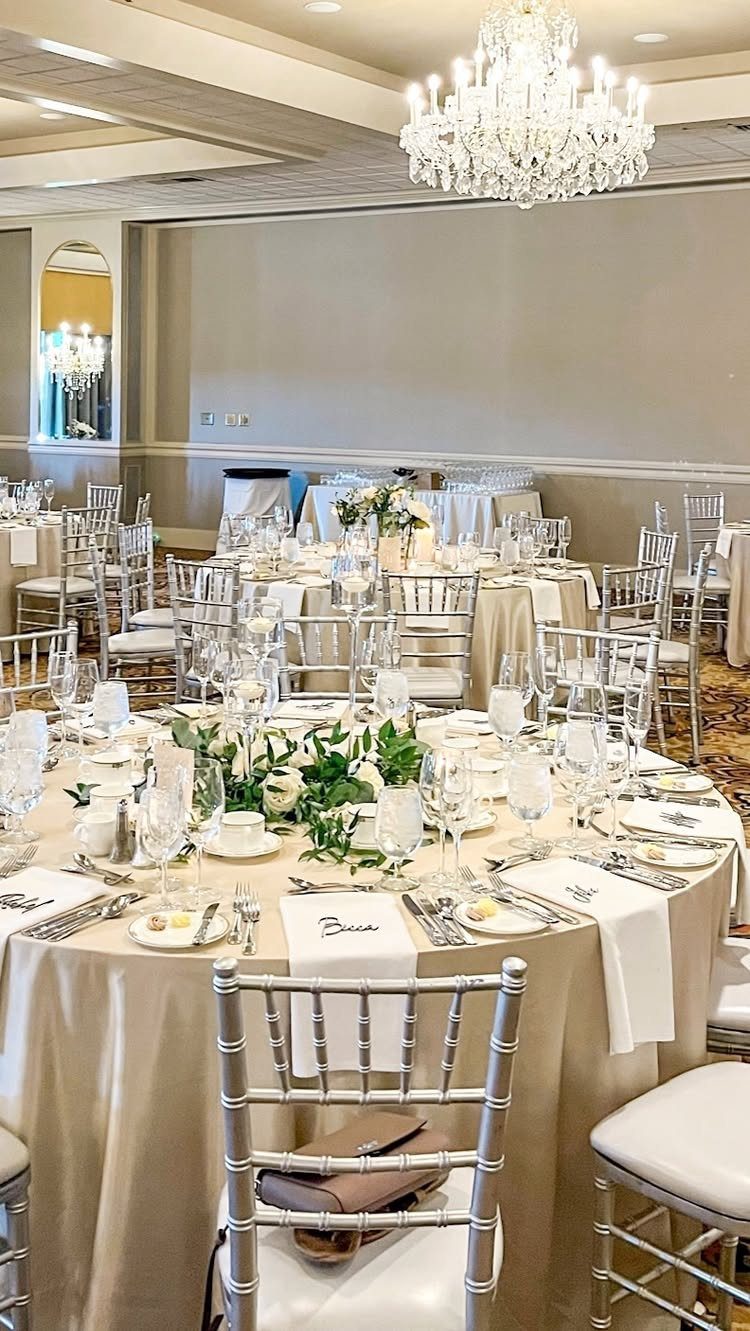
Your tables are photographed before any guest sits down, so this is the one shot where the decor gets its full due. Wide angles catch overhead fixtures, close ones catch glassware and folded napkins.
To stretch a budget, skip chargers and use nicer plates instead.
Ask your florist for two or three centerpiece styles in place of one repeated design. Greenery on neutral linens keeps varied elements looking calm and unified.
7. Groom’s Family
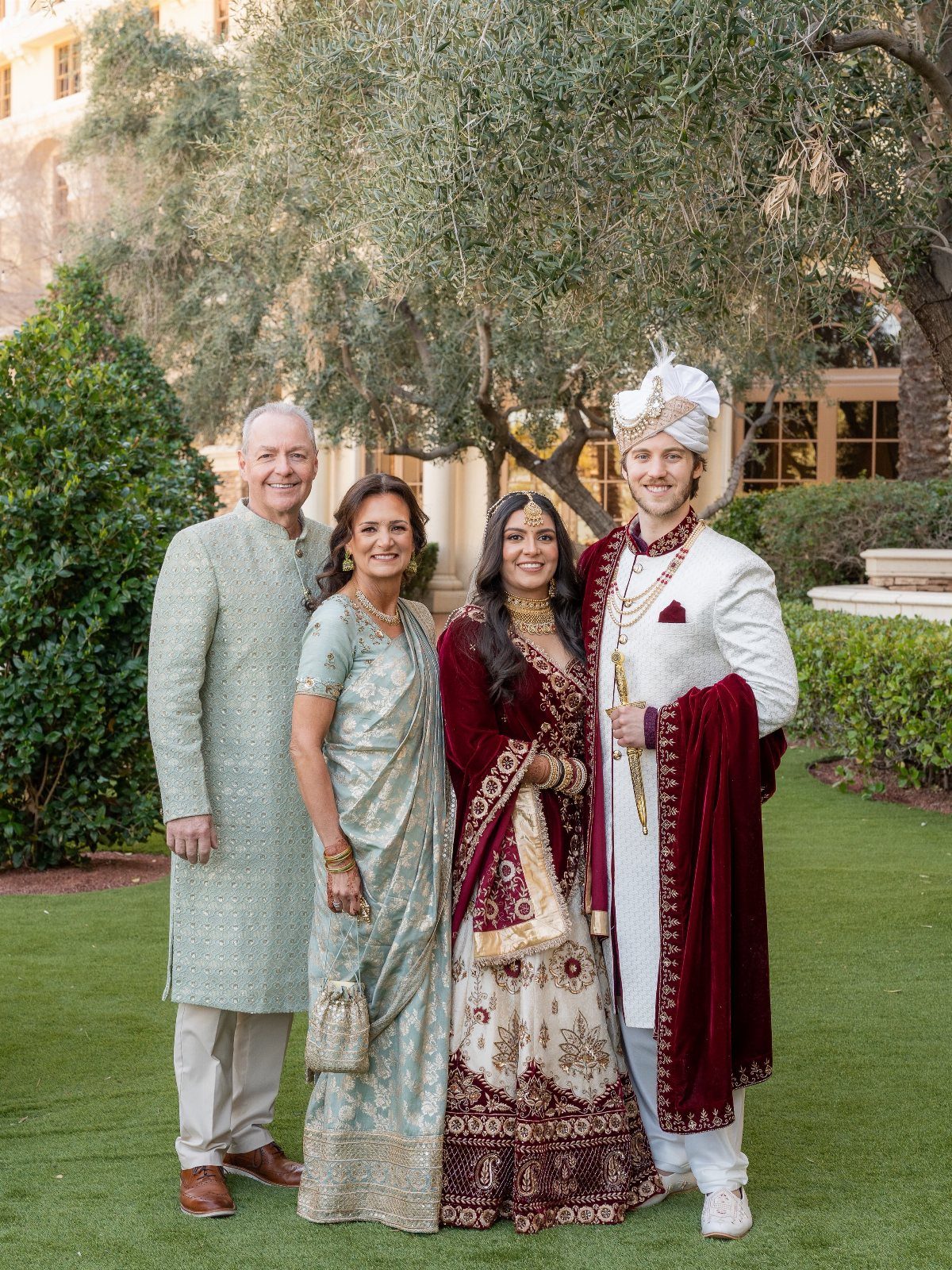
Give the groom’s side its own frame.
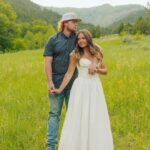
Pick a spot with plain grass and a little background, then keep the group small. Grandparents go first, then parents and siblings, then cousins in separate rounds.
Hand your photographer a written list of names for his side. Relatives drift off fast after the ceremony, and a list saves you from hunting for them.
8. The Bride and Groom’s First Dance
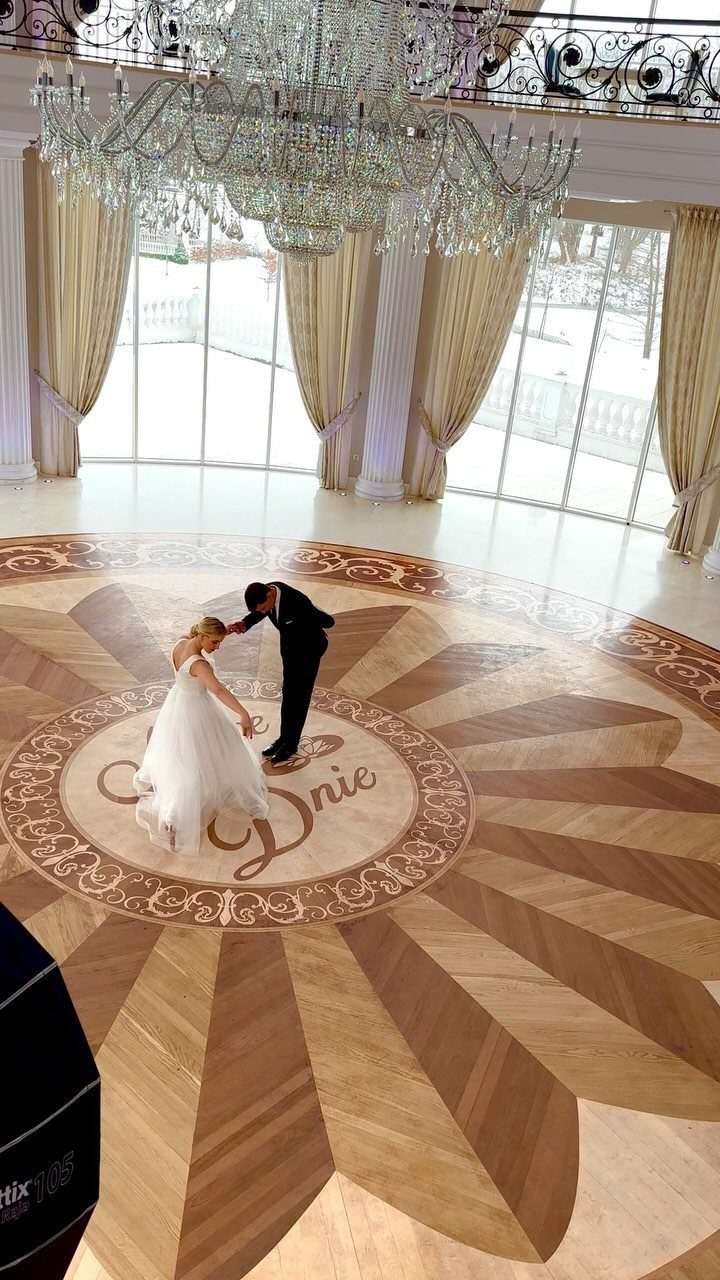
Entrances at the reception move fast, so tell your photographer where you will stand before the music starts. Pick a song you can actually dance to, because a rehearsed turn photographs better than a nervous sway.
I would ask for wide frames that show the floor and the ceiling, then a few tight ones of your faces.
9. The Send-Off
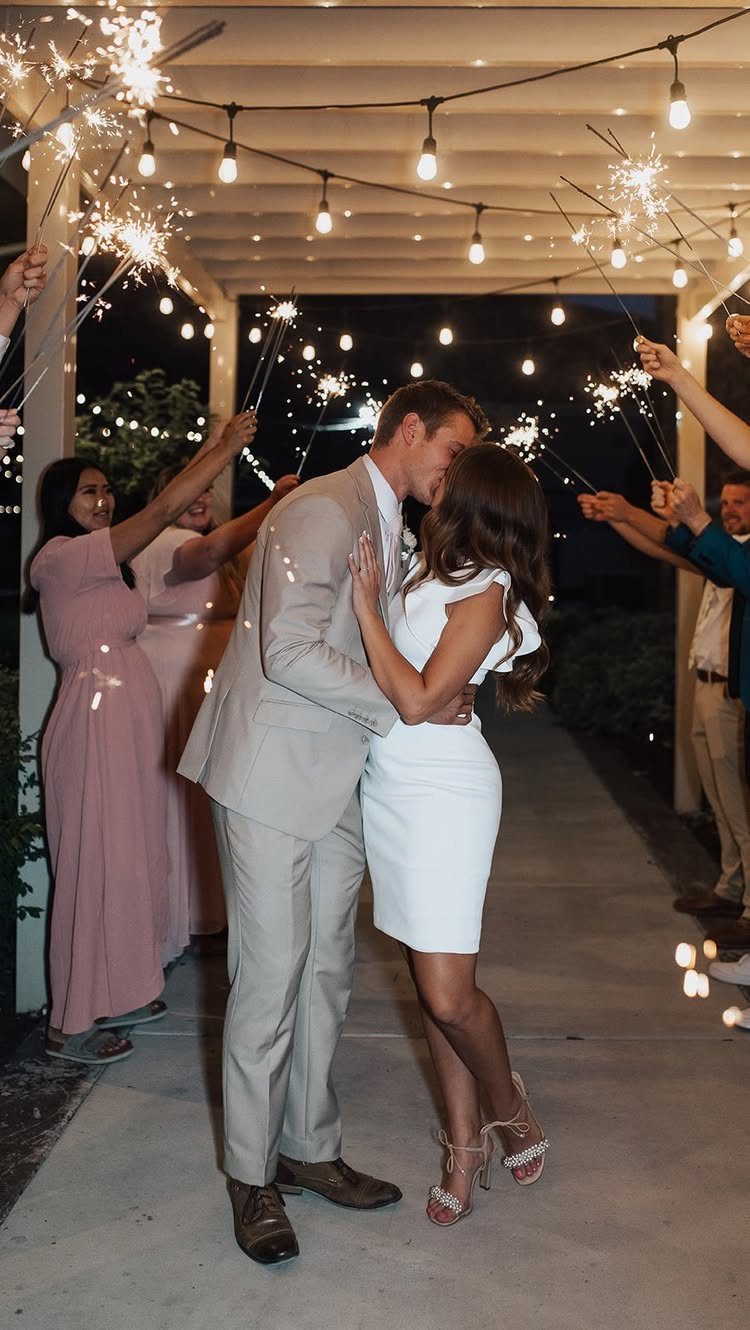
Sparklers held by guests turn an exit into a glowing tunnel, and a kiss in the middle of it is the frame I would ask for first.
Line guests up in 2 rows before you walk out, and hand out sparklers early so everyone is ready to light together.
String lights overhead add soft background glow, so keep the exit in the same patio area if you can.
Run through it once with your photographer. The moment passes in seconds, and a second pass is rarely possible.
10. Close-Up Photos of Wedding Rings
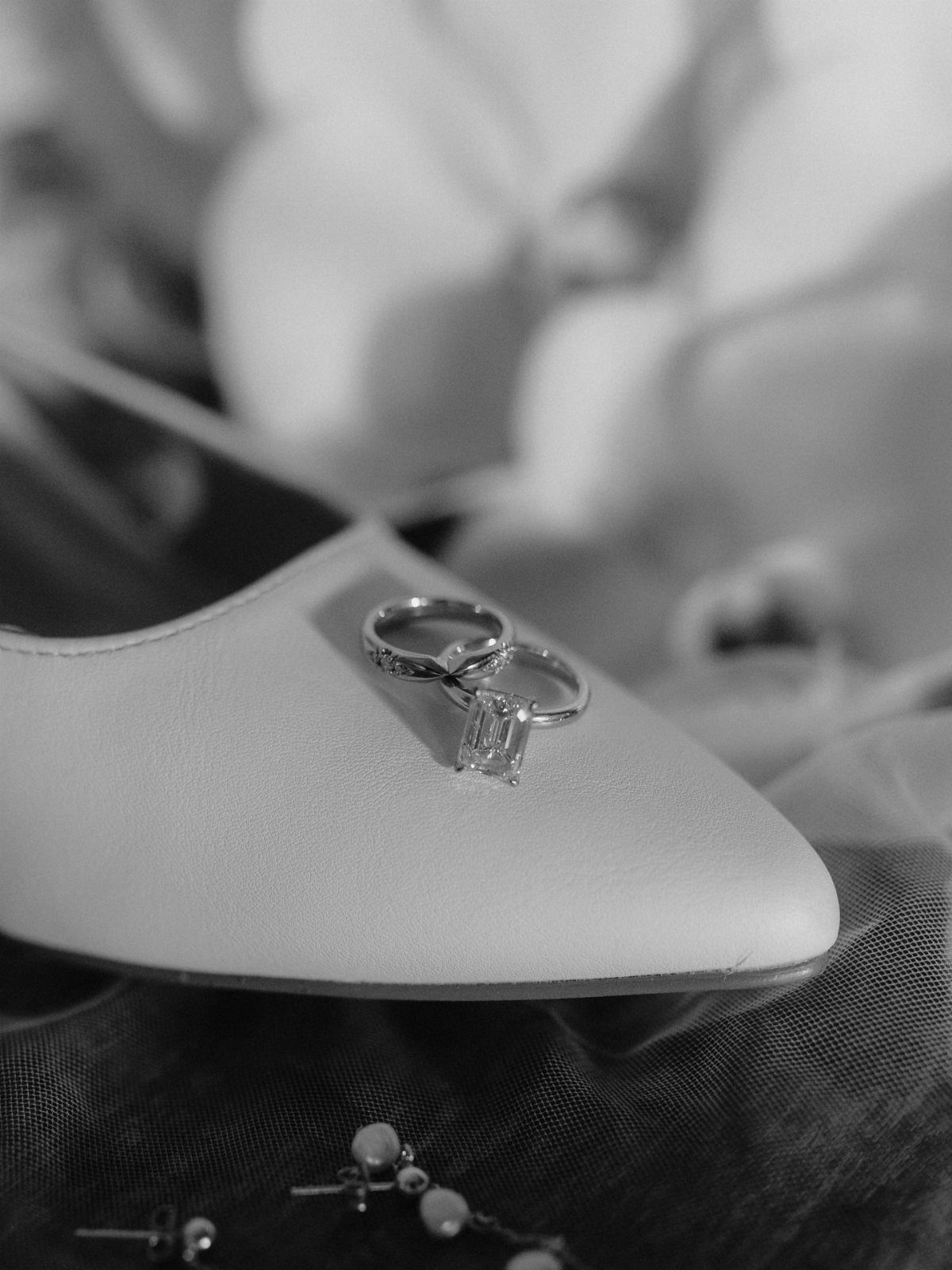
A pair of rings on a white pointed-toe shoe is a small, clever setup: the shoe is already part of your outfit, so the shot costs nothing extra.
Black and white suits it well. With blurred flowers behind, the metal catches the light and the eye stays on the rings.
Hand the rings to your photographer before the ceremony, ideally during getting ready, when nobody is rushing. Ask for a few angles so you can choose your favorite later.
11. Empty Ceremony Space Setup
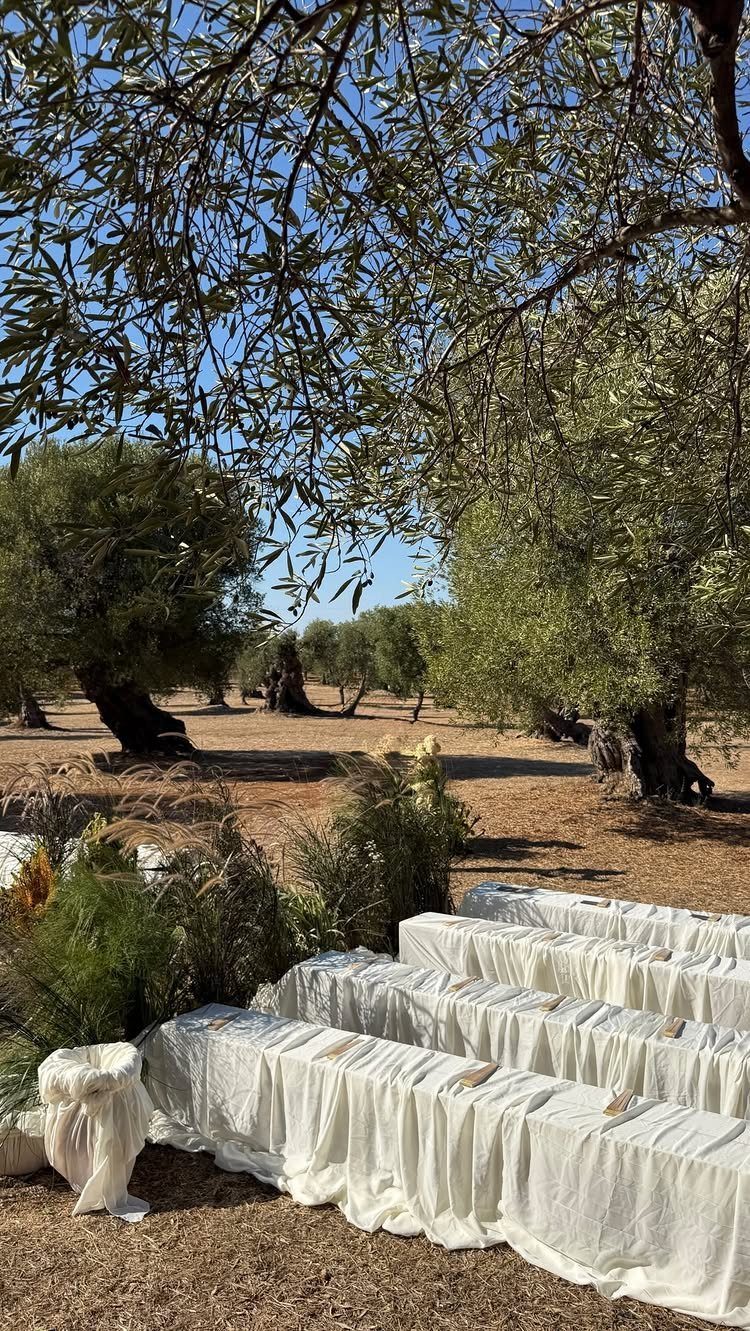
Shoot the ceremony space before a single guest sits down. Wooden benches draped in white fabric, with grasses and florals along the rows, look their cleanest when the seats are empty.
Plan this for the window just before guests arrive, and tell your florist to finish early.
12. Champagne Tower Pour
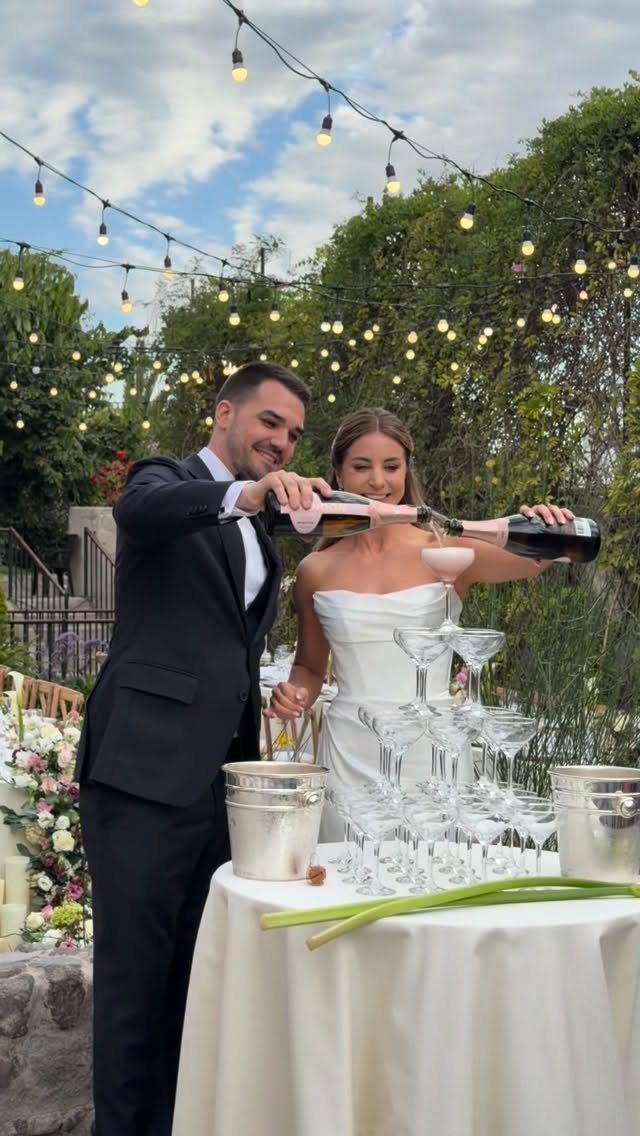
Pouring together into a stacked tower gives the two of you something to do with your hands, which helps if posing makes you stiff.
String lights overhead give the glass a warm glow, so I would schedule the pour once the light fades. Pour slowly from the top glass and keep the bottle low, so the champagne spills evenly down the tiers.
Test the stack for steadiness before the toast. A wobbly tower is a stress, not a photo.
13. First Look with Bridesmaids
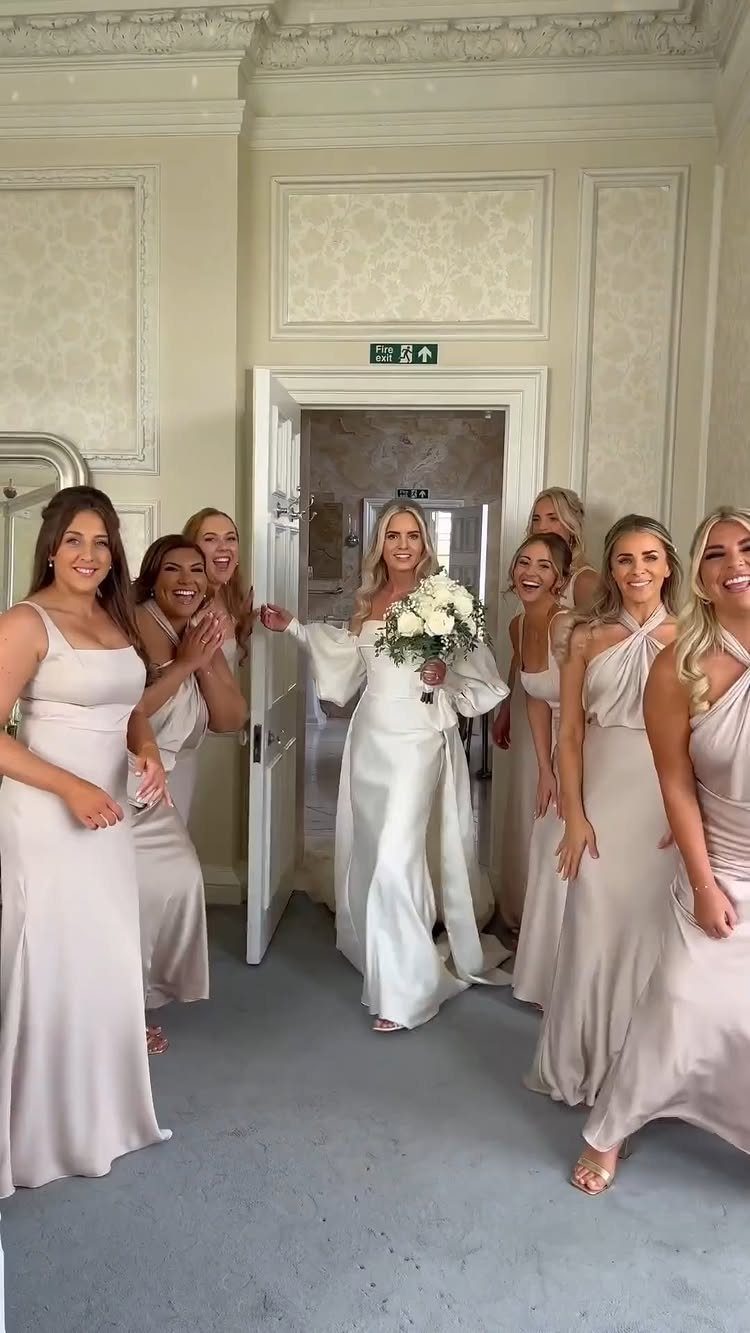
Bridesmaids get their own reveal, and the reactions are the whole picture. A group of bridesmaids in matching dresses crowding a doorway will give you open mouths, raised arms and real squeals the moment you step into view.
Ask the photographer to stand behind the bridesmaids, facing you, so the frame catches their faces and yours at once. Have them wait out of sight until you are ready, then call them over.
Do this after hair and makeup are done but before the ceremony, in a room with space to cluster.
Importance of Communication
Treat your shot list as something to talk through with your photographer, because a rigid script rarely survives the day.
Before you write anything, ask your photographer whether they want something from you. Some hand couples a worksheet, and its questions about what you’re most looking forward to often tell them more than a long checklist does.
When the schedule gets tight, your photographer can guard those first and let the rest slide.
Timing for Photos
Family formals are the most complicated stretch of the day, and the camera is not the slow part. Each grouping takes 2–3 minutes to shoot; the time disappears while people are being rounded up.
Budget 20–30 minutes, and keep the list to 10–15 groupings. Pile in more than that and the day runs long, or the photos get hurried.
Write names, not "both families." Then give one reliable person on each side, such as the maid of honor, the best man or a dependable sibling, the sole job of gathering relatives and handing them off.
Put grandparents near the top of the sequence so anyone who has trouble standing or walking isn’t left waiting the longest.
Flexibility in Shooting
A list covers what you know you want. The rest of a good gallery comes from moments nobody can schedule: a laugh across the room, a grandparent wiping an eye, a kid bolting across the floor.
Tell your photographer plainly that you want both. Then let them work between the planned shots without asking for a pose each time.
If being photographed makes you want to duck out of frame, tell your photographer early on.
A good photographer gives simple prompts and light direction, so you look like yourselves and never have to worry about what your hands are doing.
Frequently Asked Questions
What should be on a wedding shot checklist?
Put the moments, people and details you care about most on it: getting ready, the aisle walk, wedding party portraits, family groupings, rings, the first dance and the send-off.
Hand it to your photographer as a starting point for a conversation, not a script to tick off.
How long should family formals take?
Plan on roughly 20–30 minutes for 10–15 groups, and pad that number if your families are large. Write out specific names instead of "both families," and give one dependable person on each side the job of gathering relatives.
Should we do a first look before the ceremony?
I think yes for most couples. Seeing each other privately lets both reactions come out honest, nerves settle, and you get extra time for portraits.
The cost is giving up the traditional moment of first seeing each other at the ceremony, so it comes down to which matters more to you.
Who should I put first in the family photo lineup?
Grandparents go first, since anyone who tires easily on their feet shouldn’t be the one waiting the longest.
Parents and siblings come next, and cousins and the wider family can each get their own round after that. Keeping each group small makes the sequence move faster.