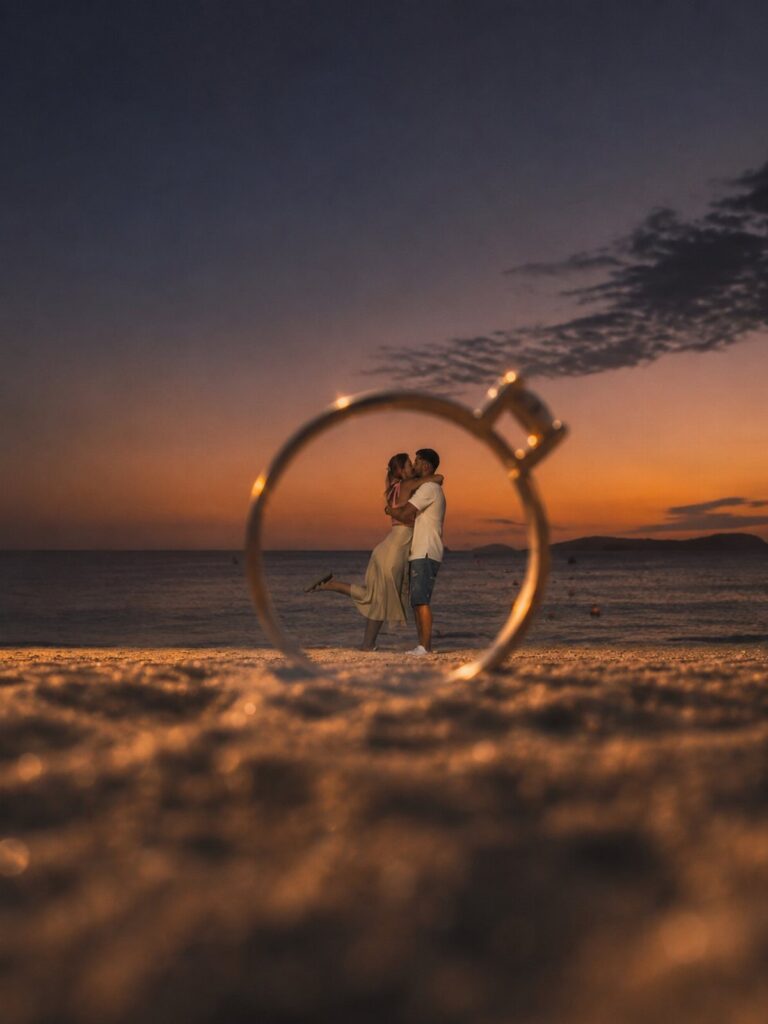
These ideas range from a ring set on a shell, which costs almost nothing, to a heart-shaped floral arch with lit "MARRY ME" letters, where every piece is a separate line on the bill.
Your beach shapes the session more than your budget does: a rocky shoreline, a wide stretch of sand and a lighthouse view each favor different frames, so the lighthouse backdrop, the waterline walk or the piggyback ride only works where the setting allows it.
Timing is what ties these ideas together, so plan to start shooting roughly an hour before the sun goes down.
1. Golden Hour Shots
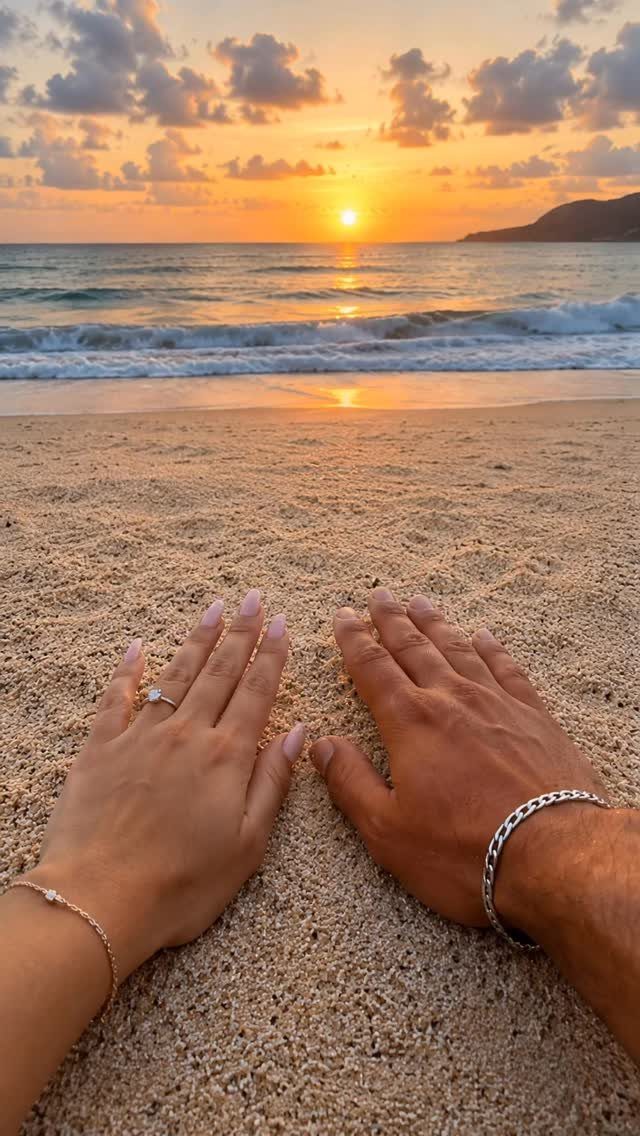
Soft light just before sunset or just after sunrise is kind to skin and makes a ring glint without any harsh glare. The hands-on-sand frame works because it needs almost no posing, so nobody has to feel awkward.
Plan the session around the sun, not around your lunch break. Ask your photographer to scout the timing for your date, since the window is short.
2. Walking Along the Waterline
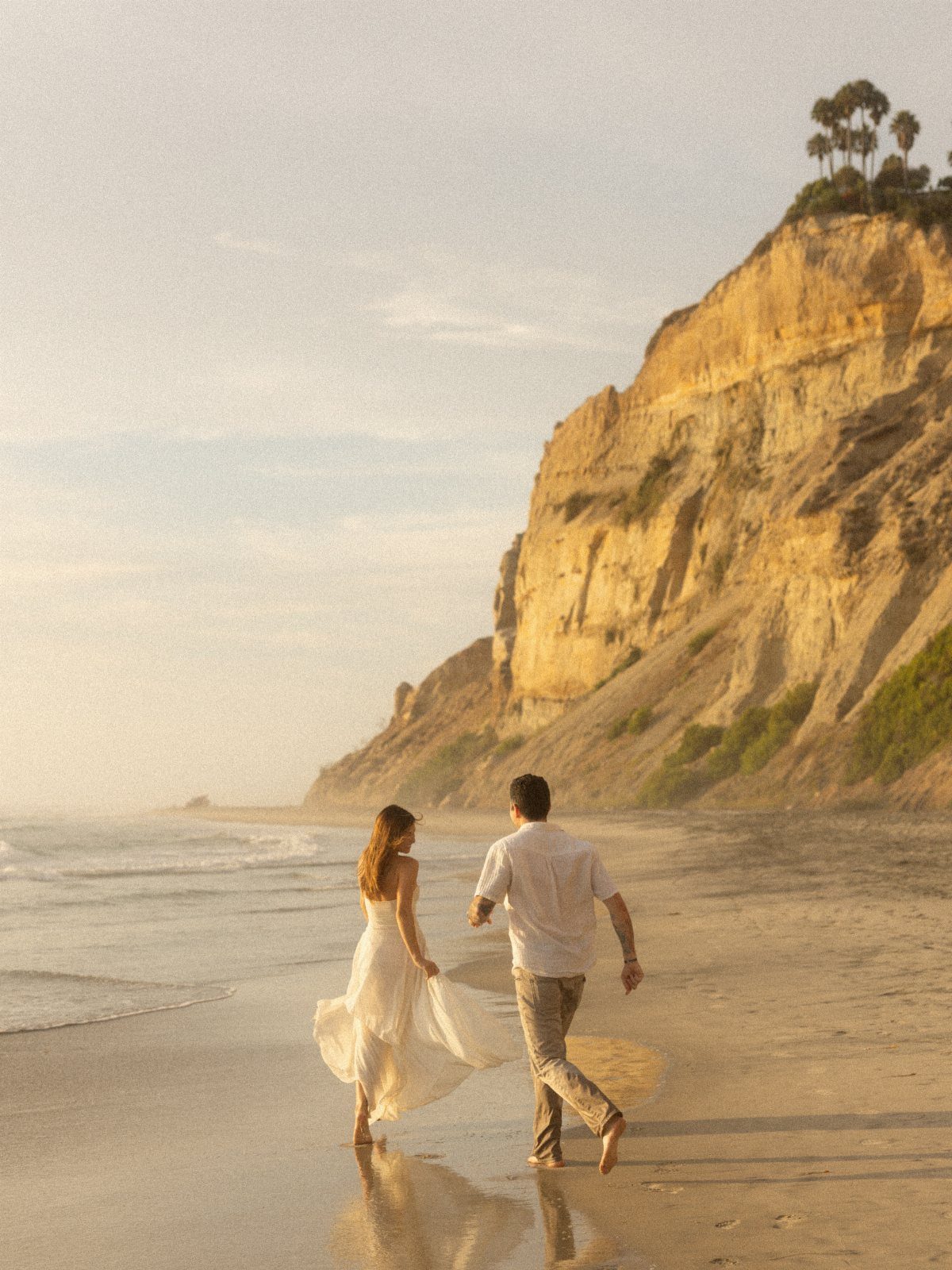
Waves meeting the sand give a walking shot its movement, and I like it best when the couple keeps talking instead of looking at the camera.
Walk slowly, hold hands loosely, and let the photographer work from a few steps ahead or behind.
Stay on the damp, firm strip near the water’s edge, where each step leaves a clean print. Barefoot is easiest.
3. Kiss in the Waves
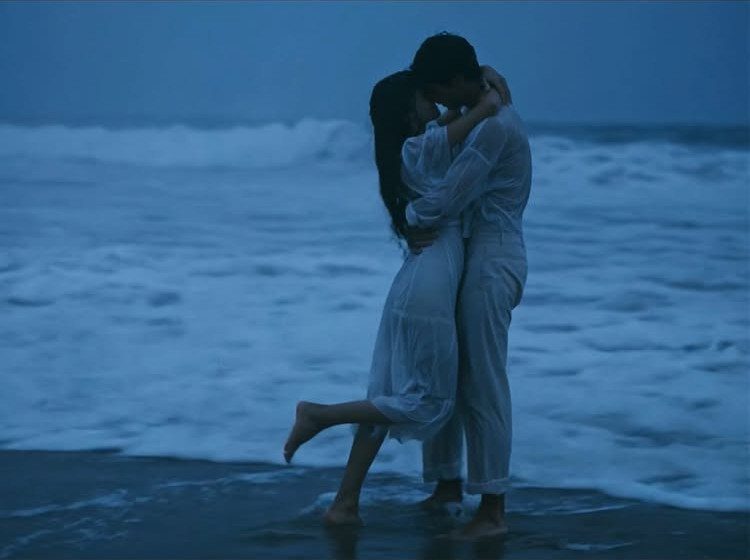
Wading in ankle-deep and kissing as the water moves around you gives the frame more energy than a kiss on dry sand.
Pale clothing reads clearly against dark twilight water, so white or cream outfits stand out best when you shoot in the last light of the evening.
Roll up pant legs or choose a dress that is easy to gather. Shoot a few rounds, because a wave will time itself badly at least once.
4. Lighthouse Backdrop
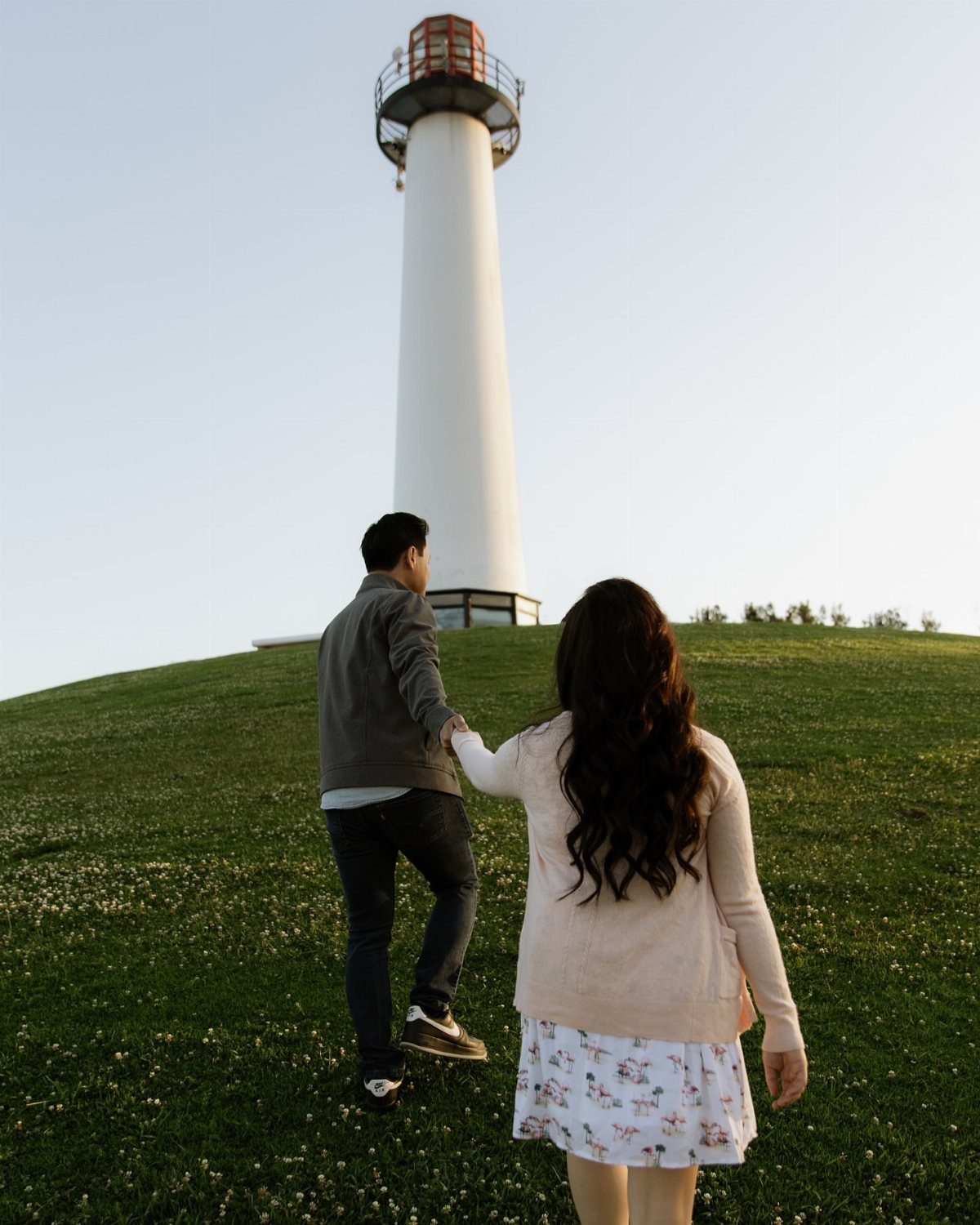
A tall white lighthouse gives the shot a landmark, so the photos say where you are without a single caption.
Walking uphill toward it, hands joined, gives you a natural path and a reason to move instead of freezing into a pose.
Check ahead whether the grounds are open to the public. Wear shoes you can climb a grassy slope in.
5. Coastal Rocks
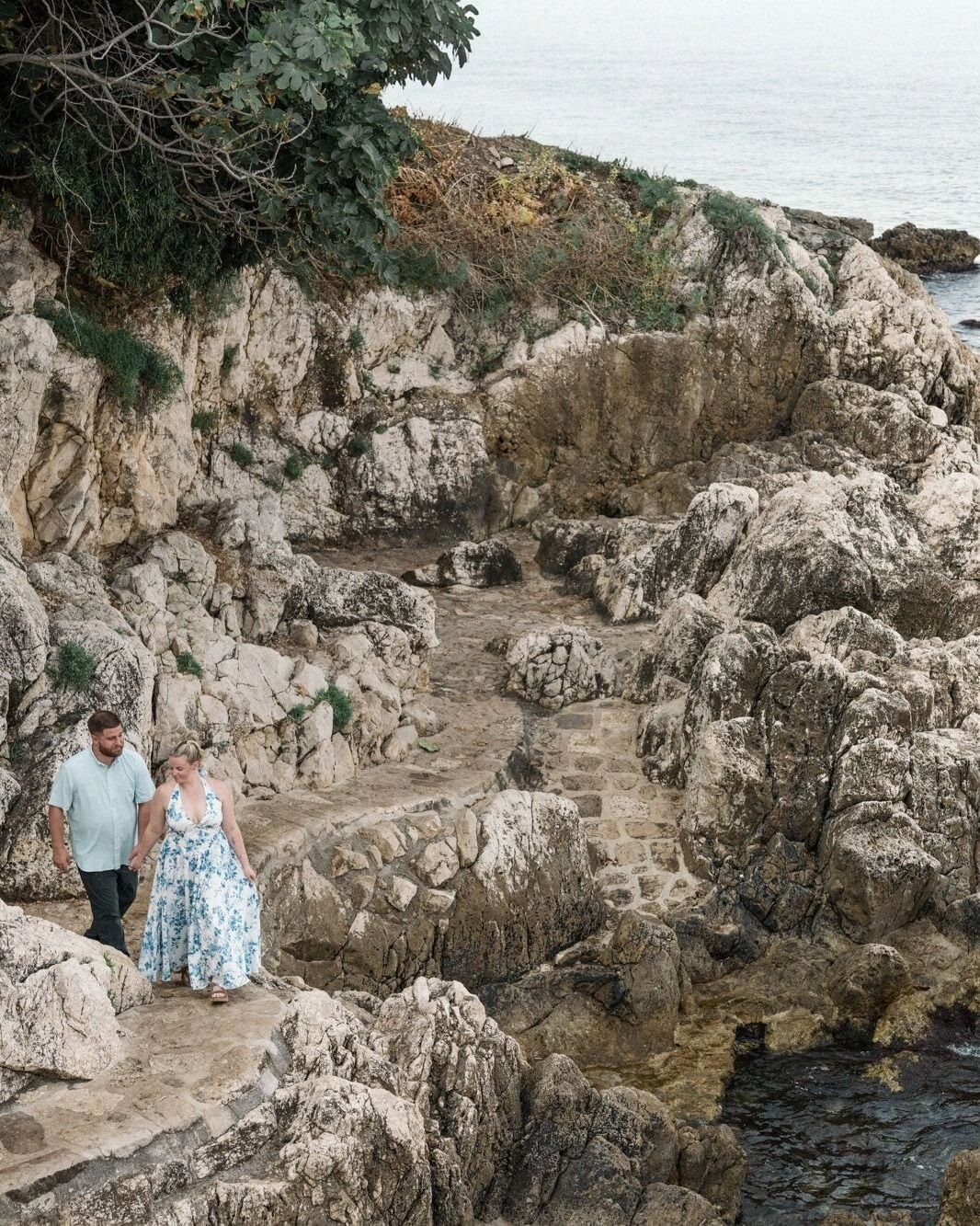
Rugged rock beside the ocean gives engagement photos a moodier feel than open sand, and a path along it gives you somewhere to walk.
A printed dress, such as a blue and white floral, pops against gray stone, while solid pastels tend to disappear into it.
Wet rock is slick, so pick shoes with grip and take your time. Keep poses simple: walking, hand in hand, and a glance at each other.
6. Cozy Blanket Shots
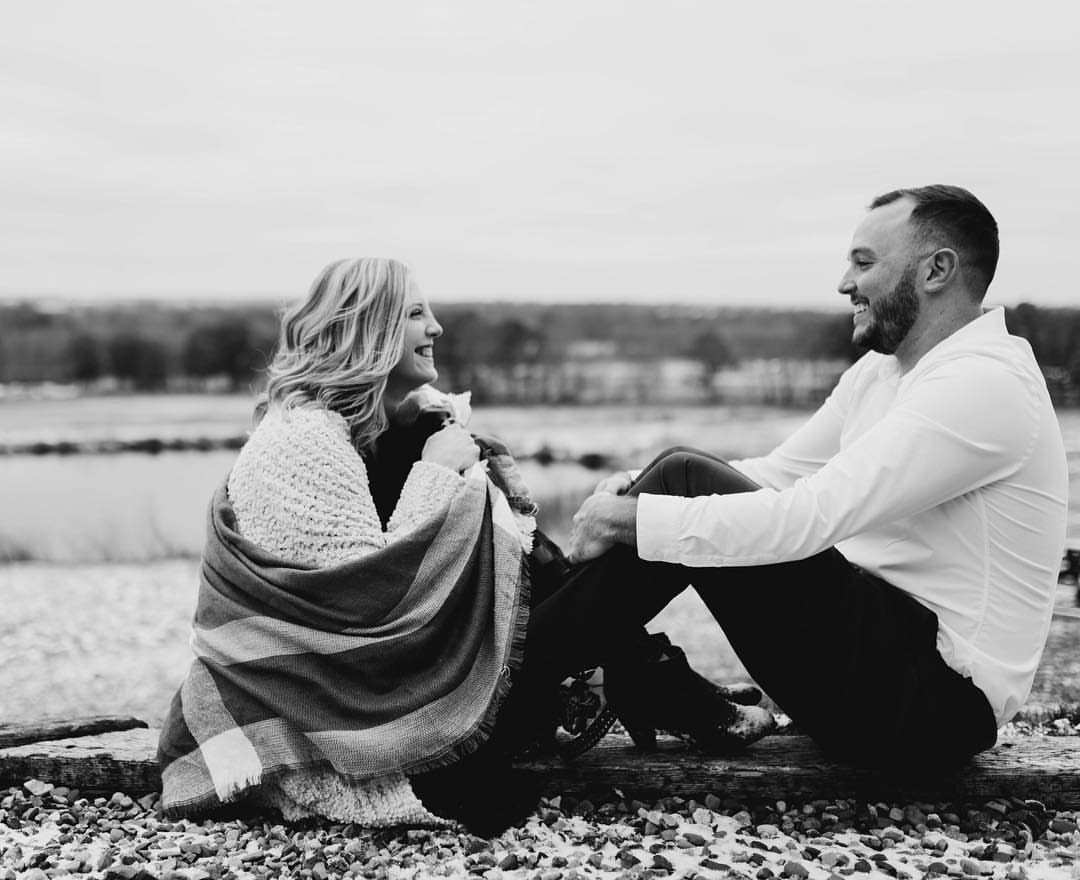
A blanket around both shoulders pulls you close without any direction, which is why this setup suits couples who dislike posing. On a rocky shore it also gives you something soft to sit on.
I’d choose a plain, textured blanket so it does not fight with the scenery. Black and white suits the quiet mood well, so ask your photographer to deliver a few frames that way.
7. Piggyback Rides
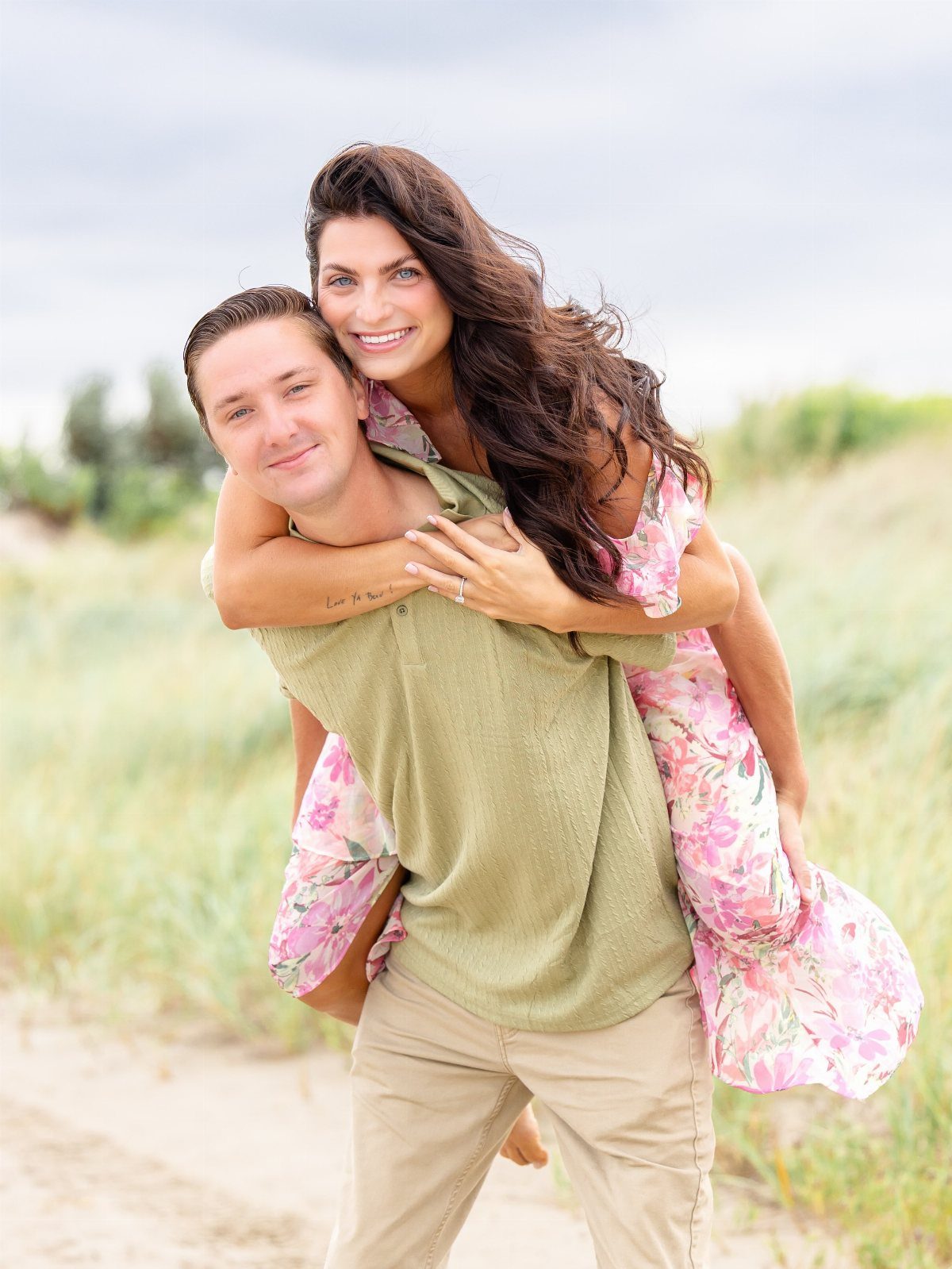
Piggyback rides along the shoreline suit couples who freeze when a camera points at them.
Pick the carrier by who is steadier on sand, since soft footing makes this harder than it looks. A dress with some room in the skirt lets the rider wrap her legs without a fuss.
Shoot a few rounds and let the rider lean in and talk.
8. Picnic on the Beach
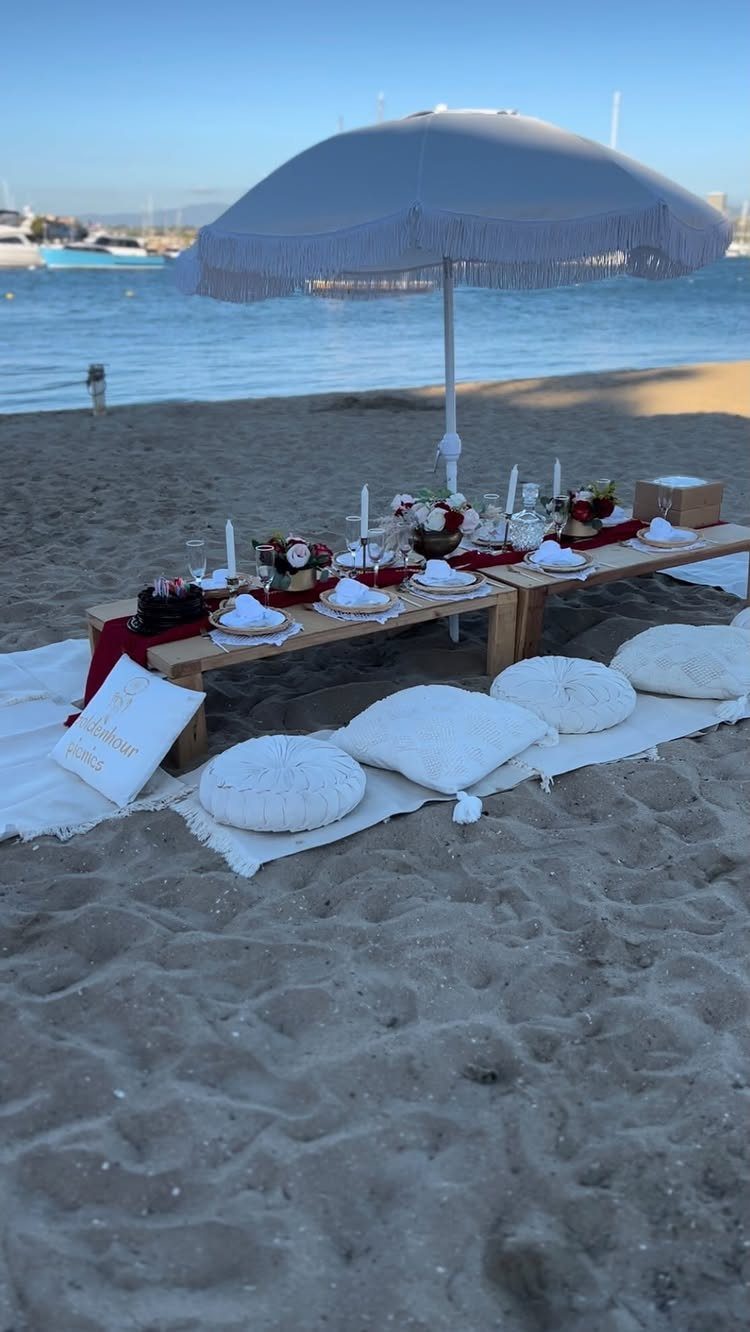
A low table set right on the sand turns a beach session into a small, private dinner. Cushions or a blanket beside it mean you sit the way you would at home, not pose.
An umbrella overhead gives shade and a soft frame, and a few flowers and plates are enough styling. I’d keep the palette to two or three colors so the scene stays calm.
A rental or a DIY setup costs money, so decide how much of it the photos will actually show.
9. Writing in the Sand
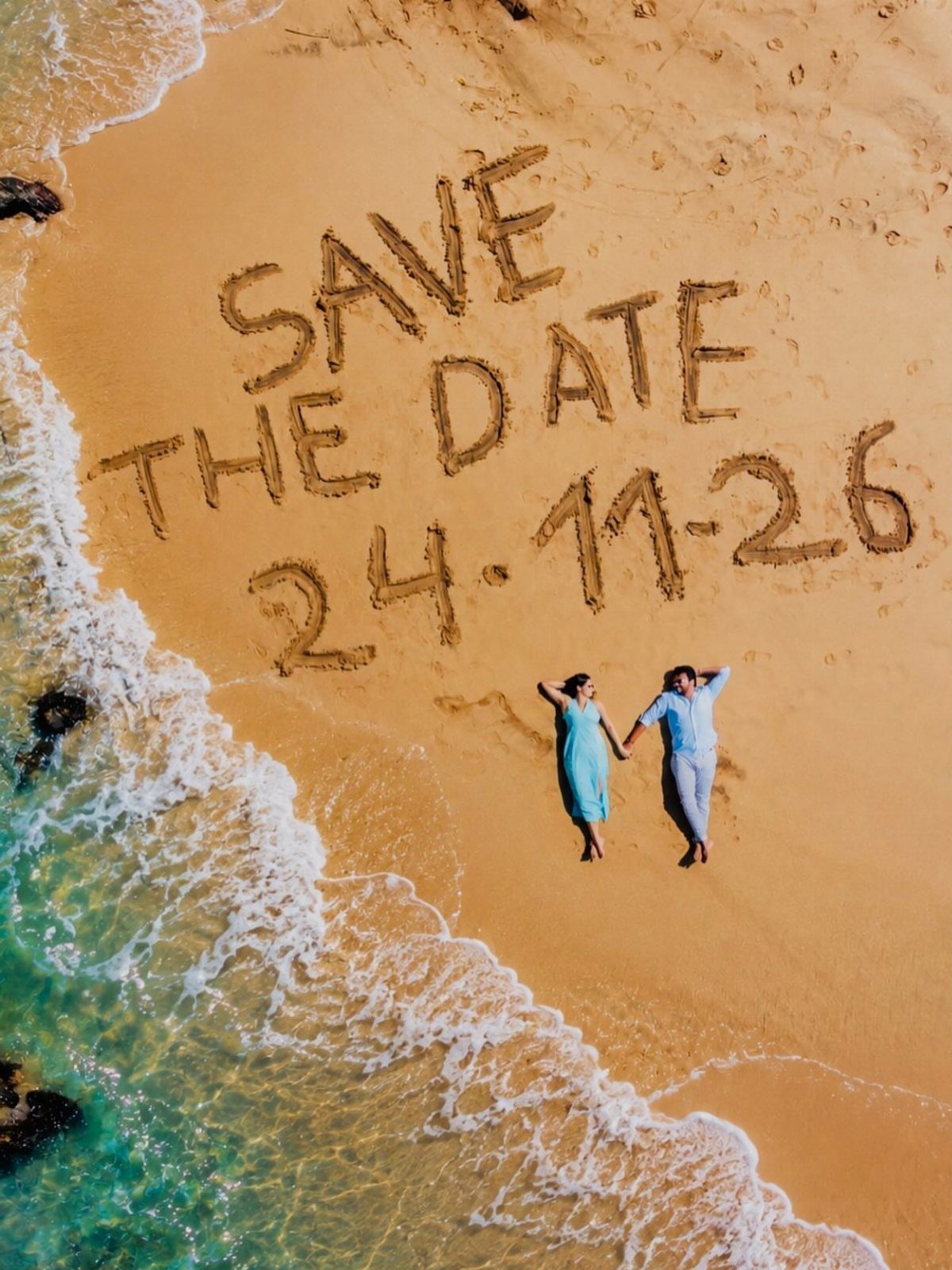
Writing a date or your initials in the sand makes the photo say something specific, and a Save the Date works as the announcement itself.
Write it big, because small letters vanish in a wide shot. Draw on damp, firm sand where the lines stay sharp, and keep it well back from the incoming waves.
Have the photographer shoot it quickly; the tide will not wait.
10. Dip Your Partner
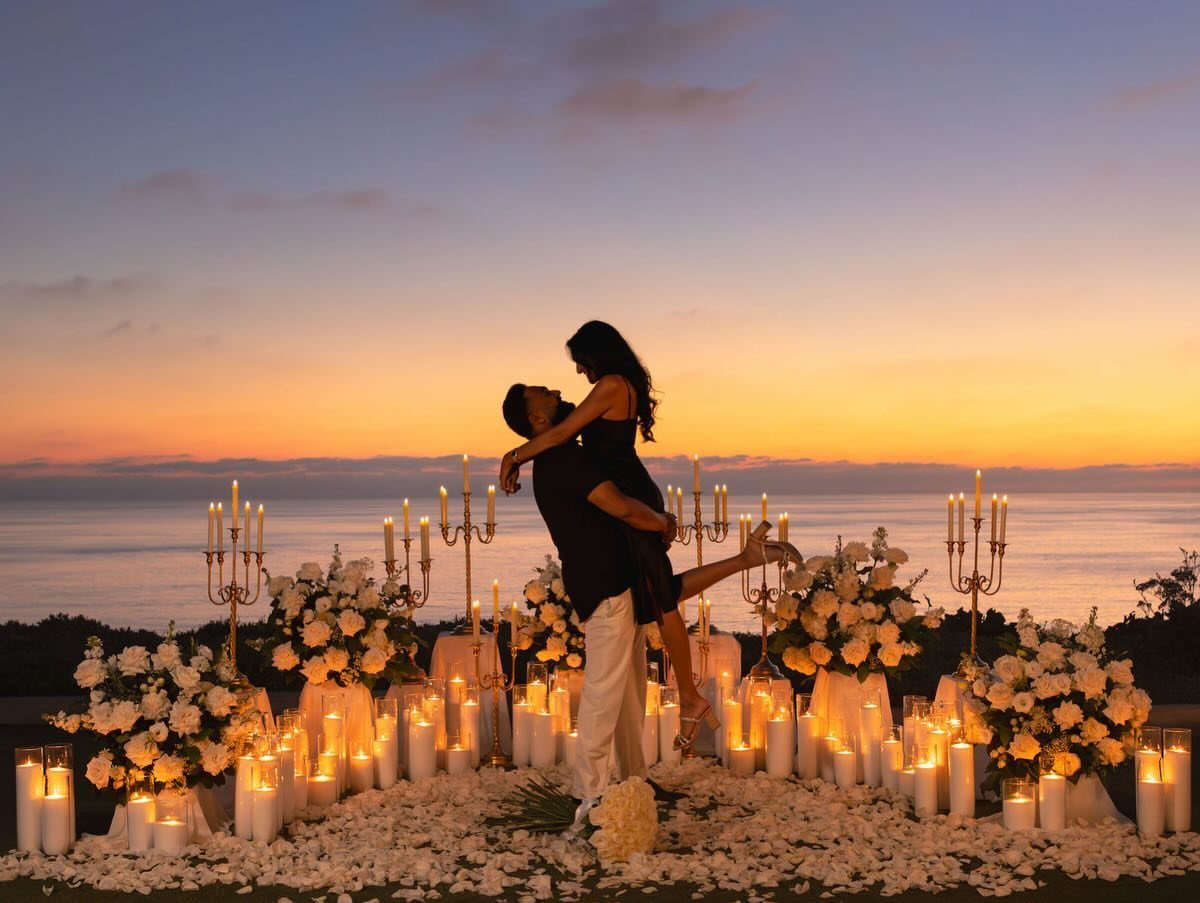
A dip, one partner leaning back into the other’s arm for a kiss, reads as classic and romantic, and it holds up well against a sunset sky.
The dipper needs a firm stance, so plant your feet wide before you lower.
Hold the kiss for a few seconds so the photographer can fire several frames. Practice once or twice before the session, because a wobbly dip looks nervous.
Candles and flowers, as seen here, are an extra you can add if the budget allows.
11. Seashell Ring Shots
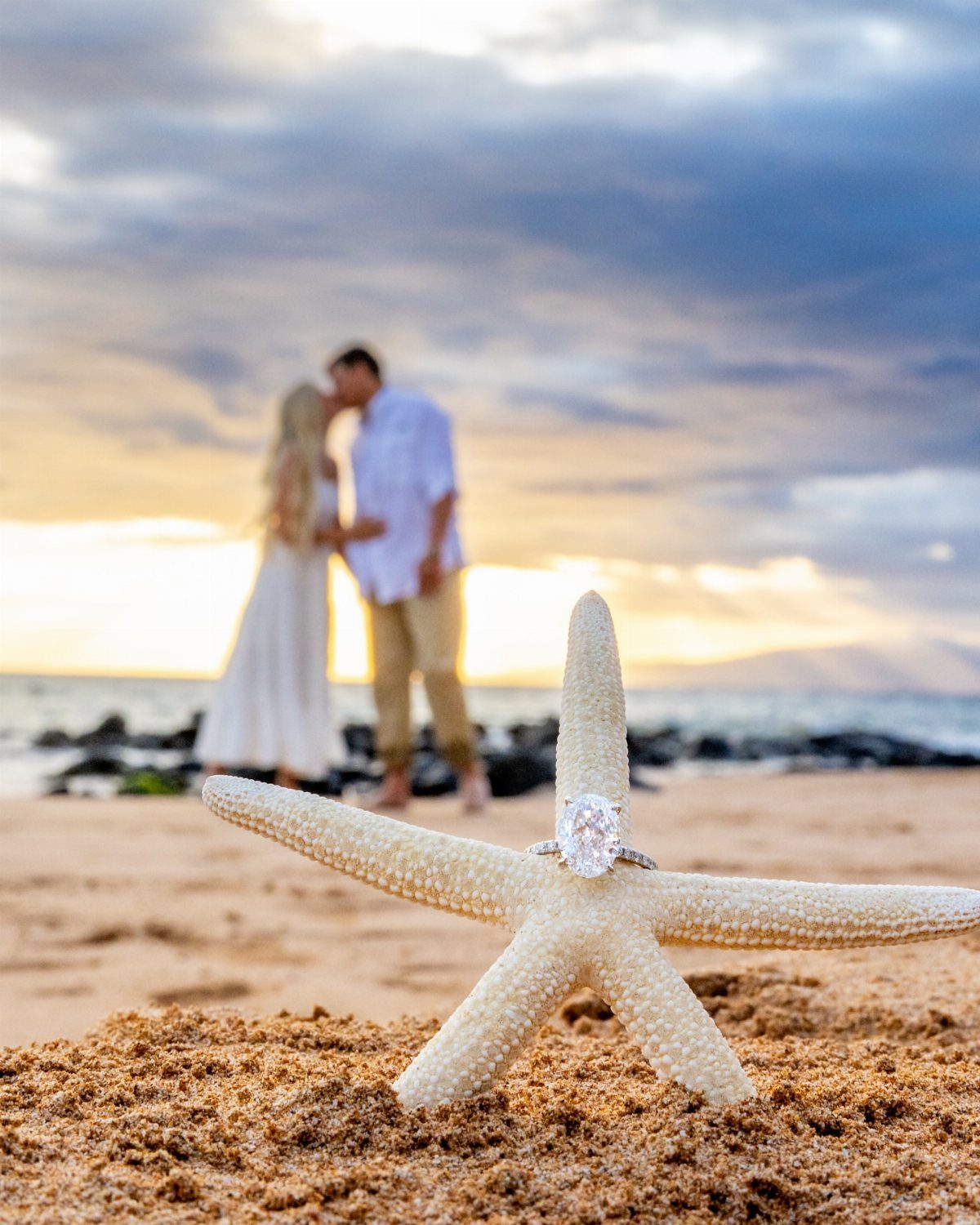
Setting the ring on a shell or starfish puts the diamond in sharp focus up front while the two of you soften into the background. It is a small detail shot that costs almost nothing.
Look for a flat, pale shell that gives the ring a stable seat, and ask your photographer to focus on the stone first. A white starfish makes the sparkle stand out.
Test that the ring will not slide off before you let go.
12. Sailboat or Kayak
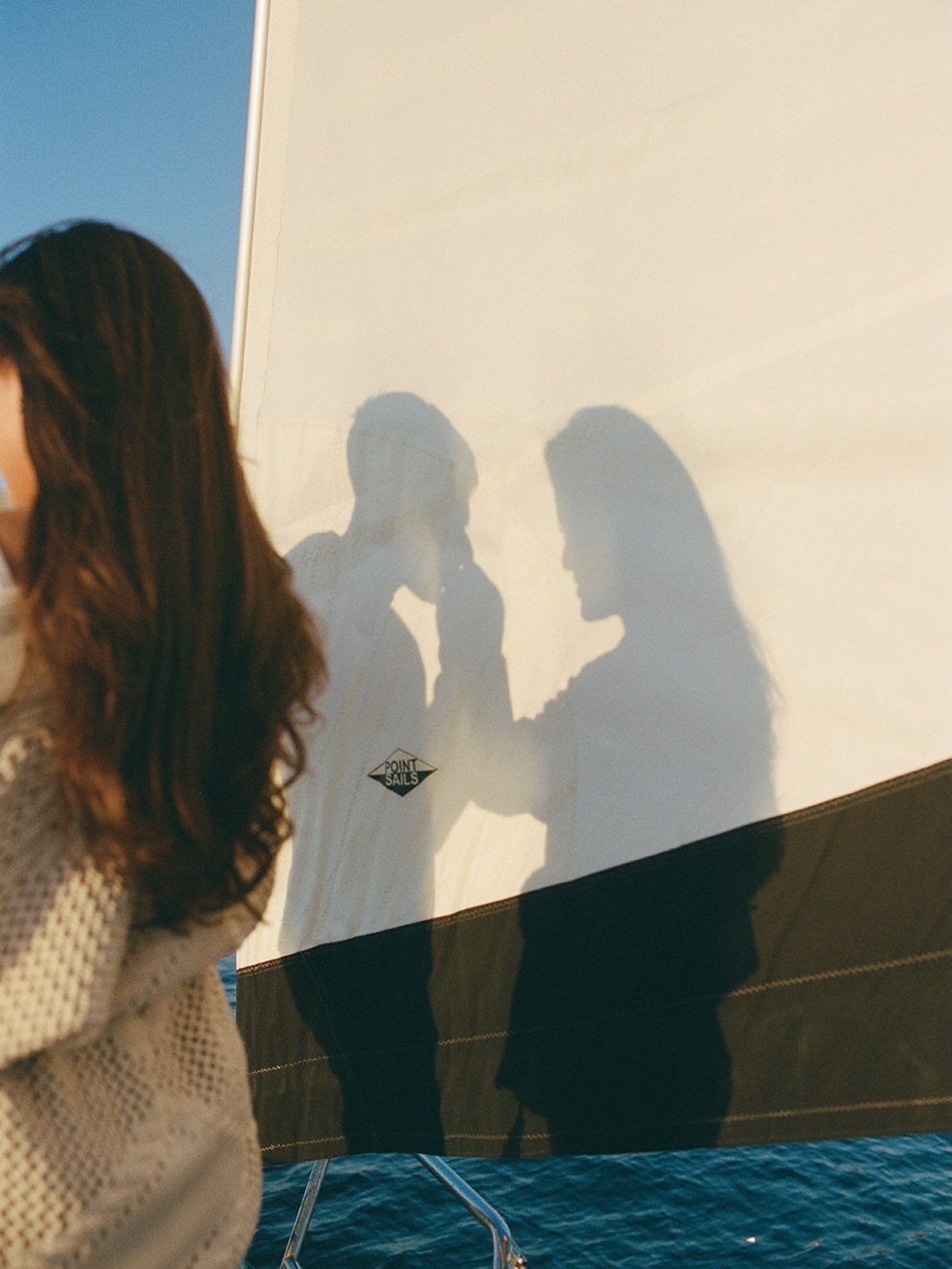
A sailboat brings in angles you cannot get on sand, and a sail can act as a screen where your shadows land. A silhouette kiss cast on white canvas is an unusual frame that needs no posing skill.
A kayak is the simpler, cheaper way to get on the water if a boat is out of reach. Either way, ask the owner or rental company about photo access before you book.
I’d go with the sail if you can arrange it.
13. Ring in the Sand
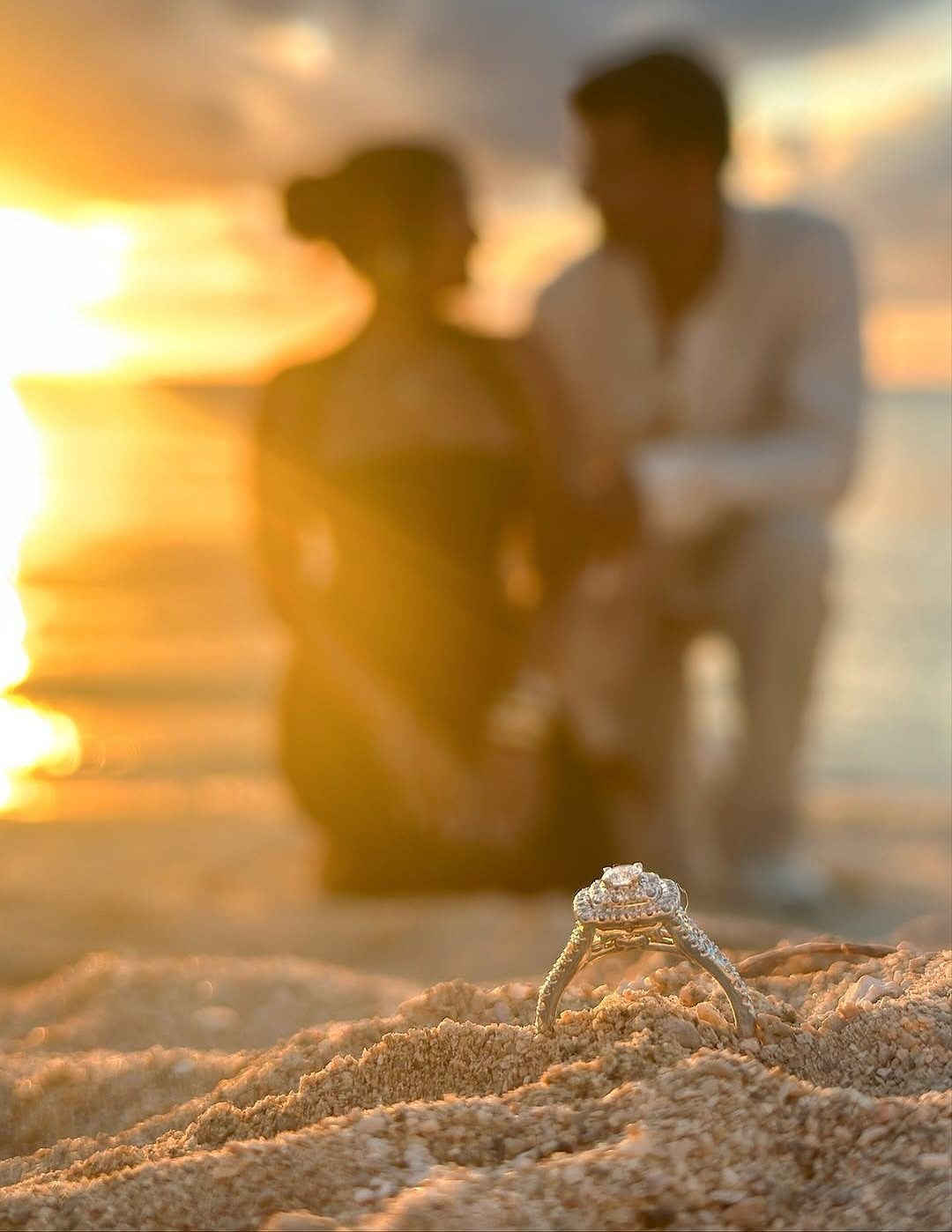
Stand the ring upright in the sand, close to the lens, and let the two of you go soft in the background. The diamond becomes the subject, with the sunset behind it.
Press it in firmly so it holds, and tell your photographer to focus on the stone before anything else.
Keep a hand near it if the wind picks up. A ring lost in sand is a bad way to end a session.
14. Overhead Sand Portrait
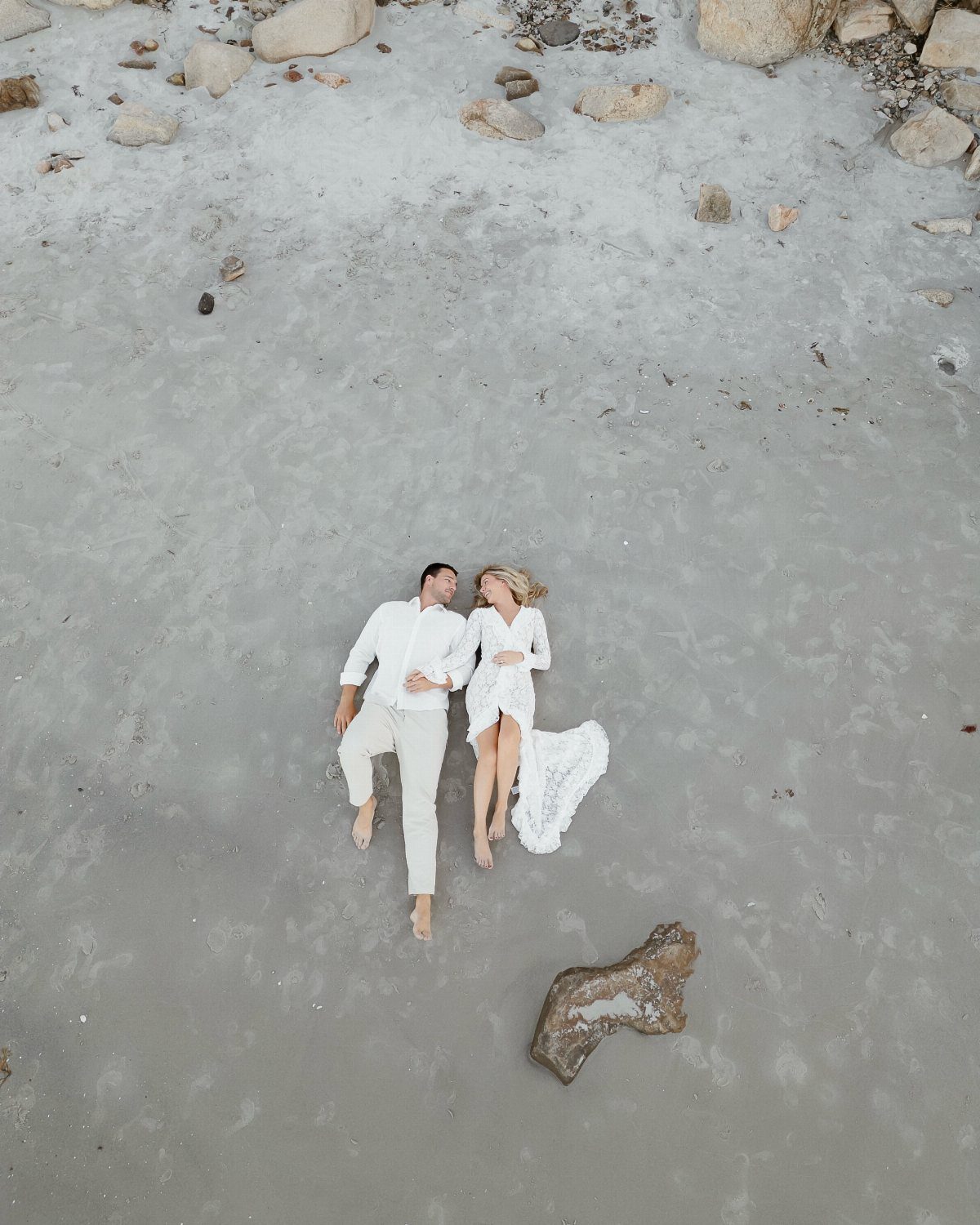
Lying side by side on the sand and shooting straight down turns the beach into a plain backdrop for the two of you.
Matching white outfits read cleanly against the light gray sand, and the scattered rocks add texture without clutter.
The photographer needs to stand over you, so ask about a step stool or a tall frame before the session. I’d keep your poses loose: turn toward each other and let your hands find a spot.
15. Hand-in-hand Point of View
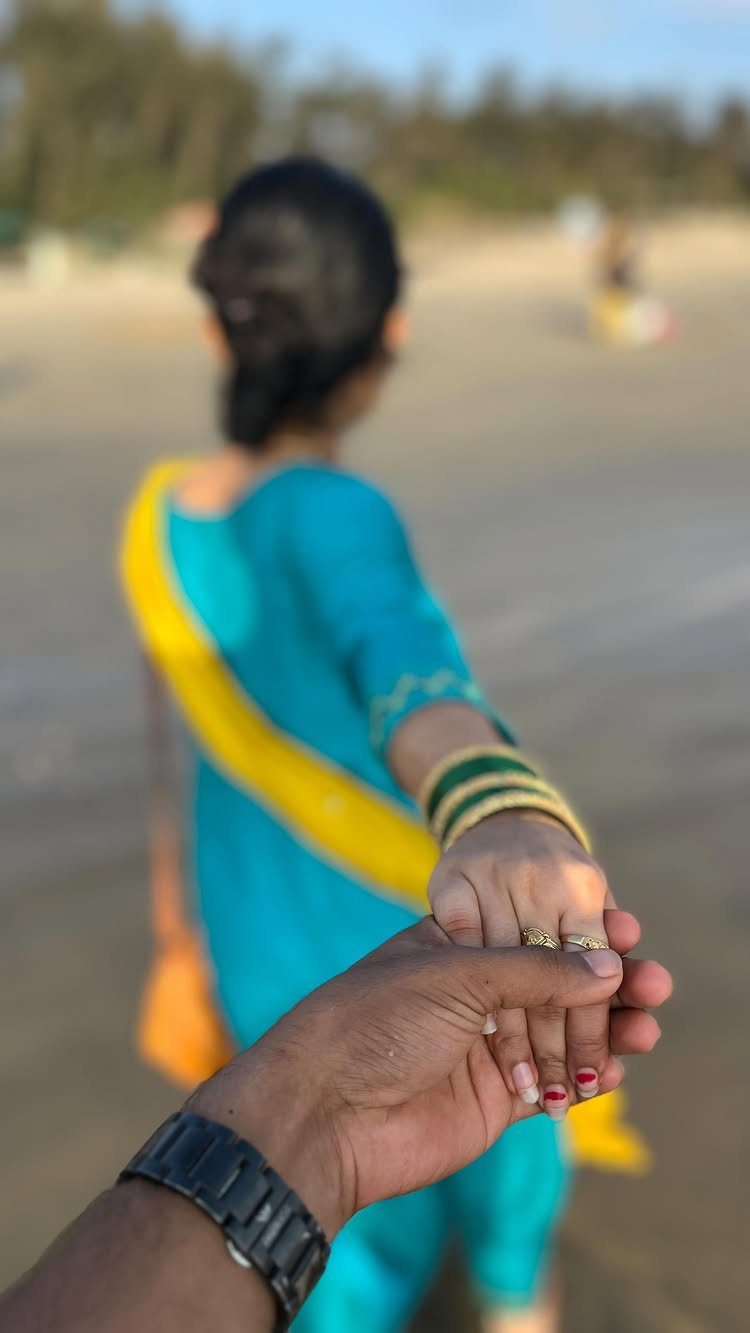
Hold your partner’s hand and let them lead you down the shore while the photographer shoots from your own eye level.
A hand-in-hand frame puts the viewer in your place, and that makes it feel more personal than a posed portrait usually does.
Your partner should face away and walk at an easy pace. A printed outfit in strong colors, like the blue and yellow here, gives the frame an instant focal point.
16. Ring Hand Close-up
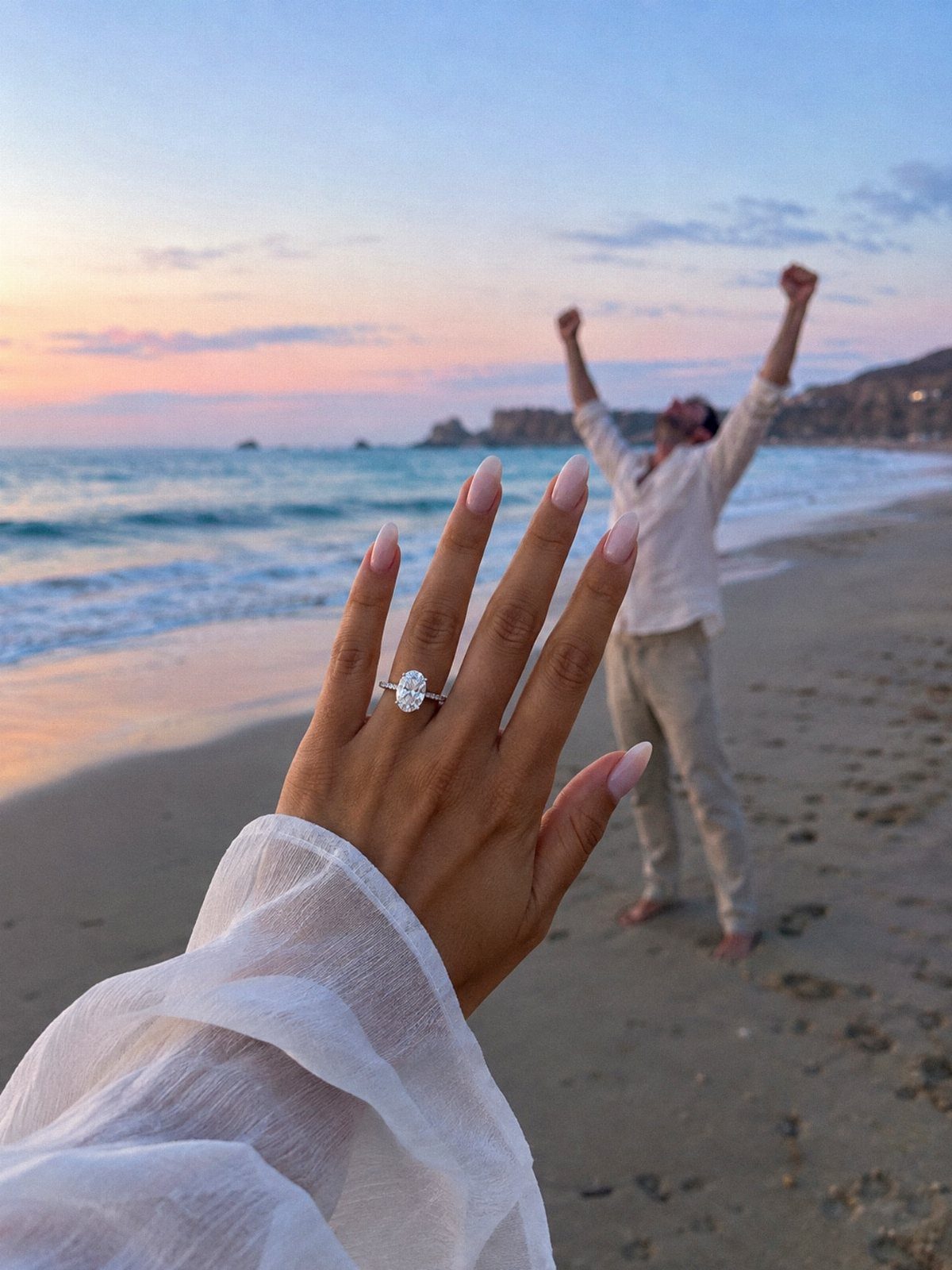
Hold the ringed hand up toward the camera, and let your partner celebrate behind it. The ring sits sharp in front while the joy stays soft in the background, so you get the detail and the feeling in one frame.
Tell your photographer up front to focus on the stone, and have your partner cheer or hug you as you lift your hand so the moment looks real. Do a few takes, since the first reaction is often the best.
17. Kneeling Surprise Proposal
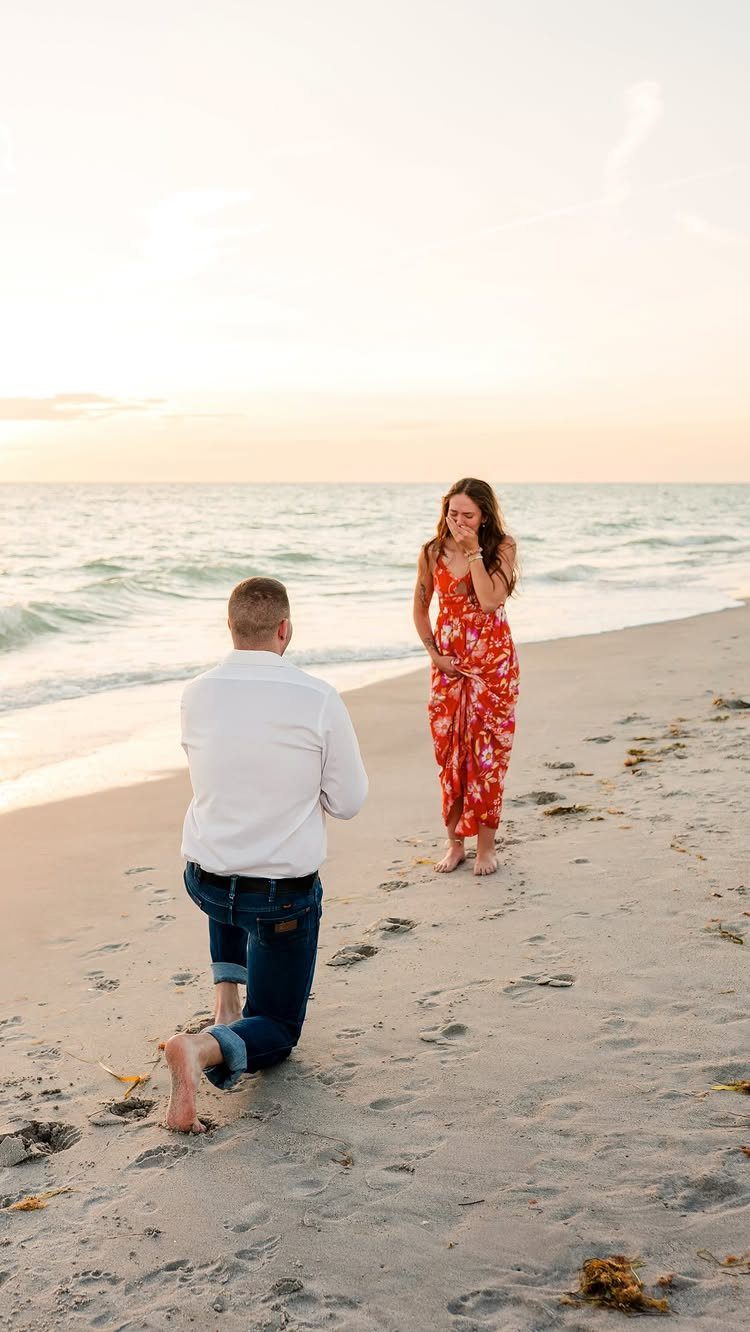
One knee in the sand, one stunned face: this is the shot couples want most from a beach session, and it works best when the reaction is real.
Tell your photographer the plan ahead of time and have them wait nearby. You only get one first reaction, so I’d ask for a long lens to stay out of sight.
18. Heart-shaped Floral Arch Setup
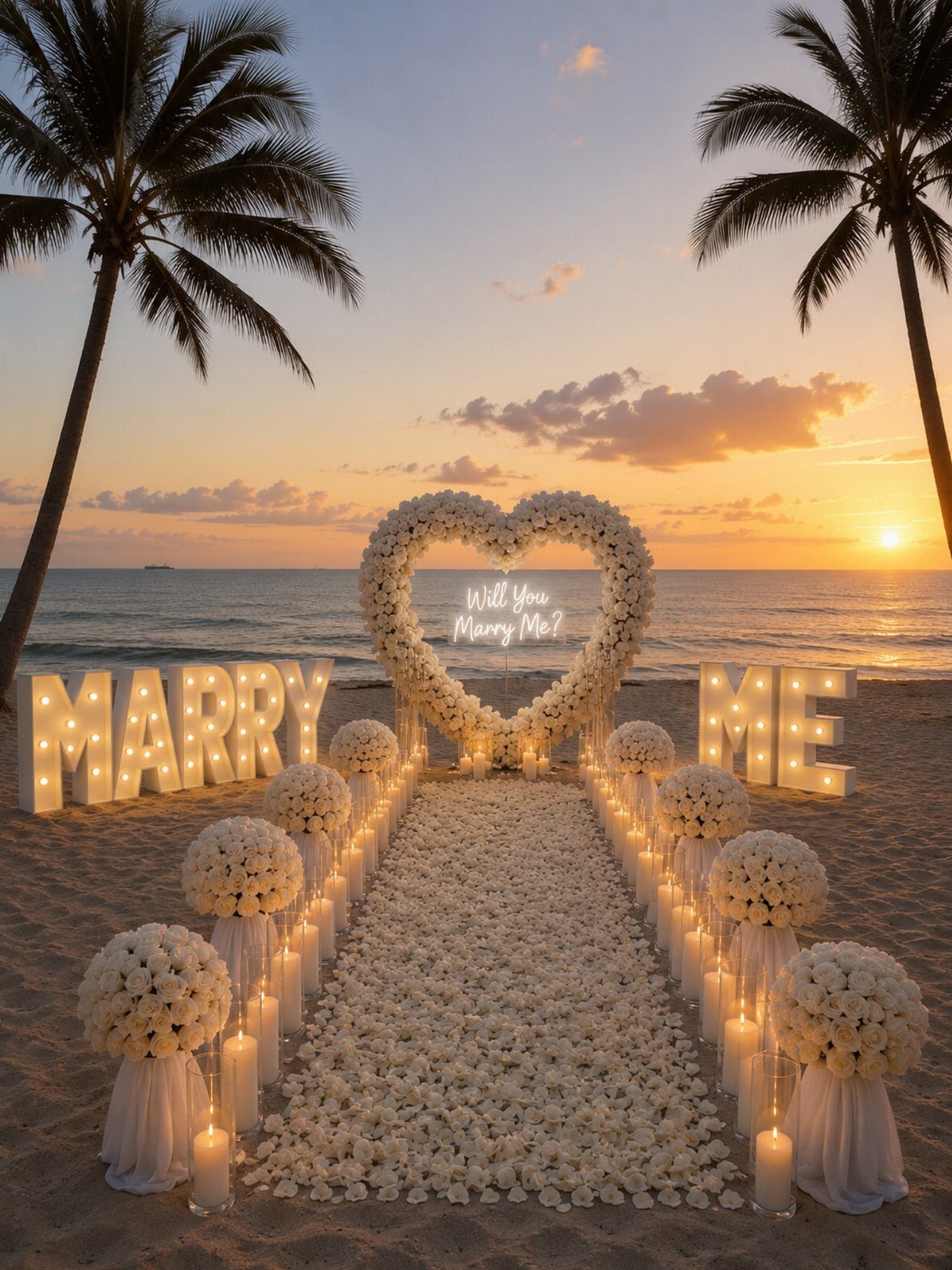
A heart-shaped floral arch, lit "MARRY ME" letters and a petal aisle make the proposal a full production. This is the splurge option for a beach shoot, and every piece costs money, so price each one before you commit.
I’d pick the arch and the letters over the petals if you must cut something, since they carry the photo.
Book sunset, because the lights show best as the sky darkens. Have the setup ready before your partner arrives.
19. Beach Sparkler Photo
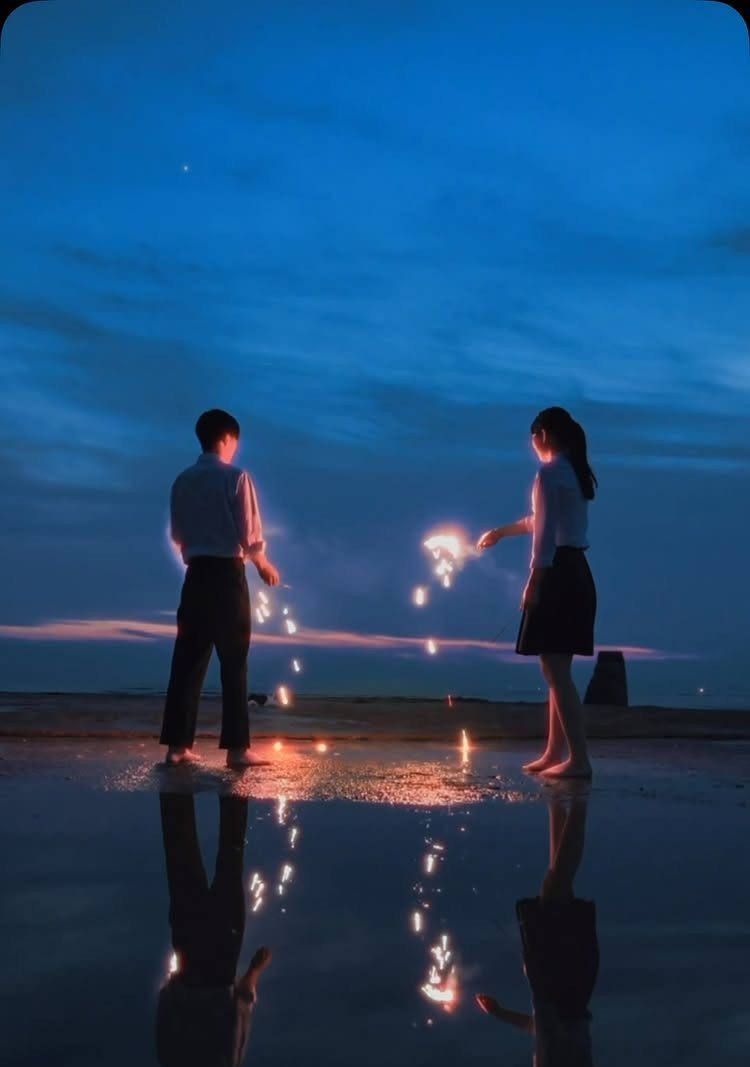
2 sparklers lit at twilight turn the wet sand into a mirror, so every spark shows twice, once in your hands and once in the water below.
Stand at the edge where the sand is shiny but the waves barely reach.
Light them only when the photographer is ready, since a sparkler burns out fast. Hold them at arm’s length, away from hair and clothing, and have a bucket of water nearby for the spent wires.
Check your beach’s rules on sparklers before you buy any. Some beaches ban them.
20. Playful Running Motion Blur
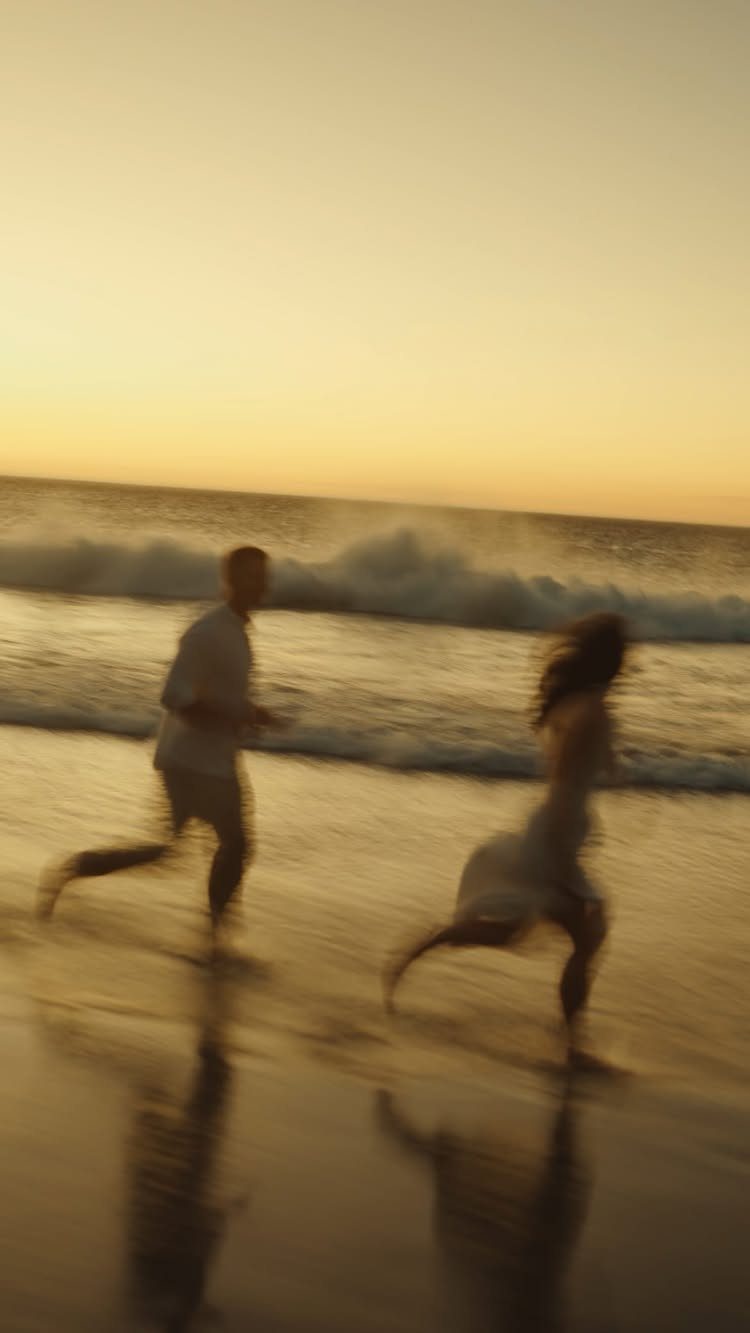
Running along the shoreline at sunset and letting the camera blur you gives a photo more laughter than any posed frame. Pale clothing smears into soft, glowing shapes against the water, which is why white works so well here.
Run toward the photographer, not past them, and ask for a slower shutter than usual so the blur looks intentional. Expect some frames to come out too smeared to use, so run several rounds.
Keep to the firm, damp sand, and I’d skip heels and stiff shoes entirely.
Best Time for Beach Engagement Photos
Light decides more than any prop or pose, so start with the clock. Aim to start shooting about 60 minutes before sunset, when the sun sits low and gold, skin looks warm, and the water picks up that glow.
Sunrise is the quieter choice. The light is soft and the beaches are almost empty, which helps if you get camera-shy around strangers.
Skip midday. Overhead sun means squinting and hard shadows, and no photographer can fully fix that.
Check the tide chart for your date too. Low tide often reveals more sand, tide pools and reflective wet sand, so you get more to shoot on.
What to Wear for Beach Engagement Photos
Pick fabrics that move and breathe: chiffon, linen, cotton or rayon.
Stay with earthy tones, whites or soft pastels for most beach backgrounds, though a printed dress can work better against gray stone where solid colors disappear. Leave off loud logos and harsh patterns, which pull attention away from your faces.
Bring two outfits, one casual and one slightly dressier. Pieces like these let you change the look with a few small tweaks, so you skip hauling a suitcase of outfits down the sand.
Barefoot looks most natural. If you want something on your feet, choose sandals or shoes that slip off easily.
Choosing the Right Beach
Choose the beach for its vibe, not for convenience. Montauk or Laguna Beach suits a classic, open-sky look, the Florida Keys or Hawaii bring palms and turquoise water, and the Oregon Coast or Maine gives you cliffs and fog.
Look for variety nearby, such as forests, hills, gardens or rock formations, so the set of photos doesn’t repeat itself.
A place like Sutro Baths in San Francisco isn’t a typical beach, yet its ruins, ocean views and bridge views give you plenty of backdrops.
Scout before the date. Check tide times and parking, and ask whether professional photography needs a permit, because that is better learned before a security guard turns up mid-session.
Frequently Asked Questions
What are some creative ideas for a beach engagement photoshoot?
Sparklers at twilight are my pick: wet sand mirrors every spark, so each one shows twice.
How soon after engagement should you do engagement photos?
I can’t give a firm rule here, because timing depends more on the light than on the calendar. For the timing, book the session so it begins roughly an hour before sunset, while the light is low and warm.